Interactive Whiteboard vs Smart TV: Which Is the Better Choice for Schools and Businesses?
When choosing a display solution, many buyers compare interactive whiteboards and smart TVs because they look similar at first glance. However, they are designed for very different purposes. Understanding these differences can help schools, businesses, and distributors make the right investment.
What Is an Interactive Whiteboard?
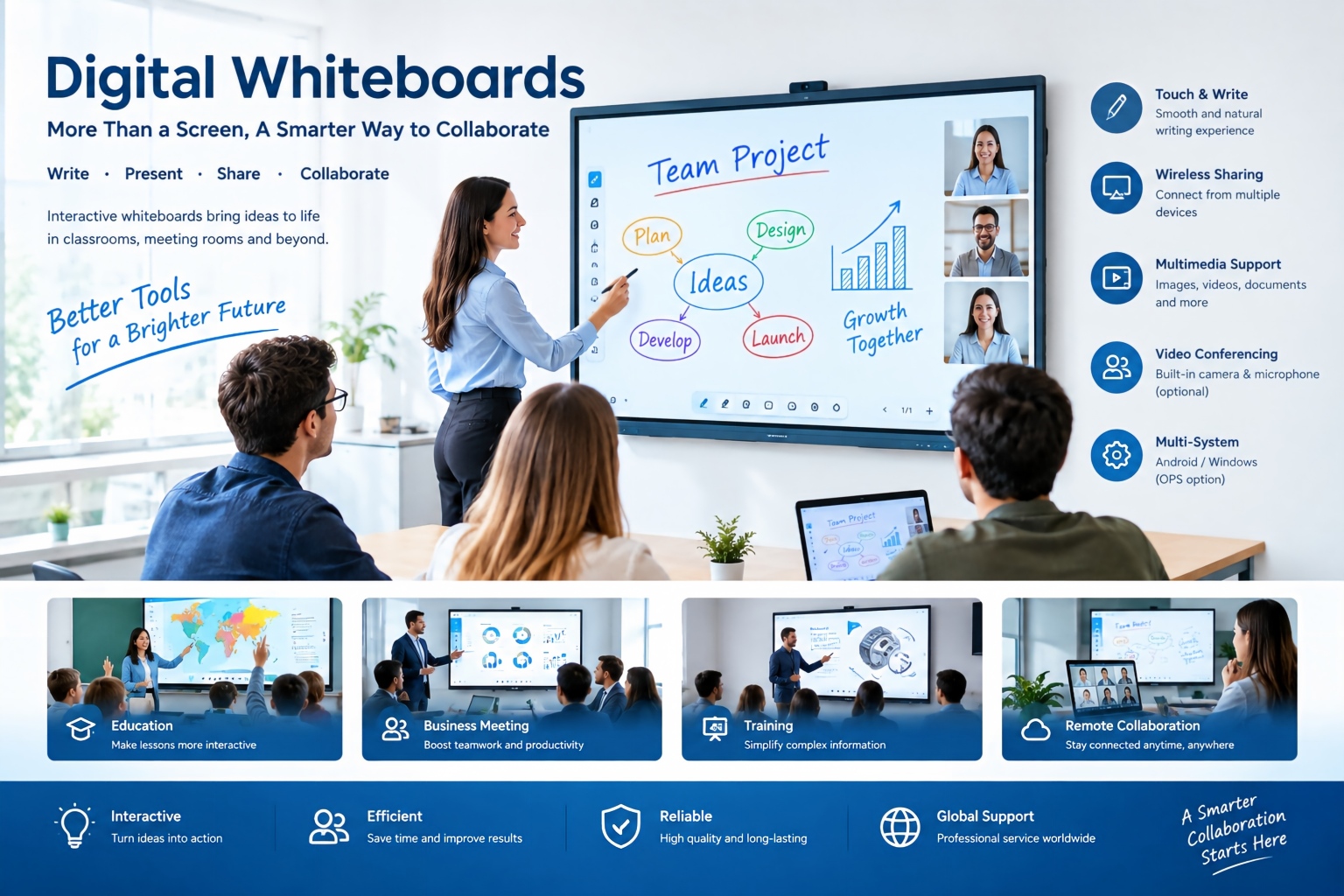
An interactive whiteboard, also known as an interactive flat panel display (IFPD), is a professional touchscreen designed for education and business collaboration. It combines a 4K display, multi-touch technology, digital whiteboard software, wireless screen sharing, video conferencing compatibility, and annotation tools in one device.
Unlike a standard TV, an interactive whiteboard is built for daily collaboration, presentations, teaching, and meetings.
What Is a Smart TV?
A smart TV is primarily designed for home entertainment. It allows users to watch streaming videos, browse the internet, and install entertainment apps. Although some smart TVs support basic screen mirroring, they are not optimized for interactive teaching or professional collaboration.
Key Differences
1. Touch Interaction
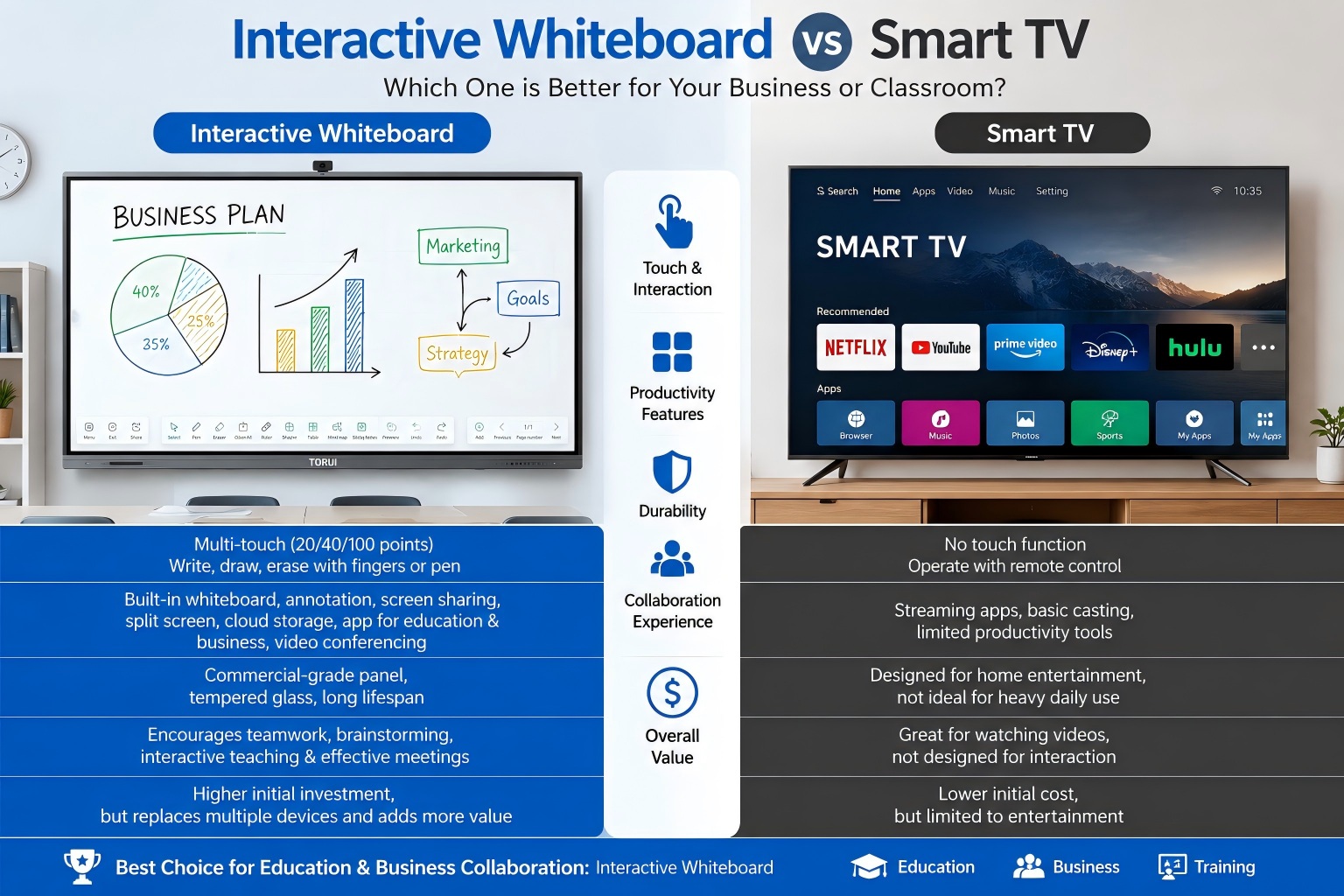
Interactive whiteboards support multi-touch technology, allowing multiple users to write, draw, erase, and manipulate content simultaneously. This feature encourages classroom participation and improves teamwork during meetings.
Most smart TVs do not support touch functionality. Users must rely on a remote control or external devices.
2. Productivity Features
Interactive whiteboards include built-in whiteboard software, annotation tools, wireless casting, split-screen mode, cloud integration, and compatibility with platforms such as Microsoft Teams, Zoom, and Google Meet.
Smart TVs mainly focus on media playback and offer limited productivity functions.
3. Durability
Interactive whiteboards are engineered for continuous daily operation in schools, conference rooms, and training centers. Their tempered glass panels provide excellent protection against scratches and frequent touch.
Smart TVs are intended for lighter home use and may not withstand heavy commercial environments.
4. Classroom and Meeting Experience
Teachers can write directly on lesson materials, save notes instantly, and engage students through interactive activities. Business users can brainstorm, annotate presentations, and collaborate with remote participants in real time.
A smart TV can display content clearly, but it cannot deliver the same interactive experience.
Which One Offers Better Value?
Although the initial cost of an interactive whiteboard is higher than a smart TV, it delivers significantly greater long-term value. One device replaces a projector, traditional whiteboard, speakers, annotation system, wireless presentation equipment, and collaboration software, reducing maintenance and simplifying classroom or meeting room management.
Which Product Should You Choose?
Choose a Smart TV if your primary goal is entertainment or digital signage.
Choose an Interactive Whiteboard if you need:
- Smart classroom teaching
- Corporate meetings
- Training sessions
- Hybrid collaboration
- Interactive presentations
- Professional conference rooms
Conclusion
For organizations focused on education, training, or business collaboration, an interactive whiteboard is the more efficient and future-ready solution. Its advanced touch technology, collaboration tools, and professional software help improve engagement, productivity, and communication.
When evaluating suppliers, buyers should consider display quality, touch accuracy, operating system, software compatibility, warranty, and after-sales support. Partnering with an experienced manufacturer that offers OEM/ODM services, international certifications, and reliable technical support ensures a higher return on investment and long-term customer satisfaction.
LED vs LCD Interactive Whiteboard: Which Display Technology Is Better for Schools and Businesses?
How to Become an Interactive Whiteboard Distributor: A Complete Guide for Global Business Partners
Related Article