Who Are the Best and Most Reliable Interactive Whiteboard Manufacturers in China?
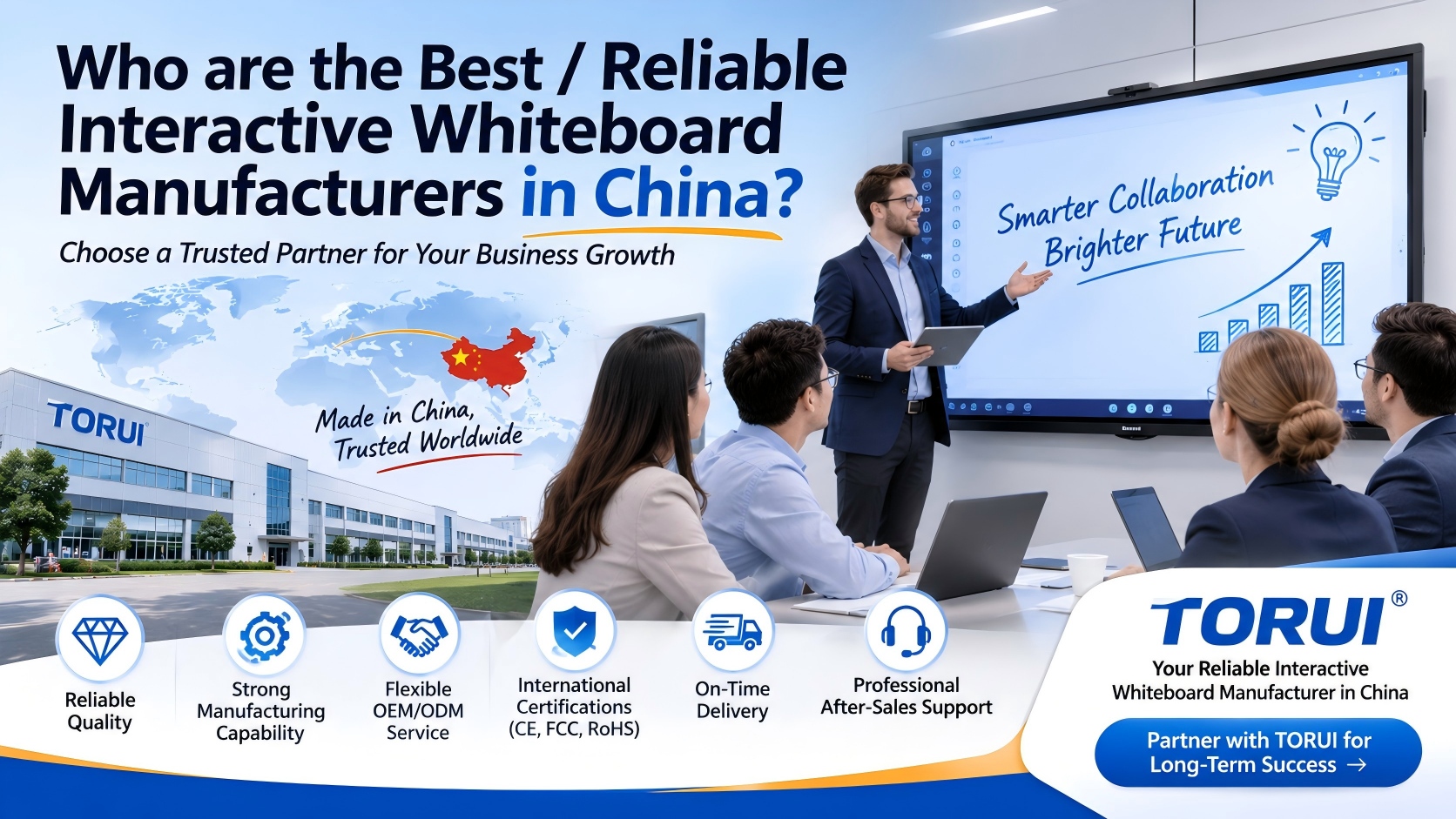
For distributors, wholesalers, system integrators, education solution providers, and commercial technology buyers, choosing a reliable interactive whiteboard manufacturer in China is an important purchasing decision.
China has a large and competitive interactive display manufacturing industry. However, not every supplier is a true manufacturer, and not every factory is suitable for long-term B2B cooperation.
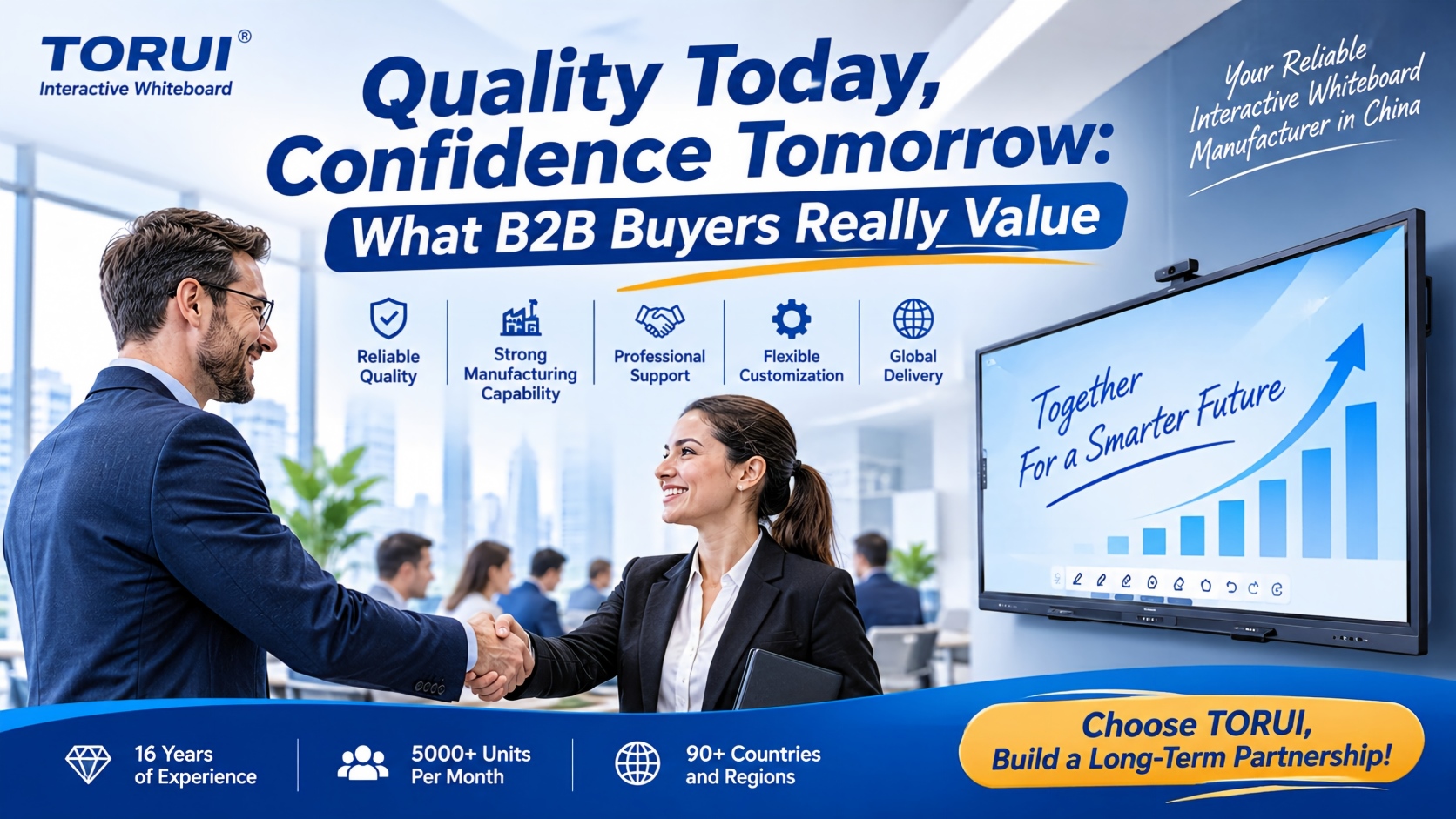
The best interactive whiteboard manufacturer is not necessarily the supplier offering the lowest quotation. A reliable manufacturer should combine stable product quality, manufacturing capability, OEM/ODM flexibility, competitive pricing, certifications, delivery reliability, technical support, and after-sales service.
So, how should international buyers identify the right Chinese interactive whiteboard manufacturer?
What Makes a Reliable Interactive Whiteboard Manufacturer?
Before comparing suppliers, B2B buyers should understand the difference between a manufacturer, an OEM/ODM factory, and a trading company.
Interactive whiteboards combine LCD panels, touch systems, motherboards, operating systems, speakers, cameras, microphones, wireless connectivity, software, mechanical structures, and other components. Therefore, the manufacturer's engineering and quality-control capabilities can directly influence the final product.
A reliable supplier should be able to provide clear information about its factory, production process, product specifications, quality inspection, certifications, customization capability, and after-sales support.
For international procurement, buyers should evaluate at least these eight factors:
- Manufacturing experience
- Production capacity
- Product range and technical configuration
- OEM/ODM capability
- Quality control
- International certifications
- Delivery and export experience
- Technical and after-sales support
This approach is more reliable than selecting a supplier based only on price.
1. Manufacturing Experience and Factory Verification
The first question B2B buyers should ask is simple:
Is this company a real interactive whiteboard manufacturer?
A professional factory should be able to provide factory information, production photos or videos, product samples, quality-control procedures, and relevant business documentation.
Buyers should also consider whether the manufacturer has experience serving international distributors and system integrators.
Factory visits are particularly valuable for large orders. They allow buyers to evaluate production lines, testing procedures, warehouse management, assembly processes, and quality-control standards.
For long-term distribution cooperation, a factory with many years of experience can also provide better knowledge of product development, market requirements, packaging, export procedures, and technical support.
2. Product Range and Hardware Configuration
A reliable interactive whiteboard manufacturer should offer multiple screen sizes and configurations rather than only one standard model.
Common commercial sizes include 55, 65, 75, 86, 98, and 110 inches.
However, screen size is only one part of the purchasing decision.
B2B buyers should compare:
- 4K display resolution
- Touch technology and touch points
- Processor
- RAM and storage
- Android version
- OPS computer options
- Camera and microphone
- Speakers
- Wireless screen sharing
- HDMI/USB/LAN connectivity
- Annotation functions
- Operating-system compatibility
- Optional accessories
Different markets may require different configurations. A distributor selling to schools may prioritize classroom functions, while a system integrator may require stronger computing performance, cameras, microphones, and Windows OPS compatibility.
Therefore, the best manufacturer should be able to recommend configurations according to the buyer's market and application rather than simply selling one fixed specification.
3. OEM and ODM Capability
For distributors and private-label brands, OEM/ODM capability can be one of the most important supplier-selection factors.
A professional OEM/ODM interactive whiteboard manufacturer may support:
- Customer logo
- Customized packaging
- Product labels
- User manuals
- UI language
- Product configuration
- Accessories
- Product appearance
- Market-specific requirements
- Software customization
OEM is generally suitable for buyers who already have a product specification and mainly need their own brand.
ODM is more suitable for companies that want the manufacturer to participate in product configuration, engineering, or development.
Buyers should always confirm MOQ, sample process, development requirements, tooling costs, lead time, and customization limitations before placing an OEM/ODM order.
4. Quality Control Is More Important Than the Lowest Price
One of the biggest mistakes B2B buyers make is choosing an interactive whiteboard manufacturer purely according to the lowest quotation.
An interactive whiteboard is a complex electronic product. A small difference in component quality or assembly control can eventually create problems such as touch failure, display defects, unstable software, poor audio, overheating, or high after-sales costs.
A professional manufacturer should have inspection procedures covering critical production stages.
Buyers can ask:
- How are incoming components inspected?
- Is every unit tested before shipment?
- Is touch performance tested?
- Is the display tested?
- Are audio and camera functions tested?
- Is aging testing performed?
- How are defective products handled?
- Are spare parts available?
For distributors, consistent quality is particularly important because the manufacturer's product quality directly affects the distributor's local reputation.
5. Certifications and International Market Access
Certification requirements depend on the destination market and product configuration.
International buyers may need certifications or compliance documentation such as CE, FCC, RoHS, CCC, ISO-related quality systems, or additional country-specific requirements.
However, buyers should not simply ask whether a supplier has certificates.
They should verify:
Does the certificate apply to the actual product model being purchased?
They should also confirm whether the certification meets the requirements of the target market.
This is especially important for government tenders, education projects, large corporate procurement, and institutional projects.
6. Production Capacity and Delivery Reliability
A manufacturer may offer excellent products but still be unsuitable if it cannot maintain stable supply.
Distributors should therefore evaluate:
- Monthly production capacity
- Production lines
- Standard lead time
- Peak-season capacity
- Component supply
- Packaging capability
- Warehouse management
- Export experience
This becomes increasingly important after a distributor develops a successful local product.
A supplier that can support both sample orders and repeat bulk orders provides greater flexibility for market development.
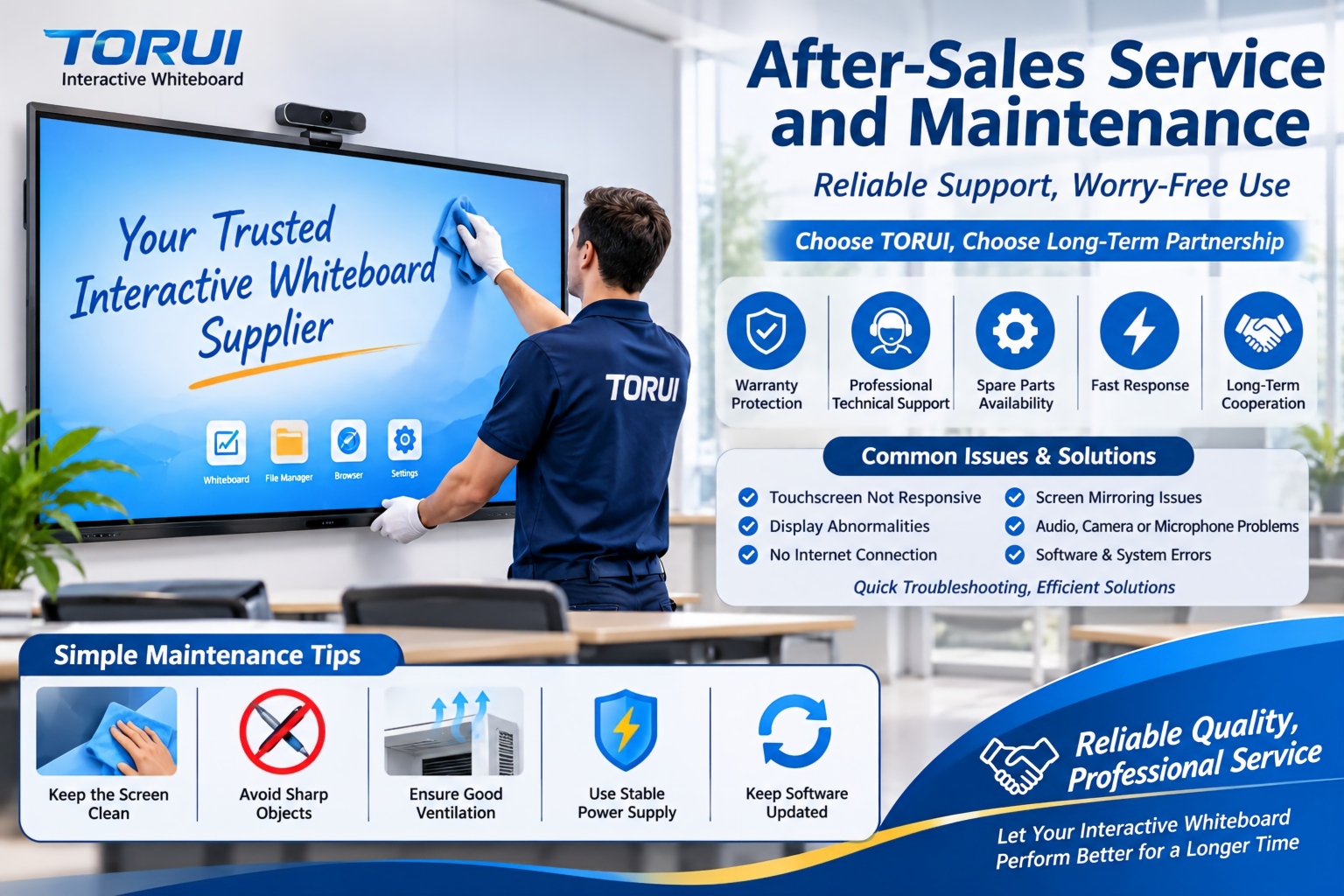
7. Technical Support and After-Sales Service
For interactive whiteboards, the relationship should not end when the container leaves China.
International B2B buyers should ask about:
- Warranty
- Remote technical support
- Installation guidance
- Product training
- Troubleshooting
- Spare parts
- Software support
- Replacement procedures
This is particularly important for system integrators and education solution providers because they may need to support their own customers after installation.
A manufacturer that understands international B2B cooperation should be able to communicate clearly about technical specifications, troubleshooting, documentation, and after-sales procedures.
8. How Should Buyers Compare Chinese Interactive Whiteboard Manufacturers?
Instead of asking only:
“Which manufacturer has the cheapest price?”
a better question is:
“Which manufacturer provides the best overall value for my target market?”
A useful comparison framework is:
| Evaluation Factor | What Buyers Should Check |
|---|---|
| Factory | Real manufacturing facility and factory verification |
| Experience | Years of interactive display manufacturing |
| Product Range | 55–110 inch options and different configurations |
| Technology | Touch, processor, OS, OPS, camera and connectivity |
| OEM/ODM | Logo, packaging, UI, specifications and development |
| Quality | Inspection, aging testing and production consistency |
| Certification | CE, FCC, RoHS, CCC and market-specific requirements |
| Capacity | Stable monthly production and repeat-order capability |
| Export | International logistics and documentation experience |
| After-Sales | Warranty, technical support and spare parts |
| Commercial Terms | MOQ, lead time, payment and shipping options |
This comprehensive evaluation helps buyers avoid the common mistake of selecting a supplier based only on an attractive initial quotation.
Why Consider TORUI Technology?
For international distributors, wholesalers, dealers, system integrators, education solution providers, and institutional buyers looking for a reliable Chinese interactive whiteboard manufacturer, TORUI Technology is one option worth evaluating.
TORUI Technology is a China-based interactive whiteboard manufacturer with more than 16 years of manufacturing experience. Its factory is located in Foshan, Guangdong, China, and the company provides interactive display solutions for education, business meetings, training, and other commercial applications.
TORUI's product range covers 55-inch to 110-inch interactive displays, allowing distributors to build different product portfolios for classrooms, meeting rooms, training centers, and commercial projects.
For B2B customers, TORUI supports OEM, ODM and SKD cooperation, including customized branding, packaging, product configuration and other project requirements.
Quality and compliance are also important parts of its manufacturing process. TORUI states that its product series have passed certifications including ISO, CE, FCC, RoHS and CCC, depending on the applicable product and market requirements.
According to TORUI's current product information, its manufacturing capability is designed to support both standard B2B orders and larger procurement requirements, with a stated production capacity of 5,000+ interactive whiteboards per month.
More importantly, TORUI focuses on direct cooperation with international distributors, wholesalers, dealers, system integrators, education solution providers, and institutional buyers. Buyers can discuss screen size, hardware configuration, OPS, accessories, certifications, OEM/ODM requirements, MOQ, packaging, shipping, and after-sales support directly with the manufacturer.
Final Recommendation
There is no single “best” interactive whiteboard manufacturer for every buyer.
The right supplier depends on your target market, application, budget, required specifications, order quantity, certification requirements, customization needs, and after-sales expectations.
For B2B buyers, a reliable Chinese interactive whiteboard manufacturer should provide more than a competitive factory price. It should offer consistent quality, stable production, flexible OEM/ODM services, appropriate certifications, reliable delivery, technical support, and long-term cooperation capability.
For distributors and system integrators searching for a China factory, TORUI Technology offers a combination of 16+ years of manufacturing experience, 55–110 inch product coverage, OEM/ODM/SKD capability, quality control, international certifications, and B2B export support.
The best way to evaluate any manufacturer is to request a product sample, compare the complete technical configuration, verify certifications, assess quality control, discuss customization requirements, and communicate directly with the factory before placing a bulk order.
That approach helps international buyers choose not simply the cheapest interactive whiteboard supplier, but a reliable long-term manufacturing partner.
Common Interactive Whiteboard After-Sales Problems and Maintenance: A B2B Buyer’s Guide
OEM vs. ODM Interactive Whiteboard Manufacturing: A Complete Customization Guide for Global Distributors
Related Article