
AI-Powered Interactive Whiteboard Technology: Transforming Education and Business
author: toruitech
2025-12-12
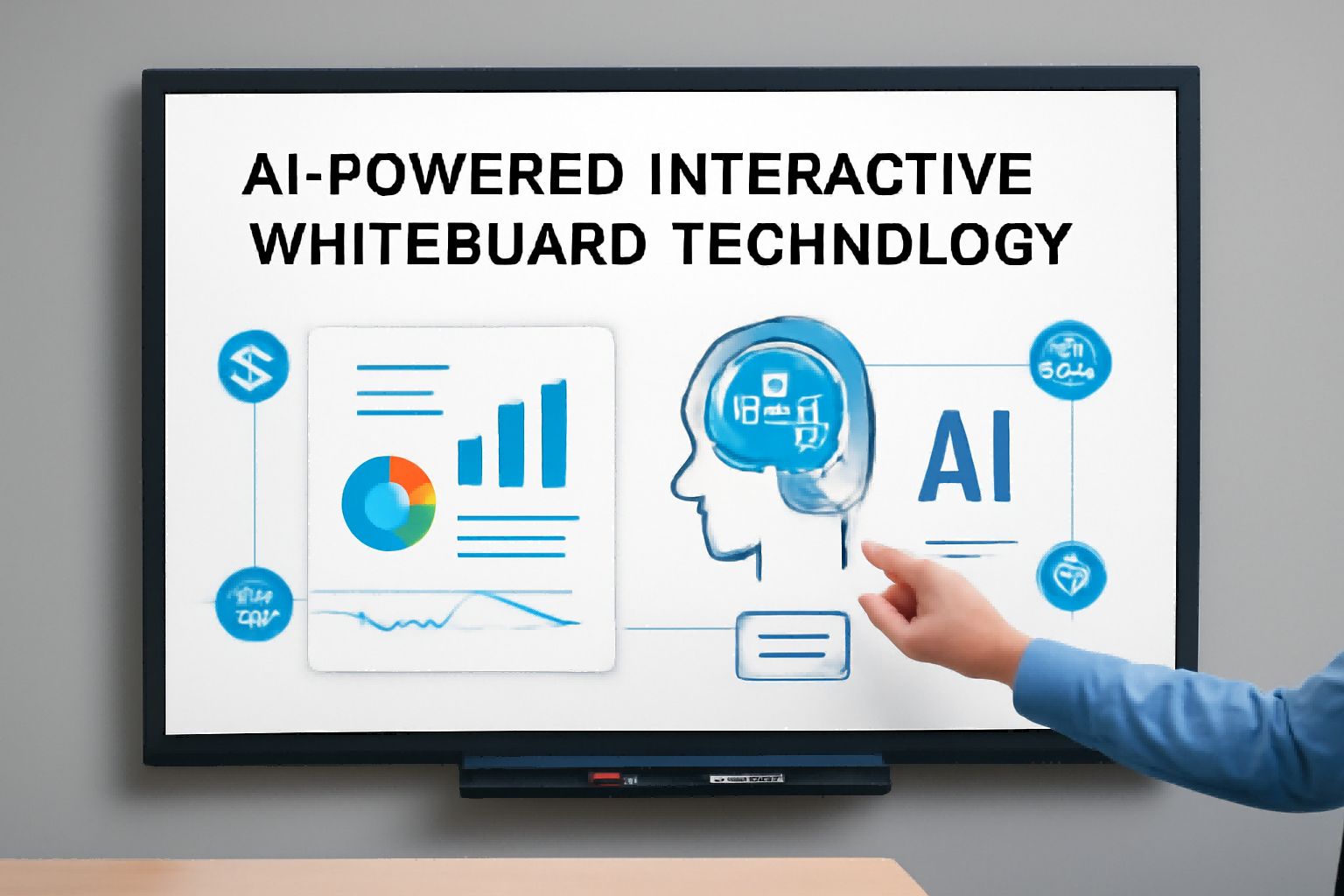
In recent years, AI-powered interactive whiteboards (IWBs) have emerged as a transformative tool in classrooms, corporate environments, and various other sectors. The integration of artificial intelligence (AI) into traditional interactive whiteboard technology has redefined how users interact with digital content, enhancing productivity, engagement, and learning outcomes. This article explores the role of AI-powered interactive whiteboards, their benefits, and how they are shaping the future of education and business.
What is an AI-Powered Interactive Whiteboard?
An AI-powered interactive whiteboard is an advanced version of the traditional interactive whiteboard, integrating AI technologies to improve functionality, user interaction, and content delivery. These boards combine touch-sensitive screens, projection technology, and intelligent software to facilitate dynamic and engaging communication. By embedding AI, these boards can adapt to user behavior, provide real-time feedback, and offer personalized learning experiences, making them significantly more effective than standard whiteboards.
Benefits of AI-Powered Interactive Whiteboards
-
Enhanced Learning Experiences:
AI-powered IWBs revolutionize education by offering features such as personalized content delivery, real-time assessments, and interactive lessons that cater to individual learning needs. The AI can analyze students' progress and suggest resources or learning paths tailored to each student's pace and understanding. -
Improved Collaboration:
These whiteboards enable seamless collaboration between users, regardless of their physical location. AI algorithms can translate languages in real-time, enabling international collaboration without barriers. Additionally, AI can identify the roles and contributions of each participant in collaborative tasks, ensuring an inclusive and efficient group dynamic. -
Real-Time Feedback and Insights:
AI algorithms continuously analyze interactions on the whiteboard, providing real-time feedback to users. For example, in a classroom, teachers can instantly identify areas where students are struggling and adjust their teaching strategies accordingly. This level of insight would be nearly impossible to achieve manually. -
Automated Content Creation and Management:
AI-powered IWBs can automate content generation, including quizzes, lesson summaries, and diagrams. Teachers or facilitators can simply input basic information, and the system will create detailed, tailored learning materials. AI also helps manage and organize content, ensuring that all resources are easily accessible. -
Data-Driven Decision Making:
With AI, these interactive boards can collect and analyze data on user interactions and performance, providing valuable insights into patterns and trends. In a business or corporate setting, this information can be used to assess meeting effectiveness, track team productivity, and make informed decisions.
AI in Education: Empowering Teachers and Students
AI-powered IWBs are not just tools for teaching; they are platforms that empower educators. By automating time-consuming tasks such as grading, lesson planning, and content management, teachers can dedicate more time to engaging with students. AI also supports differentiated instruction, allowing teachers to cater to students with different learning styles and abilities. For example, an AI-powered whiteboard can adjust the difficulty level of exercises based on a student’s performance or suggest additional resources for further study.
For students, these boards create an interactive and immersive learning environment. With real-time feedback, students can track their progress and understand areas that need improvement. Moreover, the ability to interact with digital content through touch, voice commands, and gestures enhances student engagement and retention.
AI in Business: Streamlining Meetings and Presentations
In business, AI-powered IWBs are helping teams collaborate more effectively during meetings, workshops, and presentations. By leveraging AI, these boards can auto-generate meeting agendas, action items, and post-meeting summaries. Furthermore, AI tools can analyze meeting dynamics, suggesting the best strategies for team engagement and providing recommendations for improving future interactions.
These boards also facilitate seamless integration with cloud-based services and communication platforms, allowing real-time document sharing, editing, and collaboration. AI-driven analytics can provide businesses with insights into team performance, project milestones, and meeting outcomes, enabling smarter decision-making and more efficient workflows.
Future of AI-Powered Interactive Whiteboards
As AI technology continues to evolve, the future of interactive whiteboards will likely see even more advanced features. For instance, voice and facial recognition could allow users to interact with the board in new ways, while deeper machine learning algorithms could predict and adapt to user preferences with greater accuracy. Integration with augmented reality (AR) and virtual reality (VR) technologies will also likely enhance the immersive experience, enabling more interactive learning environments and virtual collaboration.
Conclusion
AI-powered interactive whiteboards represent a significant leap forward in digital technology, providing unparalleled opportunities for both education and business. These intelligent systems improve engagement, foster collaboration, and offer personalized, data-driven experiences. As AI continues to advance, these whiteboards will become even more intuitive, helping users unlock their full potential. Whether in classrooms or corporate boardrooms, AI-powered IWBs are paving the way for the future of interactive technology.
By integrating AI into everyday activities, we are not just enhancing productivity and efficiency but also revolutionizing the way we learn, work, and communicate. As this technology continues to develop, it holds the promise of making educational and professional environments smarter, more adaptive, and ultimately more effective.
Interactive Whiteboard FAQs: Everything You Need to Know Before Buying
The T985 Motherboard for Interactive Whiteboards: Essential Features and Benefits
Related Article

Choosing the right interactive whiteboard size is an important decision for distributors, wholesalers, and education technology suppliers. The 65-inch, 75-inch, and 86-inch interactive whiteboards are popular options for classrooms, meeting rooms, training centers, and commercial projects.
65 vs 75 vs 86-Inch Interactive Whiteboard: Which Model Should Distributors Choose?

Choosing the right interactive whiteboard manufacturer in China is an important decision for distributors, wholesalers, education technology suppliers, and system integrators. The right manufacturing partner can help businesses improve product quality, maintain competitive pricing, customize products for local markets, and build a sustainable distribution business.
Who Are the Best Interactive Whiteboard Manufacturers in China for B2B Distributors and Wholesalers?
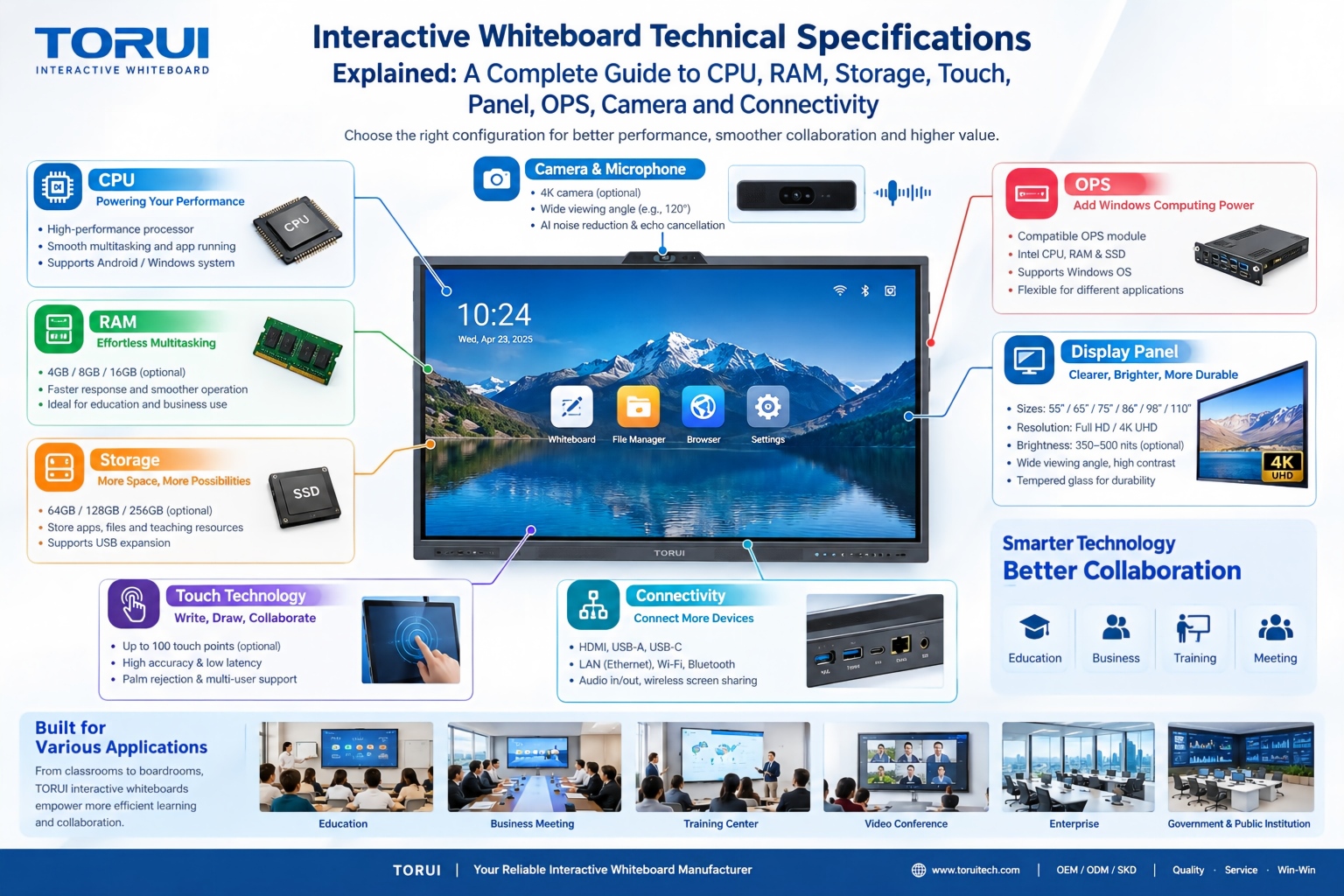
Choosing an interactive whiteboard involves more than comparing screen sizes and prices. For schools, businesses, distributors, wholesalers, and system integrators, understanding the technical specifications is essential to selecting a reliable product that meets different application requirements.
Interactive Whiteboard Technical Specifications Explained: A Complete Guide to CPU, RAM, Storage, Touch, Panel, OPS, Camera and Connectivity
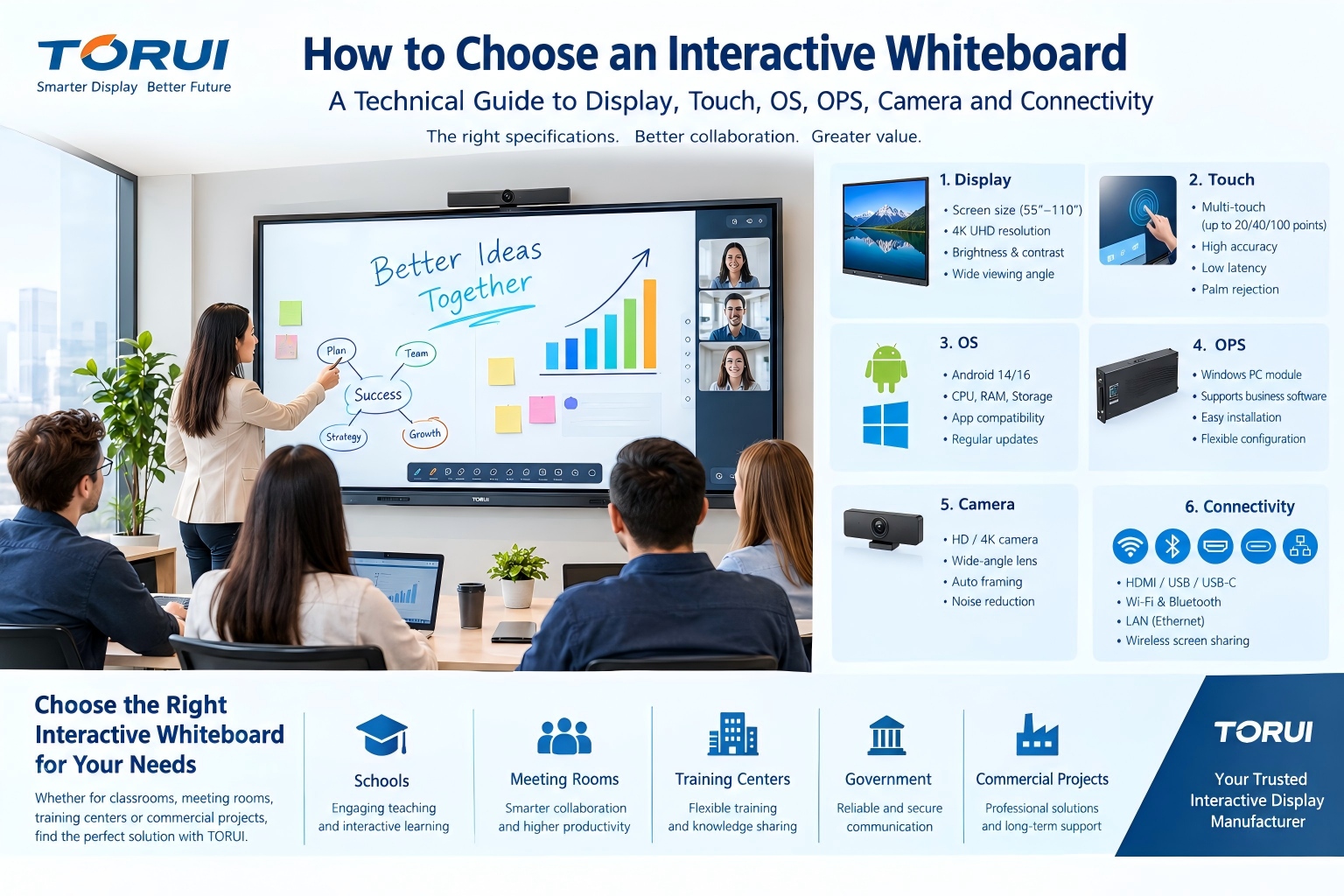
Choosing an interactive whiteboard for a school, meeting room, training center, government organization or commercial project requires more than comparing screen size and price. The most important specifications include display resolution, brightness, touch technology, operating system, processor, memory, storage, OPS compatibility, camera and microphone performance, connectivity, durability and after-sales support.
How to Choose an Interactive Whiteboard: A Technical Guide to Display, Touch, OS, OPS, Camera and Connectivity