
Analysis and Application Advantages of Zero-Adhesion Technology for Interactive Whiteboards
author: toruitech
2025-08-18
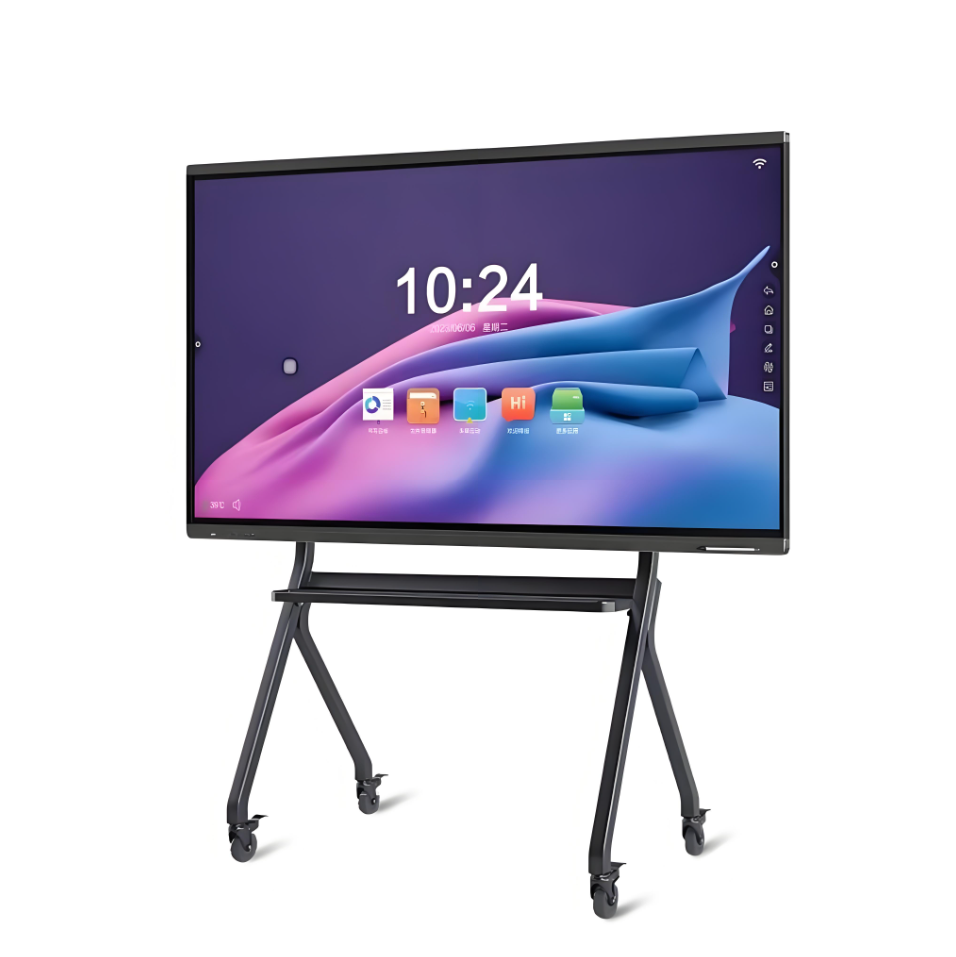
With the continuous development of educational informatization and smart office technology, interactive whiteboards are increasingly used in teaching and conferencing. As a key component in enhancing interactive experience and display quality, interactive whiteboard manufacturing processes are constantly improving. In particular, "zero-adhesion technology" has become a focus of industry attention in recent years. It not only optimizes product structure but also significantly enhances whiteboard performance and user experience. This article will detail the principles, advantages, and practical applications of zero-adhesion technology in interactive whiteboards.
1. Basic Principles of Zero-Adhesion Technology
During the manufacturing process of traditional interactive whiteboards, adhesives are typically used to bond the glass panel to components such as the touch layer and display layer. While this method achieves a tight bond between the multi-layer structure, adhesives can introduce air bubbles, impurities, and yellowing, impacting display quality and product lifespan. Zero-adhesion technology, on the other hand, uses innovative processes to securely bond the various layers without the need for adhesives. Common methods include physical snap fasteners, vacuum bonding, and mechanical fastening to ensure a seamless fit between panels and avoid chemical interference.
II. Advantages of Zero-Bonding Technology
Improved Display Quality
Because it eliminates the need for adhesives, zero-bonding technology minimizes light refraction and interference from impurities, resulting in clearer, more transparent whiteboard displays with superior color reproduction. This significantly enhances the visual experience, especially in high-resolution and multimedia teaching environments.
Improved Durability and Safety
Adhesives can age and discolor over time, even affecting structural strength. Zero-bonding technology eliminates these risks, enhancing the overall durability and safety of whiteboards. Even in challenging environments like high temperature and humidity, whiteboards maintain stable performance.
Easier Maintenance
Whiteboards using zero-bonding technology have a simpler structure, making disassembly and maintenance easier. If the panel is damaged or internal components need replacing, there's no need to handle the adhesive layer, reducing maintenance costs and time.
Environmentally Friendly and Healthy
Zero-bonding technology eliminates the use of harmful chemical adhesives, helping to improve indoor air quality and safeguard the health and safety of teachers, students, and staff. It also aligns with modern, environmentally friendly manufacturing practices.
III. Practical Applications of Zero-Bonding Technology for Interactive Whiteboards
Currently, an increasing number of interactive whiteboard brands and manufacturers are adopting zero-bonding technology, particularly in the high-end education and enterprise markets. This technology is not only used to bond glass panels to touch screen layers, but is also widely used in the assembly of multi-layer structures such as display modules and backplanes. Through precision mechanical design and high-standard manufacturing processes, zero-bonding technology achieves high performance and reliability for whiteboards, meeting diverse teaching and conferencing needs.
Conclusion
As a significant innovation in interactive whiteboard manufacturing, zero-bonding technology has significantly improved the product's display quality, durability, and environmental performance. With continuous technological advancements and growing market demand, zero-bonding technology will play an increasingly important role in smart education and efficient office environments, providing users with a superior interactive experience.
Analysis of Infrared Touch Technology for Interactive Whiteboards
Analysis of 4mm Tempered Glass for Interactive Whiteboards
Related Article

Choosing the right interactive whiteboard size is an important decision for distributors, wholesalers, and education technology suppliers. The 65-inch, 75-inch, and 86-inch interactive whiteboards are popular options for classrooms, meeting rooms, training centers, and commercial projects.
65 vs 75 vs 86-Inch Interactive Whiteboard: Which Model Should Distributors Choose?

Choosing the right interactive whiteboard manufacturer in China is an important decision for distributors, wholesalers, education technology suppliers, and system integrators. The right manufacturing partner can help businesses improve product quality, maintain competitive pricing, customize products for local markets, and build a sustainable distribution business.
Who Are the Best Interactive Whiteboard Manufacturers in China for B2B Distributors and Wholesalers?
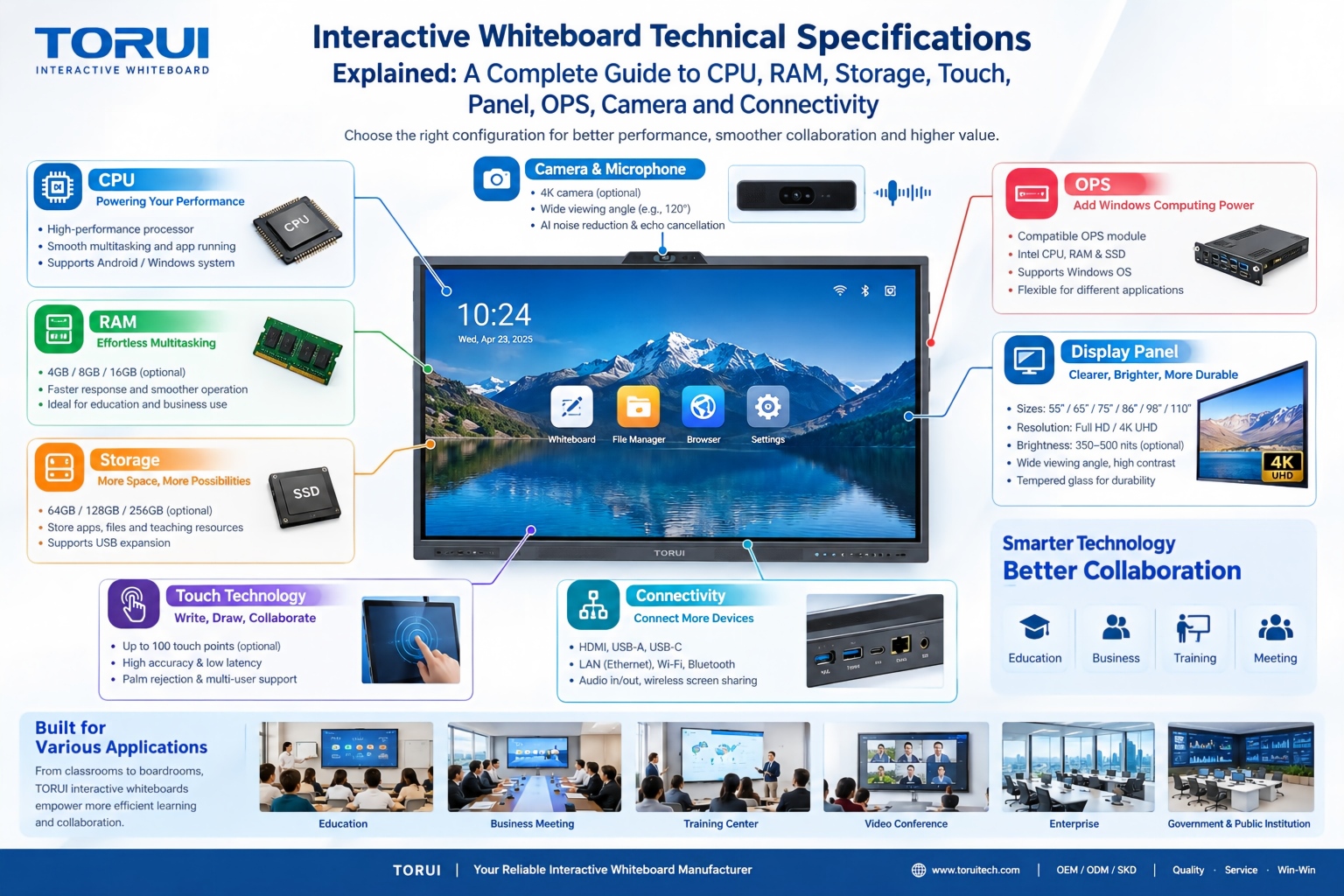
Choosing an interactive whiteboard involves more than comparing screen sizes and prices. For schools, businesses, distributors, wholesalers, and system integrators, understanding the technical specifications is essential to selecting a reliable product that meets different application requirements.
Interactive Whiteboard Technical Specifications Explained: A Complete Guide to CPU, RAM, Storage, Touch, Panel, OPS, Camera and Connectivity
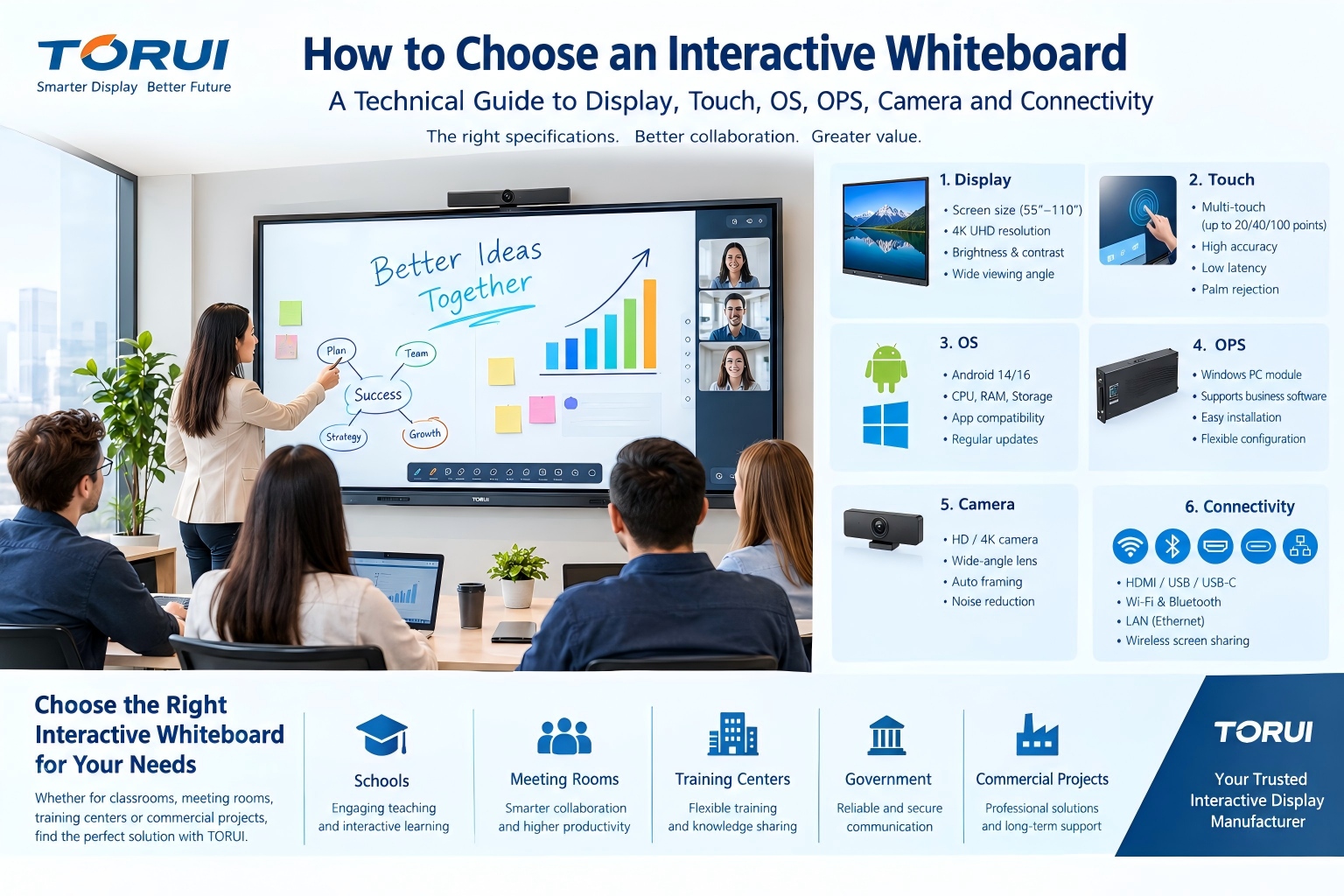
Choosing an interactive whiteboard for a school, meeting room, training center, government organization or commercial project requires more than comparing screen size and price. The most important specifications include display resolution, brightness, touch technology, operating system, processor, memory, storage, OPS compatibility, camera and microphone performance, connectivity, durability and after-sales support.
How to Choose an Interactive Whiteboard: A Technical Guide to Display, Touch, OS, OPS, Camera and Connectivity