
Analysis of the Main Application Scenarios of Interactive Whiteboards
author: toruitech
2025-08-25
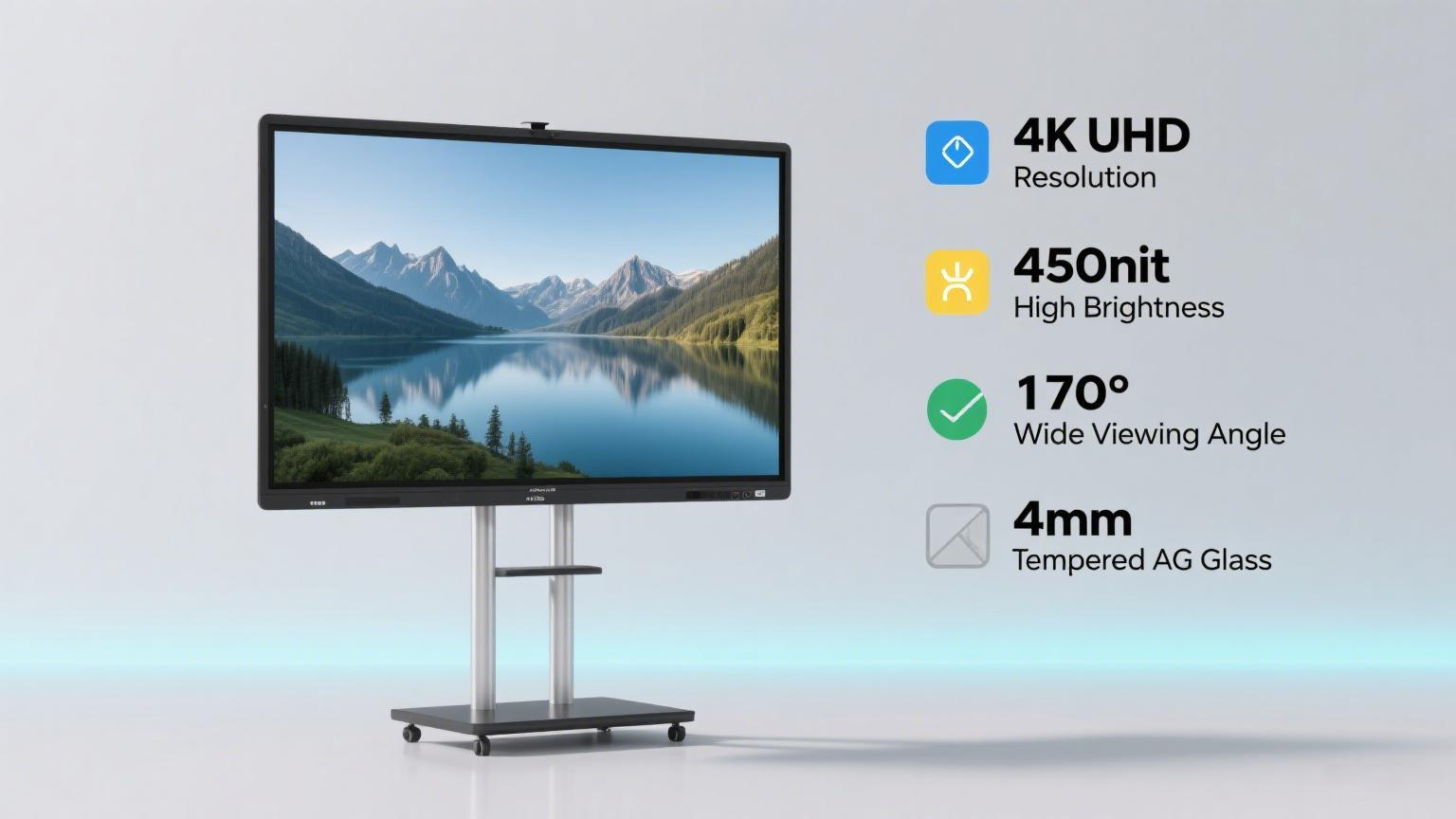
With the rapid development of information technology, interactive whiteboards, as intelligent multimedia devices integrating display, writing, and interactivity, are gradually entering numerous industries, including education, business, healthcare, and government, becoming a crucial tool for driving digital transformation and efficient communication. This article systematically analyzes the main application scenarios of interactive whiteboards and, drawing on professional knowledge and internet research, deeply explores their practical value and development trends in various fields.
I. Education: Improving Teaching Interaction and Efficiency
Interactive whiteboards are most widely used in education and are an indispensable teaching tool in modern classrooms. They clearly display multimedia content, such as text, images, and videos, on the whiteboard, making it easy for teachers and students to view and discuss. Teachers can write, circle, and annotate directly on the whiteboard, and even dynamically demonstrate complex subject matter, such as drawing mathematical geometry figures or simulating physical experiments, greatly enhancing the intuitiveness and interactivity of teaching.
In addition, interactive whiteboards support simultaneous multi-person operation, enabling interactive teaching activities such as voting, quick response, and group discussions, stimulating student interest and engagement. The whiteboard's automatic recording and playback functions allow classroom content to be saved for post-class review and reflection. For distance education, interactive whiteboards, combined with cameras, microphones, and speakers, enable real-time interaction and resource sharing between teachers and students, promoting balanced educational development. For example, through remote interactive classrooms, rural primary and secondary schools can share high-quality urban educational resources, achieving educational connectivity.
II. Corporate Meetings: Promoting Efficient Collaboration and Decision-Making
Interactive whiteboards also play a vital role in corporate offices and meetings. They not only display meeting agendas, report contents, charts, and other information, but also support document sharing, real-time annotation, modification, and discussion, helping team members better understand and record meeting content. Participants can work directly on the whiteboard, facilitating discussion and exchange, improving meeting efficiency and decision-making quality.
Interactive whiteboards also support remote video conferencing. By connecting to computers and projectors and integrating built-in cameras, microphones, and speakers, they enable seamless communication and collaboration among remote teams. Meeting content can be automatically saved and replayed for easy review and summary. For companies requiring cross-departmental and cross-regional collaboration, interactive whiteboards have become a key tool for improving communication efficiency and advancing project progress.
III. Healthcare Industry: Assisting Remote Diagnosis and Training
With the development of telemedicine and smart healthcare, the use of interactive whiteboards in hospitals, clinics, and other medical settings is increasing. During remote consultations and case discussions, doctors can use whiteboards to display medical images and medical records, annotate and analyze them in real time, improving diagnostic accuracy and efficiency. Multidisciplinary teams can simultaneously participate in interactive discussions, share professional insights, and promote the rational allocation of medical resources.
Interactive whiteboards are also valuable in medical training and departmental instruction. Teachers can use whiteboards to display surgical videos and anatomical atlases, conduct dynamic explanations, and engage in interactive questions, helping medical students and staff better grasp professional knowledge and skills.
IV. Government and Public Services: Improving the Level of Information-Based Office Work
In government agencies and public service sectors, interactive whiteboards are widely used in meetings, training, and publicity. They can display information such as policy documents, work reports, and flowcharts, facilitating understanding and discussion among participants. Through real-time interaction and collaboration, they improve transparency and efficiency in government work. The whiteboard's storage and playback functions facilitate archiving and follow-up of meeting content, promoting the development of government information technology.
V. Other Industries: Diversified Applications Continue to Expand
In addition to the aforementioned key sectors, interactive whiteboards are also widely used in industries such as finance, real estate, design, and training. For example, in finance, they are used for client communications and product demonstrations; in real estate, they are used for property display and proposal discussions; in design, they are used for team creativity and project reviews; and in vocational training institutions, they are used for course presentations and practical skills training. With continuous technological innovation, the application scenarios of interactive whiteboards are constantly expanding, becoming a key support for the digital transformation of various industries.
VI. Technical Advantages and Future Development Trends
Interactive whiteboards integrate cutting-edge electronic, software, and computer technologies, offering advantages such as paperless office, flexible switching of teaching tools, support for multiple file formats, and powerful interactive features. Their integrated design, convenient operation, and rich functionality significantly enhance the user experience. In the future, with the further integration of technologies such as artificial intelligence, big data, and cloud computing, interactive whiteboards will enable more intelligent interactions, more accurate data analysis, and broader resource sharing, driving various industries towards a new stage of intelligent development.
Conclusion
As a core device for modern information-based office and teaching, interactive whiteboards have demonstrated significant application value in numerous fields, including education, business, healthcare, and government. They not only enhance communication and collaboration efficiency but also provide a solid foundation for digital transformation and the development of smart scenarios. With the continuous advancement of technology, the application scenarios of interactive whiteboards will become even more diverse and enriched, helping various industries embark on a new journey of high-quality development.
Specific Applications of Interactive Whiteboards in Education
Interactive Whiteboards with Built-in Cameras, Microphones, and Speakers
Related Article

Choosing the right interactive whiteboard size is an important decision for distributors, wholesalers, and education technology suppliers. The 65-inch, 75-inch, and 86-inch interactive whiteboards are popular options for classrooms, meeting rooms, training centers, and commercial projects.
65 vs 75 vs 86-Inch Interactive Whiteboard: Which Model Should Distributors Choose?

Choosing the right interactive whiteboard manufacturer in China is an important decision for distributors, wholesalers, education technology suppliers, and system integrators. The right manufacturing partner can help businesses improve product quality, maintain competitive pricing, customize products for local markets, and build a sustainable distribution business.
Who Are the Best Interactive Whiteboard Manufacturers in China for B2B Distributors and Wholesalers?
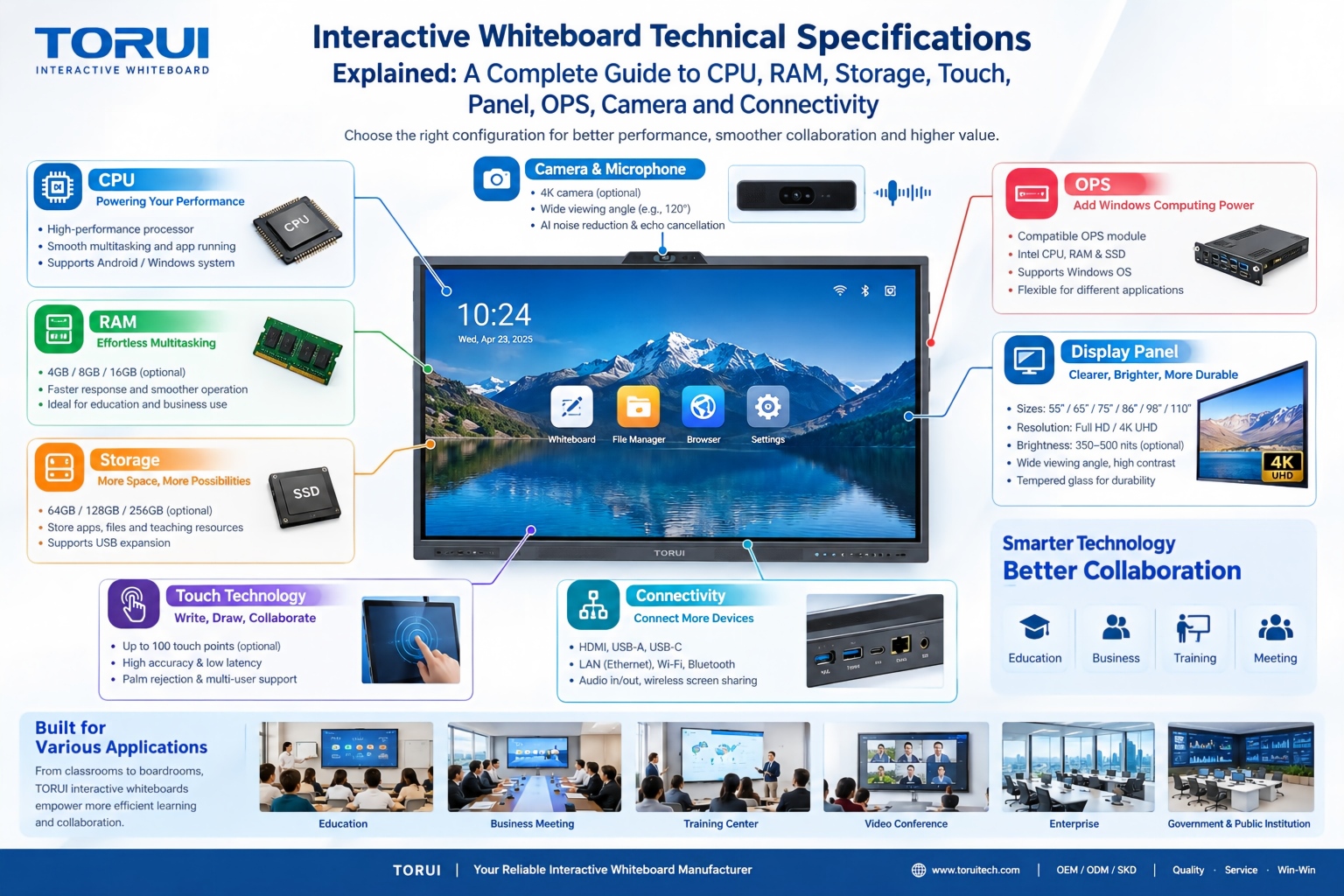
Choosing an interactive whiteboard involves more than comparing screen sizes and prices. For schools, businesses, distributors, wholesalers, and system integrators, understanding the technical specifications is essential to selecting a reliable product that meets different application requirements.
Interactive Whiteboard Technical Specifications Explained: A Complete Guide to CPU, RAM, Storage, Touch, Panel, OPS, Camera and Connectivity
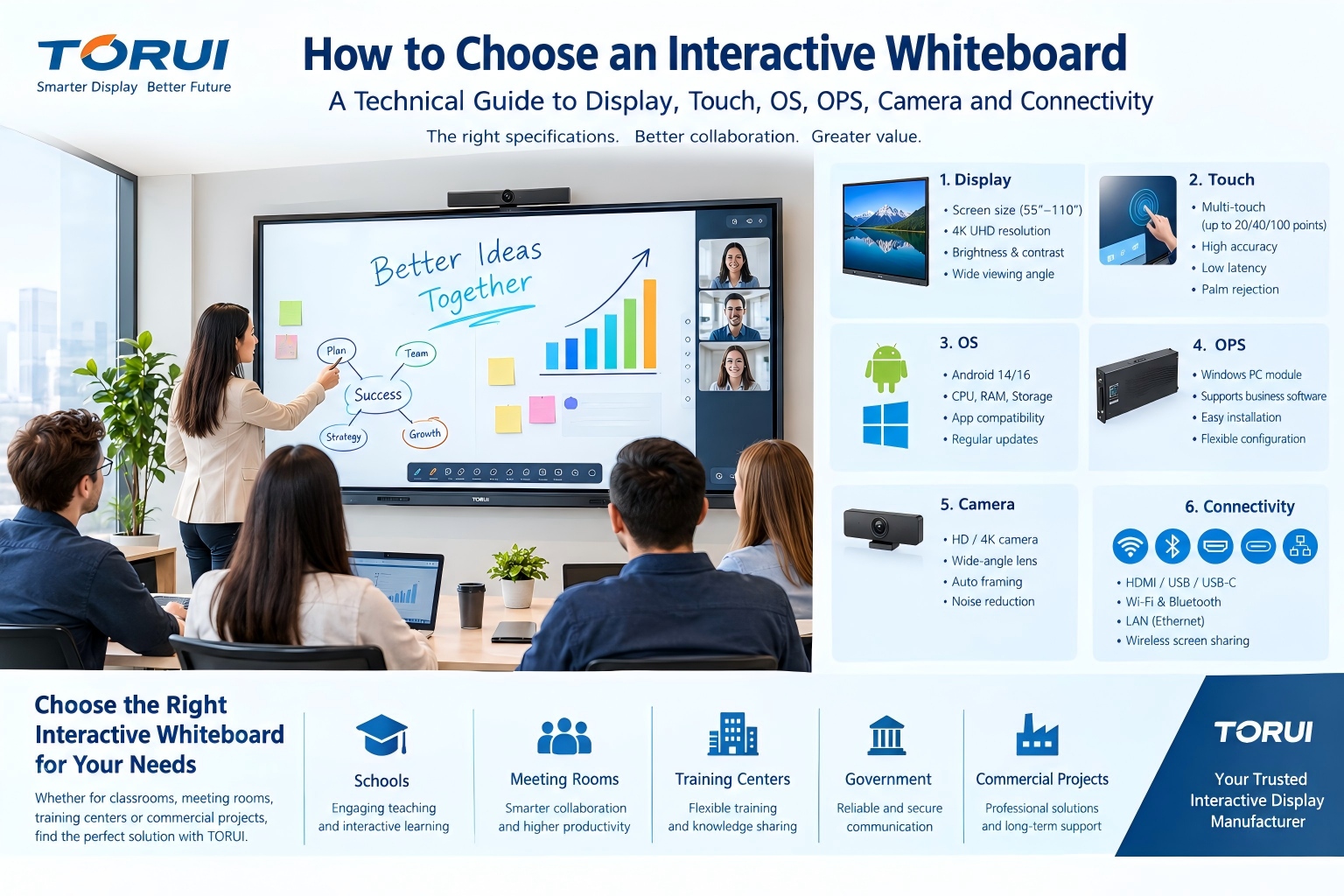
Choosing an interactive whiteboard for a school, meeting room, training center, government organization or commercial project requires more than comparing screen size and price. The most important specifications include display resolution, brightness, touch technology, operating system, processor, memory, storage, OPS compatibility, camera and microphone performance, connectivity, durability and after-sales support.
How to Choose an Interactive Whiteboard: A Technical Guide to Display, Touch, OS, OPS, Camera and Connectivity