
Analysis of the Smart Interactive Whiteboard Market in Indonesia
author: toruitech
2025-07-20
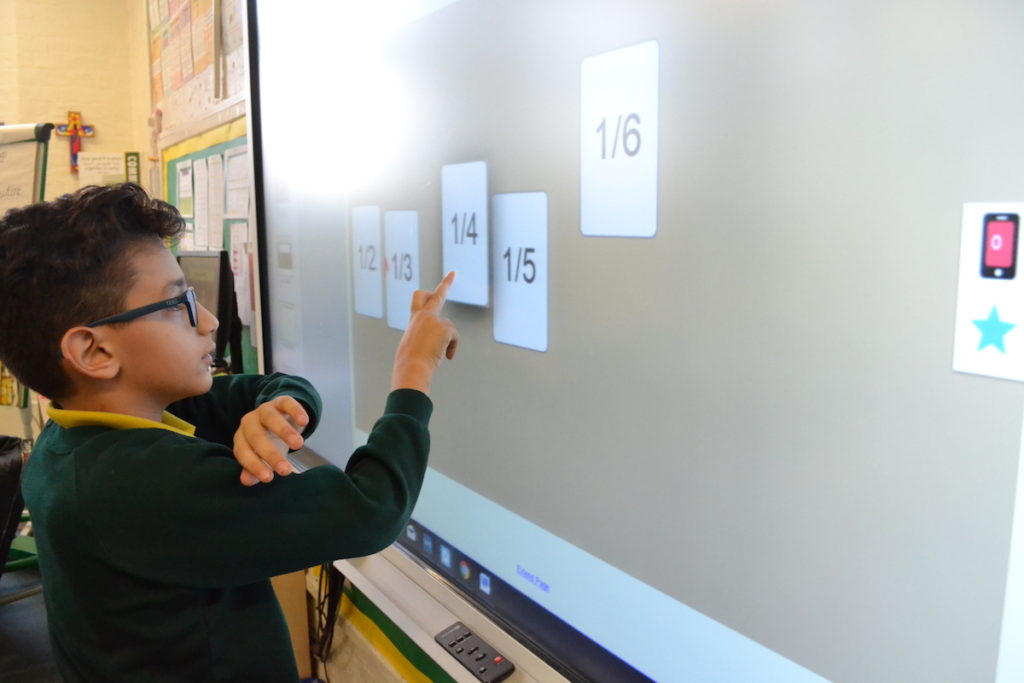
With the rapid development of technology, tools in the fields of education and business are constantly being innovated. In Indonesia, the smart interactive whiteboard (IWB), as a device that integrates education and technology, is gradually entering classrooms and conference rooms. This article will deeply analyze the market status, driving factors, challenges and future development trends of smart interactive whiteboards in Indonesia.
Market Status
Smart interactive whiteboards were first popularized in developed countries and gradually gained attention in developing countries. As one of the largest economies in Southeast Asia, Indonesia's acceptance of technological products has gradually increased. In recent years, with the government's emphasis on educational modernization and the demand of enterprises for efficient communication tools, the market for smart interactive whiteboards has begun to show a growth trend. At present, schools, universities and more and more companies in Indonesia have begun to invest in such products in order to improve teaching quality and work efficiency.
Market Drivers
1. Policy Support: In recent years, the Indonesian government has implemented a number of education reform policies aimed at improving the quality of national education. Among them, the application of educational technology is regarded as the key to improving teaching effectiveness. The government provides financial support and policy incentives to encourage schools to introduce modern teaching equipment.
2. Educational needs: With the increasing number of students, traditional teaching tools can no longer meet the needs of high-quality teaching. Smart interactive whiteboards can provide a highly interactive classroom experience, increase student participation and learning interest, and are an important tool for improving teaching quality.
3. Commercial use: In a corporate environment, smart interactive whiteboards can improve meeting efficiency and promote teamwork. The demand for improved communication efficiency and innovation has driven the application of such products in the commercial field.
4. Popularization of technology: With the popularization of information technology and the improvement of network infrastructure, Indonesian consumers are increasingly accepting high-tech products, and smart interactive whiteboards have therefore gained more market opportunities.
Market challenges
1. Cost issues: Compared with traditional whiteboards, smart interactive whiteboards are relatively expensive. For many schools and small and medium-sized enterprises with limited budgets, the cost of the first investment is a major challenge.
2. Technical training: The efficient use of smart interactive whiteboards requires certain technical support and training. However, Indonesia currently has relatively insufficient resources in this regard, and teachers and employees often lack relevant operating skills.
3. Brand competition: The market is flooded with smart interactive whiteboards of various brands and models, with varying quality. This has caused confusion for consumers and may affect the market reputation of the product.
4. Infrastructure limitations: Although Indonesia's network infrastructure is constantly improving, Internet connectivity issues still exist in remote areas, which limits the effectiveness of smart interactive whiteboards.
Future development trends
1. Localization and customization: In order to better adapt to the Indonesian market, manufacturers may launch customized products that conform to local culture and language, thereby increasing market penetration.
2. Mobile and portable design: With the rise of remote education and hybrid work modes, the demand for portable and wireless devices has increased, and more portable smart interactive whiteboard products may be seen in the future.
3. Ecosystem establishment: By cooperating with software developers, smart interactive whiteboard manufacturers may develop richer applications and resources, create a complete ecosystem, and improve user stickiness.
4. Combination of augmented reality (AR) and virtual reality (VR): The development of AR and VR technology will provide new functions and application scenarios for smart interactive whiteboards, and enhance the interactivity and immersion of products.
Conclusion
Smart interactive whiteboards are in a growth stage in the Indonesian market, benefiting from policy support, market demand and popularization of technology. However, challenges such as cost, safety and technical training cannot be ignored. In the future, with the advancement of technology and the maturity of the market, smart interactive whiteboards are expected to play a more important role in Indonesia's education and business fields, promoting further innovation and development of social, educational and business environments. Through continuous innovation and adaptation, smart interactive whiteboards will not only help Indonesia's education reform, but also create more value in business practices.
Analysis of the US market for smart interactive whiteboards
Analysis of key parameters of smart interactive whiteboards
Related Article

Choosing the right interactive whiteboard size is an important decision for distributors, wholesalers, and education technology suppliers. The 65-inch, 75-inch, and 86-inch interactive whiteboards are popular options for classrooms, meeting rooms, training centers, and commercial projects.
65 vs 75 vs 86-Inch Interactive Whiteboard: Which Model Should Distributors Choose?

Choosing the right interactive whiteboard manufacturer in China is an important decision for distributors, wholesalers, education technology suppliers, and system integrators. The right manufacturing partner can help businesses improve product quality, maintain competitive pricing, customize products for local markets, and build a sustainable distribution business.
Who Are the Best Interactive Whiteboard Manufacturers in China for B2B Distributors and Wholesalers?
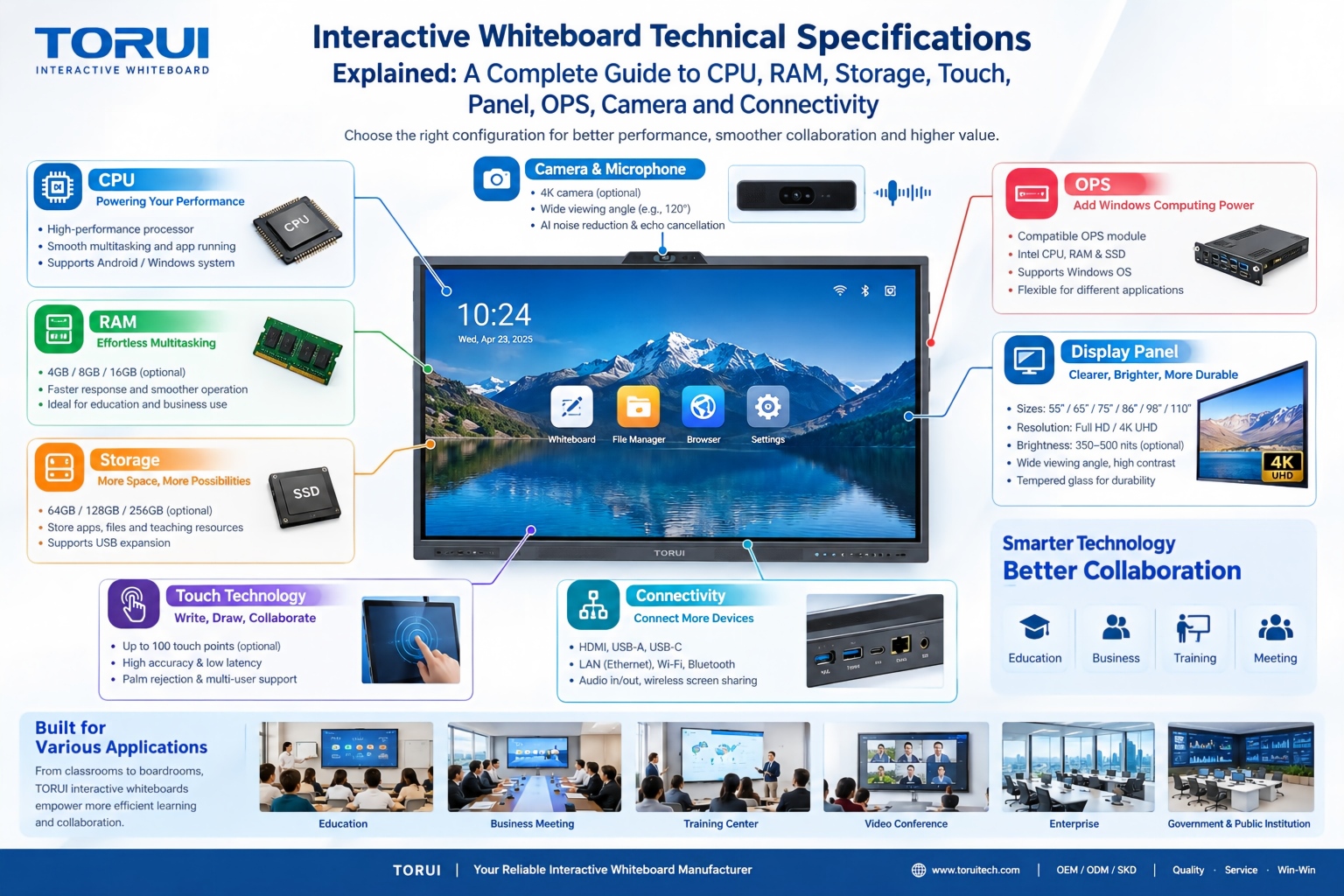
Choosing an interactive whiteboard involves more than comparing screen sizes and prices. For schools, businesses, distributors, wholesalers, and system integrators, understanding the technical specifications is essential to selecting a reliable product that meets different application requirements.
Interactive Whiteboard Technical Specifications Explained: A Complete Guide to CPU, RAM, Storage, Touch, Panel, OPS, Camera and Connectivity
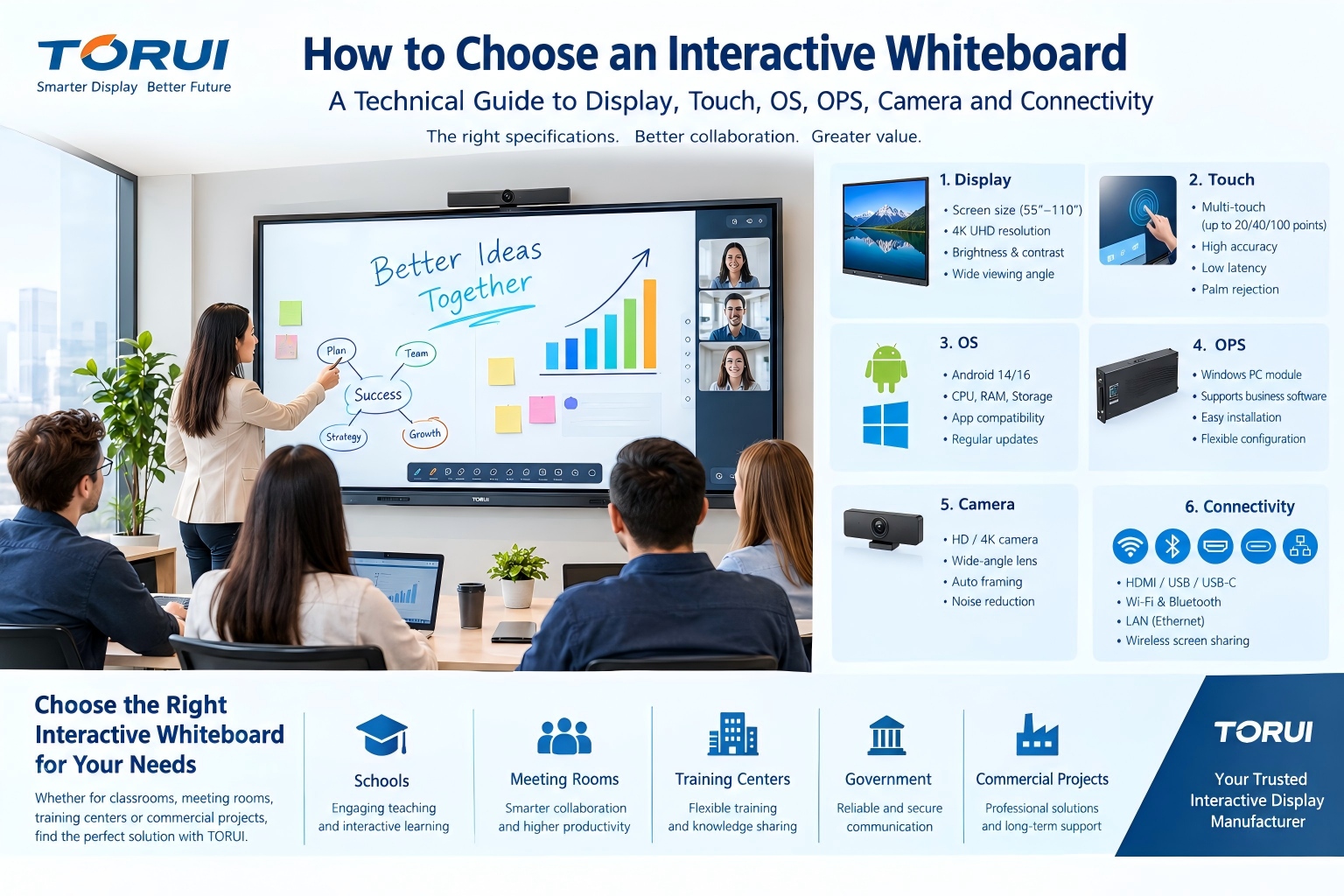
Choosing an interactive whiteboard for a school, meeting room, training center, government organization or commercial project requires more than comparing screen size and price. The most important specifications include display resolution, brightness, touch technology, operating system, processor, memory, storage, OPS compatibility, camera and microphone performance, connectivity, durability and after-sales support.
How to Choose an Interactive Whiteboard: A Technical Guide to Display, Touch, OS, OPS, Camera and Connectivity