Android 14 8GB+128GB vs Android 16 16GB+256GB: Which Interactive Whiteboard Is Better?
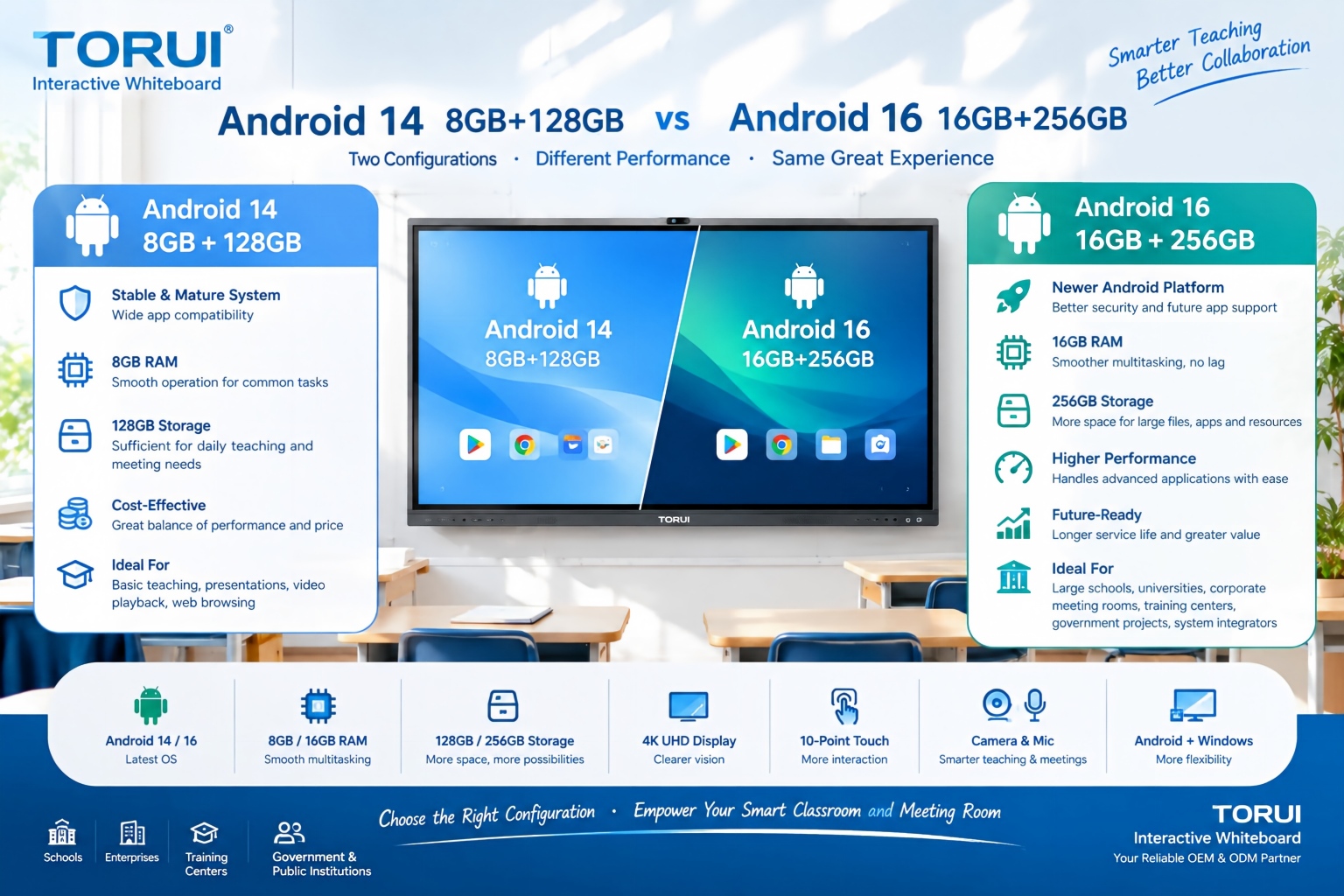
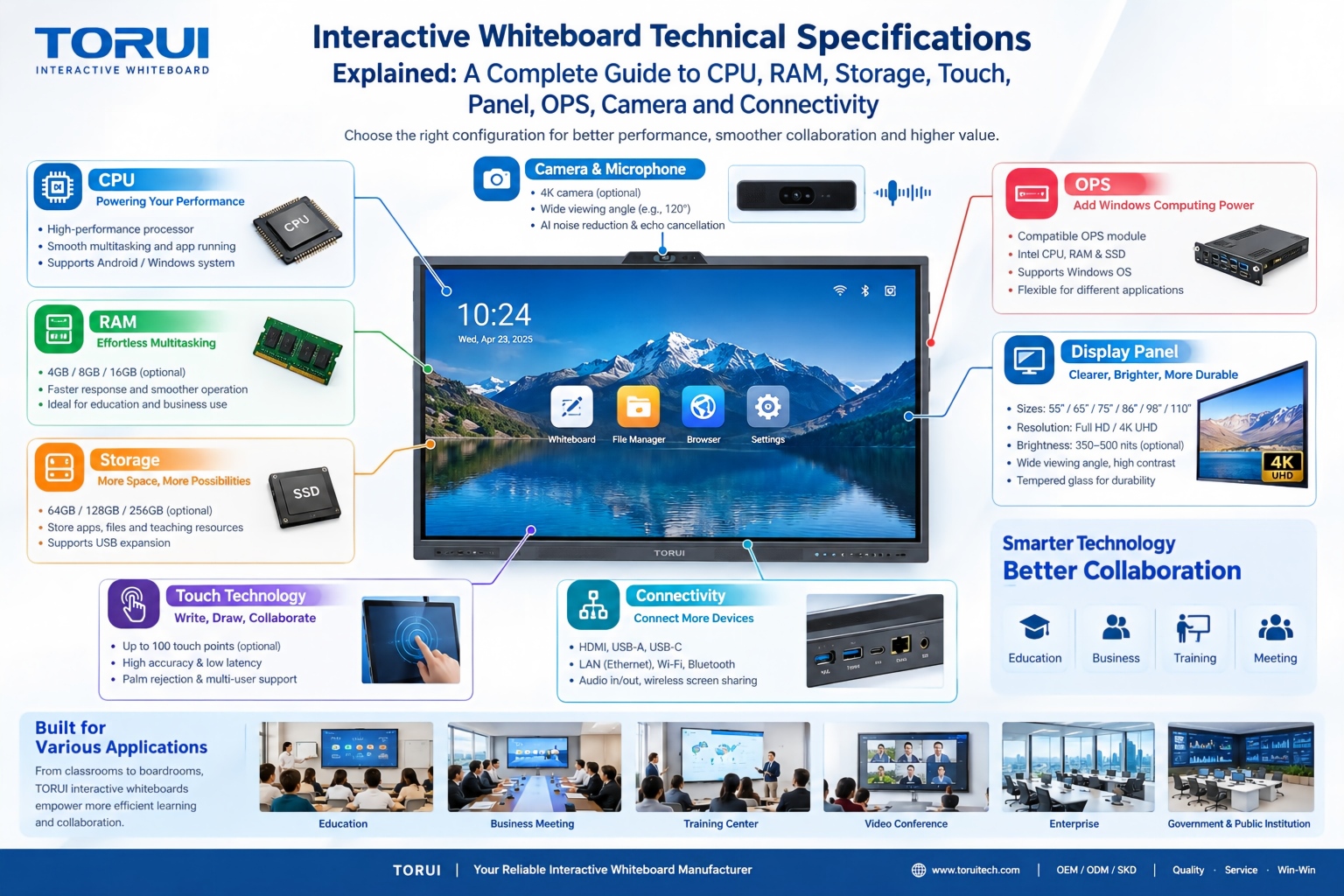
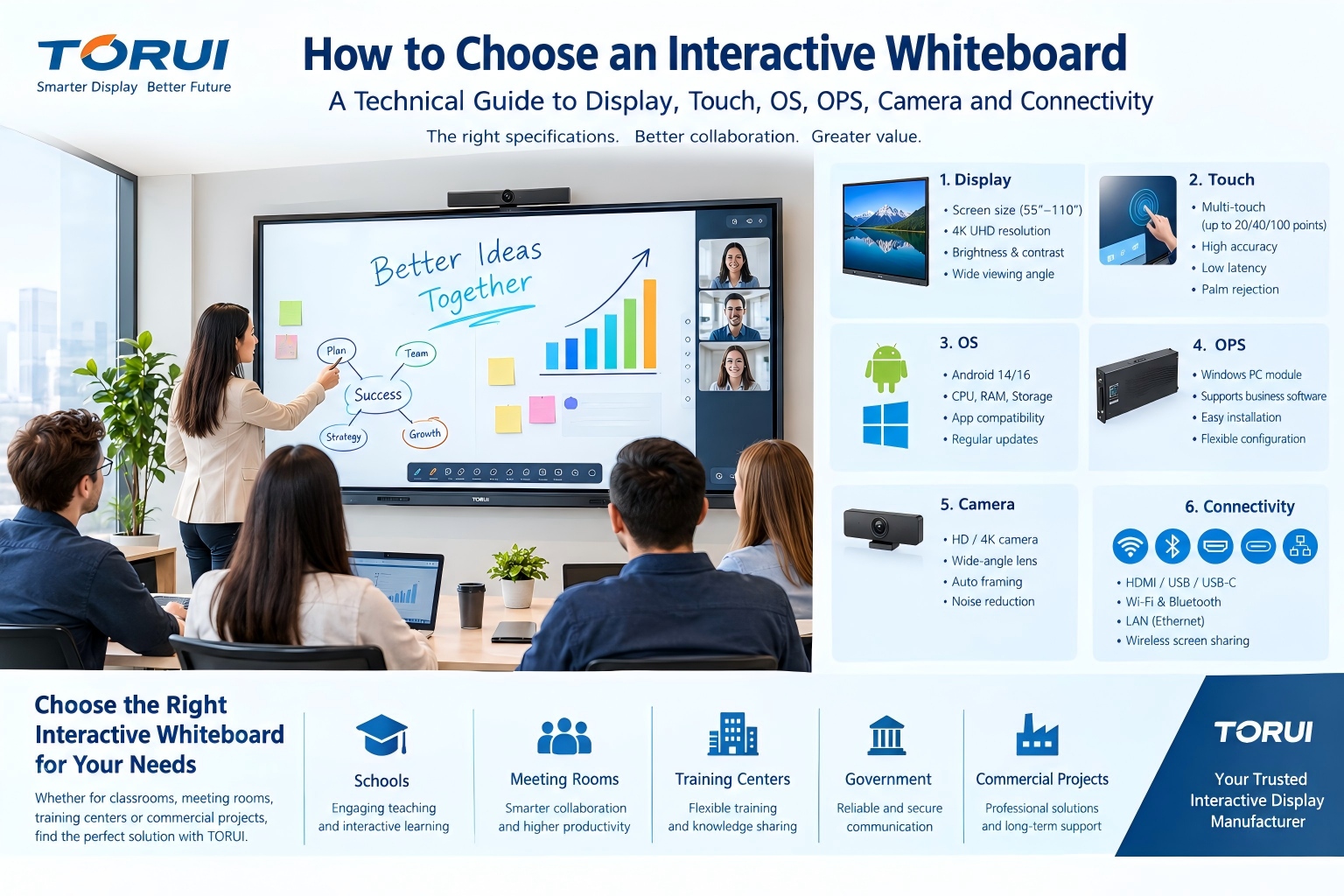
When choosing an interactive whiteboard for a school, training center, meeting room, or commercial project, the Android version and hardware configuration can significantly affect user experience. Two common configurations are Android 14 with 8GB RAM and 128GB storage and Android 16 with 16GB RAM and 256GB storage.
While both configurations can support modern interactive teaching and meeting applications, the Android 16 16GB+256GB configuration offers clear advantages for buyers looking for higher performance, longer service life, and better support for demanding applications.
Android 14 8GB+128GB: A Practical and Cost-Effective Choice
An interactive whiteboard with Android 14, 8GB RAM, and 128GB storage is suitable for many standard education and office applications.
8GB of RAM provides enough capacity for common tasks such as digital whiteboard annotation, document presentation, web browsing, video playback, screen sharing, and classroom applications. The 128GB storage capacity is also sufficient for users who mainly work with cloud-based content or regularly transfer files to external storage.
For schools, training centers, and meeting rooms with relatively straightforward requirements, this configuration can provide a good balance between functionality and purchase cost.
Another advantage is that Android 14 is a mature operating system with broad application compatibility. For projects where budget control is important, Android 14 8GB+128GB can remain a practical option.
Android 16 16GB+256GB: Higher Performance for Future-Ready Interactive Whiteboards
The Android 16 16GB+256GB configuration provides a substantial hardware upgrade.
The most obvious difference is RAM. Increasing memory from 8GB to 16GB gives the interactive whiteboard significantly more headroom for multitasking. Teachers can switch between teaching software, browsers, videos, documents, annotation tools, and other applications more smoothly.
The storage capacity also doubles from 128GB to 256GB. This is particularly useful for schools and organizations that store large presentations, videos, teaching materials, applications, and local resources on the interactive whiteboard.
Android 16 also represents a newer software platform. For buyers planning to use an interactive whiteboard for many years, a newer Android generation can provide a stronger foundation for future application compatibility, security improvements, and software development.
Key Differences at a Glance
| Feature | Android 14 + 8GB+128GB | Android 16 + 16GB+256GB |
|---|---|---|
| Operating System | Android 14 | Android 16 |
| RAM | 8GB | 16GB |
| Storage | 128GB | 256GB |
| Multitasking | Good | Excellent |
| Large File Storage | Good | Better |
| Future Readiness | Good | Higher |
| Suitable For | Standard applications | Advanced applications and heavy multitasking |
| B2B Project Positioning | Cost-effective | Premium and future-ready |
Which Configuration Should B2B Buyers Choose?
The right configuration depends on the application and project budget.
For basic classroom teaching, presentations, video playback, web browsing, and digital annotation, Android 14 8GB+128GB can provide sufficient performance at a competitive cost.
For large schools, universities, corporate meeting rooms, training institutions, government projects, and system-integrator projects, Android 16 16GB+256GB is generally the stronger long-term choice.
However, buyers should not evaluate an interactive whiteboard based on Android version and memory alone. The processor, display resolution, touch technology, brightness, speaker system, camera, microphone, wireless connectivity, software features, and overall quality control also have a major impact on actual performance.
Conclusion
For buyers seeking a cost-effective interactive whiteboard, Android 14 with 8GB RAM and 128GB storage remains a practical configuration for standard applications.
For customers prioritizing performance, multitasking, storage capacity, future readiness, and long-term value, Android 16 with 16GB RAM and 256GB storage provides a more powerful platform.
For B2B buyers, the best configuration should therefore be selected according to the project requirements rather than simply choosing the newest specification. A professional interactive whiteboard manufacturer can help distributors, schools, system integrators, and commercial buyers match the right hardware configuration with their actual application needs.
How to Use Digital Whiteboards: A Practical Guide for Schools and Businesses
Interactive Whiteboard Quality Control: What Should Buyers Check?
Related Article