
Analysis of common trade price terms for smart interactive whiteboard foreign trade export?
author: toruitech
2025-07-10
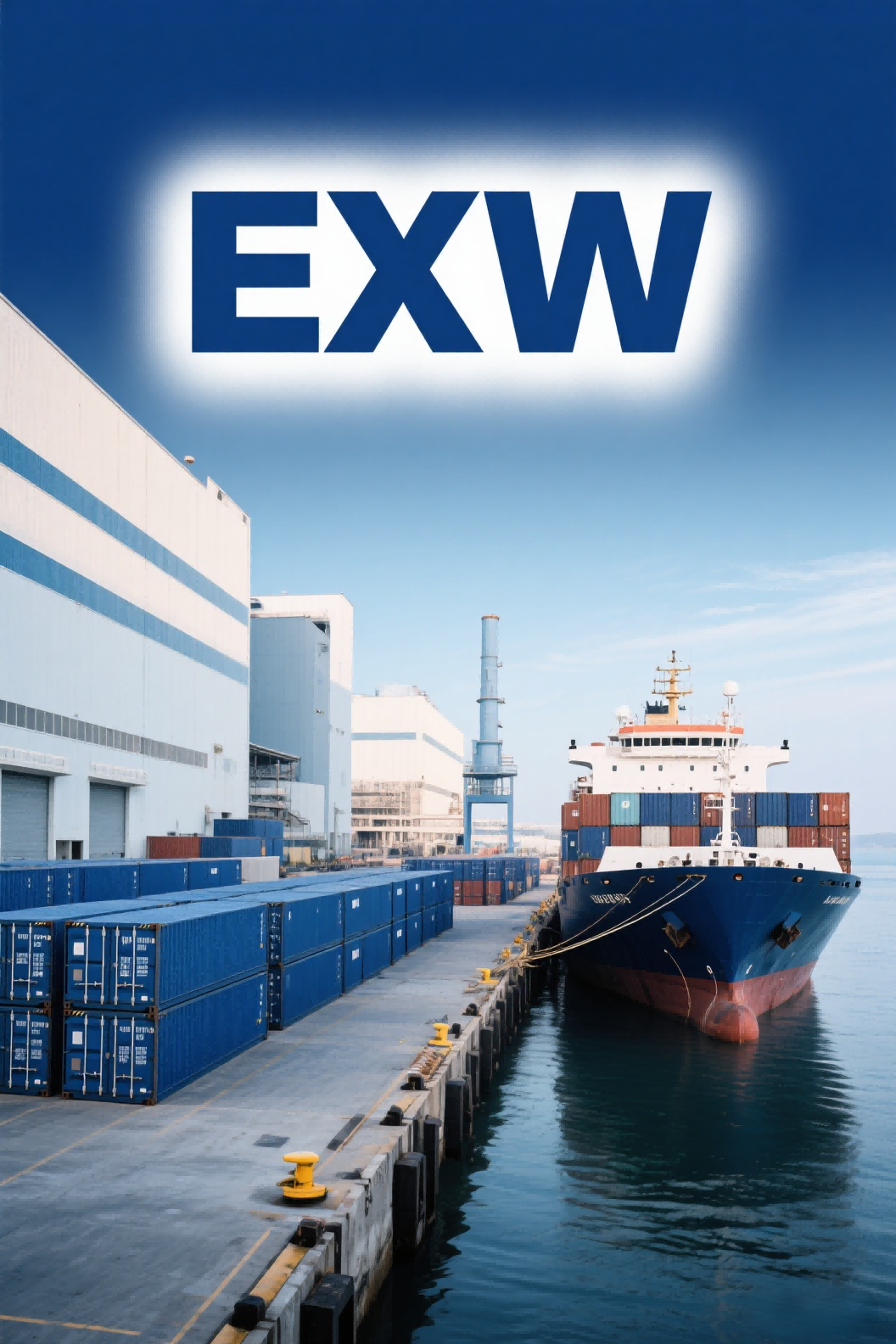
In the context of globalization, smart interactive whiteboards (IWBs) are gradually being widely accepted by markets in various countries as an important tool for modern education and business collaboration. However, in order to successfully export these products to overseas markets, it is crucial to understand and master the trade price terms in foreign trade exports. This article will deeply analyze common trade price terms to help companies better conduct international business.
First of all, it is very important to understand the trade price terms commonly used in export trade. These terms are usually called the International Commercial Terms (Incoterms). Incoterms is a set of standard trade terms developed by the International Chamber of Commerce (ICC) to clarify the division of rights and responsibilities between sellers and buyers in international trade. The following are some common trade price terms in smart interactive whiteboard foreign trade exports:
1. EXW (Ex Works, factory delivery):
The EXW term means that the seller delivers the goods at its factory or warehouse, the seller fulfills the delivery obligation, and the buyer needs to bear all costs and risks from the seller's factory to the destination. This is a term with the least responsibility for the seller, and all subsequent transportation arrangements, customs clearance, insurance, etc. are the responsibility of the buyer.
2. FOB (Free On Board):
FOB is one of the most commonly used trade terms. Under FOB terms, the seller is responsible for loading the goods onto the shipping vessel designated by the buyer. All costs and risks before the goods cross the ship's railing are borne by the seller, and the costs and risks after that are borne by the buyer. This means that the seller must be responsible for customs clearance and pay all shipping costs, while the buyer bears the transportation, insurance and destination port costs.
FOB is one of the most commonly used trade terms. Under FOB terms, the seller is responsible for loading the goods onto the shipping vessel designated by the buyer. All costs and risks before the goods cross the ship's railing are borne by the seller, and the costs and risks after that are borne by the buyer. This means that the seller must be responsible for customs clearance and pay all shipping costs, while the buyer bears the transportation, insurance and destination port costs.
3. CIF (Cost, Insurance and Freight):
Under CIF terms, the seller not only needs to pay the freight to deliver the goods to the designated destination port, but also needs to purchase marine insurance. In this case, the seller bears the costs before the goods are loaded on the ship and the freight and insurance premiums, and the costs and risks after the goods are unloaded at the destination port are borne by the buyer. Under CIF terms, the seller should ensure that sufficient insurance is purchased to cover the risks during transportation.
Under CIF terms, the seller not only needs to pay the freight to deliver the goods to the designated destination port, but also needs to purchase marine insurance. In this case, the seller bears the costs before the goods are loaded on the ship and the freight and insurance premiums, and the costs and risks after the goods are unloaded at the destination port are borne by the buyer. Under CIF terms, the seller should ensure that sufficient insurance is purchased to cover the risks during transportation.
4. DAP (Delivered At Place):
Under DAP terms, the seller is responsible for delivering the goods to the designated destination, but does not include unloading. The seller bears all costs and risks during transportation until the goods are delivered to the place specified by the buyer. The buyer is responsible for customs clearance and payment of import duties and value-added tax.
Under DAP terms, the seller is responsible for delivering the goods to the designated destination, but does not include unloading. The seller bears all costs and risks during transportation until the goods are delivered to the place specified by the buyer. The buyer is responsible for customs clearance and payment of import duties and value-added tax.
5. DDP (Delivered Duty Paid):
Under the DDP terms, the seller bears all costs of transporting the goods to the designated destination, including transportation, insurance, customs clearance, and payment of import duties and taxes. This term is more demanding for the seller because the seller needs to handle all import procedures and fees in the country of destination.
Under the DDP terms, the seller bears all costs of transporting the goods to the designated destination, including transportation, insurance, customs clearance, and payment of import duties and taxes. This term is more demanding for the seller because the seller needs to handle all import procedures and fees in the country of destination.
Understanding and correctly using these trade price terms can help companies accurately divide responsibilities and risks in international transactions, making the foreign trade export process of smart interactive whiteboards smoother and more transparent. At the same time, choosing appropriate trade terms according to the target market and specific business needs can also optimize costs and enhance competitiveness. Therefore, being familiar with and applying trade terms is one of the important skills for expanding international markets.
Smart whiteboard: a powerful tool to improve modern teaching and office efficiency
How to install an intelligent interactive whiteboard?
Related Article

Choosing the right interactive whiteboard size is an important decision for distributors, wholesalers, and education technology suppliers. The 65-inch, 75-inch, and 86-inch interactive whiteboards are popular options for classrooms, meeting rooms, training centers, and commercial projects.
65 vs 75 vs 86-Inch Interactive Whiteboard: Which Model Should Distributors Choose?

Choosing the right interactive whiteboard manufacturer in China is an important decision for distributors, wholesalers, education technology suppliers, and system integrators. The right manufacturing partner can help businesses improve product quality, maintain competitive pricing, customize products for local markets, and build a sustainable distribution business.
Who Are the Best Interactive Whiteboard Manufacturers in China for B2B Distributors and Wholesalers?
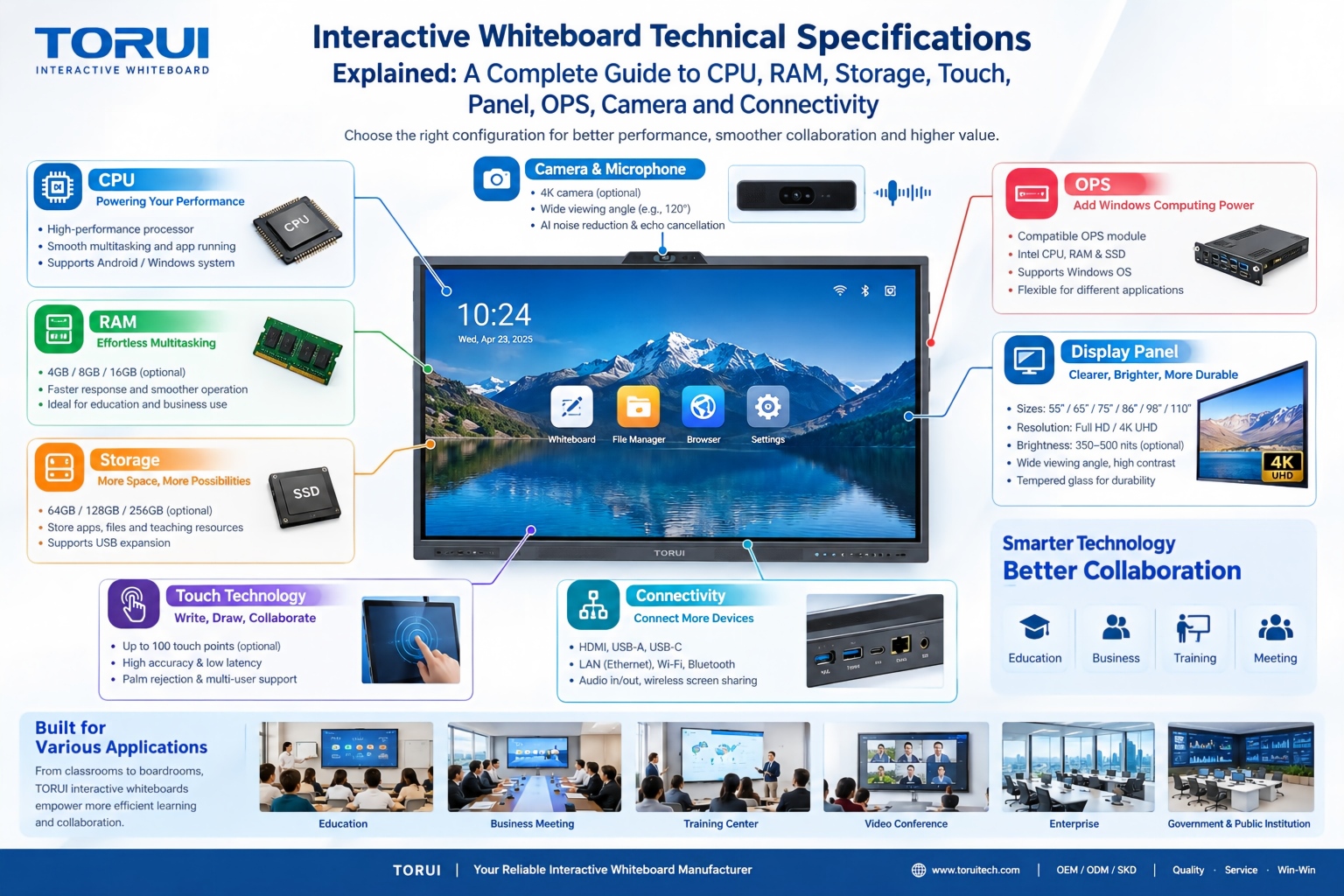
Choosing an interactive whiteboard involves more than comparing screen sizes and prices. For schools, businesses, distributors, wholesalers, and system integrators, understanding the technical specifications is essential to selecting a reliable product that meets different application requirements.
Interactive Whiteboard Technical Specifications Explained: A Complete Guide to CPU, RAM, Storage, Touch, Panel, OPS, Camera and Connectivity
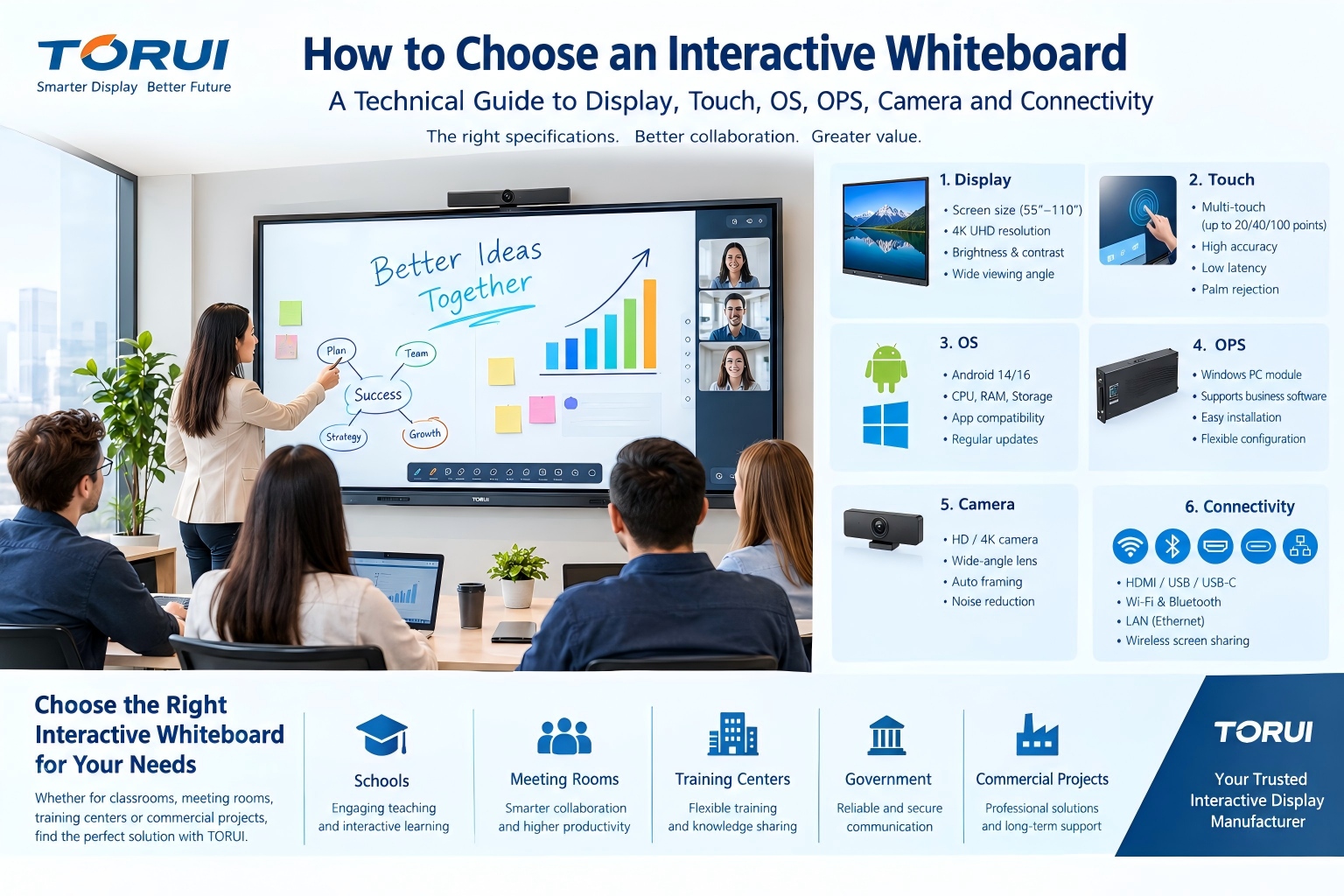
Choosing an interactive whiteboard for a school, meeting room, training center, government organization or commercial project requires more than comparing screen size and price. The most important specifications include display resolution, brightness, touch technology, operating system, processor, memory, storage, OPS compatibility, camera and microphone performance, connectivity, durability and after-sales support.
How to Choose an Interactive Whiteboard: A Technical Guide to Display, Touch, OS, OPS, Camera and Connectivity