
Delivery Time and Logistics for Interactive Whiteboards in International Trade
author: toruitech
2025-12-22

When engaging in international trade, the delivery time and logistics of products such as interactive whiteboards become critical factors that directly impact customer satisfaction, operational efficiency, and the overall success of business transactions. Interactive whiteboards are sophisticated devices requiring careful handling and timely delivery to ensure their functionality and quality upon arrival. This article explores the key aspects of delivery time and logistics for interactive whiteboards in international trade, offering insights into how businesses can streamline this process to meet customer expectations and maintain a competitive edge.
1. Understanding the Importance of Timely Delivery
In the context of international trade, delivery time is a crucial component of customer service. Interactive whiteboards are often used in educational institutions, corporate offices, and government facilities, where downtime can cause significant disruptions. Customers expect quick, efficient, and reliable delivery to ensure that their projects, classrooms, or meetings are not delayed.
Therefore, setting realistic and clear expectations for delivery time is essential. Factors such as order processing time, shipping methods, customs clearance, and the final destination’s location all influence the overall delivery timeline.
2. Order Processing and Preparation
The delivery time process begins with order processing and preparation. Once an order for an interactive whiteboard is confirmed, the first step is to ensure that the product is in stock, the configuration meets the customer's requirements, and all components (such as mounting brackets, touch pens, cables, etc.) are included.
For businesses, ensuring that inventory management is well-organized and that products are readily available for shipping can significantly reduce the time spent on order fulfillment. Automated systems that track stock levels and order status can help expedite this process, ensuring a quicker response time for customers.
3. Shipping Methods and Timeframes
Shipping methods and timeframes can vary significantly depending on the destination, size of the order, and urgency. Common international shipping options for interactive whiteboards include:
-
Air Freight: Air shipping is the fastest method for global delivery. While it is more expensive than sea freight, it is ideal for urgent orders. Shipping by air typically takes 3 to 7 days, depending on the origin and destination countries.
-
Sea Freight: Sea freight is more economical for large orders but takes longer, usually between 15 to 45 days, depending on the distance between the port of origin and the destination. Sea freight is best suited for bulk shipments or when time sensitivity is less of a concern.
-
Rail Freight: For landlocked regions, rail freight can offer a balance between speed and cost. Depending on the route, rail freight typically takes between 10 to 25 days for international shipments.
-
Courier Services: For smaller orders or urgent deliveries, courier services like FedEx, DHL, or UPS can be employed. These services offer faster door-to-door delivery and can handle customs procedures on behalf of the customer, reducing delivery time to 5 to 10 days.
It’s important for businesses to work with reliable logistics partners who can offer multiple shipping options. Depending on the customer’s needs, offering a choice between faster, more expensive air shipping or slower, more affordable sea freight can enhance customer satisfaction.
4. Customs and Documentation
One of the most significant challenges in international trade is navigating customs procedures. Interactive whiteboards are often subject to strict import regulations, including tariffs, taxes, and technical certifications. Delays in customs clearance can extend delivery times and disrupt schedules.
To mitigate this risk, businesses must work with experienced customs brokers who understand the import/export regulations of the destination country. Having the proper documentation, such as invoices, packing lists, certificates of origin, and compliance certifications (e.g., CE, RoHS), is crucial to expedite customs clearance.
Providing clear communication with customers regarding expected delivery times and potential customs delays is also vital. Customers should be informed upfront about any additional paperwork or customs duties they may need to handle.
5. Tracking and Transparency
Transparency throughout the shipping process can greatly enhance customer experience. Offering tracking systems allows customers to monitor the status of their orders in real-time, reducing uncertainty and improving confidence in the service. Many logistics providers now offer detailed tracking updates through email, mobile apps, or online portals.
For interactive whiteboards, which are often high-value items, the ability to track shipments can reassure customers that their products are en route and help address any potential delays promptly.
6. Last-Mile Delivery
The final leg of the logistics journey is last-mile delivery. This is the stage where products are delivered from a local distribution center to the customer’s address. The efficiency of last-mile delivery depends on the quality of the local logistics network. Factors such as local transportation infrastructure, delivery schedules, and even weather conditions can impact the delivery timeframe.
For international trade, it is important to partner with local delivery providers who are reliable and capable of handling large or delicate shipments, such as interactive whiteboards, with care.
7. Returns and Customer Support
Even with careful planning, occasional issues may arise during the delivery process. Delayed shipments, damaged goods, or incorrect items may need to be addressed quickly to maintain customer satisfaction.
Providing a clear and easy-to-follow return and replacement policy, as well as having a responsive customer support team available, ensures that any issues can be resolved swiftly. Quick resolution of post-delivery issues can improve customer loyalty and mitigate negative feedback.
Conclusion
In international trade, ensuring timely delivery and efficient logistics for interactive whiteboards is essential to maintaining high levels of customer satisfaction. By offering a range of shipping methods, providing clear communication regarding delivery timeframes, and ensuring that products pass smoothly through customs, businesses can streamline the logistics process. Utilizing reliable logistics partners, offering transparent tracking systems, and maintaining efficient last-mile delivery will further enhance the customer experience, allowing businesses to stay competitive in the global market. With a focus on reliability, speed, and customer communication, the delivery and logistics process can be transformed into a key strength of international trade in interactive whiteboards.
Dedicated Service with Care: TORUI’s Commitment to Excellence
Key Highlight Features of Interactive Whiteboards
Related Article
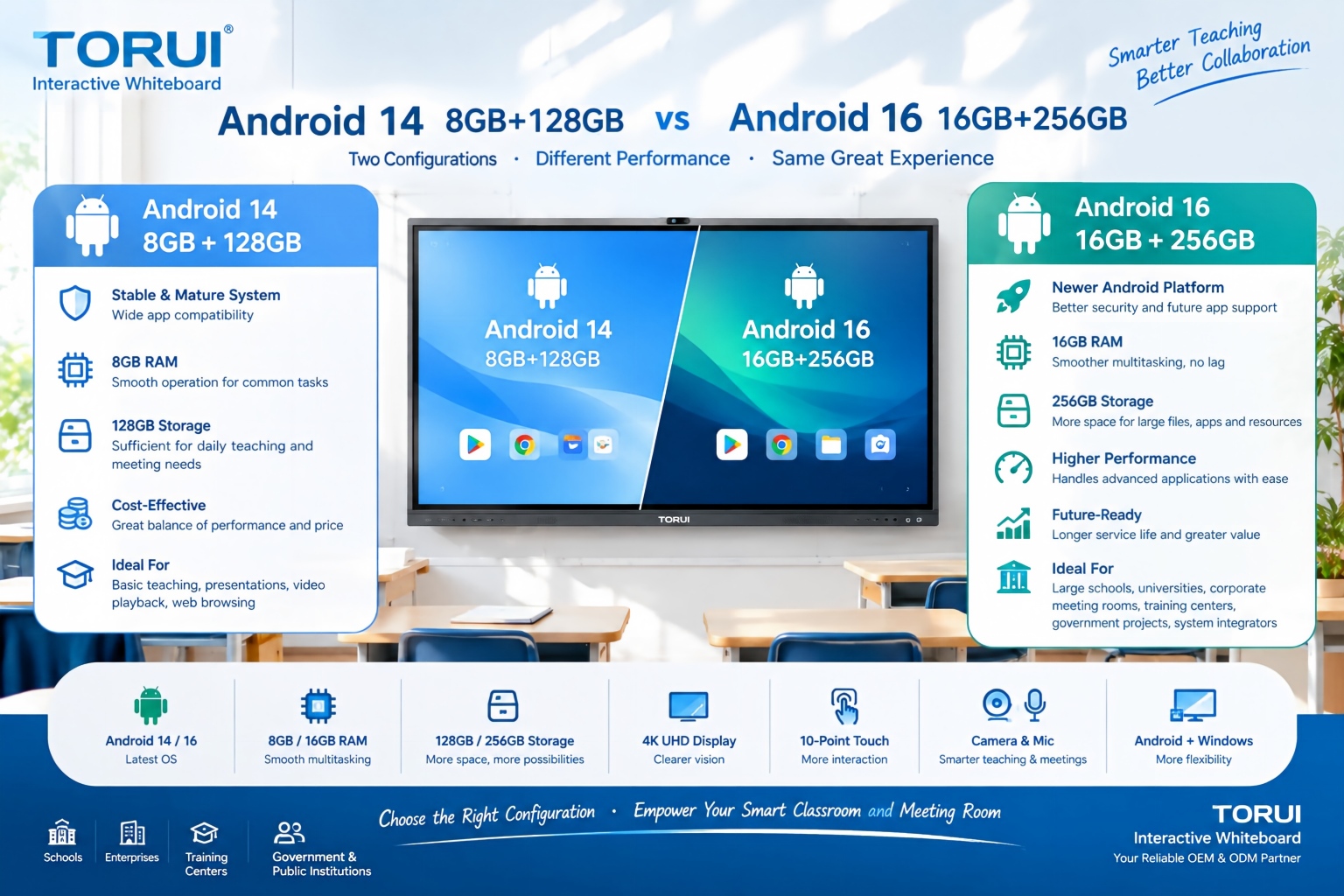
When choosing an interactive whiteboard for a school, training center, meeting room, or commercial project, the Android version and hardware configuration can significantly affect user experience. Two common configurations are Android 14 with 8GB RAM and 128GB storage and Android 16 with 16GB RAM and 256GB storage.
Android 14 8GB+128GB vs Android 16 16GB+256GB: Which Interactive Whiteboard Is Better?

Buying an interactive whiteboard is not simply about choosing the right screen size, resolution, or operating system. For B2B buyers, distributors, system integrators, schools, and corporate procurement teams, quality control is one of the most important factors affecting long-term reliability, user experience, warranty costs, and customer satisfaction.
Interactive Whiteboard Quality Control: What Should Buyers Check?
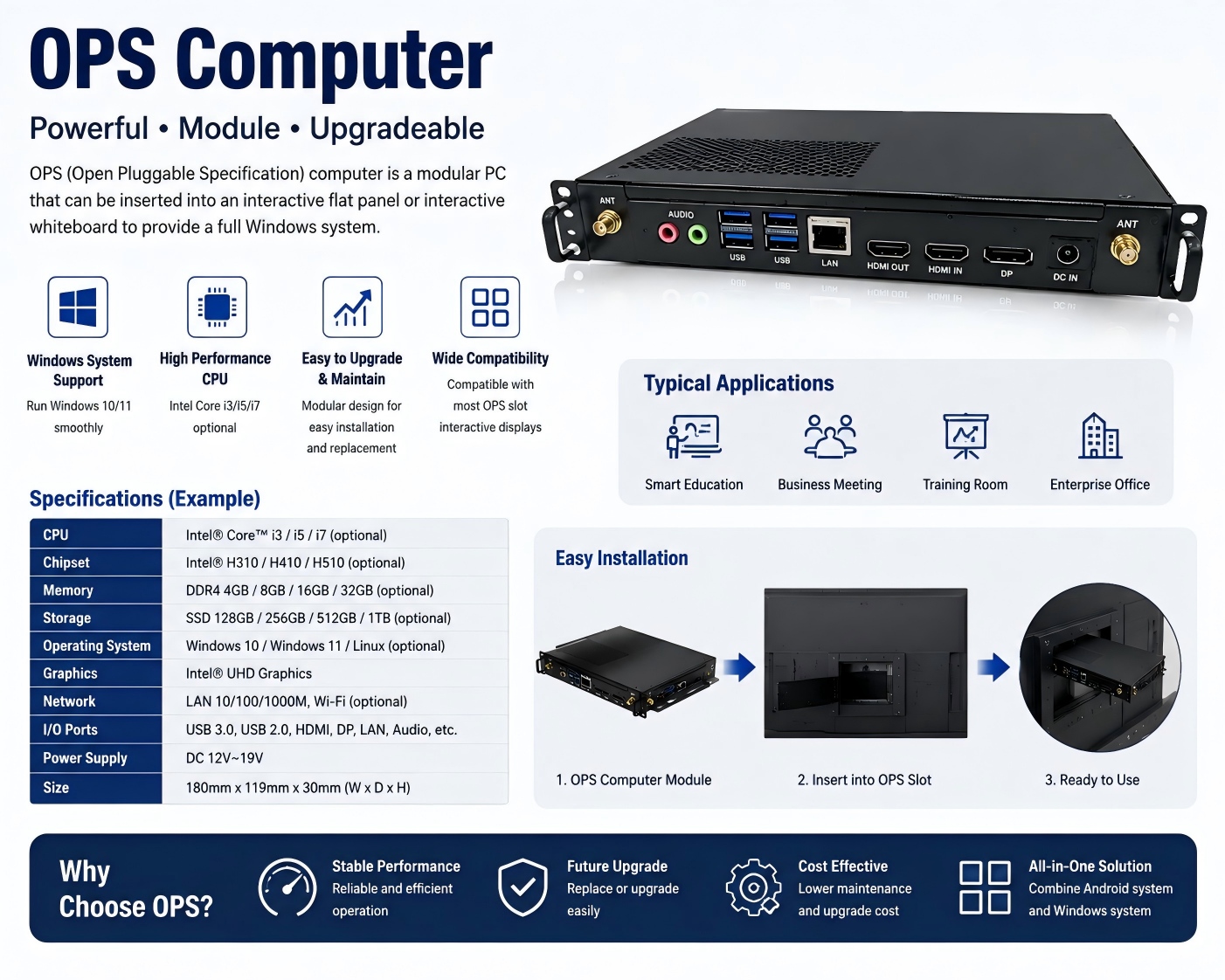
An OPS computer for an interactive whiteboard is a modular plug-in PC designed to add Windows-based computing power to an interactive display. OPS stands for Open Pluggable Specification, a standardized form factor originally developed for commercial interactive displays.
What Is an OPS Computer for Interactive Whiteboards?

Choosing the right chipset is an important decision when sourcing an interactive whiteboard for schools, conference rooms, training centers, government projects, or commercial applications. Among Rockchip platforms, RK3588 and RK3576 are two powerful options for modern Android interactive displays.
RK3588 vs RK3576: Which Chip Is Better for Interactive Whiteboards?