
The Digital Board for Classroom: Revolutionizing Modern Education
author: toruitech
2025-07-12

In today's rapidly evolving educational landscape, the digital board for classroom has become a game-changer, transforming traditional teaching methods into interactive and engaging learning experiences. As schools and institutions globally embrace technology, the digital board stands out as a beacon of innovation, enhancing both teaching and learning outcomes.
What is a Digital Board for Classroom?
A digital board, often referred to as an interactive whiteboard, is a large display that connects to a computer and projector. It allows teachers to display and interact with digital content, such as videos, images, and presentations, directly on the board. This interactivity fosters a more dynamic and participatory classroom environment, making lessons more engaging for students.
Benefits of Using a Digital Board in the Classroom
1. Enhances Student Engagement
A digital board for classroom use is instrumental in captivating students' attention. Its interactive nature encourages students to participate actively in lessons. Teachers can employ multimedia elements, such as videos and animations, to explain complex concepts, making learning more relatable and enjoyable.
2. Facilitates Interactive Learning
Digital boards enable real-time interaction between teachers and students. Features like touch-screen capabilities, digital annotations, and instant feedback promote active learning. Students can come up to the board to solve problems, engage in group activities, and demonstrate their understanding, thereby fostering a collaborative learning environment.
3. Provides Access to Vast Resources
With a digital board, teachers can access a wealth of online resources, including educational websites, e-books, and interactive simulations. This access broadens the scope of teaching materials beyond the traditional textbook, providing diverse content that can cater to different learning styles and needs.
4. Simplifies Lesson Preparation and Delivery
Teachers can prepare and organize their lessons using various digital tools and software. A digital board for classroom education streamlines this process, allowing for seamless integration of multimedia content. Furthermore, teachers can save and reuse lessons, making it easier to revisit topics or provide students with revision materials.
5. Encourages Technological Proficiency
Incorporating a digital board into the classroom routine helps students become more comfortable and proficient with technology. In an increasingly digital world, this familiarity is crucial for their future academic and professional endeavors.
Practical Tips for Integrating a Digital Board in the Classroom
Train Teachers Effectively
Proper training is essential for teachers to harness the full potential of a digital board. Workshops and professional development courses can equip educators with the necessary skills to create interactive and engaging lesson plans.
Use Interactive Software
Leverage interactive learning software compatible with the digital board. Programs like Google Classroom, Microsoft Teams, and various educational apps can enhance the teaching experience, providing interactive and collaborative tools.
Encourage Student Participation
Incorporate activities that require students to use the digital board. Encourage them to present their work, participate in interactive quizzes, and collaborate on projects using the board. This not only makes learning fun but also builds their confidence and communication skills.
Integrate Multimedia Content
Utilize the digital board to show videos, simulations, and virtual tours related to the lesson. This diversification in teaching materials caters to different learning preferences, helping to maintain students' interest and understanding.
Conclusion
The digital board for classroom use signifies a significant leap forward in educational technology. Its ability to transform traditional teaching methods into interactive and engaging learning experiences is invaluable. By enhancing student engagement, simplifying lesson preparation, and fostering technological proficiency, digital boards are paving the way for a future where education is more dynamic, inclusive, and effective.
In embracing this technology, schools are not only modernizing their teaching practices but also preparing students for a world where digital literacy is paramount. As the adoption of digital boards continues to grow, the future of education looks brighter, more connected, and incredibly promising.
Key concerns of buyers purchasing smart interactive whiteboards
Choosing the best Smart Board Distributors: The key to improving teaching and office efficiency
Related Article

Choosing the right interactive whiteboard size is an important decision for distributors, wholesalers, and education technology suppliers. The 65-inch, 75-inch, and 86-inch interactive whiteboards are popular options for classrooms, meeting rooms, training centers, and commercial projects.
65 vs 75 vs 86-Inch Interactive Whiteboard: Which Model Should Distributors Choose?

Choosing the right interactive whiteboard manufacturer in China is an important decision for distributors, wholesalers, education technology suppliers, and system integrators. The right manufacturing partner can help businesses improve product quality, maintain competitive pricing, customize products for local markets, and build a sustainable distribution business.
Who Are the Best Interactive Whiteboard Manufacturers in China for B2B Distributors and Wholesalers?
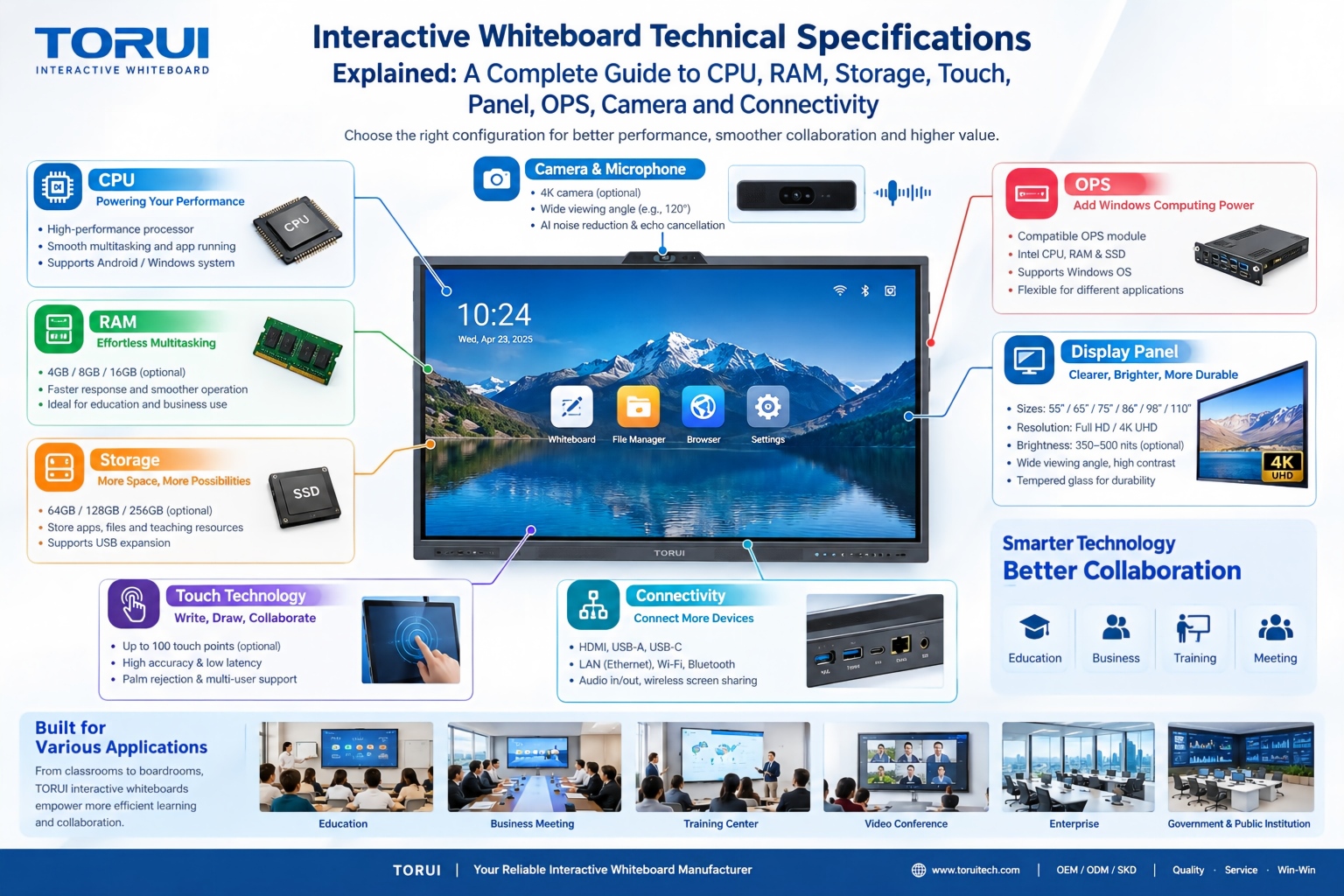
Choosing an interactive whiteboard involves more than comparing screen sizes and prices. For schools, businesses, distributors, wholesalers, and system integrators, understanding the technical specifications is essential to selecting a reliable product that meets different application requirements.
Interactive Whiteboard Technical Specifications Explained: A Complete Guide to CPU, RAM, Storage, Touch, Panel, OPS, Camera and Connectivity
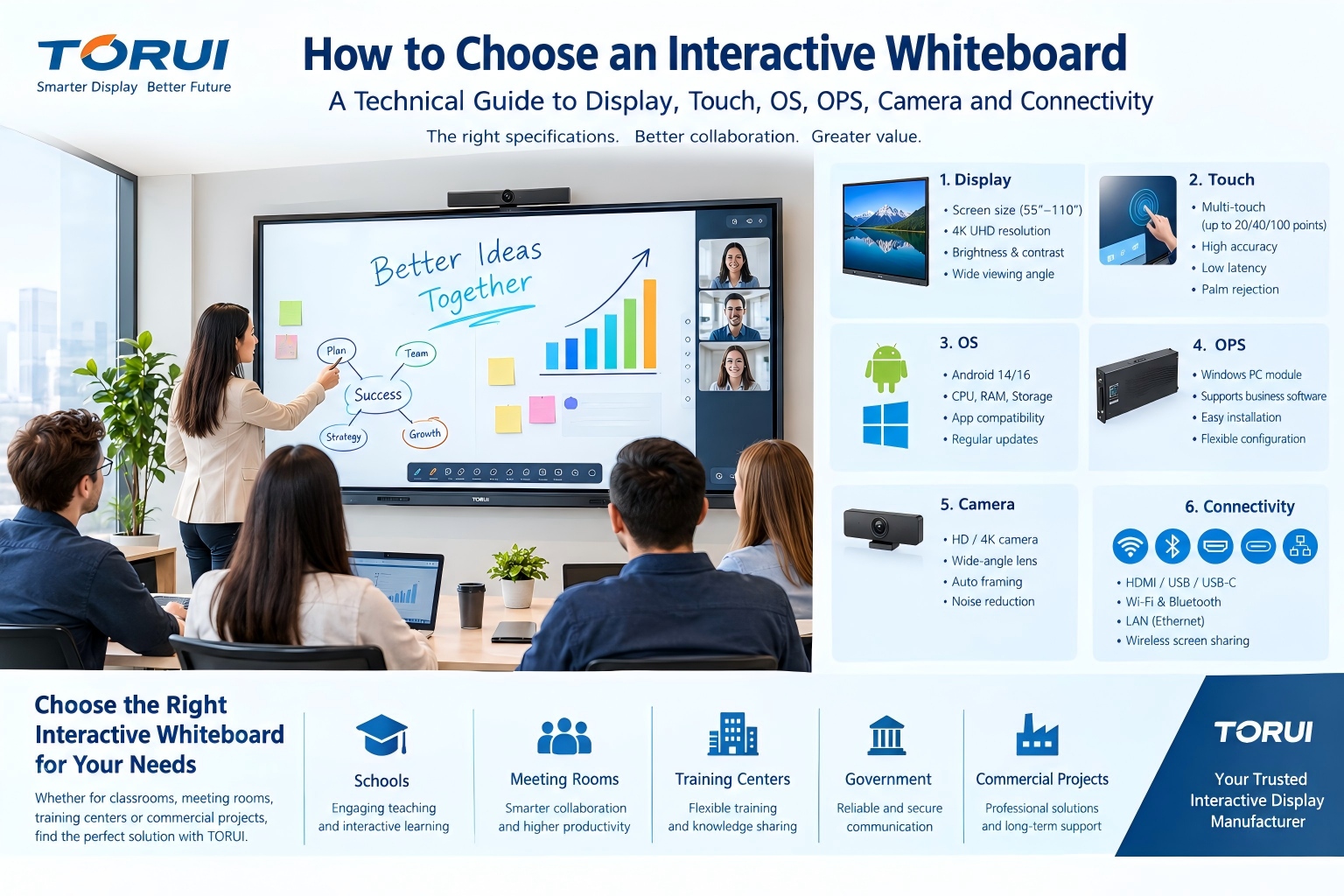
Choosing an interactive whiteboard for a school, meeting room, training center, government organization or commercial project requires more than comparing screen size and price. The most important specifications include display resolution, brightness, touch technology, operating system, processor, memory, storage, OPS compatibility, camera and microphone performance, connectivity, durability and after-sales support.
How to Choose an Interactive Whiteboard: A Technical Guide to Display, Touch, OS, OPS, Camera and Connectivity