
Electronic Whiteboards in the Classroom
author: toruitech
2025-09-14
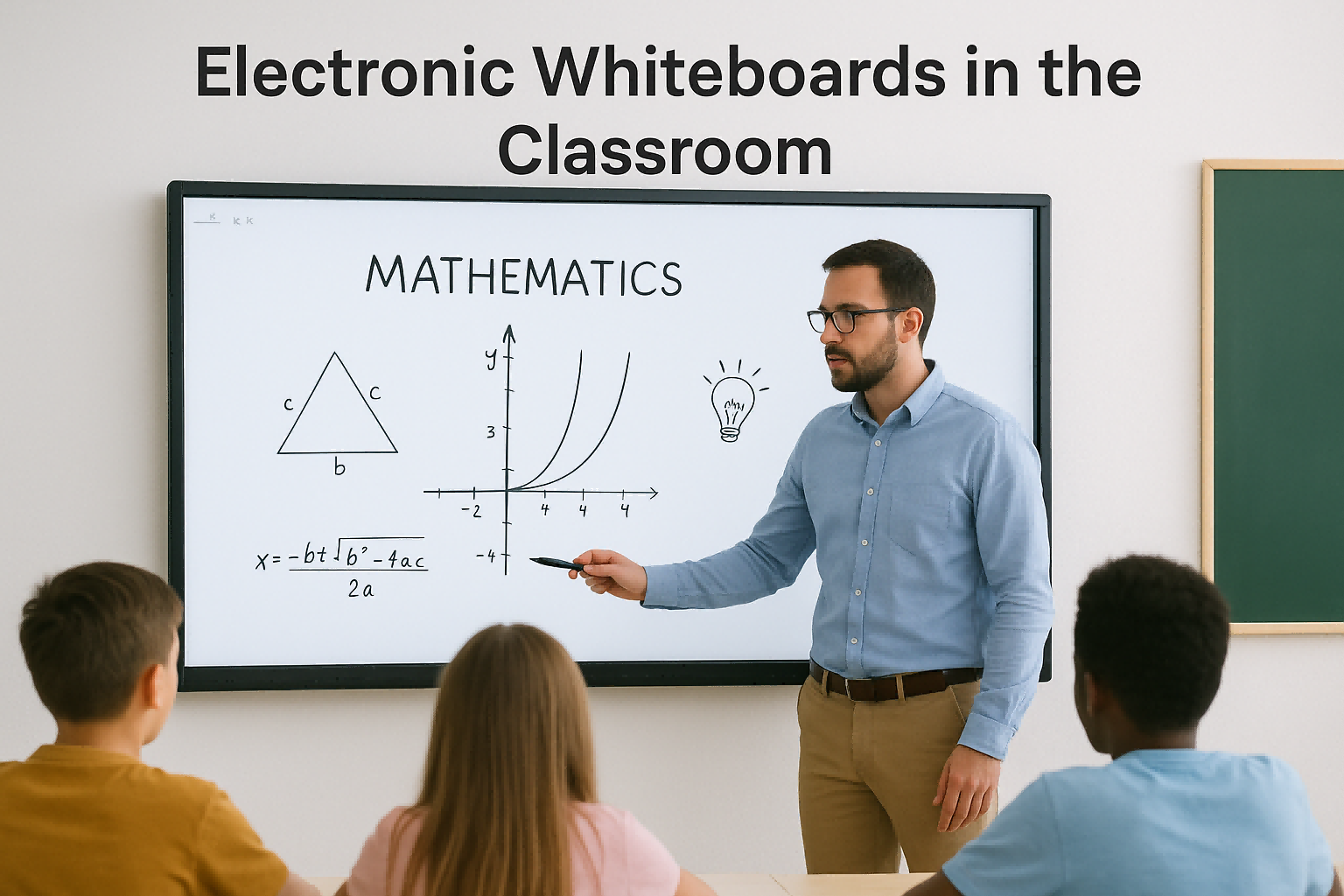
Electronic whiteboards (EWBs) in the classroom are modern teaching tools that combine display technology with interactive features to provide a more efficient and intuitive learning experience. Compared to traditional blackboards and projectors, EWBs can not only display text, images, and videos, but also support real-time annotation, saving, and sharing, making teaching content more diverse and traceable.
In practical applications, EWBs have greatly enhanced classroom interactivity. Teachers can use the whiteboard to display courseware, demonstrate experimental procedures, or directly annotate during lectures, helping students better understand complex concepts. Students can also take the podium and use the EWBs to answer questions, draw diagrams, or participate in group discussions. This interactive approach stimulates learning interest, fosters student engagement, and develops thinking skills.
EWBs also play a vital role in distance learning and blended learning. Through a network connection, teachers can share whiteboard content with remote students in real time, and combined with video conferencing software, enable simultaneous teaching across multiple locations. This not only expands the reach of educational resources but also frees learning from the constraints of time and space.
EWBs also offer convenient resource integration and management capabilities. Teachers can save classroom notes for students to review after class or upload them to a learning management system (LMS) to create a complete learning portfolio. With the application of artificial intelligence and big data, some electronic whiteboards now support voice recognition, intelligent grading, and learning analytics, further enhancing the personalization and intelligence of education.
Overall, the use of electronic whiteboards in the classroom not only optimizes teaching methods but also promotes the modernization of education. They help teachers organize lessons more efficiently and encourage students to engage more actively in learning, making them a crucial tool for realizing smart classrooms and improving the quality of education.
Interactive Whiteboards for Business
Interactive Digital Whiteboard
Related Article

Choosing the right interactive whiteboard size is an important decision for distributors, wholesalers, and education technology suppliers. The 65-inch, 75-inch, and 86-inch interactive whiteboards are popular options for classrooms, meeting rooms, training centers, and commercial projects.
65 vs 75 vs 86-Inch Interactive Whiteboard: Which Model Should Distributors Choose?

Choosing the right interactive whiteboard manufacturer in China is an important decision for distributors, wholesalers, education technology suppliers, and system integrators. The right manufacturing partner can help businesses improve product quality, maintain competitive pricing, customize products for local markets, and build a sustainable distribution business.
Who Are the Best Interactive Whiteboard Manufacturers in China for B2B Distributors and Wholesalers?
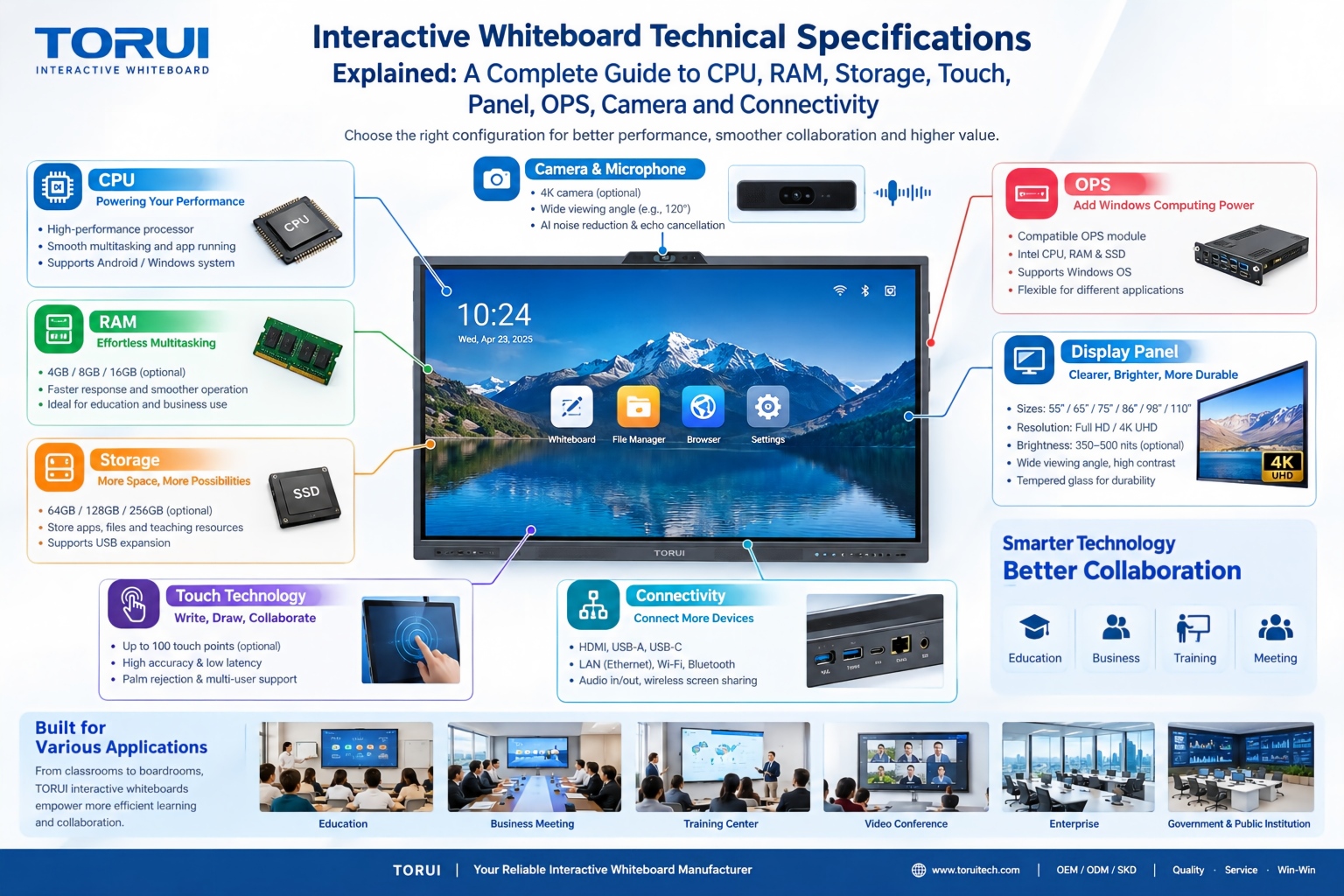
Choosing an interactive whiteboard involves more than comparing screen sizes and prices. For schools, businesses, distributors, wholesalers, and system integrators, understanding the technical specifications is essential to selecting a reliable product that meets different application requirements.
Interactive Whiteboard Technical Specifications Explained: A Complete Guide to CPU, RAM, Storage, Touch, Panel, OPS, Camera and Connectivity

Choosing an interactive whiteboard for a school, meeting room, training center, government organization or commercial project requires more than comparing screen size and price. The most important specifications include display resolution, brightness, touch technology, operating system, processor, memory, storage, OPS compatibility, camera and microphone performance, connectivity, durability and after-sales support.
How to Choose an Interactive Whiteboard: A Technical Guide to Display, Touch, OS, OPS, Camera and Connectivity