Global Interactive Whiteboard Market Trends in 2026
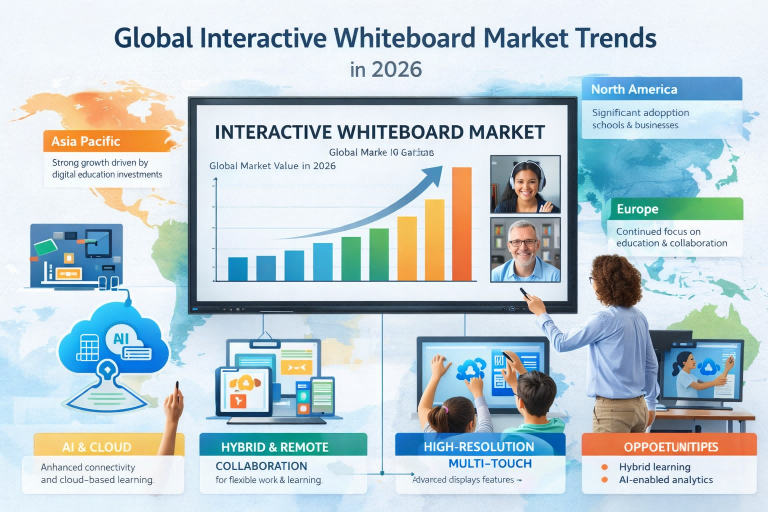
The global interactive whiteboard market continues to evolve rapidly as schools, businesses, and governmental institutions increasingly adopt digital collaboration tools. In 2026, the interactive whiteboard industry is shaped by technological innovation, demand for immersive interactive experiences, and new user expectations in a post‑pandemic world. Understanding key market trends helps manufacturers, distributors, and educational buyers make informed strategic decisions and stay ahead of competitors.
Strong Market Growth and Forecast
Interactive whiteboards (IWBs) continue their momentum as a core component of digital learning and collaboration environments. According to recent market analyses, the global interactive whiteboard market size is anticipated to be substantial in 2026, reflecting healthy demand growth driven by educational and corporate investments in interactive technologies. Industry reports estimate that worldwide market value will reach several billion dollars in 2026 and is projected to grow further in the next decade.
Market forecasts generally indicate a compound annual growth rate (CAGR) in the mid‑single digits to low‑double digits depending on the forecast period and methodology. This growth reflects steady expansion as institutions replace traditional whiteboards and invest in advanced interactive solutions.
Digital Transformation in Education as a Major Driver
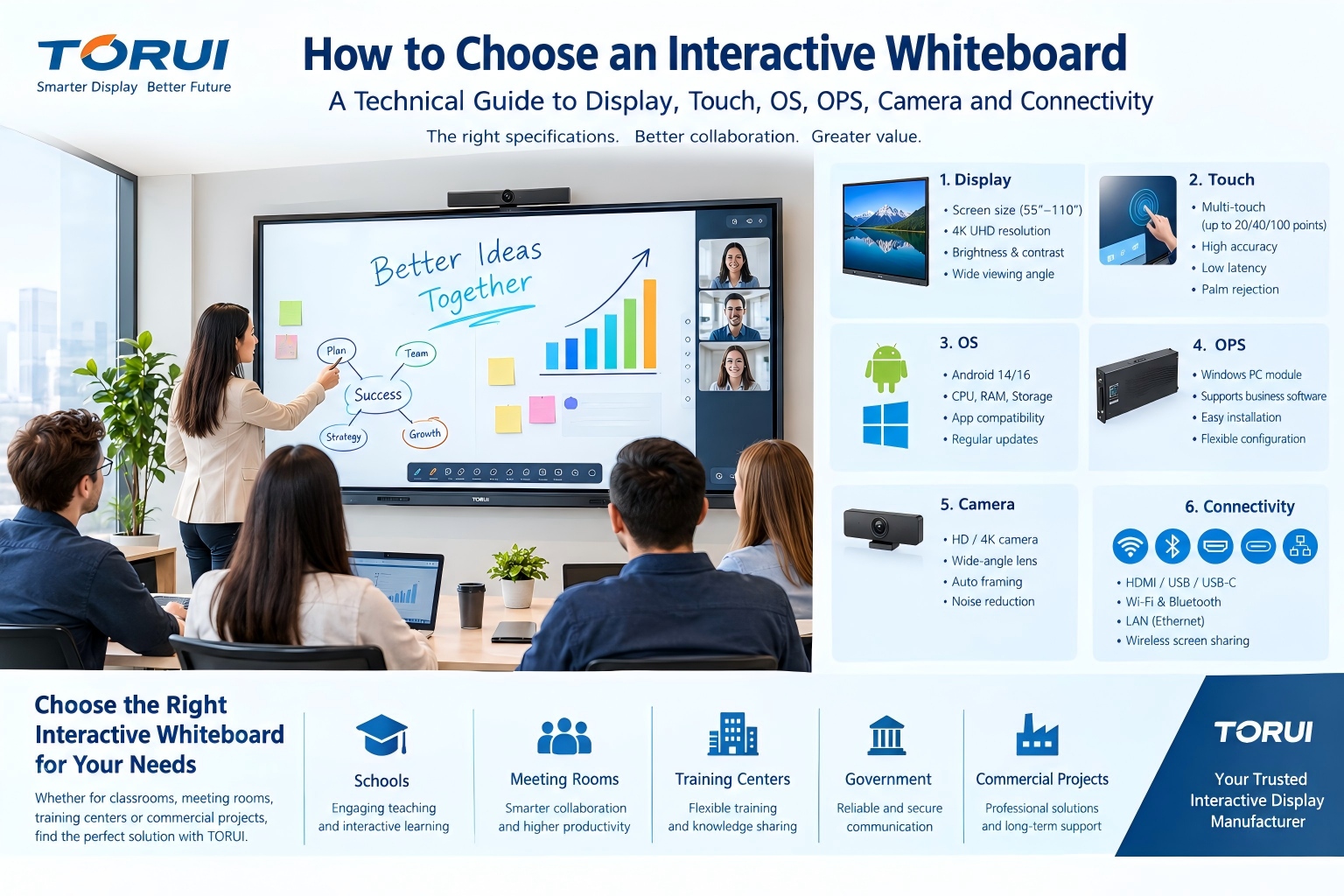
Education remains the dominant end‑use segment for interactive whiteboards. Schools and higher education institutions worldwide are integrating these devices into classrooms to enhance student engagement, encourage collaboration, and support blended learning models. Studies show that interactive displays can increase student participation by enabling tactile interaction, multimedia presentations, and real‑time feedback—features that traditional boards cannot provide.
Government initiatives and educational funding programs in countries across Asia, Europe, and North America are accelerating the deployment of digital classroom tools. This is especially true in developing markets where digital infrastructure upgrades are prioritized to prepare students for a technology‑driven future.
Corporate and Remote Collaboration Demand
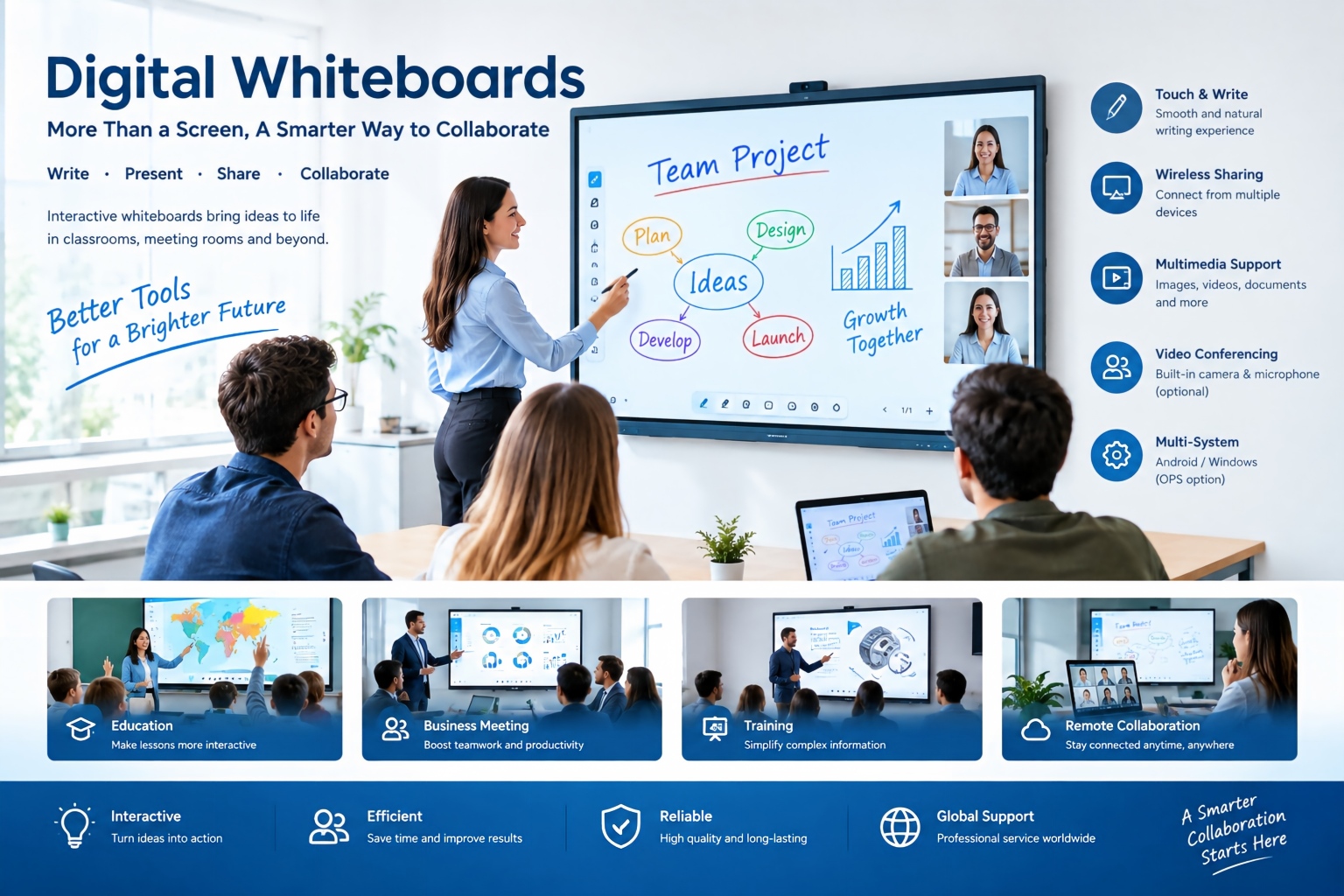
While education leads in volume, the corporate sector increasingly adopts interactive whiteboards for meetings, training, and hybrid collaboration. Interactive boards facilitate dynamic presentations, digital whiteboarding, and real‑time annotations—features that support remote work policies and distributed teams. As companies extend hybrid work models beyond the pandemic, demand for interactive collaboration hardware continues to grow.
This trend drives not just unit sales but also software ecosystem development, as vendors focus on seamless integration with conferencing platforms, cloud services, and collaborative productivity tools.
Technological Innovations Shaping the Market
Innovation remains a core trend shaping the interactive whiteboard market in 2026. Manufacturers are increasingly integrating advanced technologies such as:
-
AI‑enabled capabilities: Features like handwriting recognition, intelligent lesson suggestions, and real‑time performance analytics are becoming more common.
-
Cloud integration: Interactive boards that support cloud content storage, sharing, and remote access improve collaboration inside and outside the classroom.
-
IoT and smart device connectivity: Connectivity to external devices and sensors allows more seamless interaction and management at scale.
These innovations not only improve usability but also extend the device’s lifecycle by enabling new use cases and software‑driven enhancements.
Display Size and Interaction Advancements
Display technologies and interaction mechanisms are evolving rapidly. In 2026, multi‑touch, gesture‑based interfaces and high‑resolution displays (such as 4K panels) are becoming standard, improving both accuracy and visual clarity. Multi‑user support allows several students or professionals to interact with the board simultaneously, fostering collaborative work and creative problem‑solving.
Larger displays (above 75 inches) are increasingly popular in higher education lecture halls and boardrooms, while compact models suit smaller classrooms and meeting spaces.
Regional Market Dynamics
Regional adoption patterns vary based on economic development, educational policy, and technology infrastructure:
-
Asia‑Pacific continues to show strong growth driven by government investments in digital education and robust manufacturing ecosystems. Some forecasts project the region as one of the fastest‑growing markets globally.
-
North America and Europe maintain significant market shares due to established IT ecosystems and high adoption rates in education and business sectors.
-
Emerging markets in Latin America and the Middle East exhibit gradual adoption, supported by piloted programs and partnerships between governments and technology providers.
Challenges and Adoption Barriers
Despite strong growth prospects, the interactive whiteboard market faces certain challenges:
-
High total cost of ownership: Upfront costs, installation, and ongoing software licensing can strain education budgets, particularly in developing regions.
-
Compatibility issues: Ensuring seamless integration across different device ecosystems, conferencing tools, and educational platforms remains a technical barrier for some users.
-
Training and support needs: Institutions must invest in teacher or employee training to maximize the board’s potential.
Addressing these challenges through scalable training, flexible financing, and improved interoperability will help expand market penetration.
Strategic Opportunities for 2026 and Beyond
Looking ahead, opportunities in the interactive whiteboard market will continue to expand as digital learning and remote interactions become ingrained in everyday workflows. Key areas of opportunity include:
-
AI‑enhanced educational analytics
-
Hybrid teaching and remote collaboration tools
-
Subscription‑based software platforms bundled with hardware
-
Cloud‑first deployment models
Strategic partnerships between hardware manufacturers, software developers, and service providers will likely drive the next phase of innovation and adoption.
Conclusion
In 2026, the global interactive whiteboard market is poised for sustained growth, driven by technological innovation, digital transformation in education, and hybrid workforce collaboration needs. With expanding regional demand and advanced interactive features, interactive whiteboards are becoming indispensable tools in classrooms and corporate environments alike. Understanding these market trends helps businesses and institutions make informed investment decisions that align with evolving educational and collaborative requirements.
Android and Windows in Interactive Whiteboards: A Complete Buyer’s Guide
Why CE, FCC and RoHS Certifications Matter for Interactive Whiteboards
Related Article