How to Choose the Right Interactive Whiteboard for Schools

Choosing the right interactive whiteboard for a school isn’t just about picking the latest technology — it’s about finding a solution that improves learning outcomes, supports teachers, and fits your budget and classroom environment. With many options available today, evaluating key features and real classroom needs can help schools make a smart investment that lasts for years.
1. Understand Your Classroom Needs
Before evaluating products, start by understanding how the interactive whiteboard will be used in your school:
-
Teaching style: Will teachers mostly present slides and videos, or do they need advanced annotation and collaborative features?
-
Class size: Larger classrooms may require bigger screens and higher touch accuracy.
-
Subject needs: STEM classrooms might benefit from specialized software for math and science.
By defining core use cases first, you avoid overpaying for unused features and select a board that truly enhances day-to-day learning.
2. Screen Size and Display Quality Matter
Screen size directly impacts visibility and engagement:
-
Recommended sizes for classrooms:
-
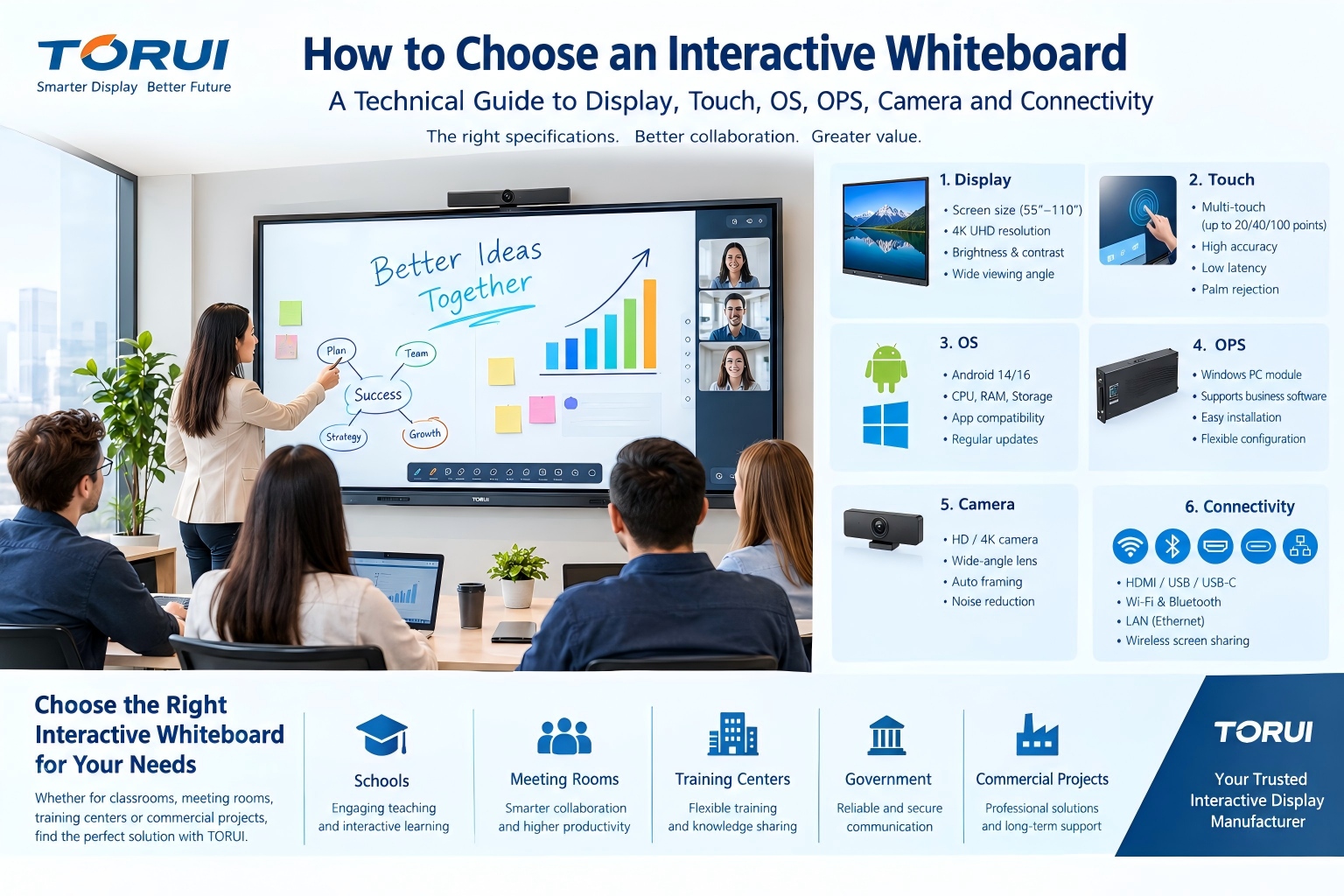
Small to medium class: 65–75 inches
-
Large class or lecture hall: 86–98 inches
-
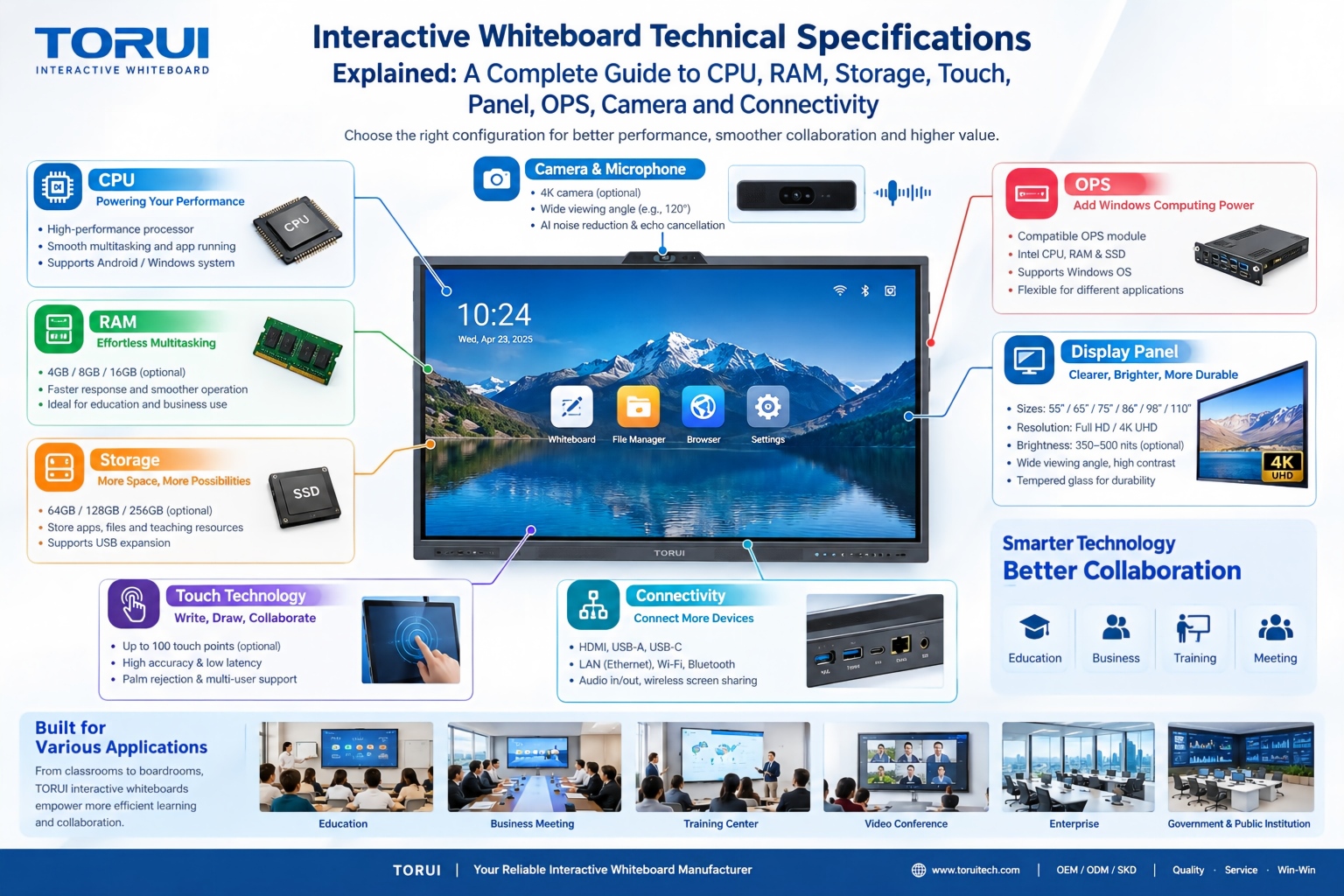
Display quality is equally important. Look for 4K resolution or above, with high brightness and contrast levels, so text and multimedia are clear from every corner of the room. Anti-glare screens are also beneficial in well-lit classrooms.
3. Touch Technology and Responsiveness
Interactive whiteboards differ in touch technology — the way they detect and respond to user interaction:
-
Infrared (IR) systems are durable and work with various tools (finger, stylus), but may be less precise.
-
Capacitive touch offers smooth and accurate touch similar to smartphones, ideal for drawing and handwriting.
-
Optical touch provides strong accuracy with multiple touch points, suitable for collaborative activities.
Multi-touch support (at least 20 touch points) is recommended so several students can interact simultaneously during group activities.
4. Software Compatibility and Usability
Software is where an interactive whiteboard becomes a teaching tool. Evaluate:
-
Pre-installed lesson tools – built-in libraries can save teachers time.
-
Compatibility with common formats – PowerPoint, PDF, Google Slides.
-
Cloud integration – supports saving and sharing lesson files across classes.
User experience matters: Systems with intuitive menus and minimal setup time help teachers adopt the technology quickly without steep learning curves.
5. Connectivity and Integration
Ensure the board connects easily with devices your school already uses:
-
Wi-Fi and Bluetooth allow wireless content sharing.
-
Multiple USB/HDMI ports support laptops and document cameras.
-
Support for video conferencing tools (Zoom, Teams) is important for hybrid learning environments.
Future-proof connectivity helps the board stay useful as classroom technology evolves.
6. Durability and Warranty Support
Classroom hardware needs to withstand daily use. When choosing a board:
-
Check for robust build materials and protective screen layers.
-
Choose brands with long-term warranty support (1 years or more).
-
Consider on-site support and training services from the supplier.
Good after-sales support minimizes downtime and maximizes your technology investment.
7. Total Cost of Ownership (TCO)
The price tag isn’t the only cost. Factor in:
-
Installation and teacher training
-
Software licenses and updates
-
Replacement parts (stylus, cables, remote)
A slightly higher upfront investment in a reliable system often leads to lower long-term costs.
Conclusion
Choosing the right interactive whiteboard for schools requires balancing size, technology, usability, and long-term support. A good board enhances engagement, supports diverse teaching methods, and adapts as educational needs evolve. Start with classroom needs, prioritize display quality and touch responsiveness, ensure software flexibility, and always consider total cost of ownership. Making a thoughtful choice today means better learning experiences tomorrow.
10 Key Factors Buyers Should Check Before Ordering Interactive Whiteboards
The Application and Value of Interactive Whiteboards
Related Article