
How to Import Interactive Whiteboard from China: The 2026 Step-by-Step Guide
author: toruitech
2026-04-26

Importing interactive whiteboards from China in 2026 remains a smart strategy for distributors, education suppliers, and system integrators seeking cost-effective, high-quality solutions. With mature manufacturing ecosystems and strong customization capabilities, Chinese factories offer competitive advantages—but success depends on a clear, structured process.
1. Define Product Specifications and Market Needs
Begin by identifying your target users and application scenarios, such as classrooms, corporate meeting rooms, or training centers. Determine key specifications including screen size (typically 65” to 98”), 4K resolution, touch technology (infrared or capacitive), operating system (Android, Windows, or dual system), and software compatibility. Aligning technical features with end-user needs ensures better market acceptance.
2. Identify Qualified Manufacturers
Look for experienced exporters with proven production capacity and a strong track record in interactive display solutions. Prioritize factories that offer OEM/ODM services, transparent communication, and documented quality management systems. Reviewing certifications, factory audit reports, and past project cases can help verify credibility.
3. Evaluate Samples and Product Performance
Request a sample unit or conduct a remote product demonstration. Carefully assess display brightness, touch precision, response time, system stability, and user interface design. If possible, arrange third-party inspections to validate build quality and internal components before moving forward.
4. Confirm Pricing Structure and Trade Terms
Negotiate pricing based on order volume, customization requirements, and packaging options. Common trade terms include FOB and CIF, each affecting cost and responsibility distribution. For first-time imports, starting with a smaller trial order can reduce financial risk while building trust with the supplier.
5. Ensure Regulatory Compliance
Compliance is critical in 2026, especially for smart devices. Verify that products meet the standards of your destination market, such as FCC requirements in the United States or CE certification in Europe. Additional considerations may include energy efficiency, environmental compliance, and data security regulations.
6. Plan Logistics and Shipping
Select the most suitable shipping method based on urgency and budget. Sea freight is ideal for bulk shipments, while air freight suits urgent or smaller orders. Work with a professional freight forwarder to manage customs clearance, import duties, and essential documentation, including the commercial invoice, packing list, and bill of lading.
7. Conduct Pre-Shipment Quality Inspection
Before final payment, perform a thorough inspection to confirm product quality, quantity, labeling, and packaging. This step is essential to avoid costly disputes and ensure that goods meet agreed specifications.
8. Secure After-Sales Support
Choose suppliers that provide reliable after-sales service, including a 1–3 year warranty, spare parts availability, and technical support. Clear communication channels and defined service terms are key to long-term cooperation.
Conclusion
Importing interactive whiteboards from China can deliver significant business value when managed professionally. By following a step-by-step approach—covering product definition, supplier verification, compliance, and logistics—you can minimize risks and maximize profitability. In a rapidly evolving smart display market, a disciplined import strategy is essential for sustainable growth and customer satisfaction.
How to Choose a Reliable Interactive Whiteboard That Won’t Fail in Class or Meetings
How to Use an Interactive Whiteboard in the Classroom
Related Article

Choosing the right interactive whiteboard size is an important decision for distributors, wholesalers, and education technology suppliers. The 65-inch, 75-inch, and 86-inch interactive whiteboards are popular options for classrooms, meeting rooms, training centers, and commercial projects.
65 vs 75 vs 86-Inch Interactive Whiteboard: Which Model Should Distributors Choose?

Choosing the right interactive whiteboard manufacturer in China is an important decision for distributors, wholesalers, education technology suppliers, and system integrators. The right manufacturing partner can help businesses improve product quality, maintain competitive pricing, customize products for local markets, and build a sustainable distribution business.
Who Are the Best Interactive Whiteboard Manufacturers in China for B2B Distributors and Wholesalers?
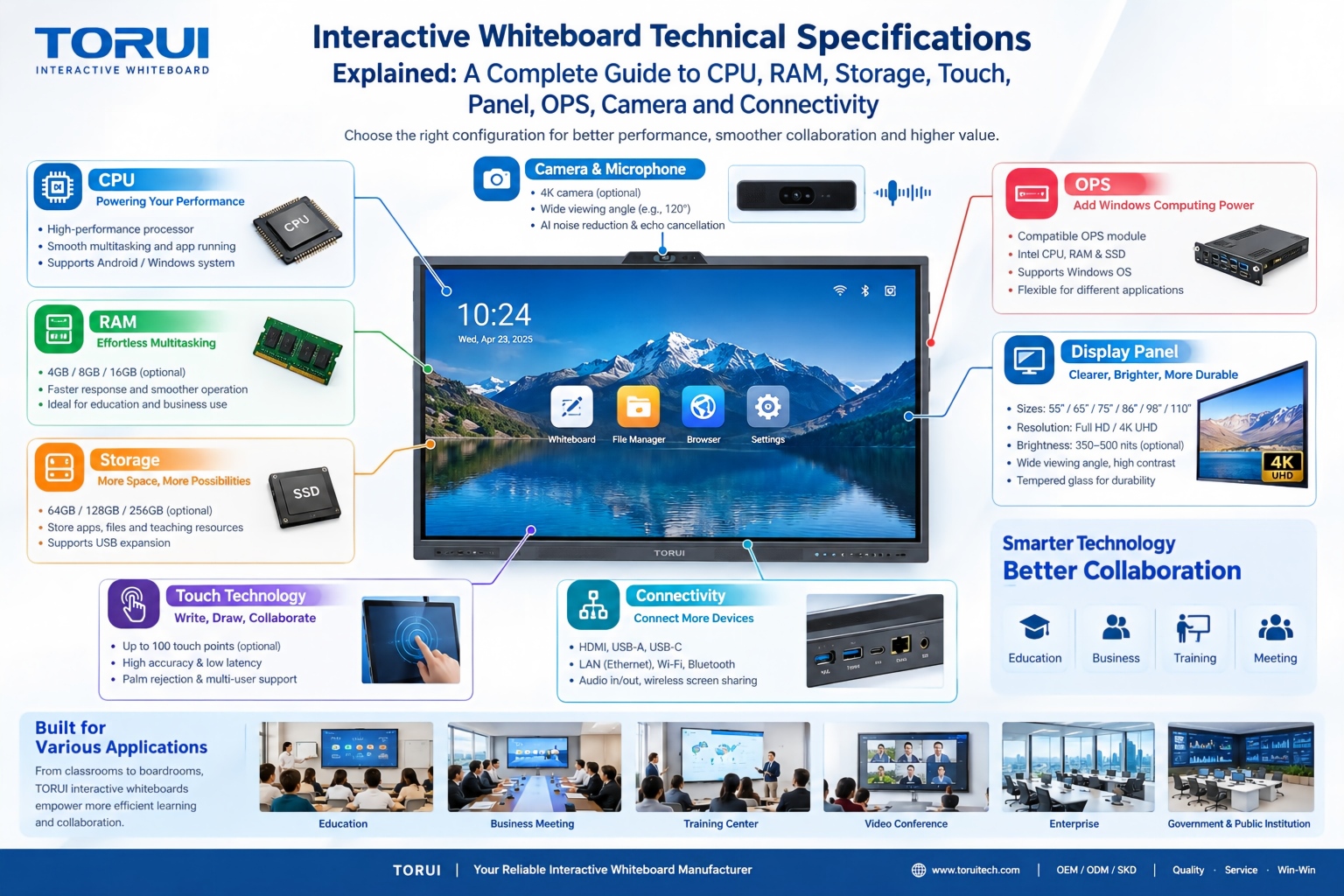
Choosing an interactive whiteboard involves more than comparing screen sizes and prices. For schools, businesses, distributors, wholesalers, and system integrators, understanding the technical specifications is essential to selecting a reliable product that meets different application requirements.
Interactive Whiteboard Technical Specifications Explained: A Complete Guide to CPU, RAM, Storage, Touch, Panel, OPS, Camera and Connectivity
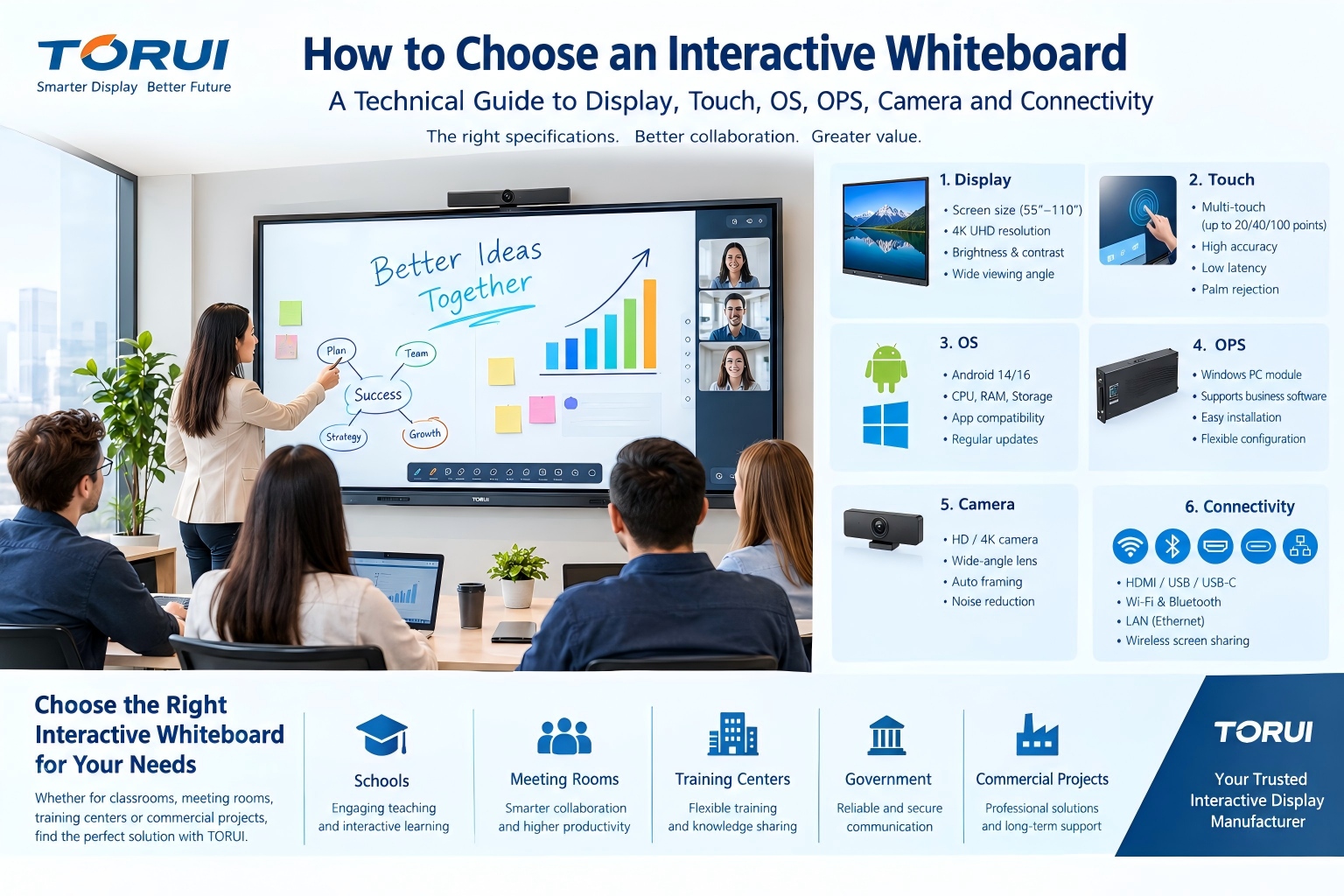
Choosing an interactive whiteboard for a school, meeting room, training center, government organization or commercial project requires more than comparing screen size and price. The most important specifications include display resolution, brightness, touch technology, operating system, processor, memory, storage, OPS compatibility, camera and microphone performance, connectivity, durability and after-sales support.
How to Choose an Interactive Whiteboard: A Technical Guide to Display, Touch, OS, OPS, Camera and Connectivity