
How to Use an Interactive Whiteboard in the Classroom
author: toruitech
2026-04-26

Interactive whiteboards have become essential tools in modern education, transforming traditional teaching into a more dynamic, engaging, and student-centered experience. When used effectively, they can significantly enhance both teaching efficiency and learning outcomes. Below is a practical guide to help educators maximize the value of an interactive whiteboard in the classroom.
First, preparation is key. Before the lesson begins, teachers should organize teaching materials such as presentations, videos, and digital worksheets. Most interactive whiteboards support multiple file formats, allowing seamless integration of multimedia resources. Structuring content in advance ensures smooth lesson delivery and avoids unnecessary interruptions.
Second, leverage multimedia to increase engagement. Unlike traditional blackboards, interactive whiteboards allow teachers to incorporate images, animations, and videos into lessons. For example, in science classes, complex concepts can be illustrated through simulations, while in language learning, audio and visual materials can improve comprehension. This multisensory approach helps students retain information more effectively.
Third, encourage student participation. One of the biggest advantages of an interactive whiteboard is its touch functionality. Teachers can invite students to come to the board to solve problems, drag and drop elements, or annotate content. This hands-on interaction not only makes learning more enjoyable but also improves student confidence and involvement.
Another important strategy is real-time annotation. Teachers can write notes, highlight key points, or draw diagrams directly on the screen during the lesson. These annotations can often be saved and shared with students afterward, making it easier for them to review the material. This feature is especially useful for summarizing key concepts at the end of a lesson.
Interactive whiteboards also support collaborative learning. Teachers can design group activities where students work together on tasks displayed on the board. For example, brainstorming sessions, quizzes, or problem-solving exercises can be conducted interactively. This fosters teamwork and critical thinking skills, which are essential in modern education.
In addition, integrating educational software and online resources can further enhance the teaching experience. Many interactive whiteboards are compatible with learning platforms, allowing teachers to access cloud-based content, conduct live quizzes, or even connect with remote classrooms. This expands the scope of teaching beyond physical boundaries.
Classroom management is another area where interactive whiteboards can be beneficial. Teachers can use timers, visual cues, and structured lesson flows displayed on the board to maintain student focus. Clear visual organization helps students follow along more easily and reduces distractions.
Finally, continuous improvement is essential. Teachers should regularly explore new features and tools available on their interactive whiteboard. Attending training sessions or sharing best practices with colleagues can help maximize its potential. The more familiar teachers become with the technology, the more effectively they can integrate it into their teaching.
In conclusion, an interactive whiteboard is not just a display tool but a powerful platform for interactive and engaging education. By combining thoughtful preparation, multimedia integration, student participation, and ongoing learning, teachers can create a more effective and inspiring classroom environment.
How to Import Interactive Whiteboard from China: The 2026 Step-by-Step Guide
Interactive Whiteboard International Shipping Solutions
Related Article

Choosing the right interactive whiteboard size is an important decision for distributors, wholesalers, and education technology suppliers. The 65-inch, 75-inch, and 86-inch interactive whiteboards are popular options for classrooms, meeting rooms, training centers, and commercial projects.
65 vs 75 vs 86-Inch Interactive Whiteboard: Which Model Should Distributors Choose?

Choosing the right interactive whiteboard manufacturer in China is an important decision for distributors, wholesalers, education technology suppliers, and system integrators. The right manufacturing partner can help businesses improve product quality, maintain competitive pricing, customize products for local markets, and build a sustainable distribution business.
Who Are the Best Interactive Whiteboard Manufacturers in China for B2B Distributors and Wholesalers?
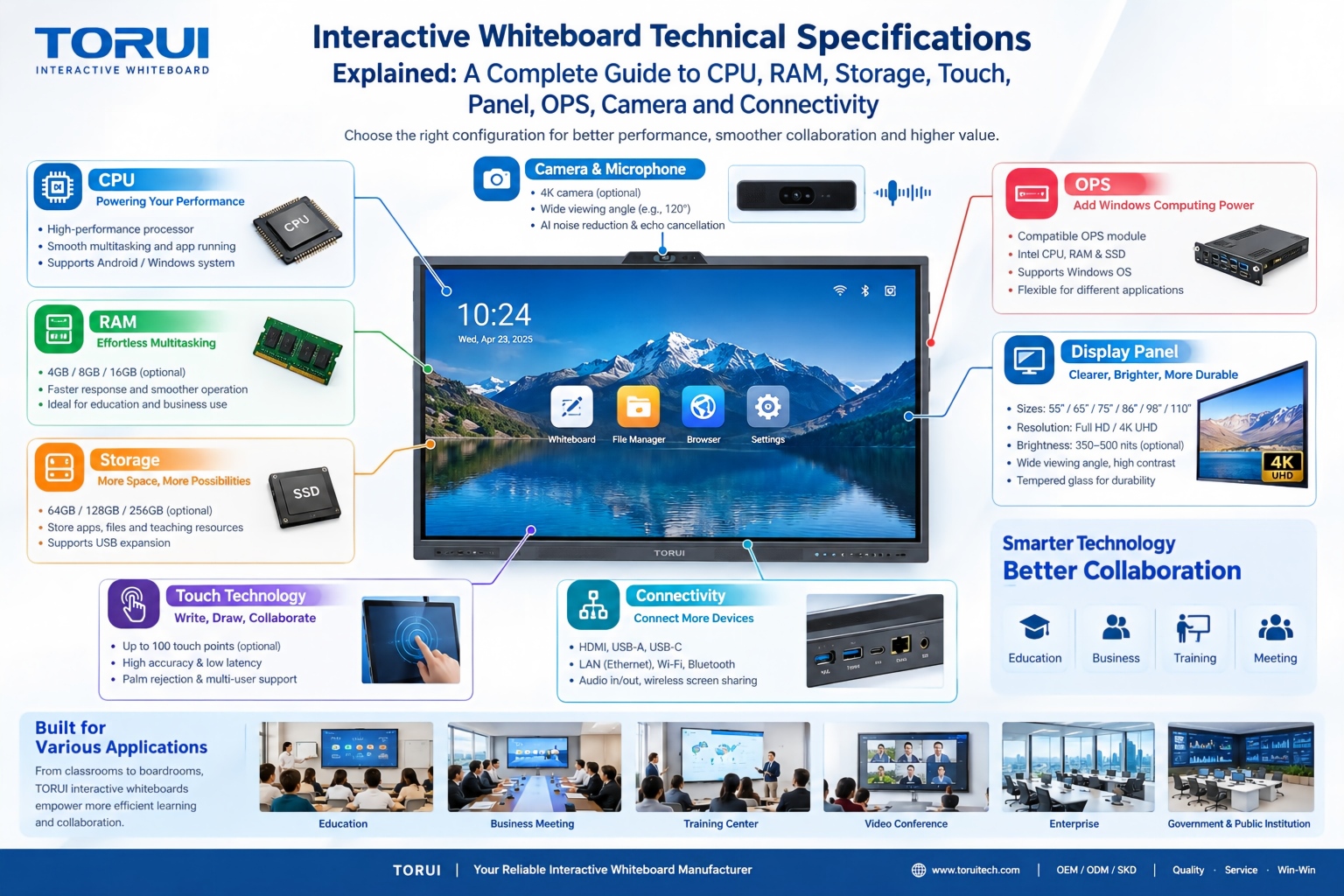
Choosing an interactive whiteboard involves more than comparing screen sizes and prices. For schools, businesses, distributors, wholesalers, and system integrators, understanding the technical specifications is essential to selecting a reliable product that meets different application requirements.
Interactive Whiteboard Technical Specifications Explained: A Complete Guide to CPU, RAM, Storage, Touch, Panel, OPS, Camera and Connectivity
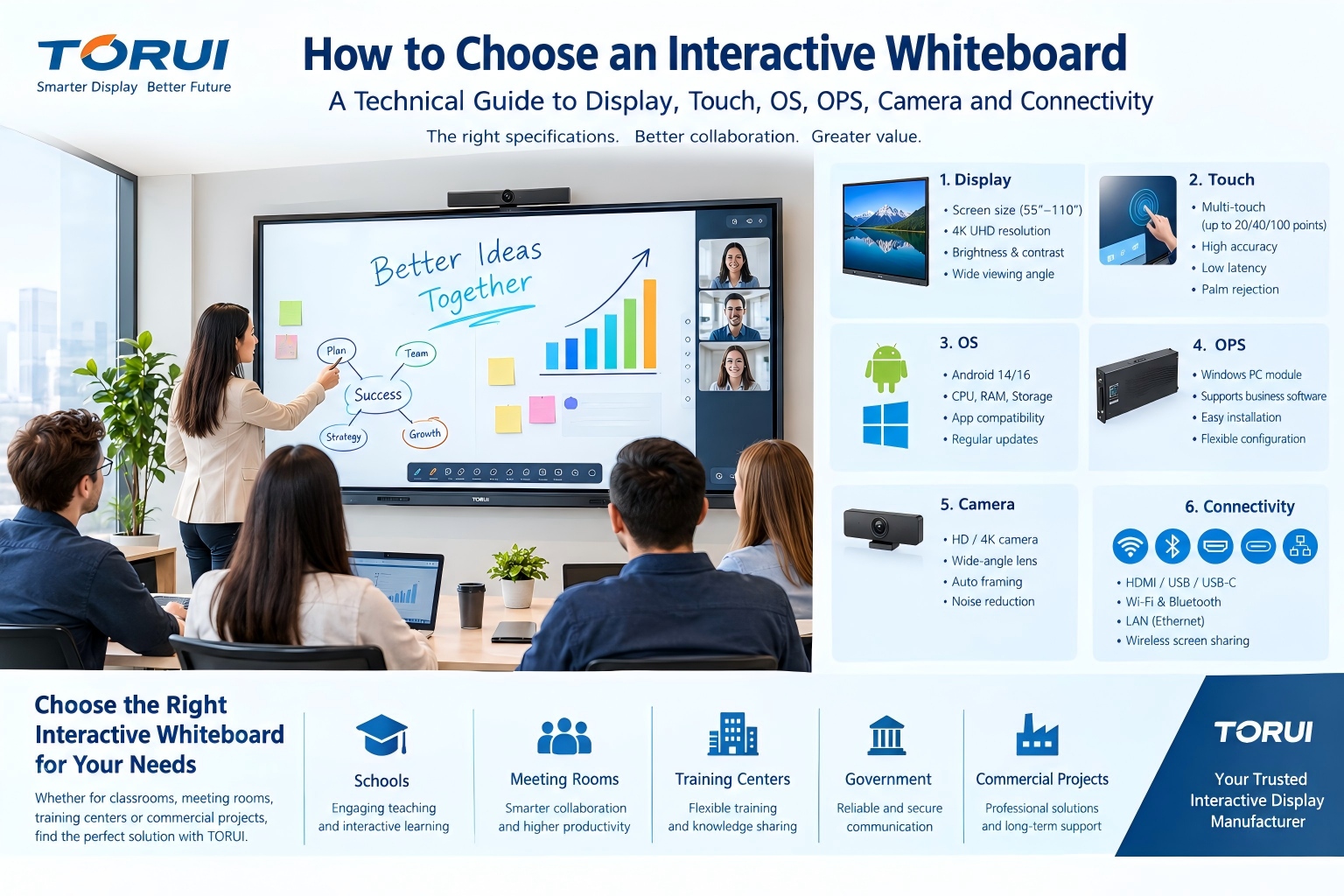
Choosing an interactive whiteboard for a school, meeting room, training center, government organization or commercial project requires more than comparing screen size and price. The most important specifications include display resolution, brightness, touch technology, operating system, processor, memory, storage, OPS compatibility, camera and microphone performance, connectivity, durability and after-sales support.
How to Choose an Interactive Whiteboard: A Technical Guide to Display, Touch, OS, OPS, Camera and Connectivity