Impact of Rising Memory Chip Prices on the Interactive Whiteboard Industry
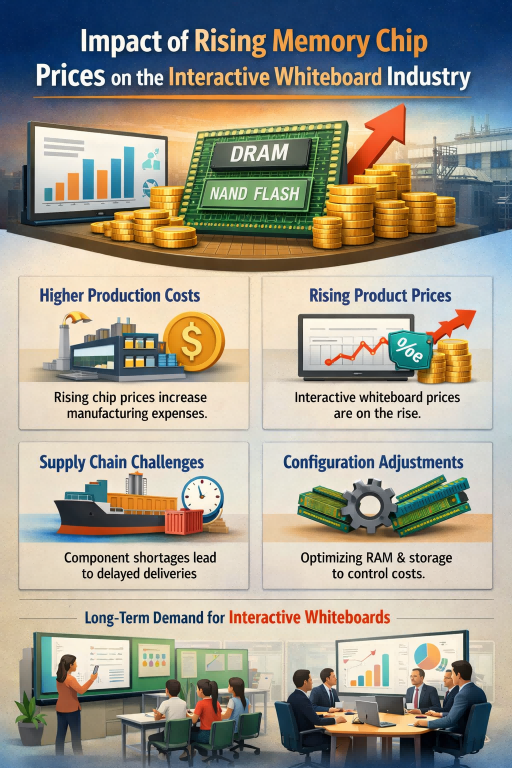
In recent years, the global semiconductor market has experienced periodic price increases, particularly in memory chips such as DRAM and NAND flash. These components are essential for many smart devices, including interactive whiteboards used in classrooms and corporate meeting rooms. As memory chip prices continue to rise, manufacturers, distributors, and buyers of interactive whiteboards are beginning to feel the impact across the entire supply chain.
1. Increased Production Costs for Manufacturers
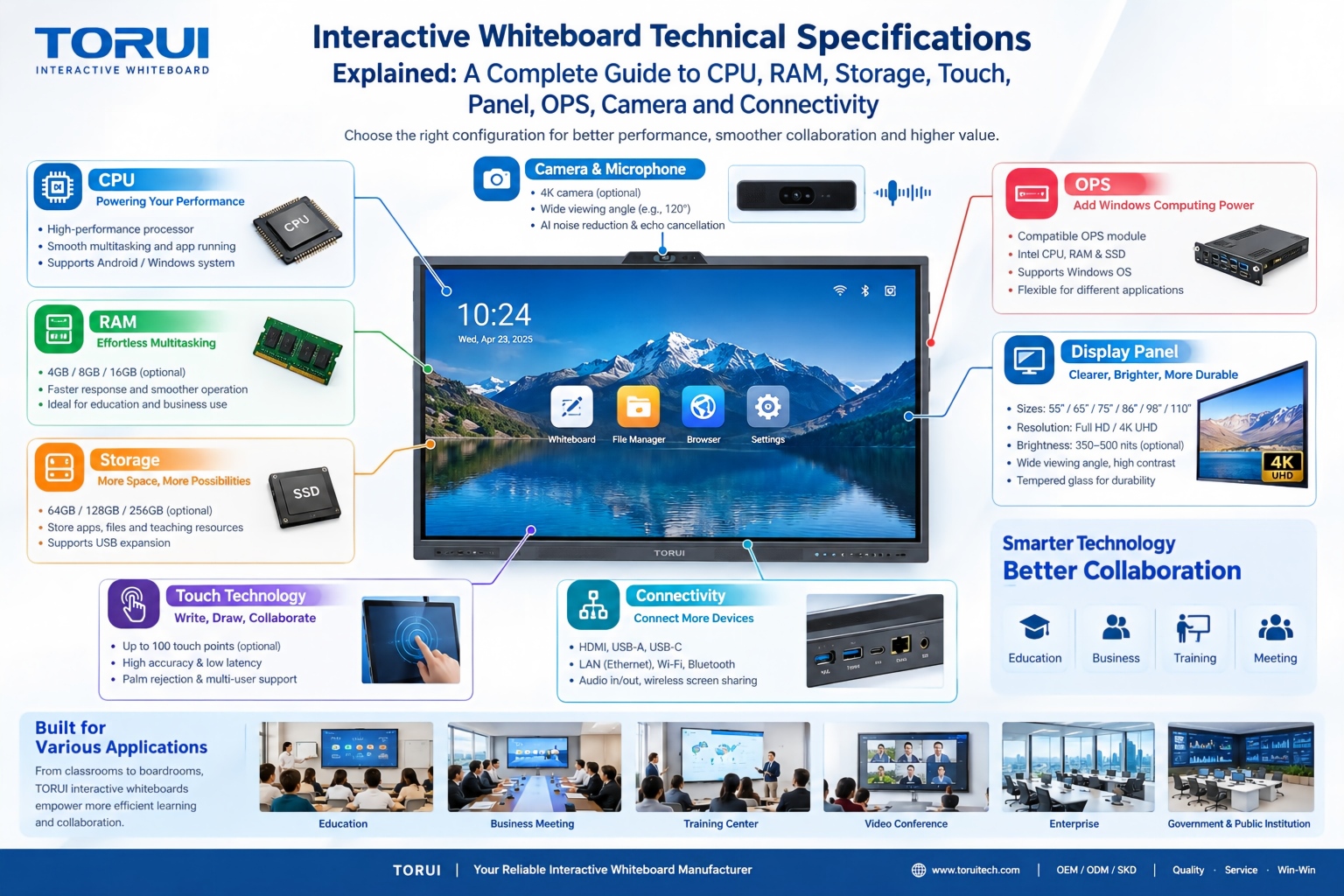
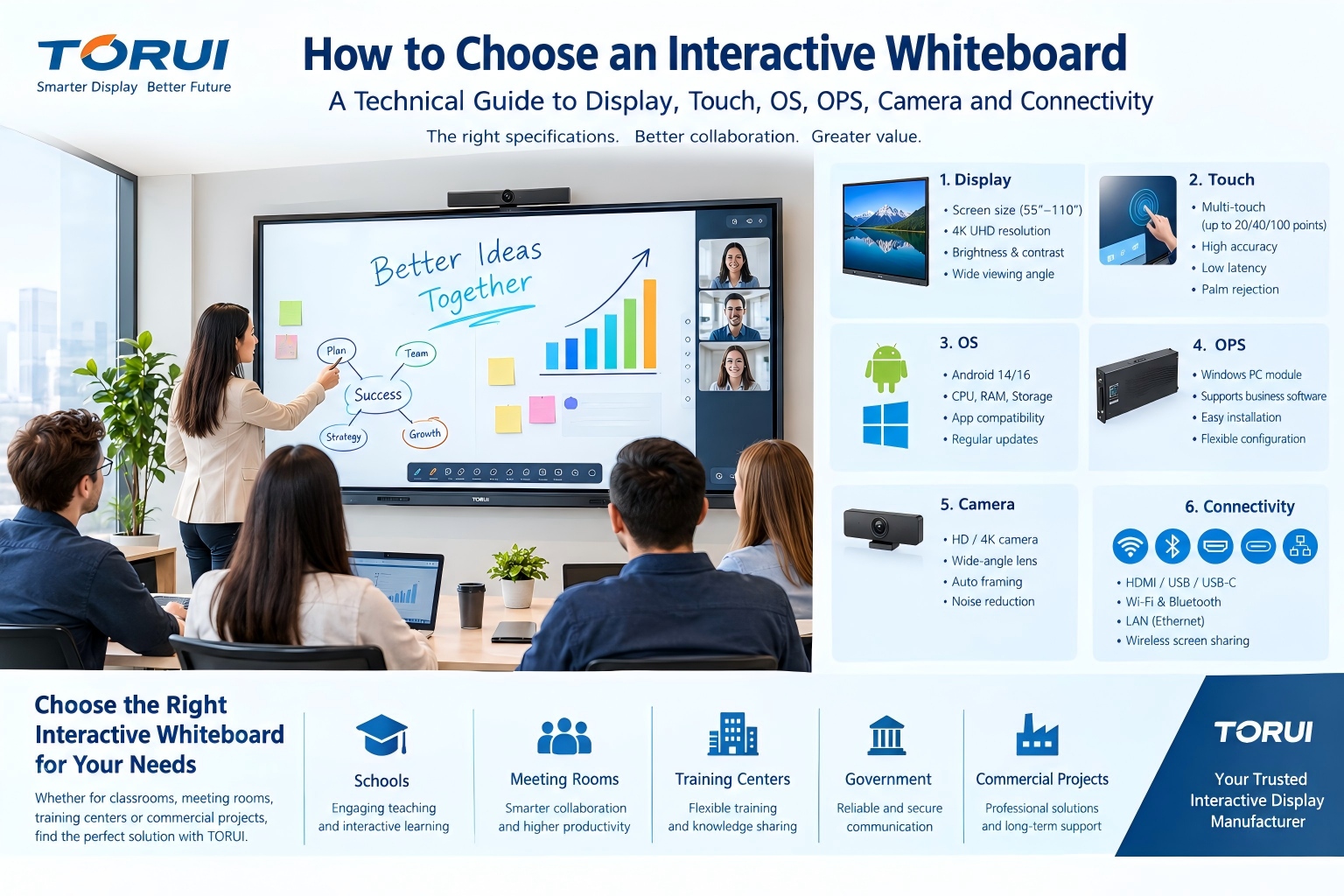
Memory chips are a core component of interactive whiteboards because they support system processing, operating systems, and application performance. Most modern interactive whiteboards operate similarly to large smart devices, often running Android or Windows systems and requiring sufficient RAM and storage to ensure smooth operation.
When DRAM and NAND flash prices rise, manufacturers must absorb higher component costs. Even a moderate increase in memory chip prices can significantly affect overall manufacturing expenses, especially for high-volume products such as 65-inch, 75-inch, and 86-inch interactive whiteboards. As a result, factories may need to adjust product pricing or optimize other components to maintain profitability.
2. Pressure on Product Pricing in the Global Market
Higher production costs often translate into increased product prices. For international buyers, including distributors, system integrators, and education procurement teams, this means that the cost of purchasing interactive whiteboards may gradually rise.
However, the interactive display market remains highly competitive. Many manufacturers try to balance price stability with cost pressure by improving supply chain efficiency, negotiating long-term contracts with chip suppliers, or adjusting hardware configurations. For example, some entry-level models may adopt optimized memory configurations to control overall pricing.
3. Impact on Product Configuration Strategies
Rising memory costs can also influence product configuration decisions. Interactive whiteboard manufacturers may carefully evaluate how much RAM and storage are necessary for typical classroom or meeting scenarios.
Instead of offering excessively high configurations, manufacturers may focus on balanced performance solutions. For example, an optimized combination of 4GB or 8GB RAM with appropriate storage can provide stable performance for education software, video conferencing, and interactive applications while keeping the device cost competitive.
4. Supply Chain Stability and Delivery Time
Memory chip price fluctuations are often linked to supply shortages or changes in global semiconductor demand. During periods of tight supply, lead times for key components may increase. This can affect production schedules and delivery timelines for large orders of interactive whiteboards.
Manufacturers with strong supply chain partnerships and inventory management capabilities are usually better positioned to maintain stable delivery times for international customers.
5. Long-Term Industry Outlook
Despite short-term price increases, the long-term demand for interactive whiteboards remains strong. Governments, schools, and enterprises worldwide continue investing in digital classrooms and smart meeting technologies. As semiconductor production capacity expands and supply chains stabilize, memory chip prices may gradually return to more balanced levels.
For buyers, the best strategy is to work with experienced manufacturers who maintain stable component sourcing and transparent pricing. This helps ensure consistent product quality, reliable delivery, and sustainable long-term cooperation.
Conclusion
Rising memory chip prices inevitably influence the cost structure of interactive whiteboards, affecting manufacturing expenses, product pricing, and supply chain management. However, through efficient sourcing strategies, optimized hardware configurations, and strong industry partnerships, manufacturers can continue delivering reliable and cost-effective solutions for the global education and business markets.
Interactive Display: Transforming Modern Education and Business Collaboration
Interactive Whiteboard vs Touch Screen Display: Understanding the Key Differences
Related Article