
Import Clearance Policies for Interactive Whiteboards
author: toruitech
2026-05-15
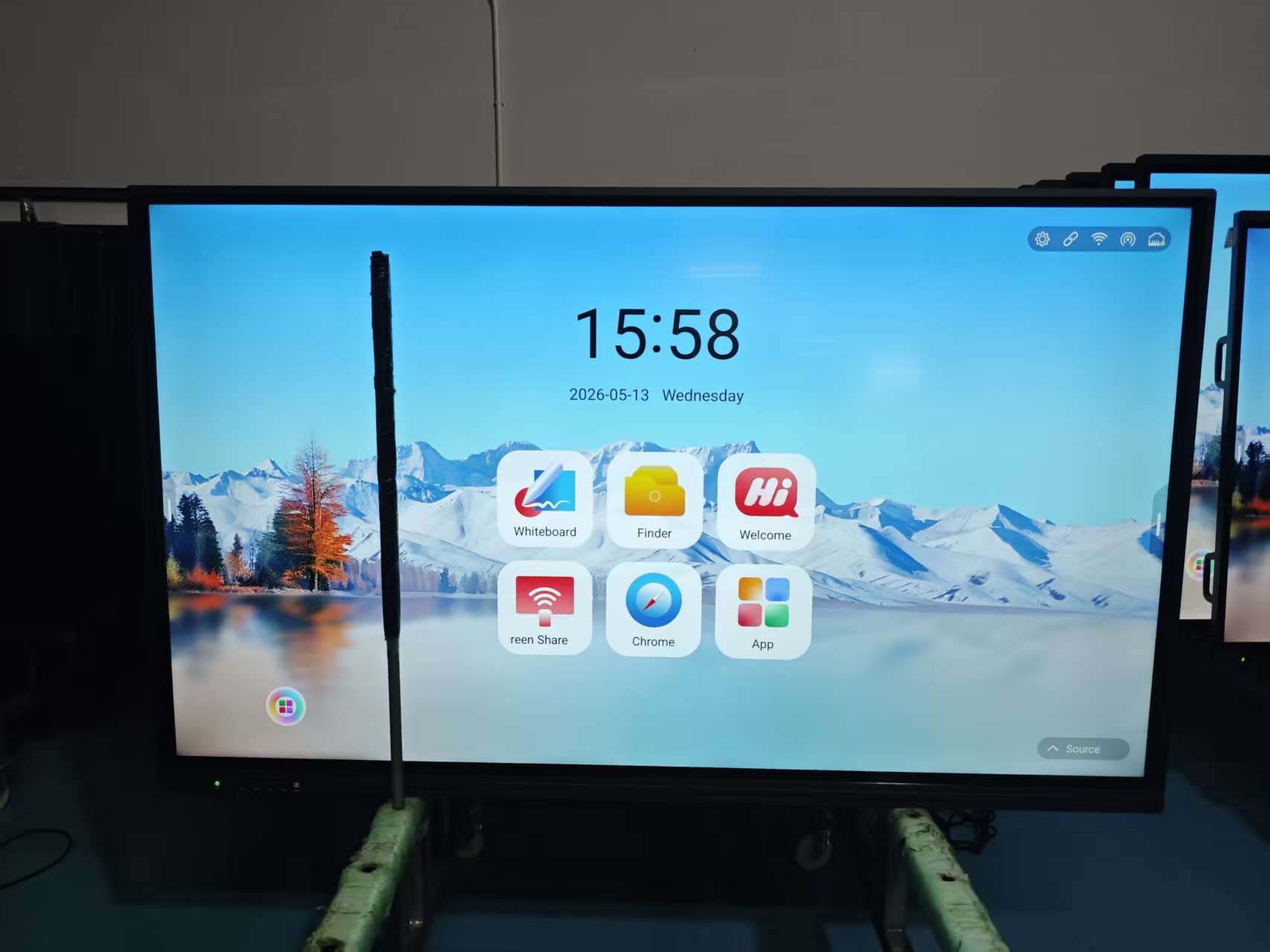
As global demand for smart classrooms and digital meeting solutions continues to grow, interactive whiteboards have become one of the most popular technology products in education and business sectors. However, importing interactive whiteboards into different countries involves complex customs clearance procedures, compliance requirements, and import regulations. Understanding import clearance policies can help importers reduce delays, avoid unexpected costs, and ensure smooth international trade operations.
Understanding Interactive Whiteboard Import Regulations
Interactive whiteboards are generally classified as electronic display equipment or educational technology products. Different countries may apply different HS codes depending on the product specifications, such as touchscreen functions, Android systems, OPS computers, cameras, or built-in software.
Before importing, buyers should confirm the correct HS code with local customs authorities or customs brokers. Incorrect classification may lead to higher import duties, customs penalties, or shipment delays.
In many markets, importers must also comply with local electrical safety and electromagnetic compatibility regulations. Common certifications include:
-
CE Certification for European markets
-
FCC Certification for the United States
-
RoHS Compliance for environmental protection
-
SASO Certification for Saudi Arabia
-
CCC Certification for China
-
CB Certification for international electrical safety standards
Having complete certification documents before shipment can significantly speed up customs clearance.
Essential Documents for Customs Clearance
Proper documentation is one of the most important parts of successful import clearance. Missing or inaccurate paperwork is a major reason for customs delays worldwide.
The standard documents required for importing interactive whiteboards usually include:
-
Commercial Invoice
-
Packing List
-
Bill of Lading or Air Waybill
-
Certificate of Origin
-
Product Certifications
-
Import License (if required by local regulations)
-
Insurance Documents
Some countries may also require technical specifications, user manuals, or product testing reports. Importers should always verify local requirements before placing large orders.
Import Duties and Tax Considerations
Import duties and VAT rates vary significantly from country to country. Some governments offer reduced tariffs for educational equipment, while others apply standard electronics import taxes.
For example, certain developing countries may provide tax incentives for smart education products used in schools or government projects. On the other hand, regions with strict electronics regulations may impose additional inspection fees or compliance testing charges.
Importers should carefully calculate:
-
Customs duties
-
VAT or GST
-
Port handling charges
-
Customs broker fees
-
Inland transportation costs
-
Storage or demurrage fees
Accurate landed cost calculations help businesses avoid profit loss and pricing issues.
The Importance of Working With Experienced Suppliers
Reliable manufacturers and exporters play a critical role in smooth customs clearance. Experienced suppliers usually understand international shipping requirements and can prepare compliant export documents correctly.
Professional interactive whiteboard manufacturers often provide:
-
Export-ready packaging
-
Correct HS code declarations
-
Product compliance certificates
-
Technical documentation support
-
Shipping coordination assistance
Choosing an experienced supplier reduces the risk of customs inspection problems and shipment rejection.
Common Customs Clearance Challenges
Importers of interactive whiteboards may face several common issues during customs clearance, including:
-
Incorrect product declarations
-
Missing certifications
-
Delayed customs inspections
-
Incomplete shipping documents
-
Unexpected tariff changes
-
Local compliance updates
To minimize risks, businesses should stay informed about changing import regulations and work closely with freight forwarders and customs brokers.
Final Thoughts
Import clearance policies for interactive whiteboards can vary widely across international markets, but proper preparation can make the process much more efficient. By understanding local regulations, preparing complete documentation, confirming certifications, and partnering with experienced suppliers, importers can reduce delays, control costs, and ensure successful product delivery.
As smart education and digital collaboration continue expanding globally, businesses that master import compliance procedures will gain a stronger advantage in the competitive interactive display market.
How to Choose the Right Size for an Interactive Whiteboard
Interactive Whiteboard After-Sales Warranty Policy: What Buyers Should Know
Related Article

Choosing the right interactive whiteboard size is an important decision for distributors, wholesalers, and education technology suppliers. The 65-inch, 75-inch, and 86-inch interactive whiteboards are popular options for classrooms, meeting rooms, training centers, and commercial projects.
65 vs 75 vs 86-Inch Interactive Whiteboard: Which Model Should Distributors Choose?

Choosing the right interactive whiteboard manufacturer in China is an important decision for distributors, wholesalers, education technology suppliers, and system integrators. The right manufacturing partner can help businesses improve product quality, maintain competitive pricing, customize products for local markets, and build a sustainable distribution business.
Who Are the Best Interactive Whiteboard Manufacturers in China for B2B Distributors and Wholesalers?
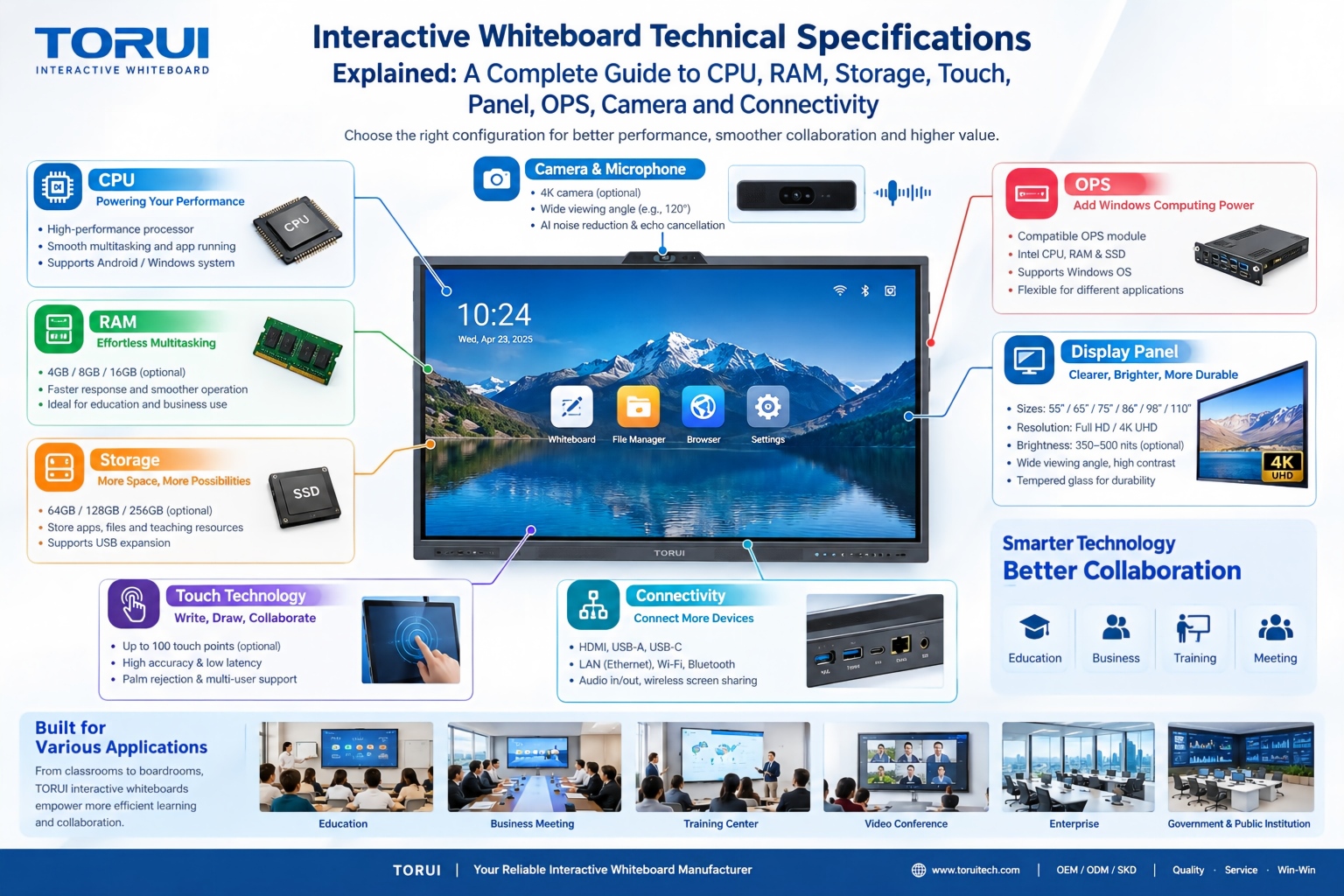
Choosing an interactive whiteboard involves more than comparing screen sizes and prices. For schools, businesses, distributors, wholesalers, and system integrators, understanding the technical specifications is essential to selecting a reliable product that meets different application requirements.
Interactive Whiteboard Technical Specifications Explained: A Complete Guide to CPU, RAM, Storage, Touch, Panel, OPS, Camera and Connectivity
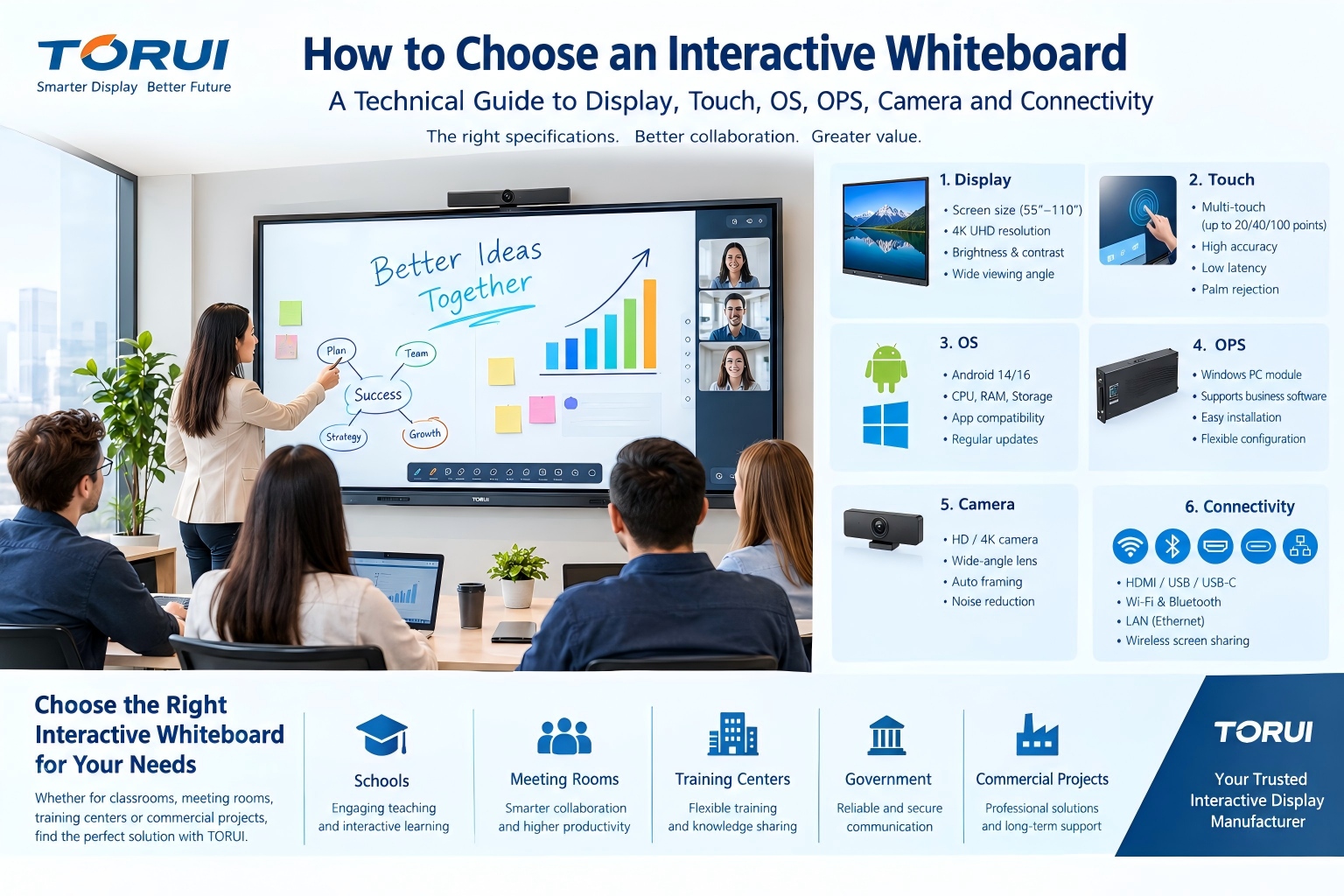
Choosing an interactive whiteboard for a school, meeting room, training center, government organization or commercial project requires more than comparing screen size and price. The most important specifications include display resolution, brightness, touch technology, operating system, processor, memory, storage, OPS compatibility, camera and microphone performance, connectivity, durability and after-sales support.
How to Choose an Interactive Whiteboard: A Technical Guide to Display, Touch, OS, OPS, Camera and Connectivity