
Interactive Technology Makes Learning Accessible and Equalizes Education
author: toruitech
2025-09-09
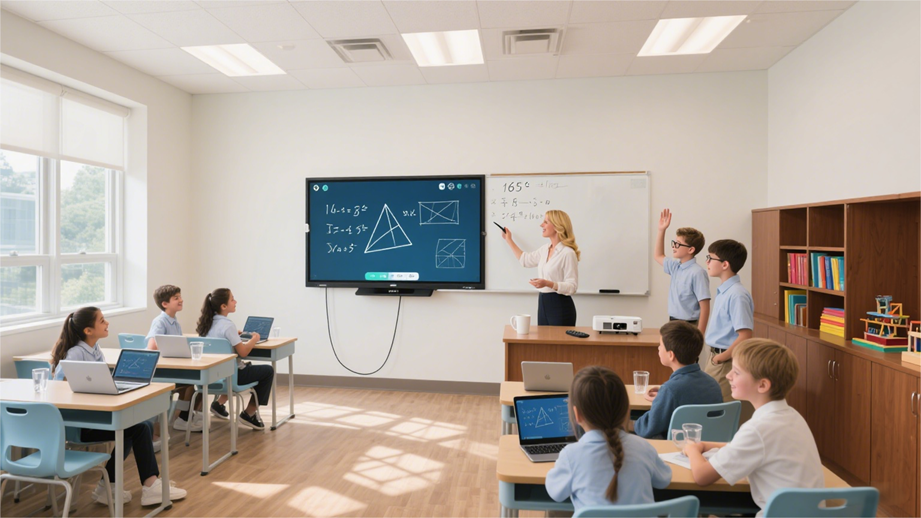
In today's information society, the rapid development of science and technology is profoundly changing our lifestyles and continuously reshaping the very fabric of education. The widespread use of interactive technology, in particular, has made "learning accessible" no longer just a slogan but a reality. At the same time, technology is empowering educational equity, helping more children overcome geographical, economic, and resource barriers and enjoy high-quality learning opportunities. This article will delve into the definition, practical applications, and role of interactive technology in promoting educational equity.
1. Interactive Technology Makes Learning Accessible
Interactive technology, as the name suggests, refers to a technology system that enables real-time interaction between people and information systems through various means. It includes touchscreens, interactive whiteboards, virtual reality (VR), augmented reality (AR), intelligent voice recognition, and other forms. In education, the application of interactive technology has greatly enriched teaching methods, making learning more engaging, convenient, and efficient. For example, students can directly participate in classroom discussions, answer online questions, and demonstrate knowledge using interactive whiteboards. Teachers can flexibly design teaching activities using multimedia resources and intelligent tools, making classrooms more interactive and engaging. In the past, learning was often confined to classrooms, textbooks, and teacher explanations. Many pieces of knowledge were difficult to present intuitively, and student engagement was limited. Today, with the help of interactive technologies, students can access knowledge resources anytime and anywhere through online platforms and smart devices, enabling personalized learning and instant feedback. Whether in cities or rural areas, day or night, learning has become "at your fingertips," greatly expanding the spatial and temporal boundaries of education.
II. The Practical Significance of Technology in Promoting Educational Equity
Educational equity is a key cornerstone of social progress and national development. However, in reality, due to differences in geography, economic status, and family background, educational resources are extremely unevenly distributed, making it difficult for some groups to access quality education. Technological innovation, particularly the development of interactive technologies, offers new possibilities for addressing these issues.
First, online learning platforms and distance education have broken down geographical barriers. Through the internet, students in remote areas can access high-quality teachers and course resources, enabling them to "take the same classes together." Interactive technologies make remote classrooms highly engaging and interactive, allowing students to ask questions, discuss, and present their work, just as in a physical classroom, significantly enhancing the learning experience.
Second, intelligent education tools and big data analytics help tailor instruction to individual needs. AI technology can intelligently deliver personalized learning content and exercises based on students' learning trajectory and interests, promptly identifying and addressing knowledge gaps. This allows students, regardless of their starting point, to develop a growth path tailored to their needs, thereby narrowing the educational gap.
Secondly, interactive technology lowers the barrier to entry for education. Many interactive learning tools are affordable and easy to use, significantly lowering the technological barriers for both families and schools. Even students with limited financial resources can participate in interactive learning through devices like mobile phones and tablets, enjoying the educational benefits of technology.
III. Case Studies and Outlook
In recent years, many schools and educational institutions around the world have actively introduced technology products such as interactive whiteboards, smart classrooms, and online interactive platforms, achieving remarkable results. For example, a rural primary school, through remote interactive classrooms, allows children to learn simultaneously with renowned urban teachers, significantly improving their academic performance and interest. AI-powered writing and grading tools and intelligent homework systems also reduce teachers' workloads and increase efficiency, allowing students to receive more timely and personalized feedback.
With the continued maturity of new technologies such as 5G, AI, and the Internet of Things, interactive technology will play an even greater role in education. In the future, innovative applications such as brain-computer interfaces, virtual laboratories, and immersive interactive spaces will continue to emerge, making learning truly ubiquitous and accessible to everyone.
Conclusion
Using interactive technologies to make learning accessible not only improves learning efficiency and experience, but also provides a solid foundation for achieving educational equity. Technological innovation ignites hope for every child, allowing high-quality educational resources to transcend barriers and reach thousands of households around the world. In the future, with the deep integration of technology and education, we have reason to believe that the dream of educational equity will eventually be realized, and the world of learning will become even broader and more beautiful.
interactive whiteboards in the classroom
Daily Use and Maintenance of Interactive Whiteboards
Related Article

Choosing the right interactive whiteboard size is an important decision for distributors, wholesalers, and education technology suppliers. The 65-inch, 75-inch, and 86-inch interactive whiteboards are popular options for classrooms, meeting rooms, training centers, and commercial projects.
65 vs 75 vs 86-Inch Interactive Whiteboard: Which Model Should Distributors Choose?

Choosing the right interactive whiteboard manufacturer in China is an important decision for distributors, wholesalers, education technology suppliers, and system integrators. The right manufacturing partner can help businesses improve product quality, maintain competitive pricing, customize products for local markets, and build a sustainable distribution business.
Who Are the Best Interactive Whiteboard Manufacturers in China for B2B Distributors and Wholesalers?
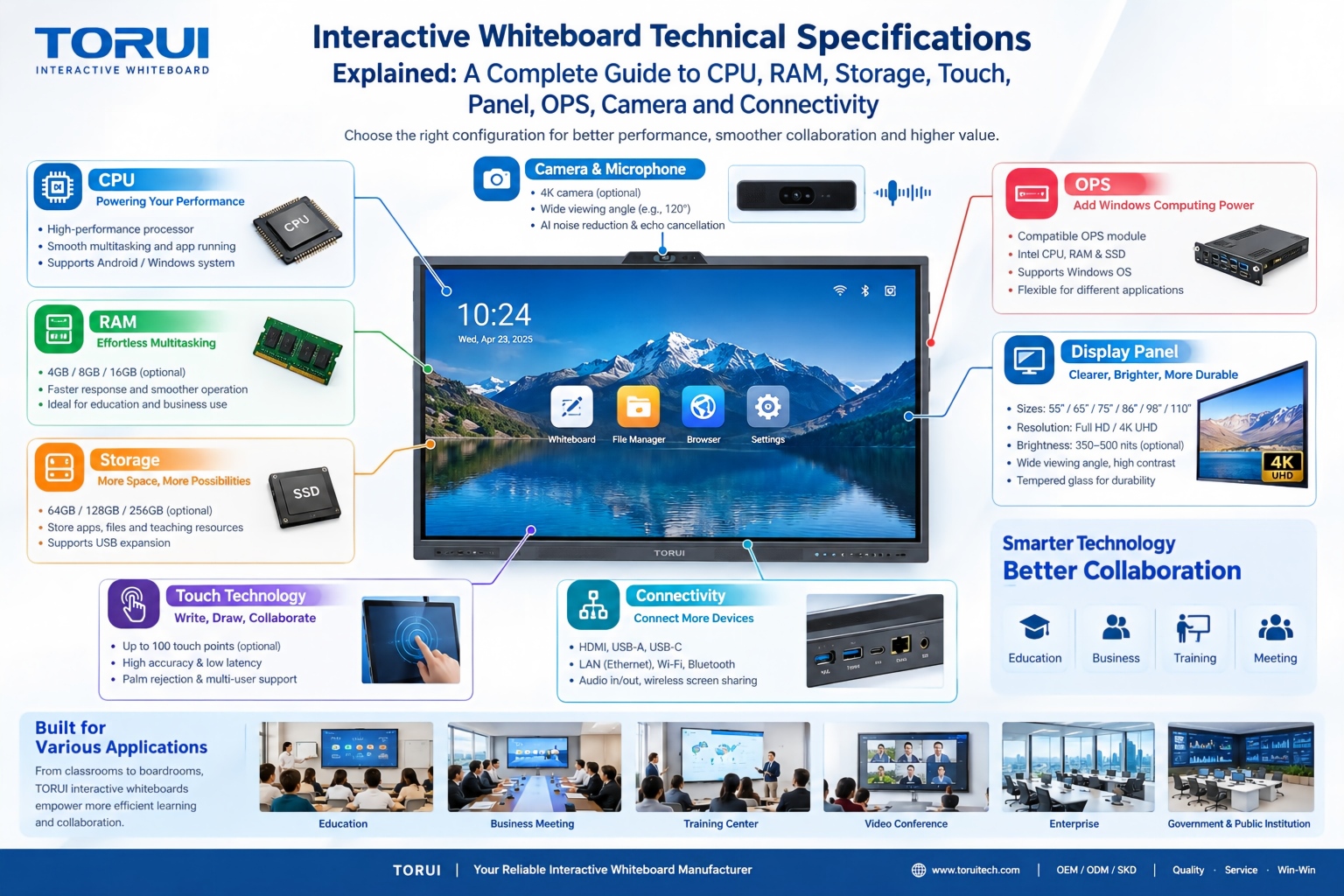
Choosing an interactive whiteboard involves more than comparing screen sizes and prices. For schools, businesses, distributors, wholesalers, and system integrators, understanding the technical specifications is essential to selecting a reliable product that meets different application requirements.
Interactive Whiteboard Technical Specifications Explained: A Complete Guide to CPU, RAM, Storage, Touch, Panel, OPS, Camera and Connectivity
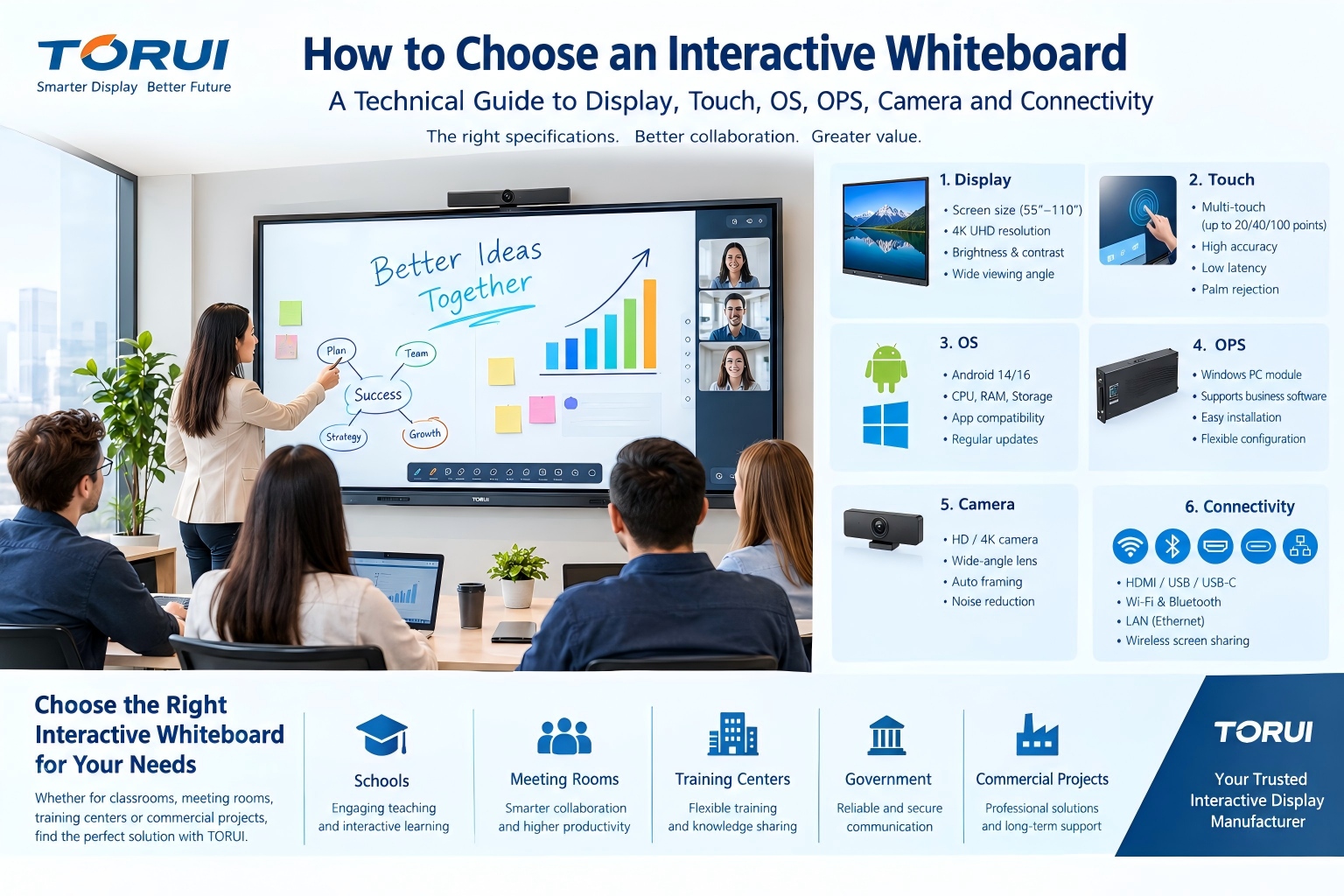
Choosing an interactive whiteboard for a school, meeting room, training center, government organization or commercial project requires more than comparing screen size and price. The most important specifications include display resolution, brightness, touch technology, operating system, processor, memory, storage, OPS compatibility, camera and microphone performance, connectivity, durability and after-sales support.
How to Choose an Interactive Whiteboard: A Technical Guide to Display, Touch, OS, OPS, Camera and Connectivity