
Interactive Whiteboard AI Camera: A Smart Upgrade for Modern Classrooms and Meeting Rooms
author: toruitech
2026-01-12

The interactive whiteboard AI camera is rapidly becoming a standard feature in smart classrooms, conference rooms, and hybrid collaboration spaces. As remote learning and video conferencing continue to grow, traditional fixed cameras are no longer sufficient. AI-powered cameras integrated into interactive whiteboards offer intelligent, automated, and high-quality visual experiences that significantly improve communication and engagement.
What Is an Interactive Whiteboard AI Camera?
An interactive whiteboard AI camera is an advanced imaging system enhanced with artificial intelligence algorithms. Unlike ordinary webcams, it can automatically recognize people, movement, and teaching or presentation areas. When built into an interactive whiteboard, the AI camera works seamlessly with touch displays, software platforms, and collaboration tools to create a more natural and efficient user experience.
Core Functions and Technologies
-
Auto Framing and Presenter Tracking
The AI camera automatically detects the presenter and keeps them centered in the frame. As the teacher or speaker moves across the room or writes on the board, the camera smoothly follows, eliminating the need for manual adjustments. -
Intelligent Zoom and Content Focus
Advanced AI algorithms allow the camera to zoom in on key areas, such as handwritten notes, diagrams, or demonstration zones. This ensures remote viewers can clearly see both the presenter and the content on the interactive whiteboard. -
Speaker Recognition
In multi-person environments, the AI camera can identify the active speaker and shift focus accordingly. This feature is particularly useful in hybrid meetings and group discussions, improving clarity and communication flow. -
Image Optimization and Low-Light Enhancement
AI-based image processing automatically adjusts brightness, contrast, and sharpness in real time. Even in classrooms or offices with uneven lighting, the video remains clear and professional. -
Privacy and Security Features
Many AI camera systems support background blurring, participant masking, and quick camera-disable options. These functions help organizations comply with privacy regulations and protect sensitive environments.
Benefits for Education
In educational settings, interactive whiteboard AI cameras greatly enhance hybrid and distance learning. Teachers can concentrate on teaching instead of managing camera angles, while online students enjoy a dynamic, immersive classroom view. Lessons become easier to follow, more engaging, and more interactive.
Additionally, AI cameras enable high-quality lesson recording. Schools can build digital teaching resources with clear visuals and consistent framing, supporting flipped classrooms and self-paced learning models.
Benefits for Business and Training
For enterprises, AI camera–equipped interactive whiteboards improve virtual meetings, product demonstrations, and employee training. Auto tracking and speaker focus create a more human, face-to-face experience, helping remote teams collaborate more effectively. This reduces communication barriers and increases productivity across global teams.
Buyer Considerations for Long-Term Value
When choosing an interactive whiteboard AI camera solution, buyers should consider camera resolution, tracking accuracy, compatibility with major video platforms, system stability, and data security. A well-integrated AI camera ensures smooth performance and a better return on investment.
Conclusion
The interactive whiteboard AI camera is more than a visual accessory—it is a core technology that transforms how people teach, learn, and collaborate. By delivering intelligent tracking, clear visuals, and user-friendly automation, AI cameras help create smarter, more connected environments. For schools and businesses planning future-ready digital spaces, investing in interactive whiteboards with AI camera technology is a strategic and forward-looking choice.
Why CE, FCC and RoHS Certifications Matter for Interactive Whiteboards
How to Choose the Right Interactive Whiteboard for Classrooms in 2026
Related Article

Choosing the right interactive whiteboard size is an important decision for distributors, wholesalers, and education technology suppliers. The 65-inch, 75-inch, and 86-inch interactive whiteboards are popular options for classrooms, meeting rooms, training centers, and commercial projects.
65 vs 75 vs 86-Inch Interactive Whiteboard: Which Model Should Distributors Choose?

Choosing the right interactive whiteboard manufacturer in China is an important decision for distributors, wholesalers, education technology suppliers, and system integrators. The right manufacturing partner can help businesses improve product quality, maintain competitive pricing, customize products for local markets, and build a sustainable distribution business.
Who Are the Best Interactive Whiteboard Manufacturers in China for B2B Distributors and Wholesalers?
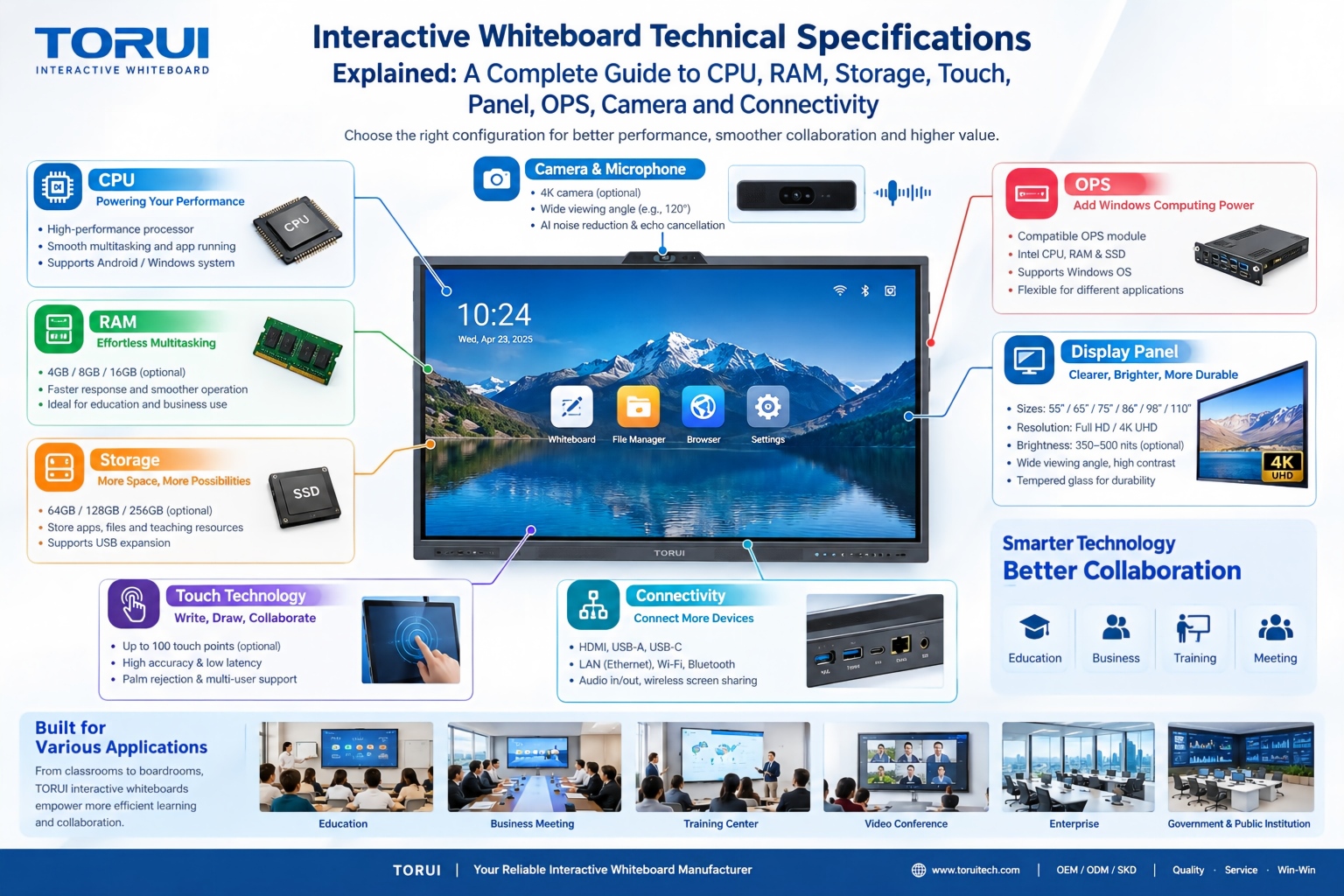
Choosing an interactive whiteboard involves more than comparing screen sizes and prices. For schools, businesses, distributors, wholesalers, and system integrators, understanding the technical specifications is essential to selecting a reliable product that meets different application requirements.
Interactive Whiteboard Technical Specifications Explained: A Complete Guide to CPU, RAM, Storage, Touch, Panel, OPS, Camera and Connectivity
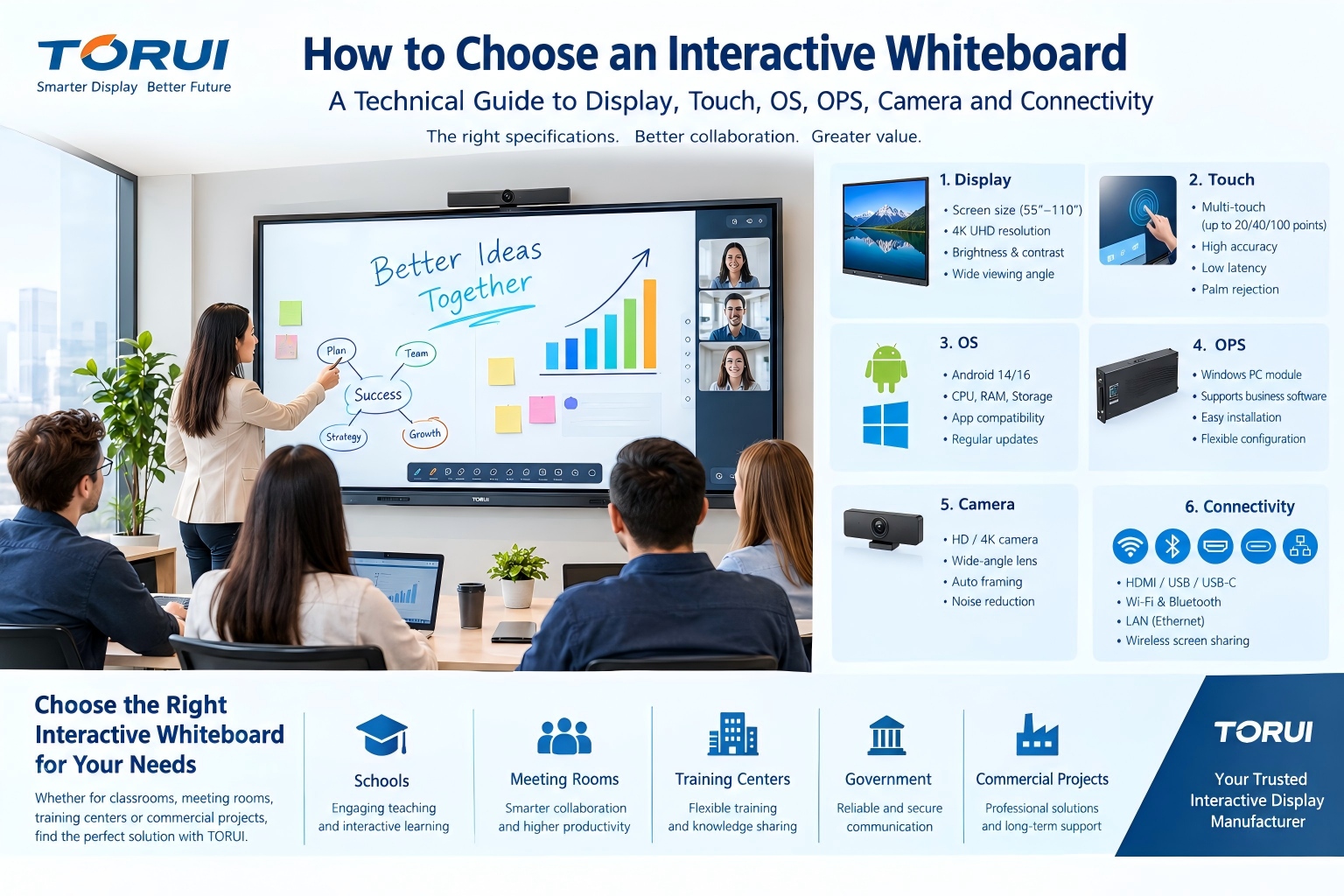
Choosing an interactive whiteboard for a school, meeting room, training center, government organization or commercial project requires more than comparing screen size and price. The most important specifications include display resolution, brightness, touch technology, operating system, processor, memory, storage, OPS compatibility, camera and microphone performance, connectivity, durability and after-sales support.
How to Choose an Interactive Whiteboard: A Technical Guide to Display, Touch, OS, OPS, Camera and Connectivity