
Interactive Whiteboard Brightness Analysis
author: toruitech
2025-08-20
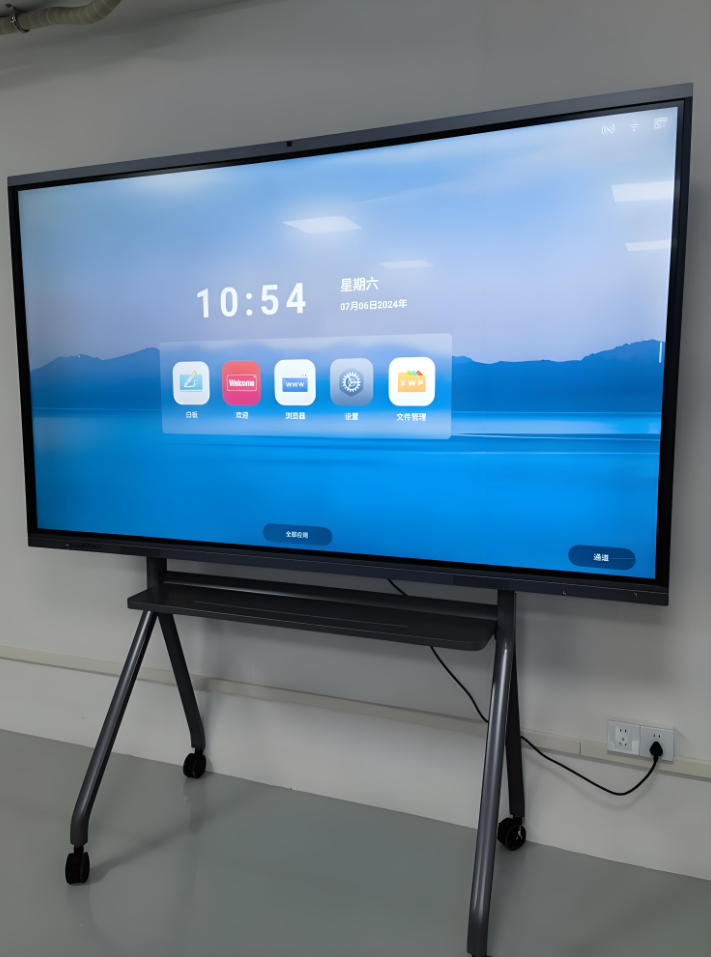
With the widespread adoption of information-based teaching and smart office work, interactive whiteboards have become a vital feature of modern classrooms and conference rooms. They integrate the functions of traditional blackboards, computers, and projectors, bringing significant convenience and innovation to teaching and office environments. Among numerous technical parameters, brightness is a crucial factor influencing the display quality of interactive whiteboards, directly impacting the user experience and the efficiency of teaching and meetings. This article will provide an in-depth analysis of interactive whiteboard brightness, including its definition, influencing factors, industry standards, practical applications, and purchasing recommendations.
1. Definition and Significance of Brightness
Brightness refers to the intensity of light emitted by an interactive whiteboard screen, measured in candelas per square meter (cd/m², also known as "nits"). Higher brightness improves screen visibility in bright environments, resulting in clearer content. In teaching and meeting settings, whiteboards are often used during daylight hours, in well-lit areas, or with large windows. Therefore, brightness is a key factor affecting image quality and information transmission efficiency. Too low brightness can cause blurry images and color distortion, affecting the viewing experience for teachers, students, and meeting attendees. Excessive brightness can cause visual fatigue and even negatively impact health.
2. Factors Affecting Brightness
Display Technology
Interactive whiteboards primarily use display technologies such as liquid crystal display (LCD), LED backlighting, and OLED. LED backlighting is the mainstream choice due to its high brightness, low energy consumption, and long lifespan. Different technologies have different upper and lower brightness limits and uniformity, which directly impacts actual performance.
Screen Size and Resolution
Large-size whiteboards require higher brightness to ensure clarity even at a distance. High-resolution screens require more uniform brightness distribution to avoid dark areas or bright spots.
Ambient Lighting
Large-size whiteboards require higher brightness to ensure clarity even at a distance. High-resolution screens require more uniform brightness distribution to avoid dark spots or bright spots.
Ambient Lighting
The lighting conditions and natural light intensity in classrooms and meeting rooms can affect whiteboard visibility. In strong direct sunlight or backlit environments, low-brightness screens can be easily overwhelmed by ambient light, making the content difficult to read.
Surface Treatment
Some interactive whiteboards use matte or anti-glare coatings, which effectively reduce reflections and improve readability in complex lighting conditions, but may also slightly reduce the actual screen brightness. III. Industry Brightness Standards and Current Application Status
Based on industry experience and mainstream product specifications, the brightness of interactive whiteboards generally ranges from 250cd/m² to 400cd/m². For ordinary classrooms and conference rooms, brightness levels above 300cd/m² meet most requirements. For specialized venues such as exhibition halls and large lecture halls, high-brightness products above 400cd/m² are recommended to ensure clear display from long distances and from multiple angles.
Internet searches reveal that some high-end interactive whiteboards can even reach 500cd/m² or higher, supporting HDR (High Dynamic Range) display, making them suitable for professional applications requiring high color and detail. However, energy consumption and heat dissipation must also be considered to avoid overheating or excessive energy consumption caused by high brightness.
IV. The Relationship between Brightness and Teaching and Meeting Efficiency
Brightness directly impacts the clarity and efficiency of information transmission. Adequately bright interactive whiteboards can effectively enhance the visibility of teaching content, reduce misinterpretation or omissions caused by ambient light interference, and enhance interaction and engagement between teachers and students. In conference settings, high-brightness whiteboards ensure clear presentations of presentations, charts, and videos, improving communication efficiency and decision-making quality. Furthermore, a uniform screen brightness reduces visual fatigue, protects users' eyesight, and enhances the overall experience.
V. Purchasing Recommendations
Select appropriate brightness based on the usage environment
For standard classrooms and conference rooms, it is recommended to choose products with a brightness of 300 cd/m² or above. For bright environments or large spaces, higher brightness should be considered.
Focus on brightness uniformity and anti-glare design
Selecting products with features such as anti-glare coatings and matte finishes can effectively improve readability in complex lighting conditions.
Comprehensively Consider Energy Consumption and Heat Dissipation
High-brightness products require a good heat dissipation system and energy-saving design to ensure long-term stable operation.
Field Testing and Experience
It is recommended to test the whiteboard's brightness performance in actual use environments to ensure it meets the actual needs of teaching and meetings.
Conclusion
Brightness, as a key technical parameter of interactive whiteboards, affects display quality, user experience, and teaching and meeting efficiency. When purchasing and using interactive whiteboards, users should carefully select brightness parameters based on their specific environment and needs, paying attention to uniformity and anti-glare design to achieve the best possible experience in information-based teaching and smart office work. With the continuous advancement of display technology, the brightness performance of interactive whiteboards will be even better in the future, bringing greater value to smart campuses and efficient enterprises.
Interactive Whiteboard Viewing Angle Analysis
Analysis of Infrared Touch Technology for Interactive Whiteboards
Related Article

Choosing the right interactive whiteboard size is an important decision for distributors, wholesalers, and education technology suppliers. The 65-inch, 75-inch, and 86-inch interactive whiteboards are popular options for classrooms, meeting rooms, training centers, and commercial projects.
65 vs 75 vs 86-Inch Interactive Whiteboard: Which Model Should Distributors Choose?

Choosing the right interactive whiteboard manufacturer in China is an important decision for distributors, wholesalers, education technology suppliers, and system integrators. The right manufacturing partner can help businesses improve product quality, maintain competitive pricing, customize products for local markets, and build a sustainable distribution business.
Who Are the Best Interactive Whiteboard Manufacturers in China for B2B Distributors and Wholesalers?
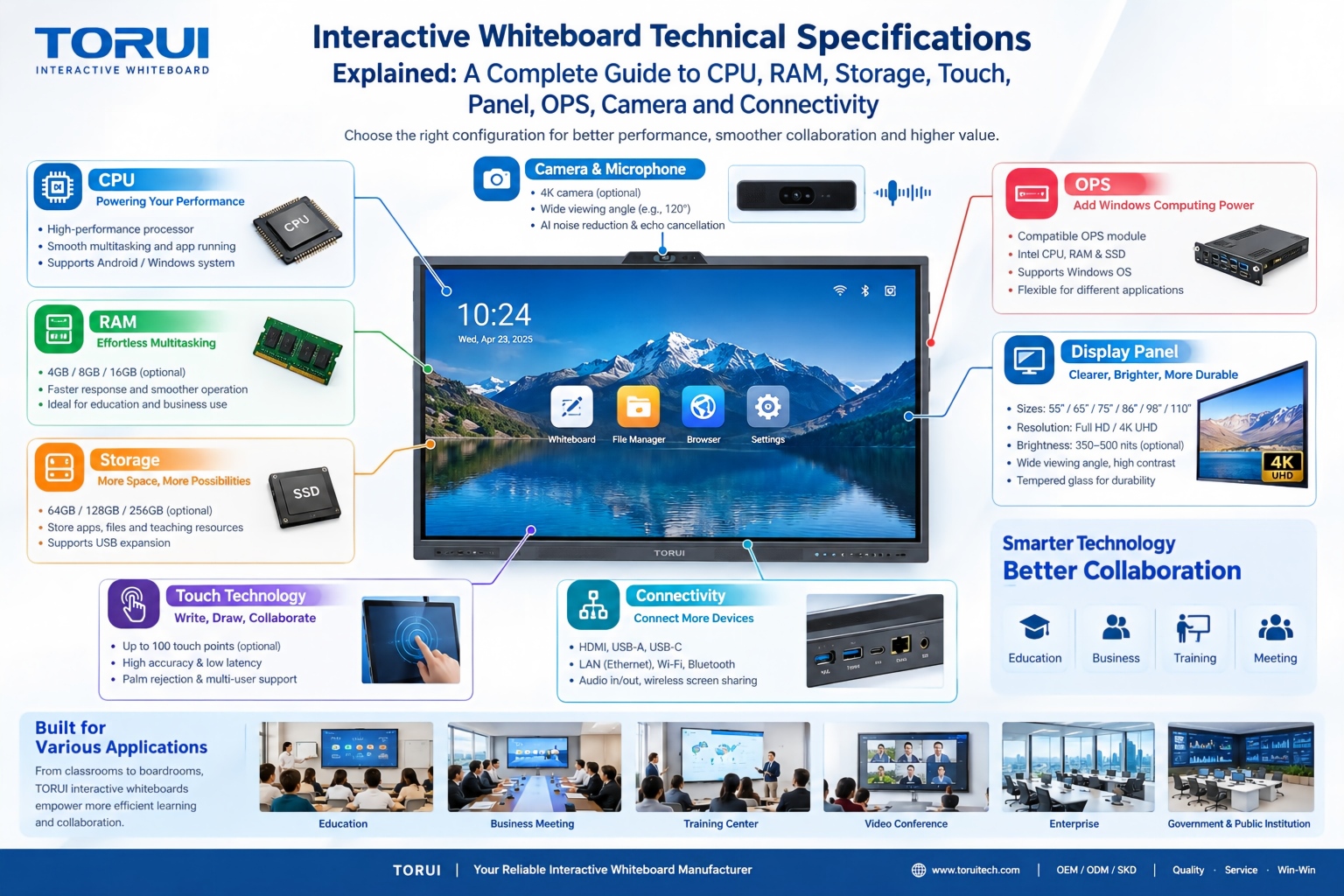
Choosing an interactive whiteboard involves more than comparing screen sizes and prices. For schools, businesses, distributors, wholesalers, and system integrators, understanding the technical specifications is essential to selecting a reliable product that meets different application requirements.
Interactive Whiteboard Technical Specifications Explained: A Complete Guide to CPU, RAM, Storage, Touch, Panel, OPS, Camera and Connectivity
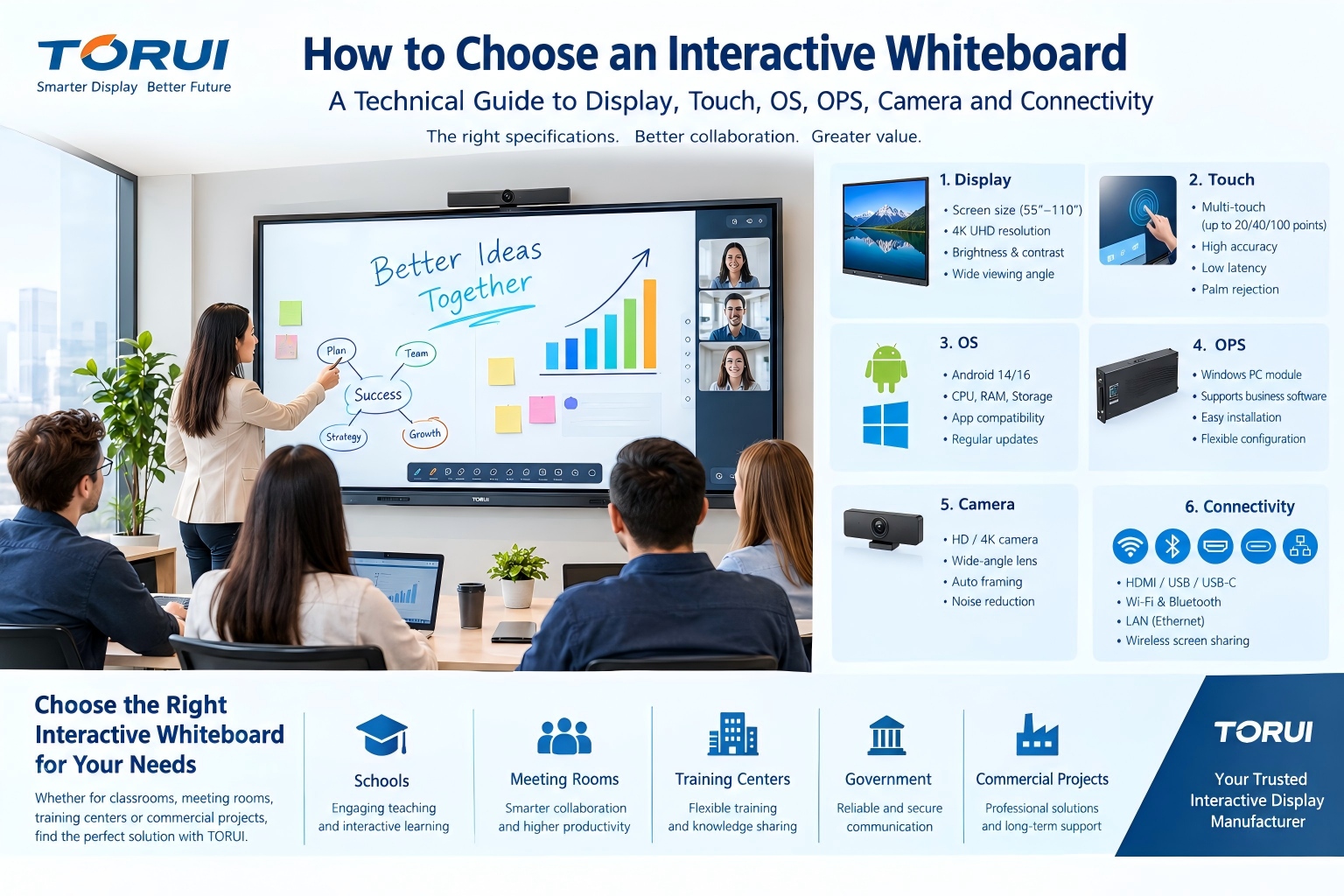
Choosing an interactive whiteboard for a school, meeting room, training center, government organization or commercial project requires more than comparing screen size and price. The most important specifications include display resolution, brightness, touch technology, operating system, processor, memory, storage, OPS compatibility, camera and microphone performance, connectivity, durability and after-sales support.
How to Choose an Interactive Whiteboard: A Technical Guide to Display, Touch, OS, OPS, Camera and Connectivity