Interactive Whiteboard FAQs: Everything You Need to Know Before Buying

Interactive whiteboards (IWBs) have revolutionized the way we teach, collaborate, and present in various settings, including classrooms, meeting rooms, and conference halls. They integrate traditional whiteboard features with the power of digital technology, allowing users to display, manipulate, and interact with multimedia content. If you are considering purchasing an interactive whiteboard, it’s essential to understand the key factors that will influence your decision. Below, we address some frequently asked questions to help you make an informed purchase.
1. What is an Interactive Whiteboard?
An interactive whiteboard is a large touch-sensitive display that works in tandem with a computer and a projector. It allows users to control the computer through the whiteboard using either a stylus or their fingers. It’s designed to enhance learning, presentations, and meetings by enabling users to interact with content directly on the screen. IWBs can display a variety of media types, such as images, videos, and documents, and are widely used in educational and professional environments.
2. How Does an Interactive Whiteboard Work?
Interactive whiteboards work by using different types of touch technology, such as resistive, capacitive, or electromagnetic sensing. When a user touches the screen, it registers the input, allowing for interaction with the content displayed. The boards can be connected to computers, projectors, and other peripherals, enabling users to display content from various software applications, including web browsers, media players, and collaborative tools.
3. What Features Should I Look for in an Interactive Whiteboard?
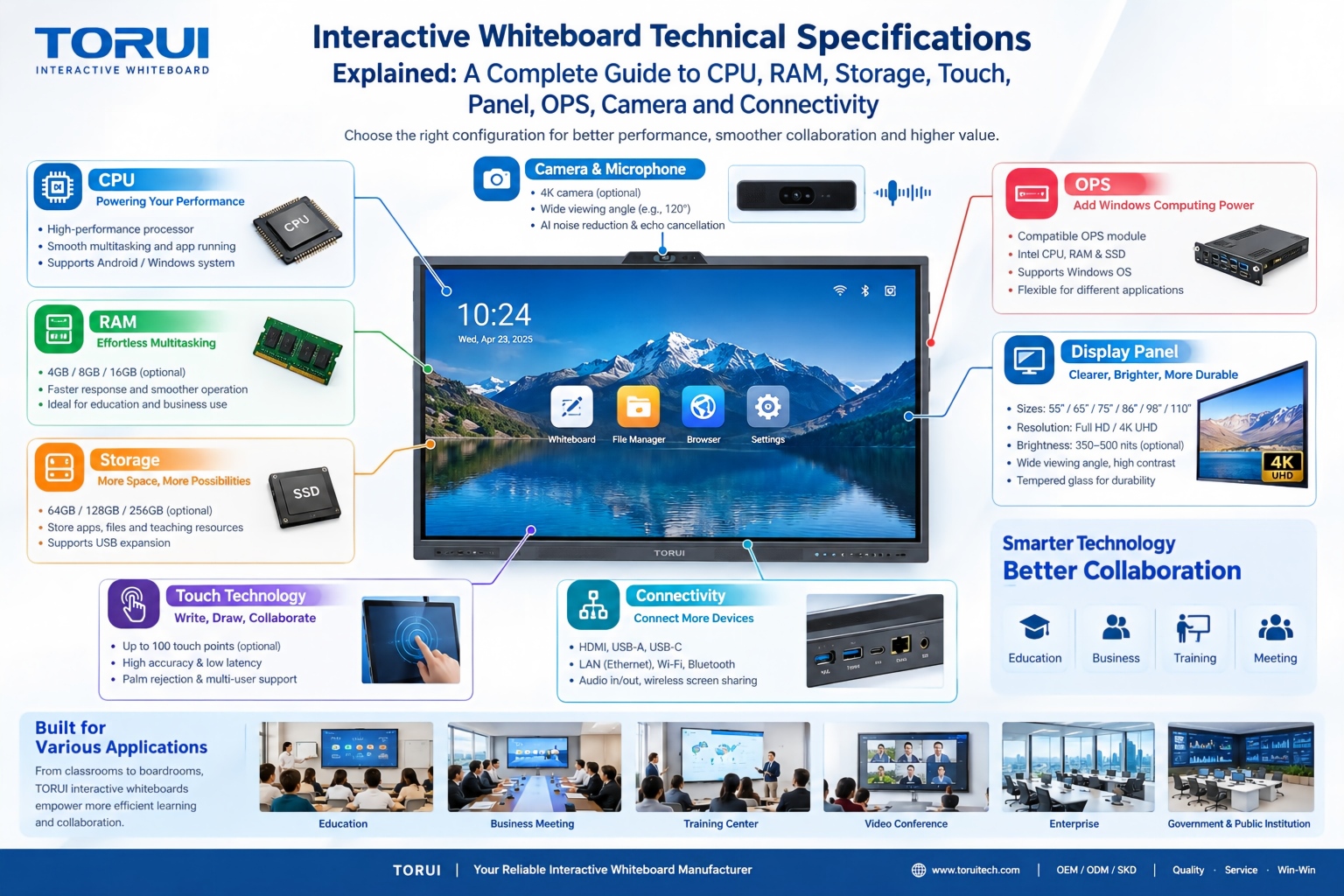
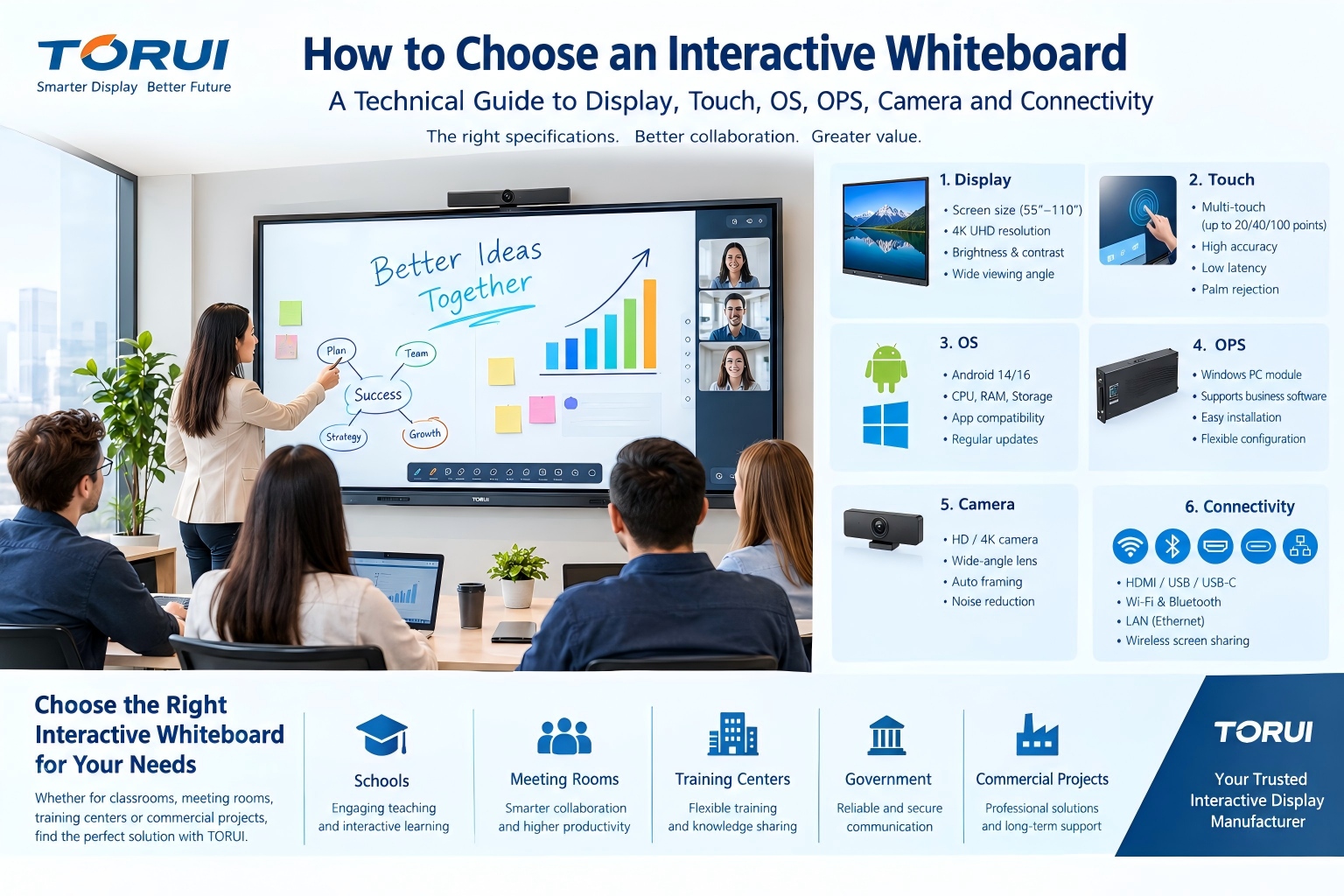
When buying an interactive whiteboard, you should consider the following key features:
-
Screen Size: Choose a board with a screen size that suits the space where it will be used. Larger screens are ideal for larger rooms, while smaller screens are suitable for smaller spaces.
-
Touch Sensitivity: Look for an IWB with multi-touch capabilities. This allows multiple users to interact with the board simultaneously, which is especially beneficial in collaborative environments.
-
Resolution: A higher resolution (e.g., 4K) ensures that images and text appear sharp and clear, which is important for both presentations and educational use.
-
Compatibility: Ensure that the IWB is compatible with the operating system and software you intend to use. Many modern boards are compatible with both Windows and macOS.
-
Connectivity: Consider the type of connectivity options available, such as USB, HDMI, Bluetooth, and Wi-Fi. These features enable seamless integration with other devices, like laptops and tablets.
-
Durability and Build Quality: Since IWBs are often used in high-traffic areas, durability is key. Look for models with robust construction and scratch-resistant surfaces.
4. What Are the Benefits of Using an Interactive Whiteboard?
Interactive whiteboards offer several benefits:
-
Enhanced Engagement: The interactive nature of IWBs keeps students or meeting participants engaged. They can directly manipulate content, participate in activities, and collaborate in real time.
-
Collaboration: IWBs enable multiple users to interact with the content simultaneously. This fosters collaboration, whether in a classroom or a business meeting.
-
Content Flexibility: IWBs support a wide range of content, including images, videos, and interactive tools. This makes them versatile for various types of lessons, presentations, and meetings.
-
Improved Learning and Productivity: With the ability to annotate, highlight, and interact with content, IWBs enhance learning and increase productivity in business meetings.
-
Remote Capabilities: Many modern IWBs offer cloud connectivity, enabling remote access to content and collaboration, which is crucial in today's hybrid working and learning environments.
5. How Much Does an Interactive Whiteboard Cost?
The price of an interactive whiteboard can vary greatly depending on the brand, features, and screen size. Basic models may start from around $1,000, while high-end models with advanced features can cost upwards of $5,000 or more. Keep in mind that additional costs, such as projectors, mounting systems, and software, may also apply.
6. What Are the Installation Requirements for an Interactive Whiteboard?
Installation of an interactive whiteboard requires a stable mounting system, a computer or device for connectivity, and a projector (if necessary). The installation process can vary depending on the model, but it generally involves mounting the board on a wall or stand, connecting it to the necessary devices, and configuring the software. It's recommended to have professional installation if you are unsure about the setup process.
7. What Are the Best Brands of Interactive Whiteboards?
There are several reputable brands known for producing high-quality interactive whiteboards, including:
-
SMART Technologies: Known for its user-friendly interface and reliable performance, SMART boards are a top choice for educational and business environments.
-
Promethean: Promethean offers a range of interactive whiteboards that are designed for collaborative learning and come with an array of software tools.
-
BenQ: BenQ interactive whiteboards are known for their sharp image quality, durability, and ease of use.
-
ViewSonic: ViewSonic’s interactive boards are popular for their affordability and robust features.
8. Do I Need Special Software for an Interactive Whiteboard?
Most interactive whiteboards come with their own proprietary software designed to enhance the user experience. These tools typically offer features such as screen annotation, interactive learning modules, and collaboration options. Additionally, IWBs are often compatible with popular software like Microsoft Office, Google Suite, and educational tools such as Kahoot and Zoom.
Conclusion
An interactive whiteboard is an excellent investment for enhancing education, collaboration, and productivity. By understanding the key features, benefits, and installation requirements, you can make an informed decision that best suits your needs. Whether you're outfitting a classroom, a conference room, or a collaborative workspace, an IWB can transform the way you interact with digital content and engage with others.
TORUI Interactive Whiteboard 2025 Year-End Promotional Campaign: A Special Offer for Our Valued Customers
AI-Powered Interactive Whiteboard Technology: Transforming Education and Business
Related Article