Interactive Whiteboard in Meetings: Transforming Collaboration and Decision-Making

In today’s fast-paced business environment, meetings must be efficient, engaging, and results-driven. An interactive whiteboard has become an essential tool for modern organizations, enabling teams to collaborate more effectively, visualize ideas clearly, and make faster decisions. By combining touch technology, digital connectivity, and smart software, interactive whiteboards are redefining how meetings are conducted across industries.
One of the primary advantages of using an interactive whiteboard in meetings is enhanced collaboration. Unlike traditional whiteboards or projectors, interactive displays allow multiple users to write, draw, and manipulate content simultaneously. This real-time interaction encourages participation from all attendees, whether they are in the room or joining remotely. Teams can brainstorm ideas, annotate documents, and edit presentations together, making discussions more dynamic and inclusive.
Another key benefit is seamless integration with digital tools. Interactive whiteboards support various software platforms, such as video conferencing apps, cloud storage services, and office productivity tools. This integration enables users to access files instantly, share screens, and save meeting notes directly to the cloud. As a result, there is no need to switch between devices, which significantly improves workflow efficiency and reduces downtime during meetings.
Visualization is also a critical factor in effective communication. Complex ideas, data sets, and strategies can be difficult to explain verbally. With an interactive whiteboard, users can display charts, graphs, and multimedia content in high resolution, making information easier to understand. Visual engagement not only improves comprehension but also helps teams retain key points discussed during the meeting.
Interactive whiteboards also contribute to better meeting productivity. Features such as screen recording, note saving, and instant sharing allow teams to capture every important detail. Participants can revisit meeting content at any time, ensuring that nothing is missed. This is particularly valuable for organizations with distributed teams, where clear documentation is essential for alignment and follow-up actions.
From a practical perspective, interactive whiteboards reduce the need for additional equipment. Instead of relying on separate projectors, flip charts, and collaboration tools, businesses can centralize all functions into a single device. This not only saves space but also minimizes technical issues and setup time, allowing meetings to start and run smoothly.
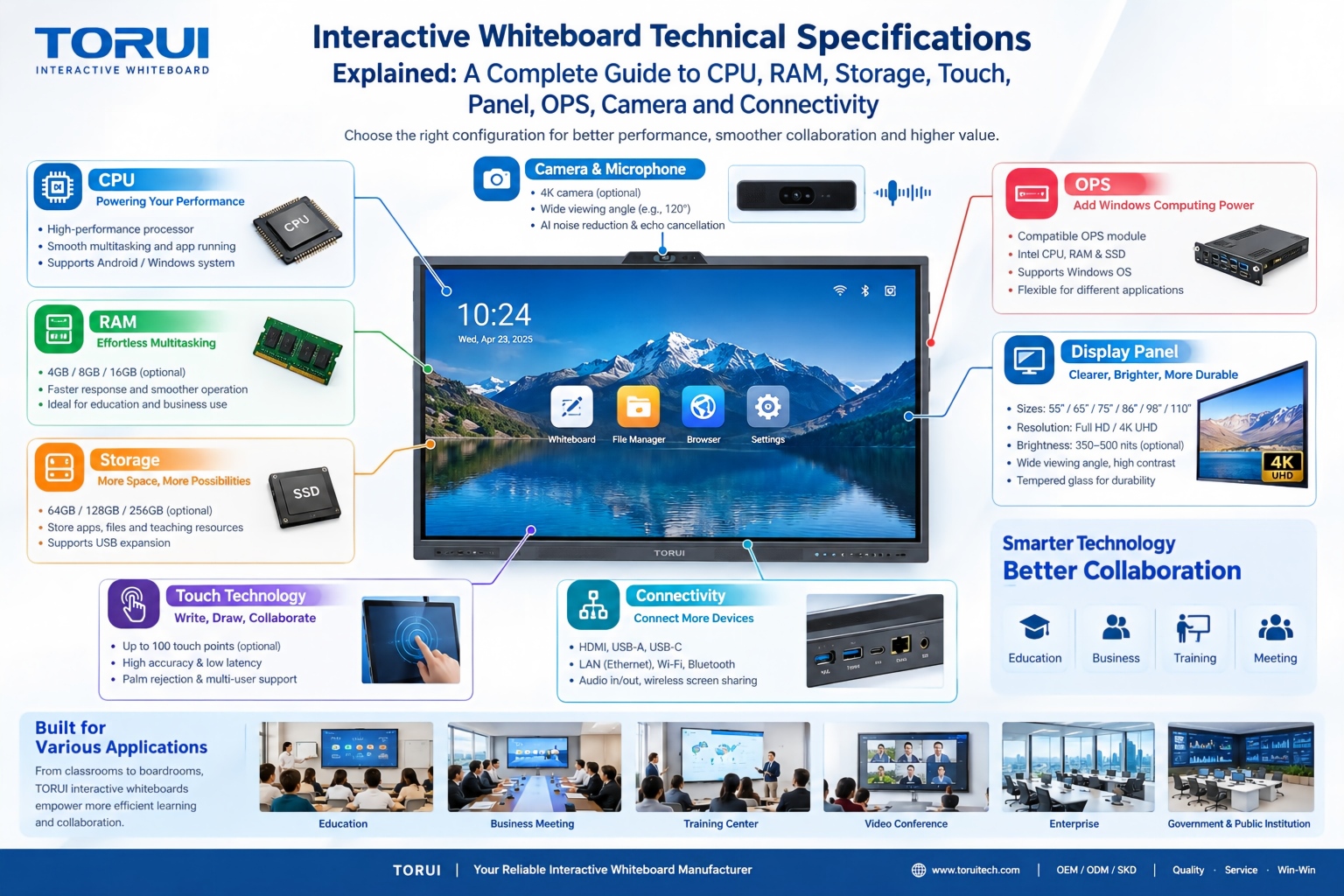
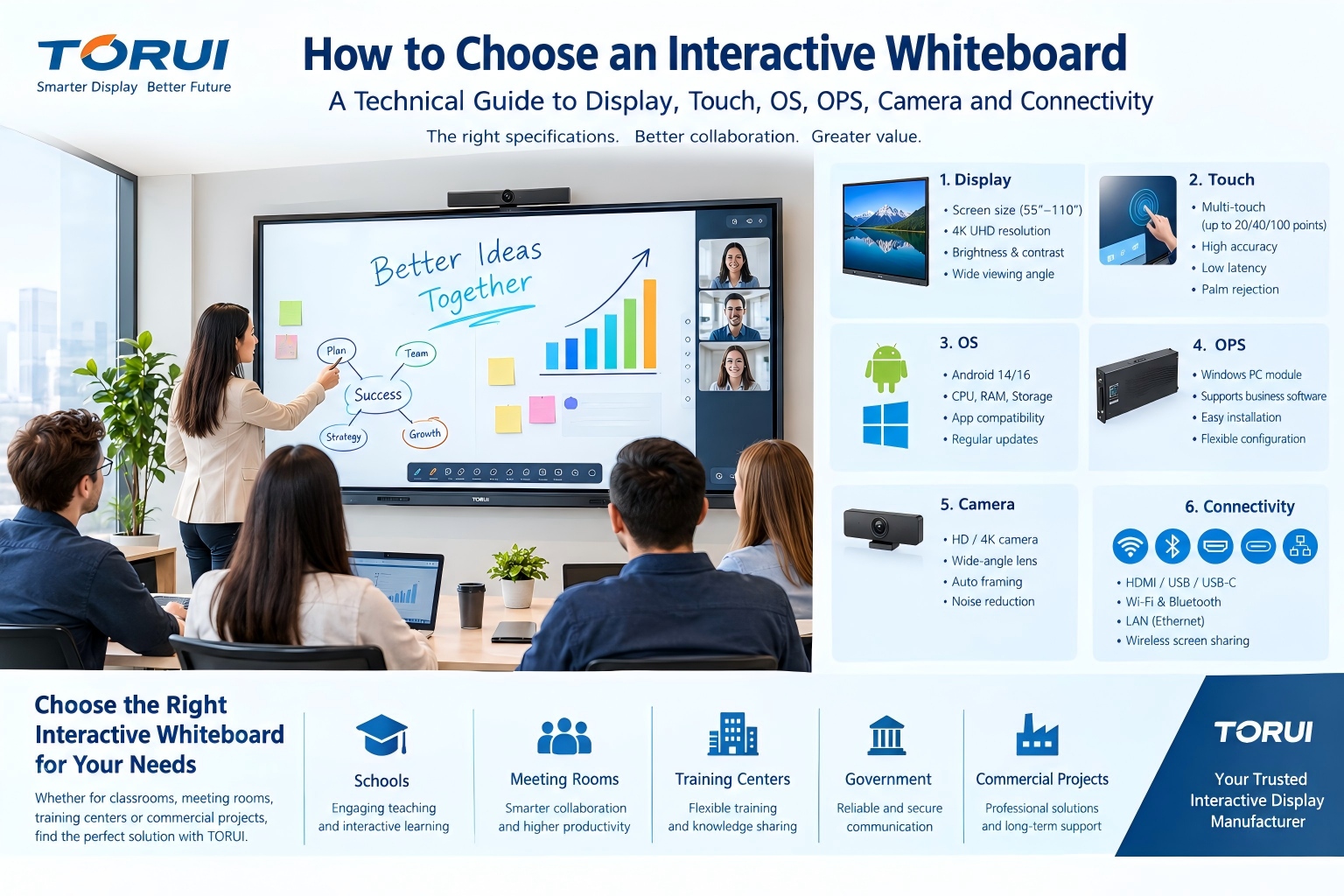
When choosing an interactive whiteboard for meetings, businesses should consider several factors. Screen size and resolution are important for ensuring visibility in larger rooms. Touch responsiveness and multi-user capability directly impact collaboration quality. Compatibility with existing software systems is also crucial for seamless integration. Additionally, built-in cameras, microphones, and speakers can enhance remote meeting experiences, making hybrid collaboration more effective.
In conclusion, interactive whiteboards are transforming the way meetings are conducted by improving collaboration, enhancing visualization, and increasing productivity. As businesses continue to adopt digital solutions, investing in an interactive whiteboard is a strategic decision that can lead to more efficient communication and better decision-making outcomes.
The Production Process of Interactive Whiteboards: A Complete Guide for Buyers
How to Choose Interactive Whiteboard for Classroom
Related Article