Interactive Whiteboard LCD Display Technology: A Complete Guide for Smarter Teaching and Meetings
Interactive whiteboards (IWBs) have become essential tools in modern classrooms and corporate environments. At the core of most high-performance IWBs lies advanced LCD display technology, which directly impacts image quality, touch responsiveness, and long-term reliability. Understanding how LCD technology works in interactive whiteboards can help buyers make more informed decisions and maximize their investment.
What Is LCD Display Technology in Interactive Whiteboards?
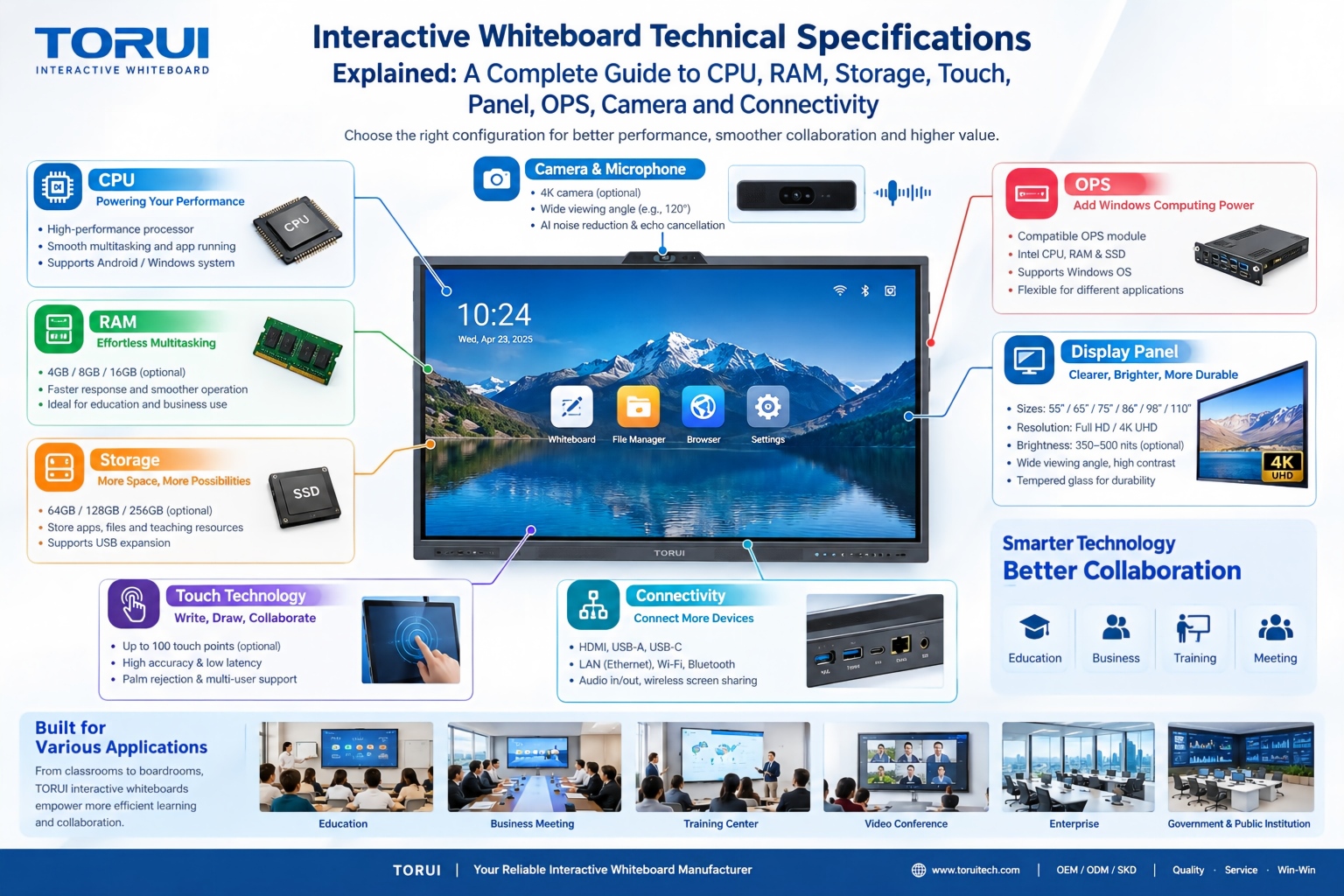
LCD (Liquid Crystal Display) technology uses liquid crystals combined with a backlight—typically LED—to produce images. In interactive whiteboards, LCD panels deliver high-resolution visuals, accurate colors, and consistent brightness across large screen sizes, often ranging from 55 inches to 110 inches.
Unlike traditional projectors, LCD-based interactive whiteboards are all-in-one solutions. They eliminate issues like shadow interference, low brightness, and frequent maintenance, making them ideal for both education and business use.
Key Advantages of LCD Interactive Whiteboards
1. Superior Image Quality
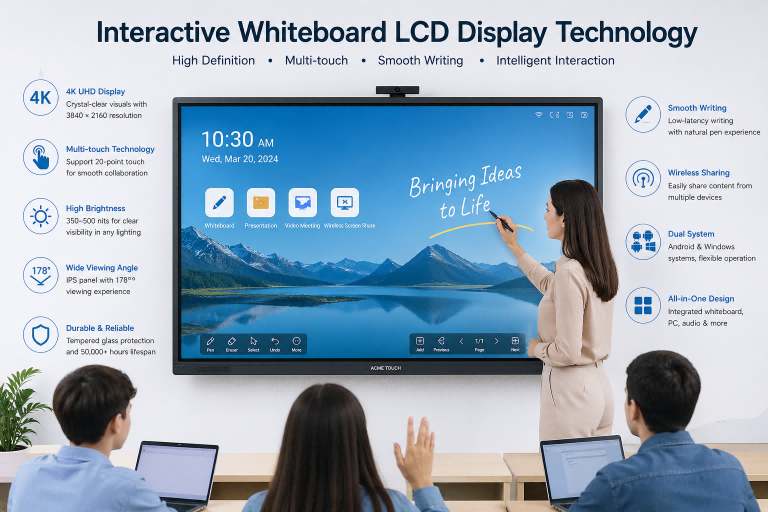
Modern LCD panels support 4K Ultra HD resolution, ensuring sharp text and vivid images. This is especially important for detailed presentations, educational content, and video conferencing.
2. High Brightness and Anti-Glare Performance
With brightness levels typically between 300–450 nits, LCD whiteboards remain clearly visible even in well-lit rooms. Anti-glare glass further enhances visibility and reduces eye strain.
3. Wide Viewing Angles
Advanced IPS (In-Plane Switching) LCD panels provide wide viewing angles—up to 178 degrees—ensuring that content remains clear from different positions in a classroom or meeting room.
4. Durability and Long Lifespan
Industrial-grade LCD panels can operate for over 50,000 hours, making them a reliable long-term investment. Tempered glass protection also improves resistance to scratches and impact.
5. Seamless Touch Integration
LCD interactive whiteboards integrate infrared (IR) or capacitive touch technology, enabling multi-touch functionality. This allows multiple users to write, annotate, and interact simultaneously.
LCD vs. Other Display Technologies
While technologies like OLED and projection systems exist, LCD remains the most practical choice for interactive whiteboards due to its balance of cost, durability, and performance. OLED offers deeper contrast but is significantly more expensive and less suitable for large-scale educational deployment. Projectors, on the other hand, require frequent maintenance and perform poorly in bright environments.
Key Factors to Consider When Choosing an LCD Interactive Whiteboard
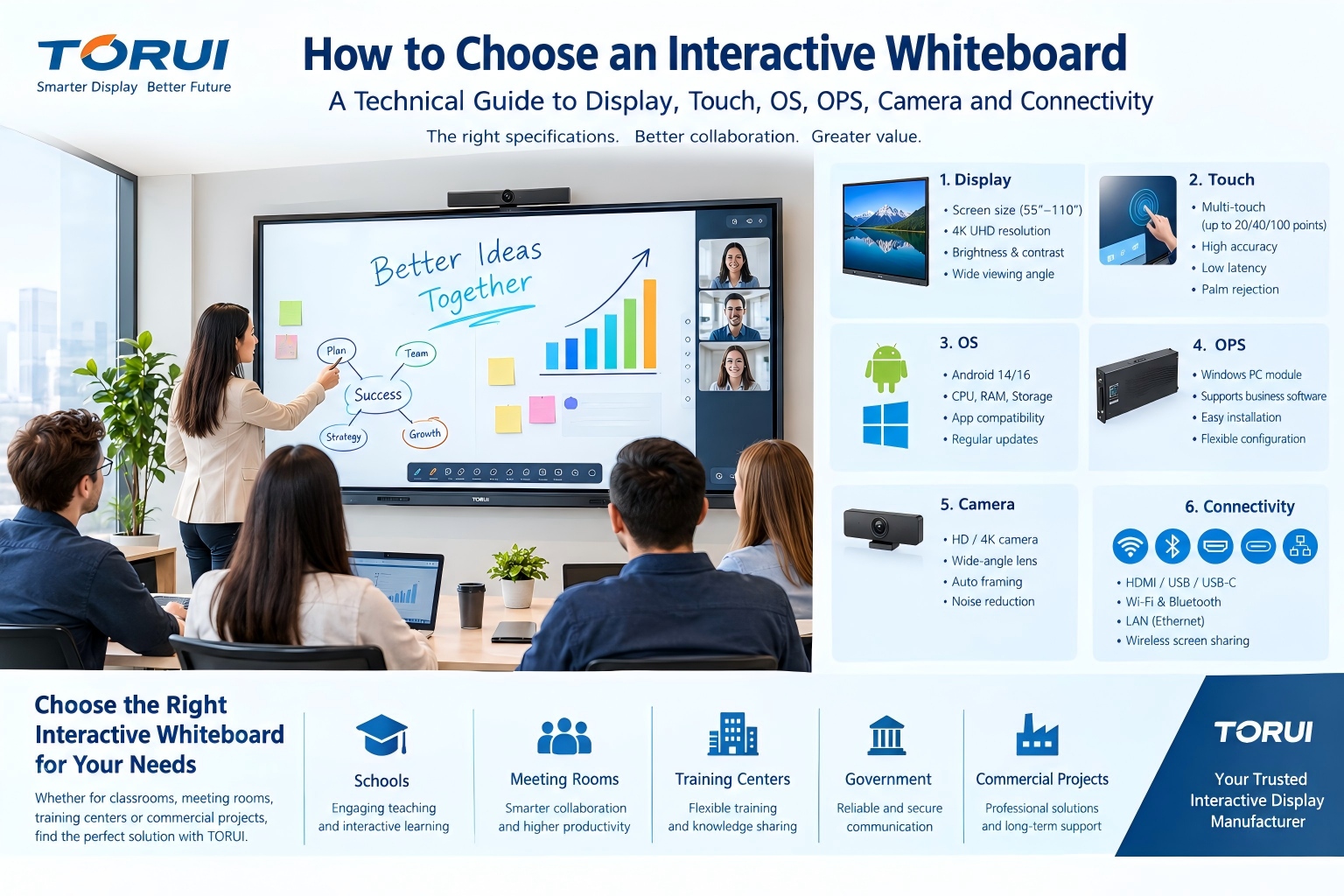
- Resolution: Opt for 4K for the best clarity
- Brightness: Minimum 350 nits for well-lit spaces
- Touch Technology: Ensure smooth, low-latency response
- Panel Type: IPS panels offer better color and viewing angles
- Connectivity: Look for multiple ports and wireless screen sharing
- System Compatibility: Android and Windows dual systems can enhance flexibility
Future Trends in LCD Interactive Display Technology
LCD technology continues to evolve with innovations such as zero bonding (reducing parallax), higher refresh rates, and AI-powered features like handwriting recognition and smart annotation. These advancements further improve user experience and productivity in both teaching and collaboration scenarios.
Conclusion
LCD display technology remains the backbone of modern interactive whiteboards, offering a powerful combination of clarity, durability, and interactivity. Whether for education or business, choosing a high-quality LCD-based interactive whiteboard ensures better engagement, improved communication, and long-term value. By understanding the technical aspects and key features, users can confidently select the right solution to meet their needs.
TORUI Interactive Whiteboard—Winning the Market Through Quality and Service
Interactive Whiteboard – DHL Air Freight: Fast, Secure & Reliable Global Delivery
Related Article