Interactive Whiteboard Market 2026: Global Analysis, Trends, and Forecast
1. Market Overview and Size
The interactive whiteboard (IWB) market — often referred to as smartboards — has emerged as a vital segment within the global interactive display and education technology ecosystem. These devices are touchscreen-enabled large displays that allow users to write, draw, interact with digital content, and collaborate in real time. Their adoption spans education, corporate collaboration, government institutions, and increasingly hybrid/remote learning environments.
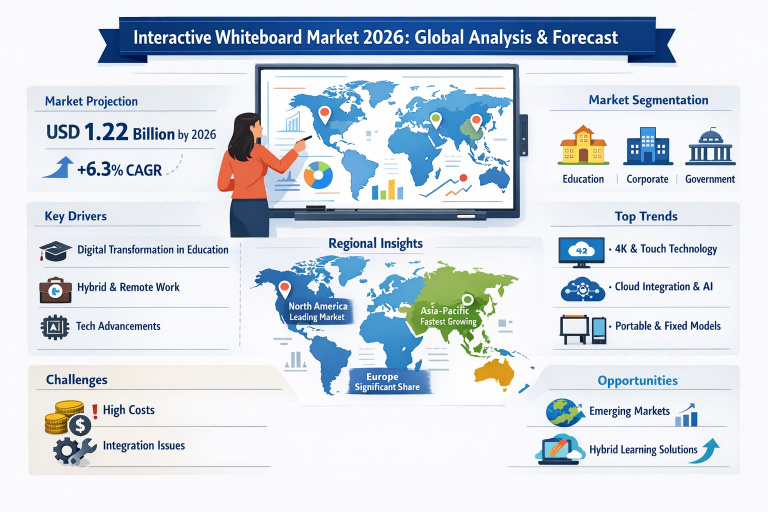
Market projections indicate steady growth through 2026. One forecast estimates the global interactive whiteboard market at approximately USD 1.22 billion in 2026 — up from around USD 1.15 billion in 2025 — with a compound annual growth rate (CAGR) of about 6.3% through the period following 2025. Additional research shows broader industry figures suggesting multi-billion dollar market scale by the late 2020s, reflecting accelerated adoption and expanded use cases across regions.
2. Key Growth Drivers
A. Digital Transformation in Education
Education remains the largest end-user segment for interactive whiteboards. The push toward digital and hybrid learning environments drives schools, colleges, and universities to invest in interactive display technologies that improve engagement, facilitate multimedia content delivery, and support collaborative pedagogy. Governments in developed and emerging markets are allocating funding to modernize classrooms and integrate smart technology — further accelerating IWB adoption.
B. Corporate & Hybrid Work Adoption
Post-pandemic work models — including hybrid and remote collaboration — have entrenched whiteboards as essential tools for meetings, presentations, and brainstorming sessions. In corporate settings, IWBs integrated with cloud conferencing platforms and collaboration suites allow geographically distributed teams to interact in real time, boosting productivity and teamwork.
C. Technological Advancements
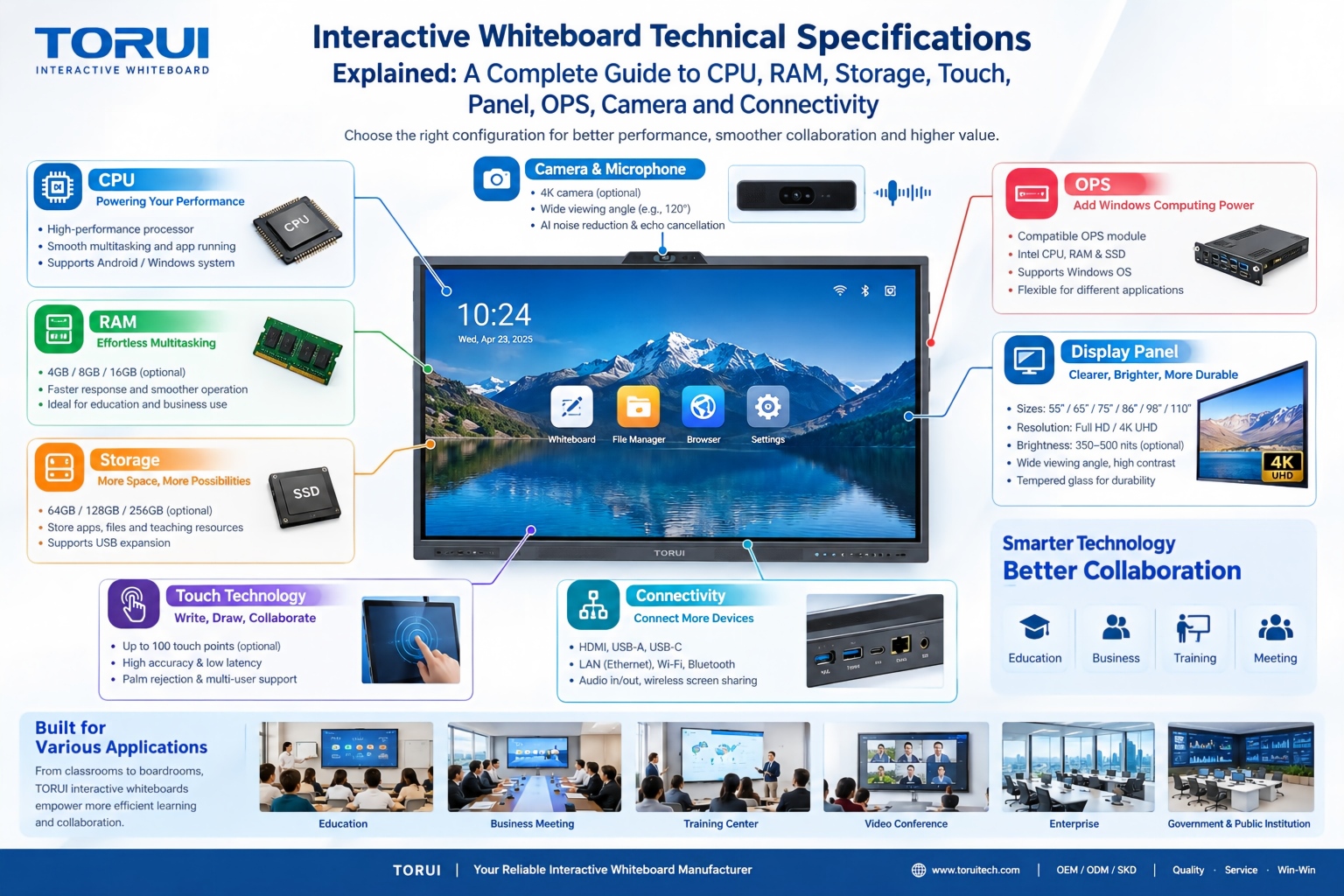
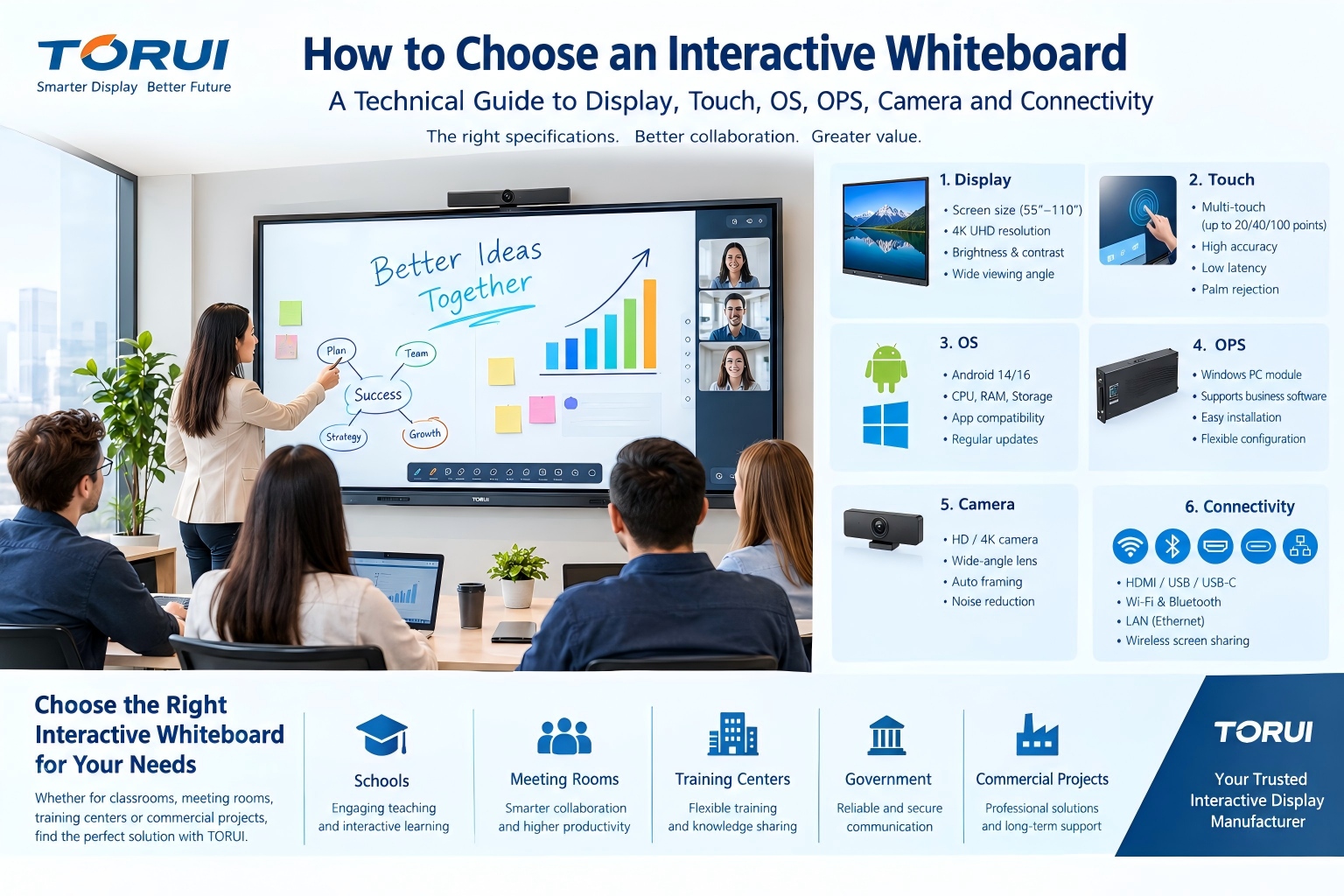
Innovation continues to shape the market. Trends include multi-touch support, capacitive and advanced touch technologies, 4K displays, cloud integration, and early implementation of AI features such as voice commands and adaptive learning support. These improvements enhance user experience and differentiate modern IWBs from legacy projection-based solutions.
3. Market Segmentation and Trends
By Technology
Interactive whiteboards utilize diverse technologies:
-
Infrared and resistive systems remain prevalent due to cost advantages.
-
Capacitive touch and electromagnetic pen technologies are growing faster due to superior responsiveness and user experience, mirroring familiar tablet-like interactions.
By Format and Projection
Portable models are gaining traction for flexibility in hybrid work and flexible classrooms, while fixed wall-mounted boards remain dominant in traditional institutional deployments. Front projection continues to hold significant share, though direct LCD/LED formats are expanding.
By Application
-
Education: Over half of the installations globally are in K-12 and higher education settings, driven by smart classroom initiatives.
-
Corporate: Rapid growth as visual collaboration becomes integral to business processes.
-
Government & Other: Increasing use in public sector training, meetings, and digital services.
4. Regional Dynamics
-
North America remains a key leader due to high adoption rates, institutional funding for EdTech, and strong corporate uptake.
-
Asia-Pacific is one of the fastest-growing markets, driven by massive education systems, government digital inclusion efforts, and urbanization.
-
Europe holds a significant share, supported by centralized education initiatives and digital transformation programs.
5. Market Challenges
Despite promising growth, the IWB market faces several constraints:
-
High initial costs and total cost of ownership — including hardware, software, installation, and training — remain barriers in budget-constrained regions.
-
Integration complexity and skill gaps hinder full utilization, especially in under-resourced educational and corporate settings.
6. Future Outlook and Opportunities
Emerging markets in Latin America, Africa, and Southeast Asia present substantial opportunities due to expanding digital infrastructure and increased adoption of affordable models. Moreover, software and service ecosystems — particularly hybrid learning platforms and cloud-native collaboration tools — are expected to drive differentiation and long-term value. As educational and workplace models evolve further toward interactivity and connectivity, IWBs are positioned to remain core collaboration tools through 2026 and beyond.
The Application and Value of Interactive Whiteboards
Dedicated Service with Care: TORUI’s Commitment to Excellence
Related Article