
Interactive Whiteboard Multilingual Features: Empowering Global Communication and Collaboration
author: toruitech
2026-04-23

Interactive whiteboards (IWBs) have become essential tools in modern classrooms and business environments. As organizations and educational institutions operate across borders, multilingual functionality has emerged as a critical feature. Interactive whiteboard multilingual features enable users from different linguistic backgrounds to communicate effectively, collaborate seamlessly, and access content without barriers.
Why Multilingual Features Matter
In international settings, language differences can hinder understanding and productivity. Multilingual interactive whiteboards address this challenge by providing flexible language options that adapt to diverse users. Whether in a global classroom or a multinational meeting, these features ensure that participants can engage with content in their preferred language, improving clarity and participation.
Key Multilingual Capabilities
1. Multi-Language System Interface
Most modern interactive whiteboards offer a wide range of system languages. Users can switch the interface language quickly, ensuring menus, settings, and built-in tools are easy to navigate. This is particularly useful in shared environments where different users interact with the same device.
2. Diverse Input Methods
Multilingual IWBs support various input methods, including on-screen keyboards, handwriting recognition, and voice input in multiple languages. This allows users to write or present naturally, regardless of their native language, enhancing the overall user experience.
3. Real-Time Translation
Advanced interactive whiteboards integrate real-time translation tools powered by artificial intelligence. These features can translate spoken words or written text instantly, making cross-language communication smoother during meetings, lectures, and collaborative sessions.
4. Multilingual Content Display
Compatibility with multiple languages and character sets ensures that documents, presentations, and annotations are displayed accurately. This eliminates formatting issues and guarantees that content remains consistent across languages.
5. Cloud-Based Collaboration
With cloud integration, multilingual content can be stored, accessed, and edited from anywhere. Teams and students in different regions can collaborate on the same materials while using their preferred languages, improving efficiency and coordination.
Practical Benefits
In education, multilingual features create inclusive learning environments where students from diverse backgrounds can fully participate. Teachers can present lessons in multiple languages or provide translated annotations, making complex topics easier to understand.
In business, these features enhance communication during international meetings, reduce misunderstandings, and support faster decision-making. They also help organizations maintain consistency in messaging across different markets.
Best Practices for Effective Use
To make the most of multilingual capabilities, users should configure language settings in advance and familiarize themselves with available input methods. Testing translation accuracy before important sessions can prevent miscommunication. Additionally, using clear and concise language improves translation quality and ensures messages are delivered effectively.
Conclusion
Interactive whiteboard multilingual features play a vital role in bridging language gaps in today’s global environment. By offering flexible language options, real-time translation, and seamless collaboration tools, these systems enhance communication, inclusivity, and productivity. As technology continues to evolve, multilingual capabilities will remain a key factor in maximizing the value of interactive whiteboards across education and business settings.
Interactive Whiteboard International Shipping Solutions
The Production Process of Interactive Whiteboards: A Complete Guide for Buyers
Related Article

Choosing the right interactive whiteboard size is an important decision for distributors, wholesalers, and education technology suppliers. The 65-inch, 75-inch, and 86-inch interactive whiteboards are popular options for classrooms, meeting rooms, training centers, and commercial projects.
65 vs 75 vs 86-Inch Interactive Whiteboard: Which Model Should Distributors Choose?

Choosing the right interactive whiteboard manufacturer in China is an important decision for distributors, wholesalers, education technology suppliers, and system integrators. The right manufacturing partner can help businesses improve product quality, maintain competitive pricing, customize products for local markets, and build a sustainable distribution business.
Who Are the Best Interactive Whiteboard Manufacturers in China for B2B Distributors and Wholesalers?
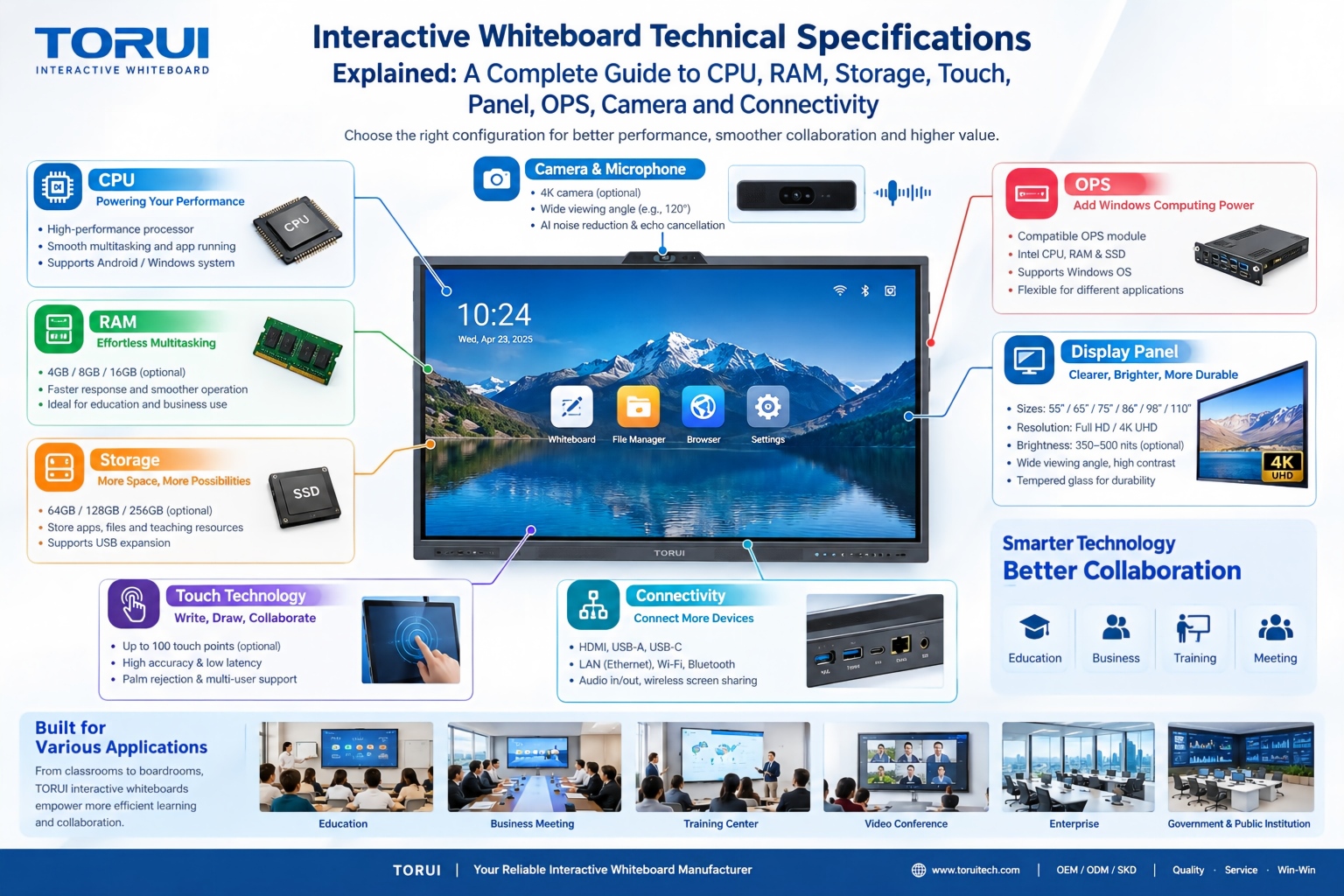
Choosing an interactive whiteboard involves more than comparing screen sizes and prices. For schools, businesses, distributors, wholesalers, and system integrators, understanding the technical specifications is essential to selecting a reliable product that meets different application requirements.
Interactive Whiteboard Technical Specifications Explained: A Complete Guide to CPU, RAM, Storage, Touch, Panel, OPS, Camera and Connectivity
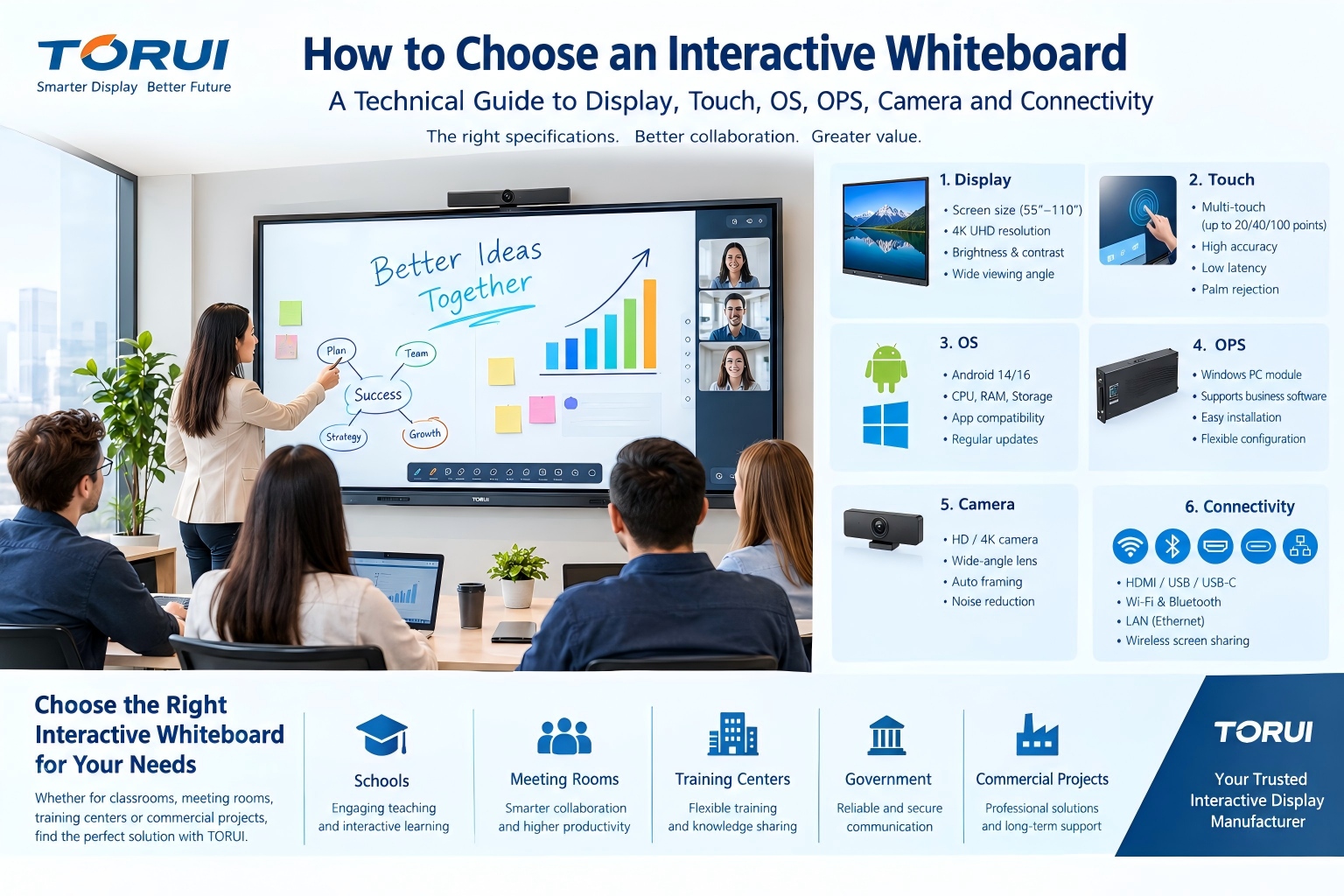
Choosing an interactive whiteboard for a school, meeting room, training center, government organization or commercial project requires more than comparing screen size and price. The most important specifications include display resolution, brightness, touch technology, operating system, processor, memory, storage, OPS compatibility, camera and microphone performance, connectivity, durability and after-sales support.
How to Choose an Interactive Whiteboard: A Technical Guide to Display, Touch, OS, OPS, Camera and Connectivity