
What are buyers most concerned about when purchasing interactive whiteboards?
author: toruitech
2025-08-14
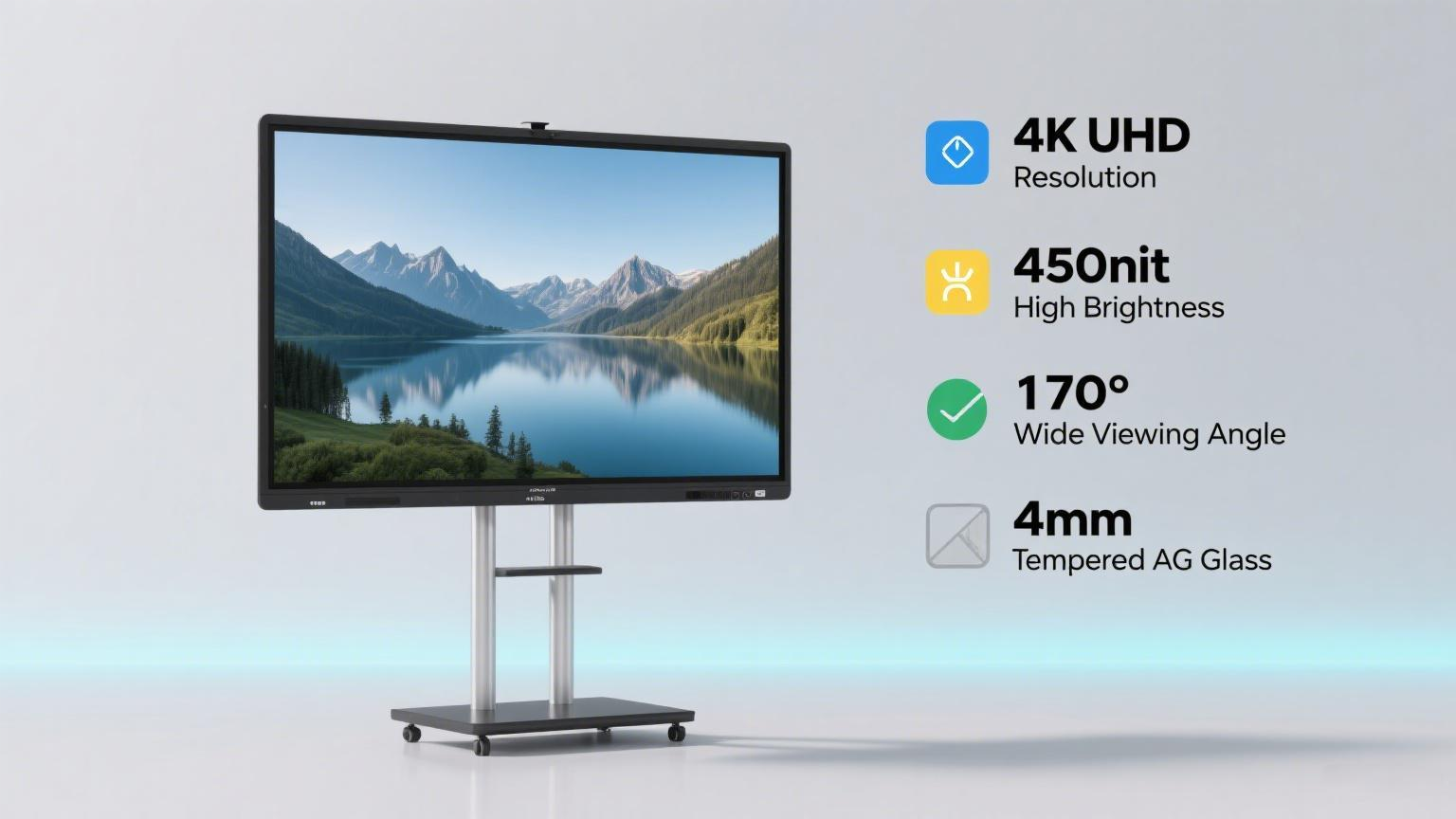
Amid the rapid development of information-based teaching and smart office work, interactive whiteboards are increasingly favored by schools, businesses, and training institutions as essential tools for improving teaching and meeting efficiency. So, what are the key factors buyers consider most when choosing an interactive whiteboard?
First, product quality and brand are among the most important factors. According to online searches, brand not only represents a company's overall strength and technological expertise, but also directly impacts product quality, stability, and after-sales service. Established brands typically possess independent R&D capabilities, comprehensive customer service systems, and mature production lines, enabling them to provide buyers with high-quality, stable, and reliable products and promptly respond to after-sales needs. Therefore, many buyers prioritize well-known brands with a strong market reputation and technical expertise to avoid subsequent issues caused by quality or service issues.
Second, functionality and ease of use are also key considerations for buyers. Core features of interactive whiteboards include touch-based writing, annotation, file editing and saving, interactive presentations, and multimedia displays. Buyers want products that support multiple writing methods, are easy to use, and can be quickly integrated into existing teaching or office processes. Software compatibility, user-friendly interfaces, and support for common file formats (such as JPG, PDF, and HTML) are also considered. Products with high usability not only enhance the user experience but also reduce training and maintenance costs.
Technology and performance indicators are also key concerns for buyers. The interactive whiteboard's positioning technology (such as electromagnetic induction, infrared, or ultrasonic), touch sensitivity, writing accuracy, and stability directly impact actual user experience. For example, smooth touch response, continuous writing lines, and precise positioning are all key areas of concern for buyers during on-site experiences or consultations. Products with excellent performance ensure smooth classroom or meeting operations and minimize disruptions caused by equipment failures.
Price and value for money are also crucial factors for buyers. While interactive whiteboard prices vary significantly across the market, buyers prioritize comprehensive product value—that is, whether they can obtain high quality, high performance, and comprehensive service within a reasonable budget. As market competition intensifies, products with high value for money are becoming increasingly popular.
Finally, after-sales service and technical support are also key concerns for buyers. As high-tech devices, interactive whiteboards may encounter installation, maintenance, and upgrade issues over time. A comprehensive after-sales service system, timely technical support, and extensive training resources can ensure peace of mind and enhance the overall experience.
In summary, when purchasing an interactive whiteboard, buyers are most concerned with brand and quality, functionality and ease of use, technology and performance, price and value, and after-sales service. Only when these key factors are met can buyers feel confident in their choice and maximize the device's value.
TORUI Technology has been specializing in interactive whiteboard manufacturing and service for 15 years, consistently adhering to high-quality standards and superior service. Our products are sold worldwide and widely used in education, conferencing, and other fields, earning them the trust and praise of users. Leveraging our extensive industry experience and expertise, TORUI continues to innovate and continuously improve the user experience, making it an ideal choice.
Interactive Whiteboard Resolution Analysis and Its Importance
Mobile Floor-Stand Installation Methods and Application Advantages of Interactive Whiteboards
Related Article

Choosing the right interactive whiteboard size is an important decision for distributors, wholesalers, and education technology suppliers. The 65-inch, 75-inch, and 86-inch interactive whiteboards are popular options for classrooms, meeting rooms, training centers, and commercial projects.
65 vs 75 vs 86-Inch Interactive Whiteboard: Which Model Should Distributors Choose?

Choosing the right interactive whiteboard manufacturer in China is an important decision for distributors, wholesalers, education technology suppliers, and system integrators. The right manufacturing partner can help businesses improve product quality, maintain competitive pricing, customize products for local markets, and build a sustainable distribution business.
Who Are the Best Interactive Whiteboard Manufacturers in China for B2B Distributors and Wholesalers?
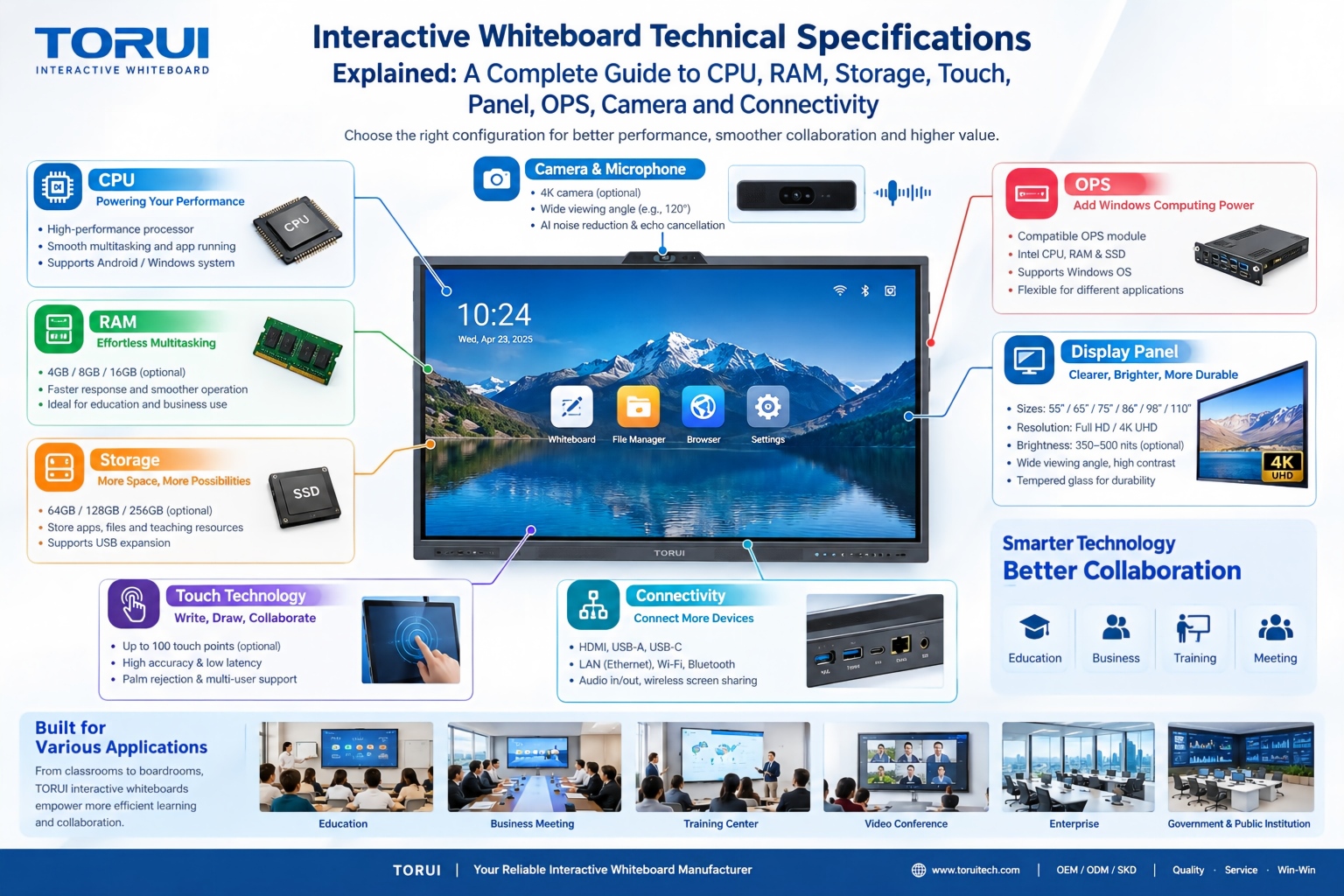
Choosing an interactive whiteboard involves more than comparing screen sizes and prices. For schools, businesses, distributors, wholesalers, and system integrators, understanding the technical specifications is essential to selecting a reliable product that meets different application requirements.
Interactive Whiteboard Technical Specifications Explained: A Complete Guide to CPU, RAM, Storage, Touch, Panel, OPS, Camera and Connectivity
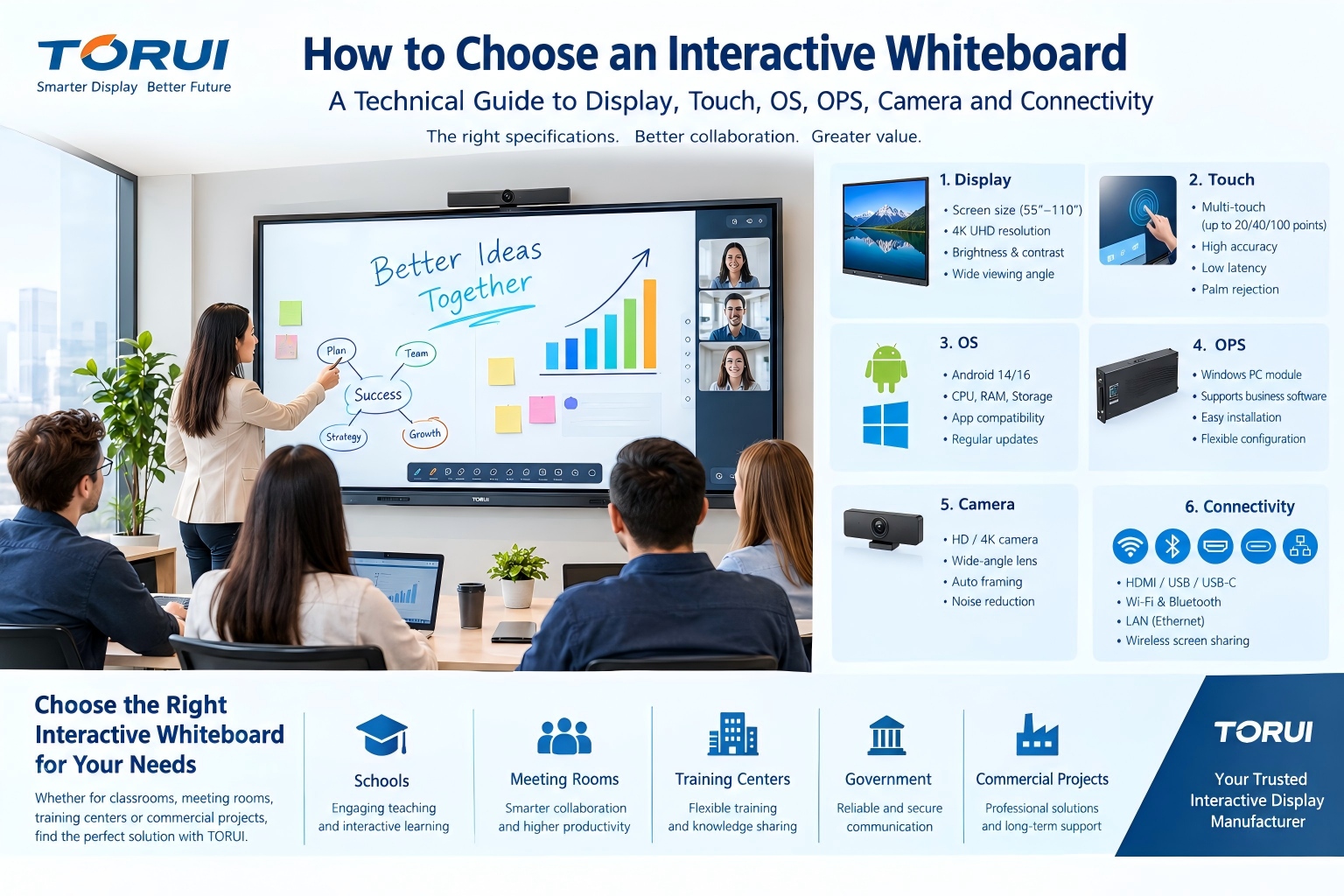
Choosing an interactive whiteboard for a school, meeting room, training center, government organization or commercial project requires more than comparing screen size and price. The most important specifications include display resolution, brightness, touch technology, operating system, processor, memory, storage, OPS compatibility, camera and microphone performance, connectivity, durability and after-sales support.
How to Choose an Interactive Whiteboard: A Technical Guide to Display, Touch, OS, OPS, Camera and Connectivity