Interactive Whiteboard vs Projector: Which Solution Is Better for Schools?

Introduction: The Evolution of Classroom Display Technology
For decades, projectors have been widely used in classrooms around the world. They provided teachers with a simple way to display presentations, videos, and digital content. However, as education continues to move toward digital transformation, many schools and education organizations are asking an important question:
Interactive whiteboard vs projector: Which solution is better for modern classrooms?
For schools, universities, training centers, and education solution providers, the choice is not only about displaying content. The ideal classroom technology should improve teaching efficiency, increase student engagement, and support interactive learning.
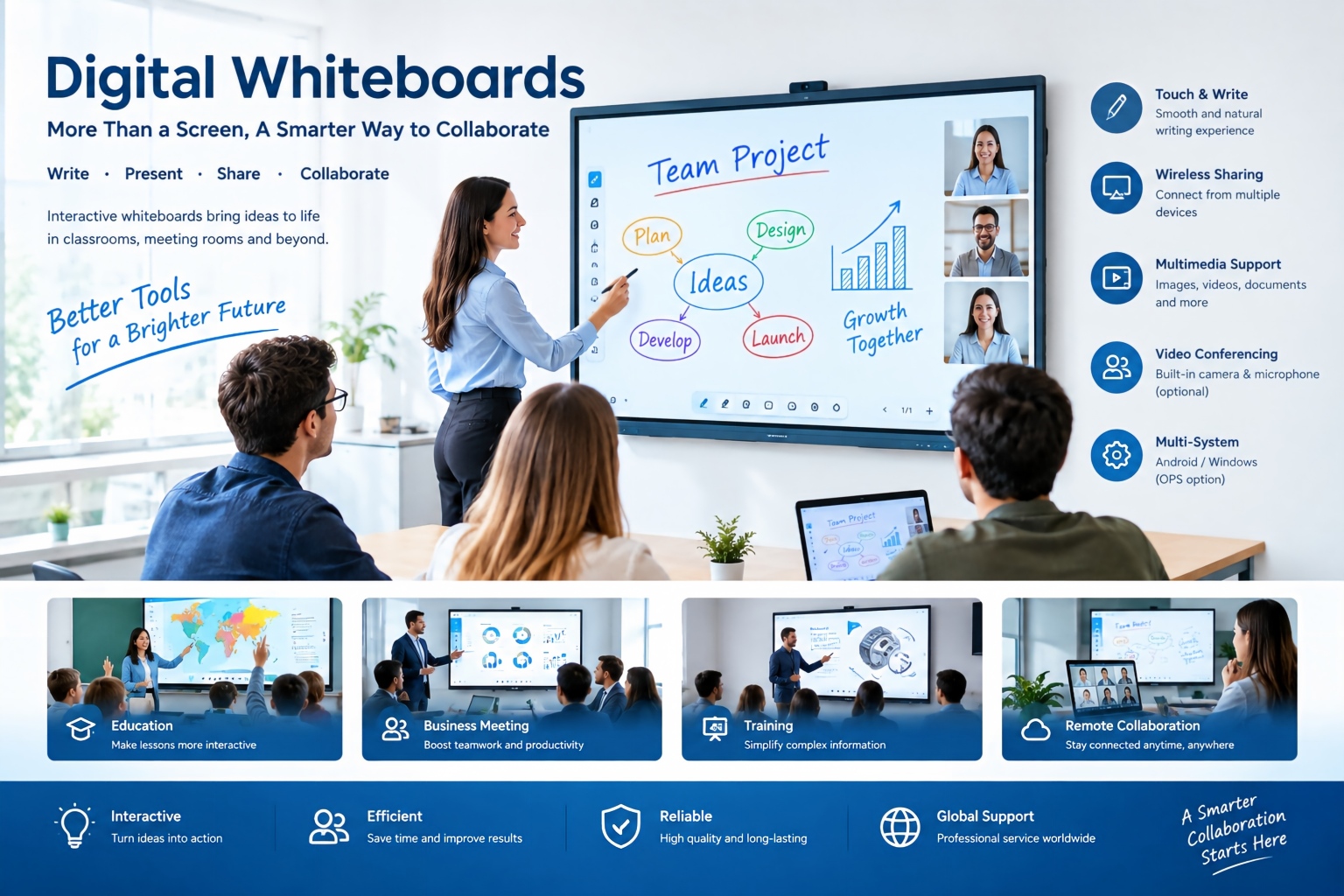
Today, interactive whiteboards (interactive flat panels) are becoming a preferred solution because they combine display, touch interaction, collaboration tools, and teaching software into one integrated system.
1. Interactive Experience: Touch Interaction vs Passive Display
The biggest difference between an interactive whiteboard and a projector is the level of interaction.
A projector mainly works as a display device. Teachers can show PowerPoint presentations, videos, or documents, but interaction usually requires additional equipment such as a computer, mouse, or external interactive system.
An interactive whiteboard allows teachers and students to directly interact with the screen.
Key advantages include:
- Multi-touch writing
- Real-time annotation
- Digital whiteboard functions
- Drawing and highlighting
- Student participation activities
Teachers can write directly on the screen, save notes instantly, and share lesson content after class.
For modern smart classrooms, interaction is a key factor that projectors cannot easily provide.
2. Display Quality: 4K Clarity vs Projection Limitations
Visual quality directly affects the classroom learning experience.
Traditional projectors may face several challenges:
- Reduced brightness in daylight
- Blurry images
- Shadow interference
- Regular lamp replacement
- Color fading over time
A modern interactive whiteboard usually provides:
- 4K UHD resolution
- High brightness LED display
- Wide viewing angle
- Anti-glare technology
- Consistent image quality
Whether students sit in the front row or the back row, everyone can clearly view teaching materials.
For large classrooms, universities, and professional training rooms, display quality becomes especially important.
3. Installation and Maintenance: Which Has Lower Long-Term Cost?
Many schools choose projectors because the initial purchase cost may appear lower. However, long-term maintenance costs should also be considered.
Projectors often require:
- Lamp replacement
- Filter cleaning
- Ceiling installation
- Regular maintenance
- Additional speakers and screens
Interactive whiteboards are an all-in-one solution that integrates:
- Display
- Touch system
- Speakers
- Computer functions
- Teaching applications
Although the initial investment may be higher, the total ownership cost can be lower because maintenance requirements are reduced.
For education departments and large-scale school projects, long-term reliability is a critical purchasing factor.
4. Teaching Efficiency: Supporting Modern Digital Education
Modern teachers need more than a screen. They need tools that improve teaching efficiency.
Interactive whiteboards support:
- Wireless screen sharing
- Online teaching
- Video playback
- Cloud-based lessons
- Digital annotation
- Interactive learning applications
Teachers can switch between different teaching resources quickly and create more engaging lessons.
This makes interactive displays ideal for:
- Primary schools
- Secondary schools
- Universities
- Language training centers
- Professional education institutions
5. Interactive Whiteboard vs Projector: Quick Comparison
| Feature | Interactive Whiteboard | Projector |
|---|---|---|
| Touch interaction | Excellent | Limited |
| Writing directly on screen | Yes | No |
| Display quality | 4K UHD | Depends on projector |
| Maintenance | Low | Higher |
| Student engagement | High | Basic |
| All-in-one solution | Yes | No |
| Smart classroom support | Excellent | Limited |
6. What Should Schools Consider Before Buying?
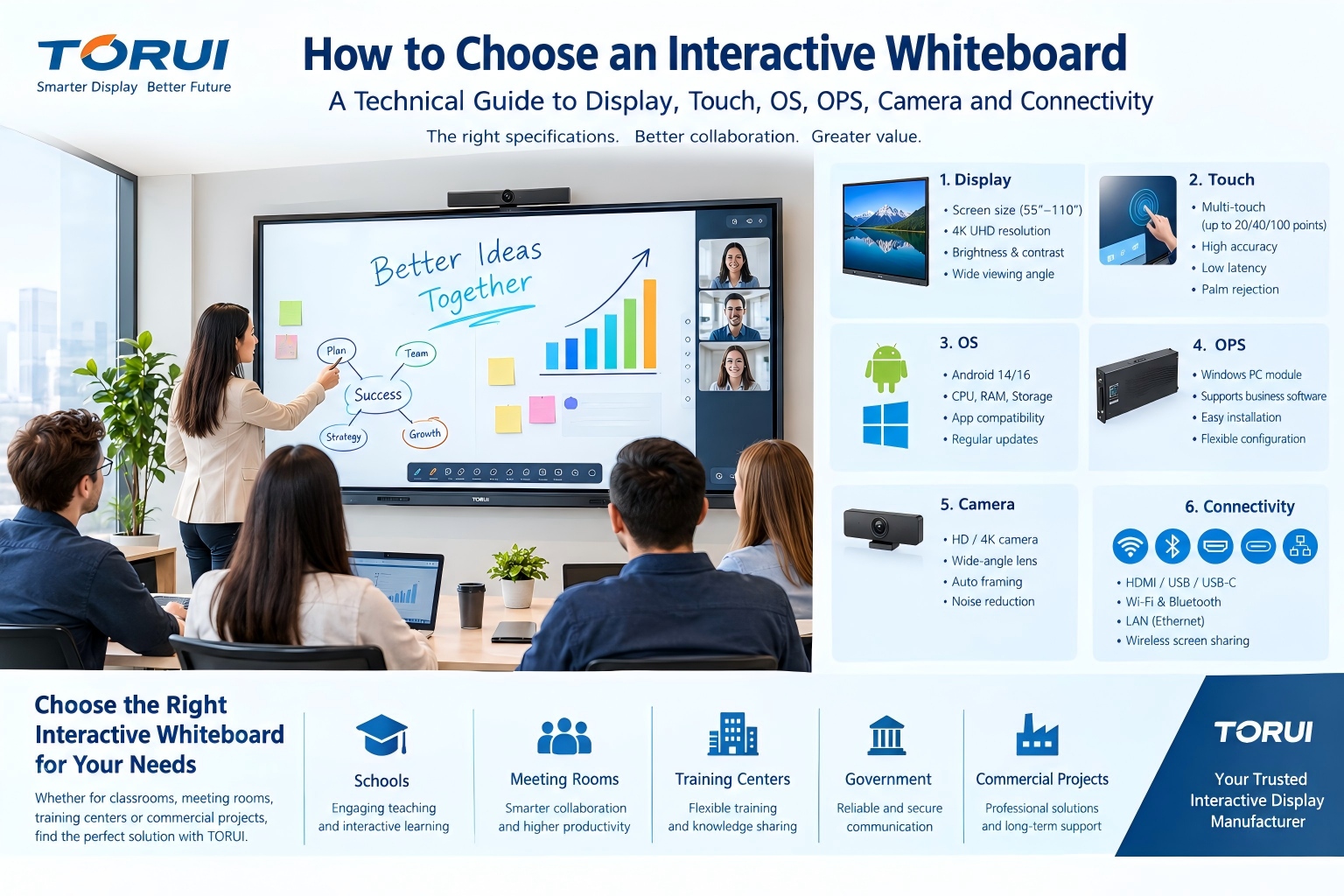
Before choosing a classroom display solution, schools and education buyers should evaluate:
Classroom Size
Recommended interactive whiteboard sizes:
- 65 inch: Small classrooms and meeting rooms
- 75 inch: Standard classrooms
- 86 inch: Large classrooms and training rooms
- 98 inch+: Universities and large teaching spaces
Software Compatibility
Check whether the solution supports:
- Android applications
- Windows OPS computer
- Teaching platforms
- Video conferencing systems
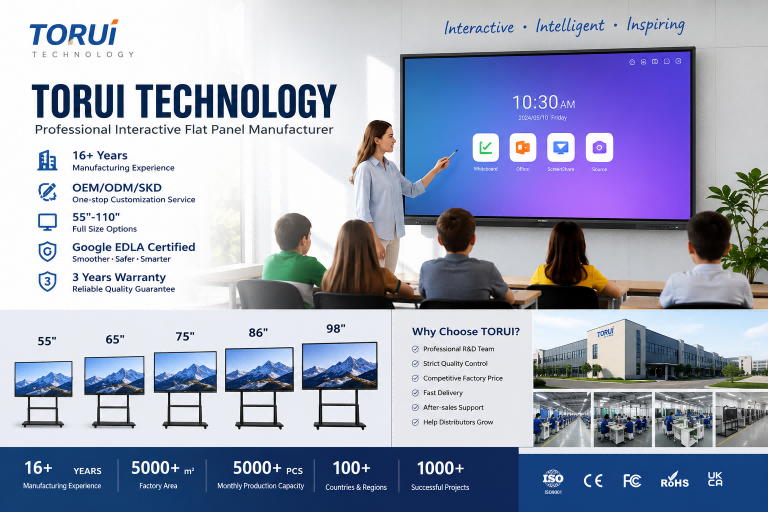
Supplier Capability
A reliable interactive whiteboard supplier should provide:
- Stable product quality
- Professional technical support
- OEM/ODM service
- International certifications
- Long-term cooperation support
Conclusion: Interactive Whiteboards Are the Future of Smart Classrooms
While projectors still have applications in some environments, interactive whiteboards provide a more complete solution for modern education.
With better image quality, direct touch interaction, lower maintenance requirements, and powerful digital teaching features, interactive whiteboards help schools create more engaging and efficient learning environments.
For schools, distributors, and education solution providers planning long-term investment, choosing an experienced interactive whiteboard manufacturer in China can provide reliable products, competitive pricing, and professional support.
The future classroom is not just about displaying information — it is about creating interactive learning experiences.
Who Are the Best Interactive Whiteboard Manufacturers in China? A Complete Guide for Global B2B Buyers
Interactive Whiteboard Buying Guide 2026: How to Choose the Right Smart Board Supplier?
Related Article