
Meeting Room Solution: Enhancing Collaboration and Efficiency in Modern Workspaces
author: toruitech
2025-10-08

In the digital era, a meeting room solution is vital for organizations aiming to improve communication and decision-making. By integrating smart interactive displays, wireless presentation systems, and video conferencing tools, companies can create efficient collaboration environments for both in-office and remote teams.
1. What Is a Smart Meeting Room Solution?
A meeting room solution is a unified system that combines hardware and software to simplify team communication. It includes interactive flat panels, video conferencing systems, and room scheduling tools that make meetings more intuitive and productive.
2. Key Features of an Interactive Display for Meetings
Modern meeting room solutions are powered by interactive displays that allow digital writing, multi-touch control, and wireless screen sharing. Participants can annotate, record sessions, and save ideas instantly—transforming meetings into interactive brainstorming sessions.
3. Benefits of a Smart Meeting Room Solution
Implementing a meeting room system brings numerous business benefits:
-
Improved Collaboration: Real-time sharing and annotation boost engagement.
-
Higher Efficiency: One-touch setup saves time and eliminates cable clutter.
-
Cost Reduction: Supports hybrid work, reducing travel costs.
-
Professional Experience: Smart displays elevate your company’s image.
4. Choosing the Right Meeting Room System
When selecting a smart meeting solution, consider:
-
The size and layout of your meeting space
-
Compatibility with platforms like Zoom, Microsoft Teams, or Google Meet
-
After-sales support and software updates
-
Security standards for corporate data
5. Conclusion: Future of Collaborative Workspaces
A meeting room solution is not just a tool—it’s a strategic investment in productivity and innovation. Businesses adopting interactive technologies can empower their teams, streamline workflows, and create smarter, more connected workplaces.
How to Choose the Right Interactive Whiteboard for Your School
Smart Classroom Solution: Transforming Education Through Interactive Technology
Related Article

Choosing the right interactive whiteboard size is an important decision for distributors, wholesalers, and education technology suppliers. The 65-inch, 75-inch, and 86-inch interactive whiteboards are popular options for classrooms, meeting rooms, training centers, and commercial projects.
65 vs 75 vs 86-Inch Interactive Whiteboard: Which Model Should Distributors Choose?

Choosing the right interactive whiteboard manufacturer in China is an important decision for distributors, wholesalers, education technology suppliers, and system integrators. The right manufacturing partner can help businesses improve product quality, maintain competitive pricing, customize products for local markets, and build a sustainable distribution business.
Who Are the Best Interactive Whiteboard Manufacturers in China for B2B Distributors and Wholesalers?
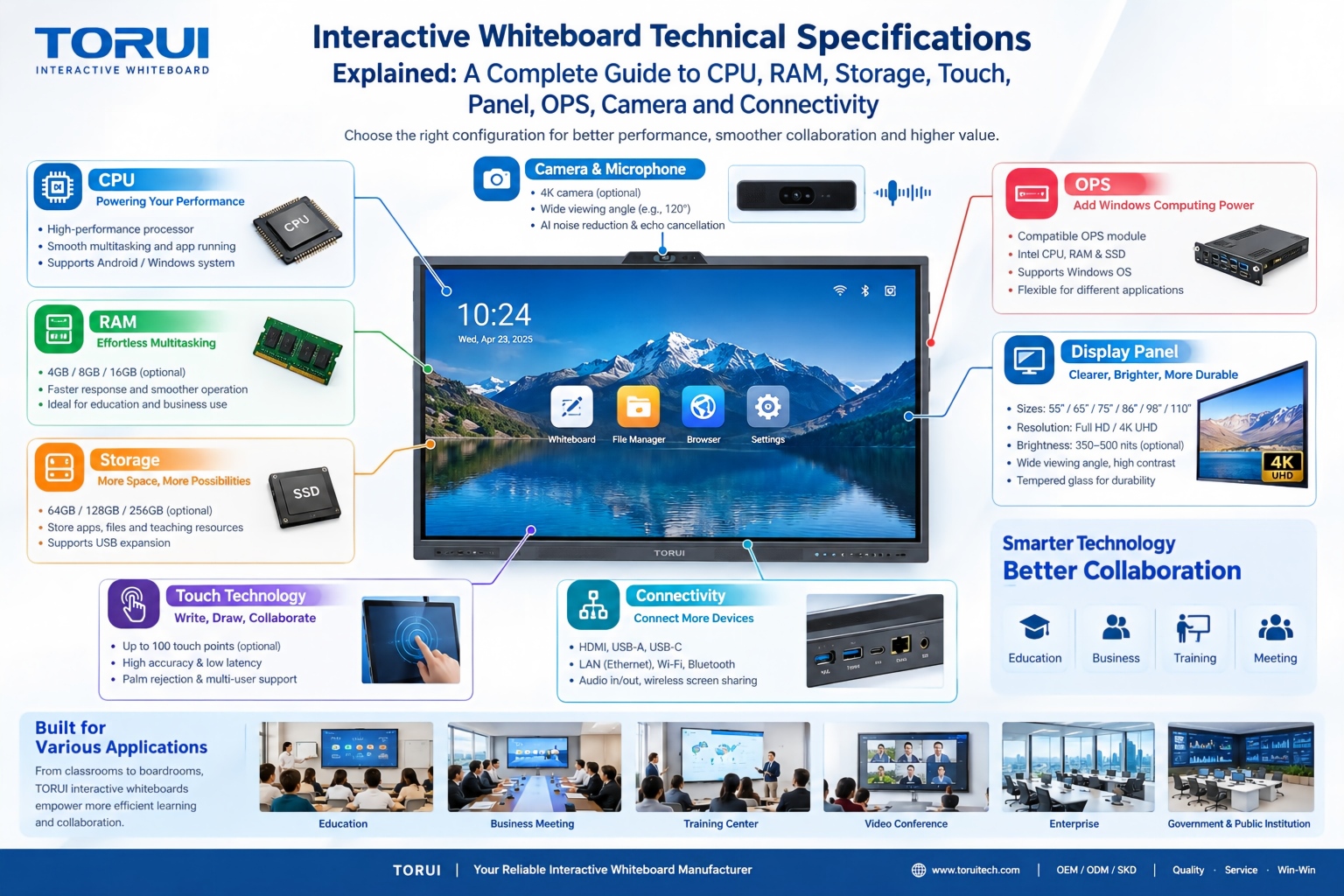
Choosing an interactive whiteboard involves more than comparing screen sizes and prices. For schools, businesses, distributors, wholesalers, and system integrators, understanding the technical specifications is essential to selecting a reliable product that meets different application requirements.
Interactive Whiteboard Technical Specifications Explained: A Complete Guide to CPU, RAM, Storage, Touch, Panel, OPS, Camera and Connectivity
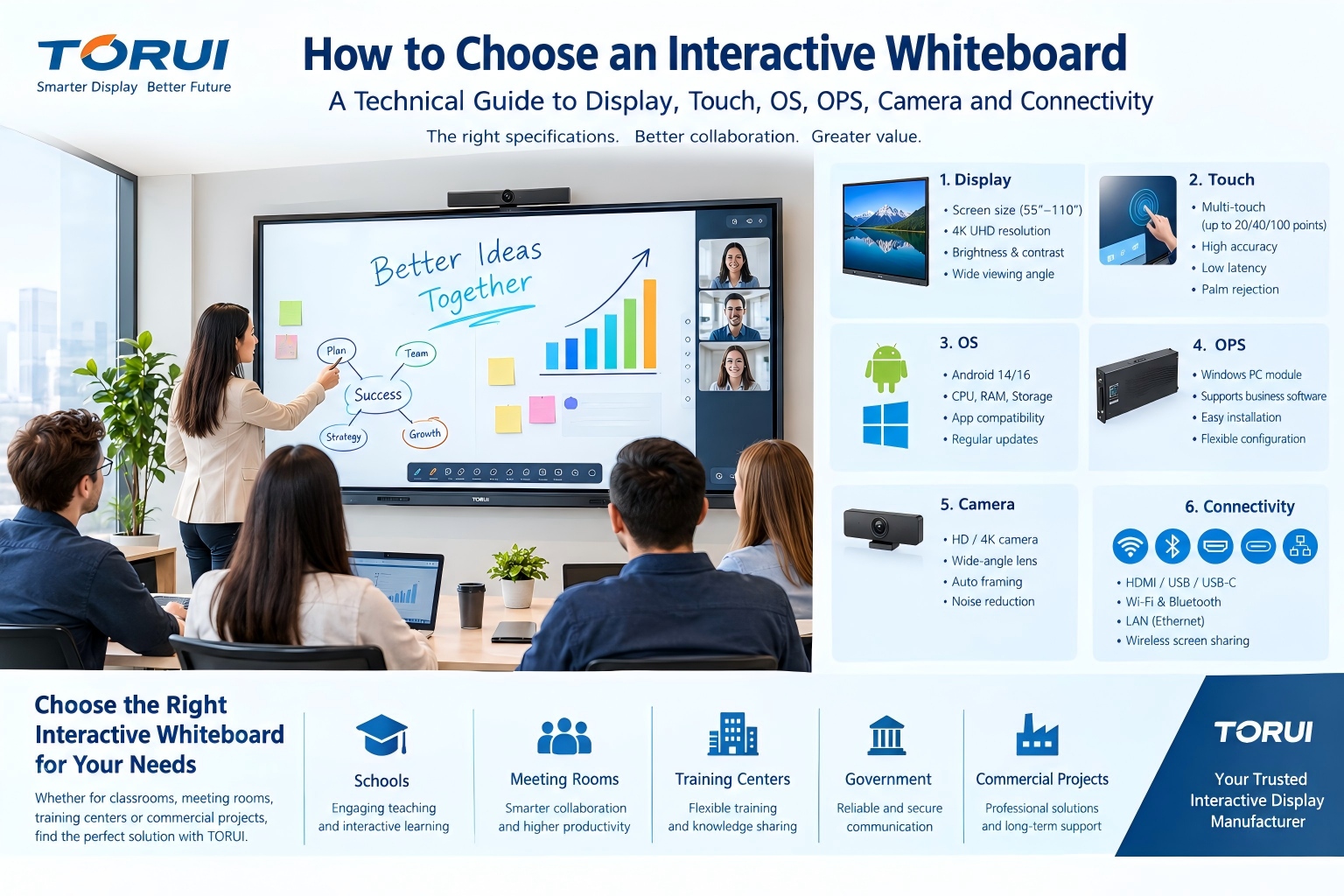
Choosing an interactive whiteboard for a school, meeting room, training center, government organization or commercial project requires more than comparing screen size and price. The most important specifications include display resolution, brightness, touch technology, operating system, processor, memory, storage, OPS compatibility, camera and microphone performance, connectivity, durability and after-sales support.
How to Choose an Interactive Whiteboard: A Technical Guide to Display, Touch, OS, OPS, Camera and Connectivity