OPS Computer: The Essential Computing Module for Modern Interactive Displays

An OPS (Open Pluggable Specification) Computer is an industry-standard modular computing solution widely used in interactive whiteboards, commercial displays, digital signage, and smart conference systems. Designed to offer high performance, easy maintenance, and seamless integration, the OPS module has become a critical component for upgrading smart classroom and meeting room environments. This article provides a comprehensive look into what an OPS computer is, how it works, its key technical features, and how to choose the right OPS unit for professional applications.
What Is an OPS Computer?
An OPS computer is a plug-in PC module built according to Intel’s Open Pluggable Specification standard. It integrates CPU, GPU, memory, storage, wireless modules, and operating systems into a compact form factor that slides directly into the OPS slot on compatible interactive flat panels. By eliminating cables and simplifying connections, an OPS computer enables displays to function as all-in-one smart systems. It is especially common in education technology, conference solutions, and digital signage networks.
Why OPS Matters for Interactive Whiteboards
Interactive whiteboards require significant computing power to run teaching software, annotation tools, video conferencing apps, and multitasking operations. An OPS computer provides:
-
High-performance processing for smooth touch interaction, large file handling, and real-time collaboration.
-
Stable system operation to support long teaching hours and continuous meeting use.
-
Flexible upgrades—schools and companies can replace the OPS module without replacing the entire interactive display.
-
Clean installation because OPS eliminates external PCs, HDMI cables, and power adapters, creating a tidy environment.
For display manufacturers, offering OPS compatibility has become a standard feature to improve functionality and competitiveness.
Key Components and Technical Specifications
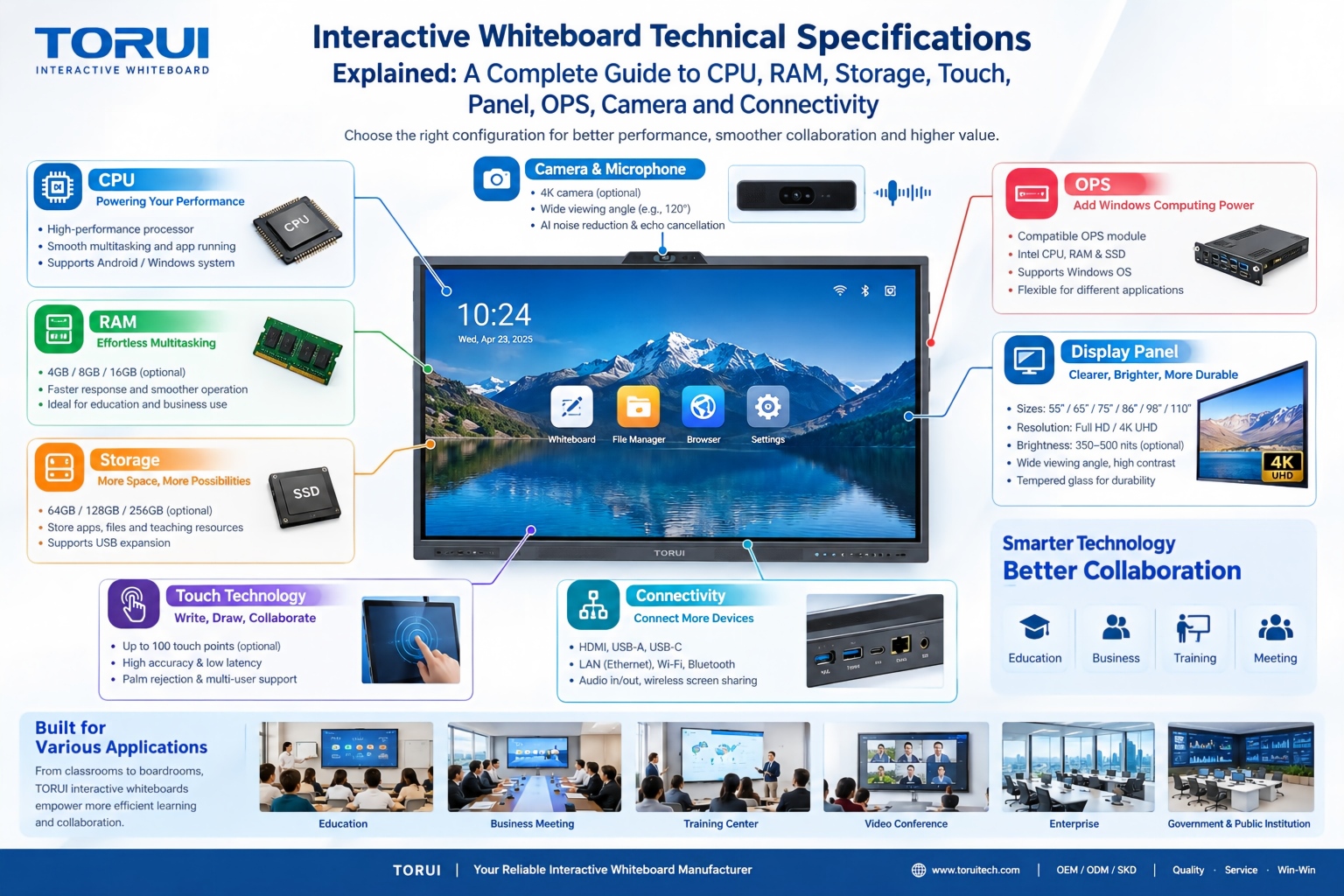
A professional OPS computer typically includes:
1. Processor (CPU)
Common choices include:
-
Intel Core i3 / i5 / i7 / i9
-
Intel N series (N100, N200) for lightweight tasks
-
AMD Ryzen series for graphics-intensive applications
A powerful CPU ensures fast application loading and smooth performance during teaching and conferencing.
2. Graphics (GPU)
Integrated Intel UHD or Iris graphics are enough for most interactive whiteboard uses, including 4K display output, handwriting recognition, and educational software. For high-end digital signage, optional discrete GPUs may be used.
3. Memory and Storage
-
8GB / 16GB / 32GB DDR4 or DDR5 RAM
-
128GB / 256GB / 512GB / 1TB NVMe SSD
Fast SSD storage boosts system responsiveness and improves multitasking efficiency.
4. Connectivity
A complete OPS module includes:
-
Wi-Fi & Bluetooth
-
USB 3.0 / USB-C ports
-
Ethernet RJ45
-
Audio output
-
Optional 4G/5G modules
These interfaces support flexible usage in classrooms, meeting rooms, and network-controlled signage systems.
5. Operating System
Most OPS computers support:
-
Windows 10 / 11
-
Android (in some dual-OS or custom versions)
-
Linux distributions for specialized applications
Windows remains the most common option for professional environments due to compatibility with teaching and business software.
Benefits of Using an OPS Computer
Easy Installation and Maintenance
The plug-and-play design allows users to install or replace the OPS unit within seconds, significantly reducing downtime and maintenance costs.
Enhanced Performance for Education and Business
Whether running interactive lessons, wireless screen sharing, or cloud conferencing tools like Zoom and Teams, an OPS computer ensures a fast, stable experience.
Cost-Effective System Upgrading
Instead of replacing an entire interactive whiteboard, upgrading to a newer OPS model provides a substantial performance boost at a fraction of the cost.
Improved Aesthetics and Cable Management
The integrated installation keeps classrooms and meeting rooms clean, professional, and clutter-free.
How to Choose the Right OPS Computer
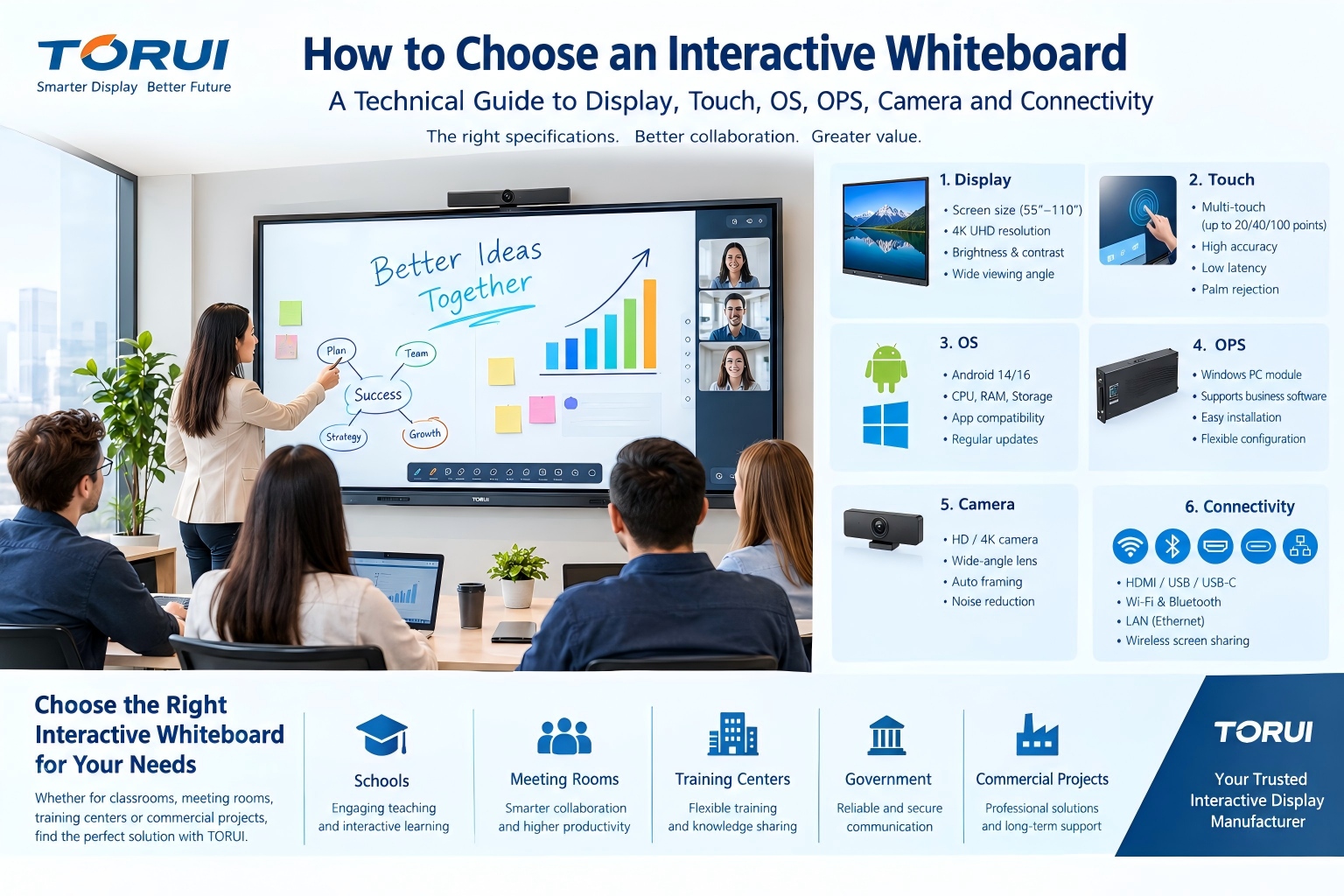
When selecting an OPS module, consider the following factors:
-
CPU level: Choose i5 or higher for demanding applications.
-
RAM: 16GB is recommended for smooth multitasking.
-
Storage: At least 256GB SSD for large teaching resources and system performance.
-
Compatibility: Ensure your interactive flat panel supports OPS slots.
-
Usage scenario:
-
Education: i5 + 16GB RAM is ideal.
-
Meetings: i5/i7 for video conferencing & screen sharing.
-
Digital signage: i7/i9 if running 4K videos or complex content.
-
Conclusion
An OPS computer is a vital component that transforms an interactive whiteboard or commercial display into a high-performance smart system. With its compact design, powerful computing capabilities, and hassle-free maintenance, OPS has become the preferred solution for schools, enterprises, and digital signage operators. Choosing the right OPS computer ensures long-term stability, efficiency, and flexibility, helping organizations build modern, intelligent environments for teaching, collaboration, and communication.
RK3588 vs RK3576 for Interactive Whiteboards — Which Is Better?
Interactive Whiteboard Manufacturing Process: A Step-by-Step Guide for Quality and Reliability
Related Article