
Quality Control Process for Smart Boards: Step-by-Step
author: toruitech
2025-11-11
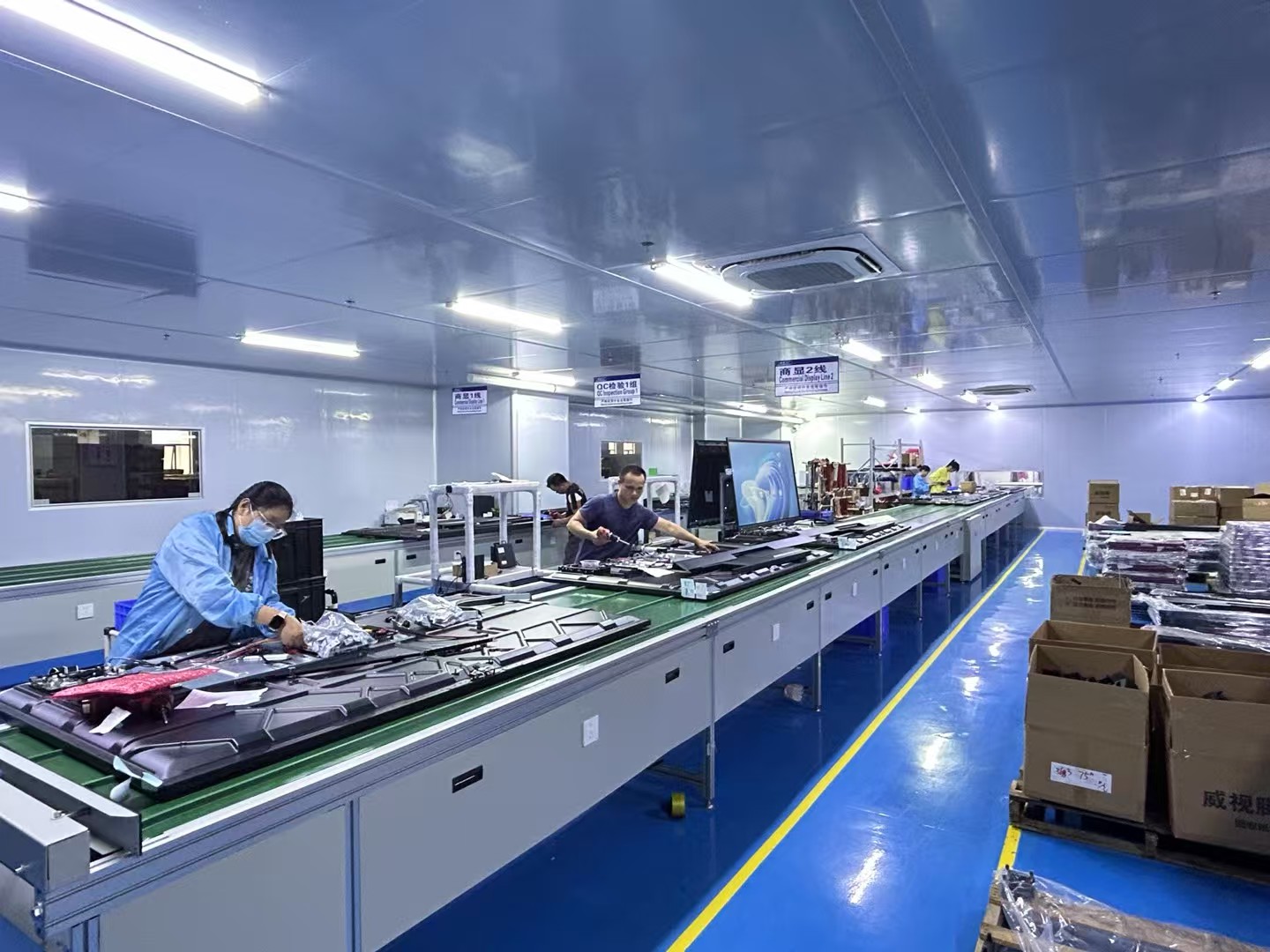
In the competitive world of educational and corporate technology, ensuring product quality is essential to maintaining brand reputation and user trust. For manufacturers of smart boards and interactive displays, a robust quality control process guarantees that every unit performs reliably in classrooms, meeting rooms, and training environments. Below is a detailed, step-by-step explanation of the quality control process used by professional smart board manufacturers like TORUI.
1. Raw Material Inspection
The quality control process begins long before assembly. Each batch of raw materials — such as display panels, touch sensors, frames, chips, and connectors — is inspected for visual defects, electrical stability, and compatibility. Components must meet strict standards in brightness, color accuracy, and touch sensitivity. Any substandard material is rejected to prevent downstream production issues.
2. Precision Assembly and Calibration
During assembly, every layer of the smart board — from the glass surface to the LED panel — must be aligned with micrometer precision. Factories use automated tools and skilled technicians to ensure the touch and writing layers are perfectly calibrated. This step directly affects touch accuracy, smooth writing response, and user experience. After assembly, the system undergoes multiple alignment checks and software calibration to achieve seamless interactivity.
3. Functional Testing
Each smart board goes through a full set of functional tests, covering both hardware and software aspects. The QC team verifies:
-
Multi-touch performance and handwriting response speed.
-
Wireless connectivity and screen sharing stability.
-
Sound quality, camera clarity (if equipped), and built-in Android or Windows compatibility.
-
Brightness, color uniformity, and image sharpness.
All test results are recorded in a traceable system, ensuring each product can be reviewed if needed.
4. Safety and Reliability Tests
Smart boards are designed for long-term use, often operating 8–10 hours daily. To guarantee reliability, manufacturers conduct durability tests that include:
-
Aging Test: Running the device continuously for 72 hours to detect early failures.
-
Vibration Test: Simulating transportation conditions to ensure stability.
-
Temperature & Humidity Test: Checking performance under extreme environmental conditions.
-
Electrical Safety Test: Verifying grounding, insulation, and voltage tolerance.
These tests confirm that every board is safe, durable, and ready for global shipment.
5. Visual and Aesthetic Inspection
Before packaging, every product undergoes a final surface inspection. Technicians check for scratches, uneven gaps, color mismatches, and labeling accuracy. The goal is to deliver not only a technically sound product but also a visually flawless one.
6. Packaging and Final Verification
The last step is careful packaging using anti-static and shockproof materials. Each carton is labeled with a unique serial number for tracking. A random sample from each batch is re-tested before shipment to ensure consistent quality.
Conclusion
A structured quality control process is the foundation of every reliable smart board. From raw material inspection to final packaging, each stage ensures the product meets international standards and provides an excellent user experience. At TORUI, strict QC procedures and professional testing guarantee that every interactive display performs with accuracy, durability, and safety — helping schools and businesses achieve smarter, more connected collaboration.
Modern Smart Classroom: Transforming Education Through Technology
TORUI Interactive Whiteboard Factory Introduction (2025)
Related Article
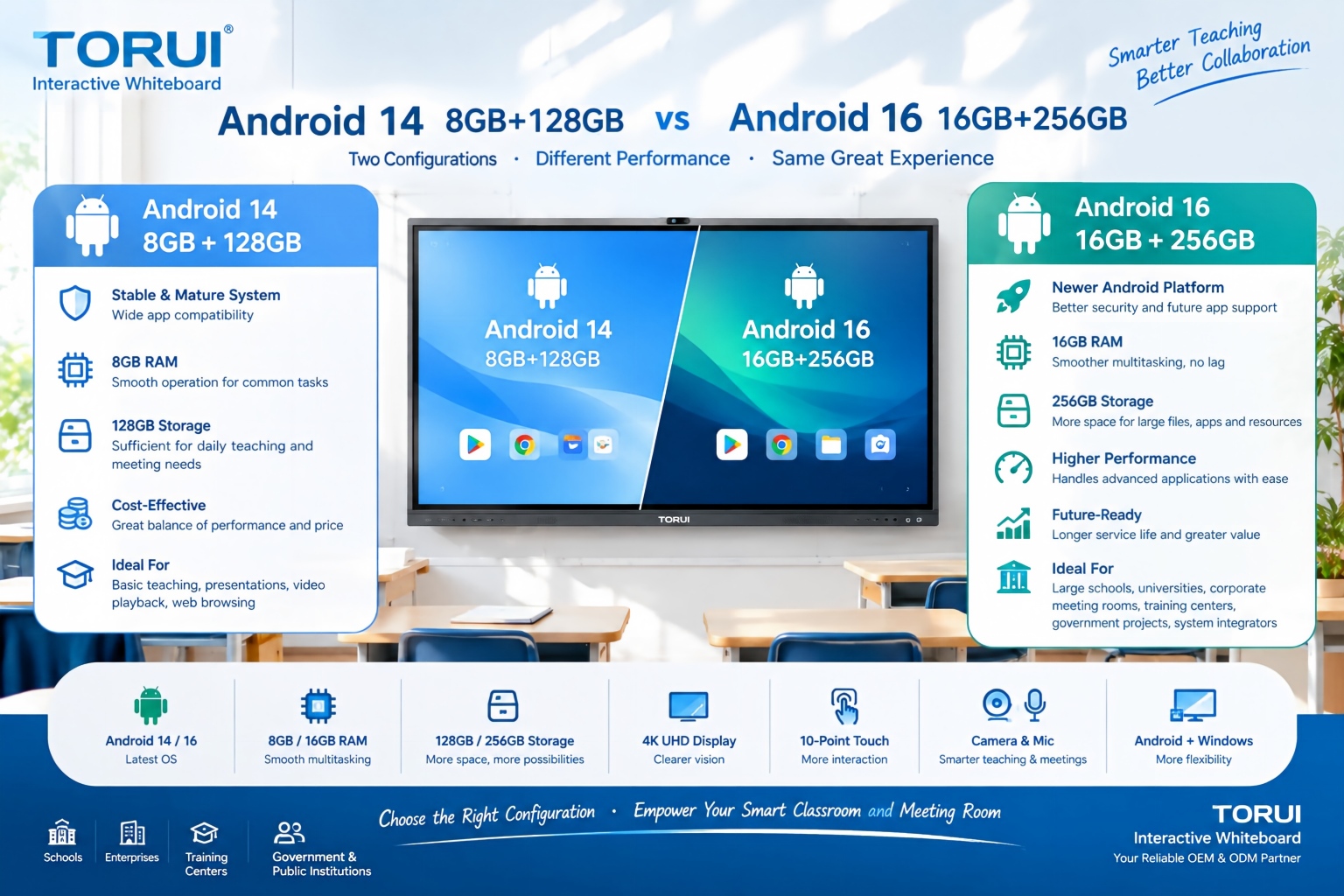
When choosing an interactive whiteboard for a school, training center, meeting room, or commercial project, the Android version and hardware configuration can significantly affect user experience. Two common configurations are Android 14 with 8GB RAM and 128GB storage and Android 16 with 16GB RAM and 256GB storage.
Android 14 8GB+128GB vs Android 16 16GB+256GB: Which Interactive Whiteboard Is Better?

Buying an interactive whiteboard is not simply about choosing the right screen size, resolution, or operating system. For B2B buyers, distributors, system integrators, schools, and corporate procurement teams, quality control is one of the most important factors affecting long-term reliability, user experience, warranty costs, and customer satisfaction.
Interactive Whiteboard Quality Control: What Should Buyers Check?
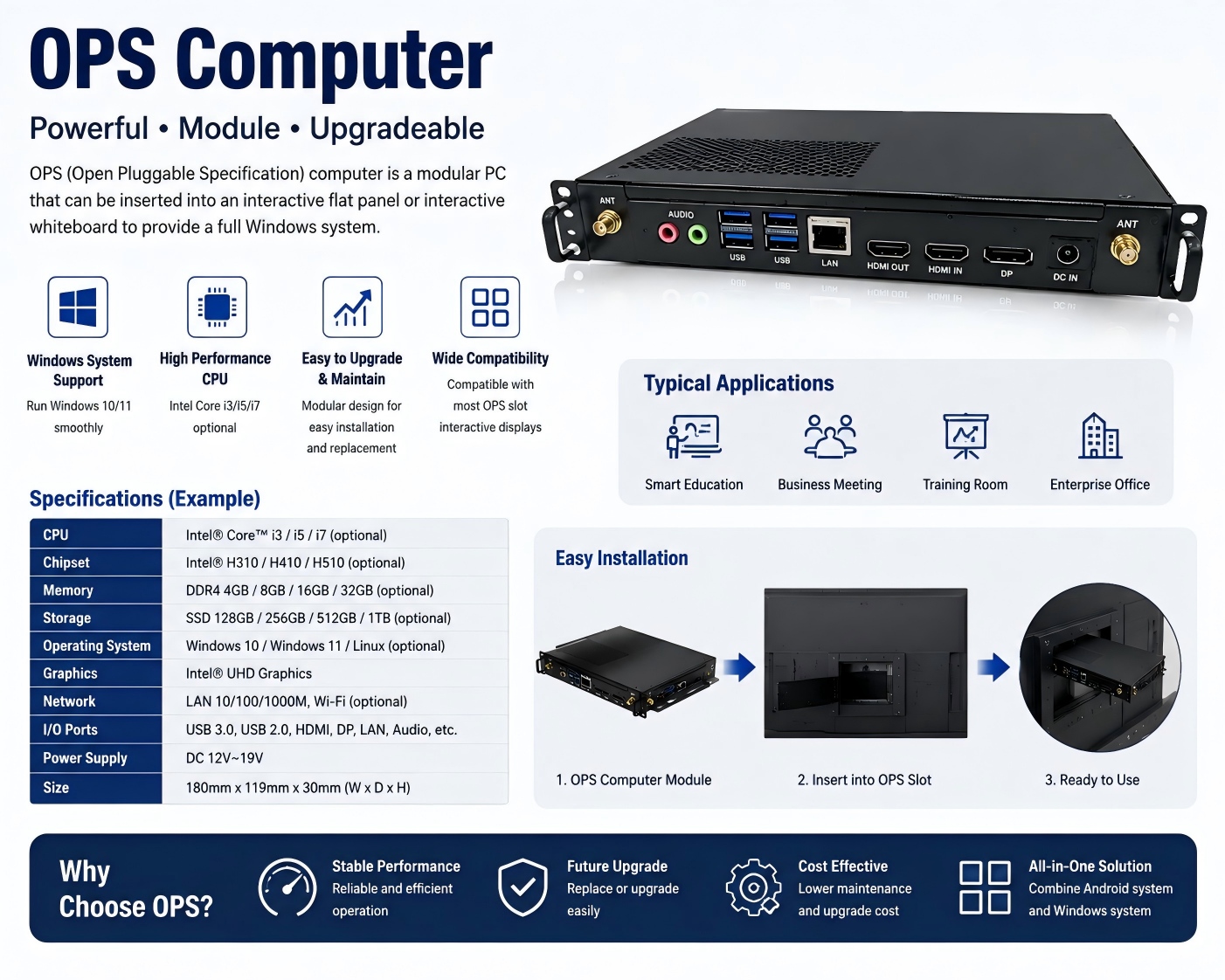
An OPS computer for an interactive whiteboard is a modular plug-in PC designed to add Windows-based computing power to an interactive display. OPS stands for Open Pluggable Specification, a standardized form factor originally developed for commercial interactive displays.
What Is an OPS Computer for Interactive Whiteboards?

Choosing the right chipset is an important decision when sourcing an interactive whiteboard for schools, conference rooms, training centers, government projects, or commercial applications. Among Rockchip platforms, RK3588 and RK3576 are two powerful options for modern Android interactive displays.
RK3588 vs RK3576: Which Chip Is Better for Interactive Whiteboards?