Smart Board for Classroom: Transforming Modern Education

A smart board for classroom is an advanced interactive display that combines touch technology, digital whiteboarding, and multimedia capabilities to create a more engaging and collaborative learning experience. Unlike traditional whiteboards, smart boards allow teachers and students to write, draw, and interact directly with the screen using a stylus or finger, making lessons more dynamic and visual.
1. What Is a Smart Board?
A smart board, also known as an interactive whiteboard, is a large touchscreen display connected to a computer and projector or built-in Android system. It enables users to display lessons, videos, images, and web content while allowing real-time interaction. Teachers can annotate directly on digital materials, save notes, and share them instantly with students.
2. Key Features of Smart Boards for Classrooms
-
Interactive Touchscreen: Supports multi-touch gestures, enabling multiple students to collaborate on the board simultaneously.
-
Built-in Software: Many models come with teaching software that allows for drawing, annotation, and screen recording.
-
Wireless Connectivity: Teachers can mirror content from laptops, tablets, or smartphones to the smart board wirelessly.
-
Integrated Audio and Video: With built-in speakers and cameras, it supports hybrid learning and video conferencing.
-
Durability and Ease of Use: Most smart boards feature anti-glare glass and user-friendly interfaces for all ages.
3. Benefits of Using Smart Boards in Classrooms
1. Enhanced Engagement: Interactive lessons increase student participation and attention. Teachers can use multimedia content—videos, 3D models, and animations—to make complex topics easier to understand.
2. Collaborative Learning: Students can work together on the same screen, promoting teamwork and problem-solving skills.
3. Accessibility and Flexibility: Smart boards accommodate different learning styles—visual, auditory, and kinesthetic—making education more inclusive.
4. Time Efficiency: Lessons can be prepared in advance and reused. Teachers can save digital notes and share them instantly after class.
5. Integration with Online Resources: Teachers can access the internet directly from the board to enrich lessons with up-to-date information and interactive quizzes.
4. Applications Across Education Levels
Smart boards are suitable for primary, secondary, and higher education. In elementary schools, they make learning playful through interactive games. In high schools, teachers use them for science simulations, map analysis, and multimedia projects. In universities, smart boards facilitate hybrid learning and digital collaboration.
5. Choosing the Right Smart Board for Your Classroom
When selecting a smart board, consider:
-
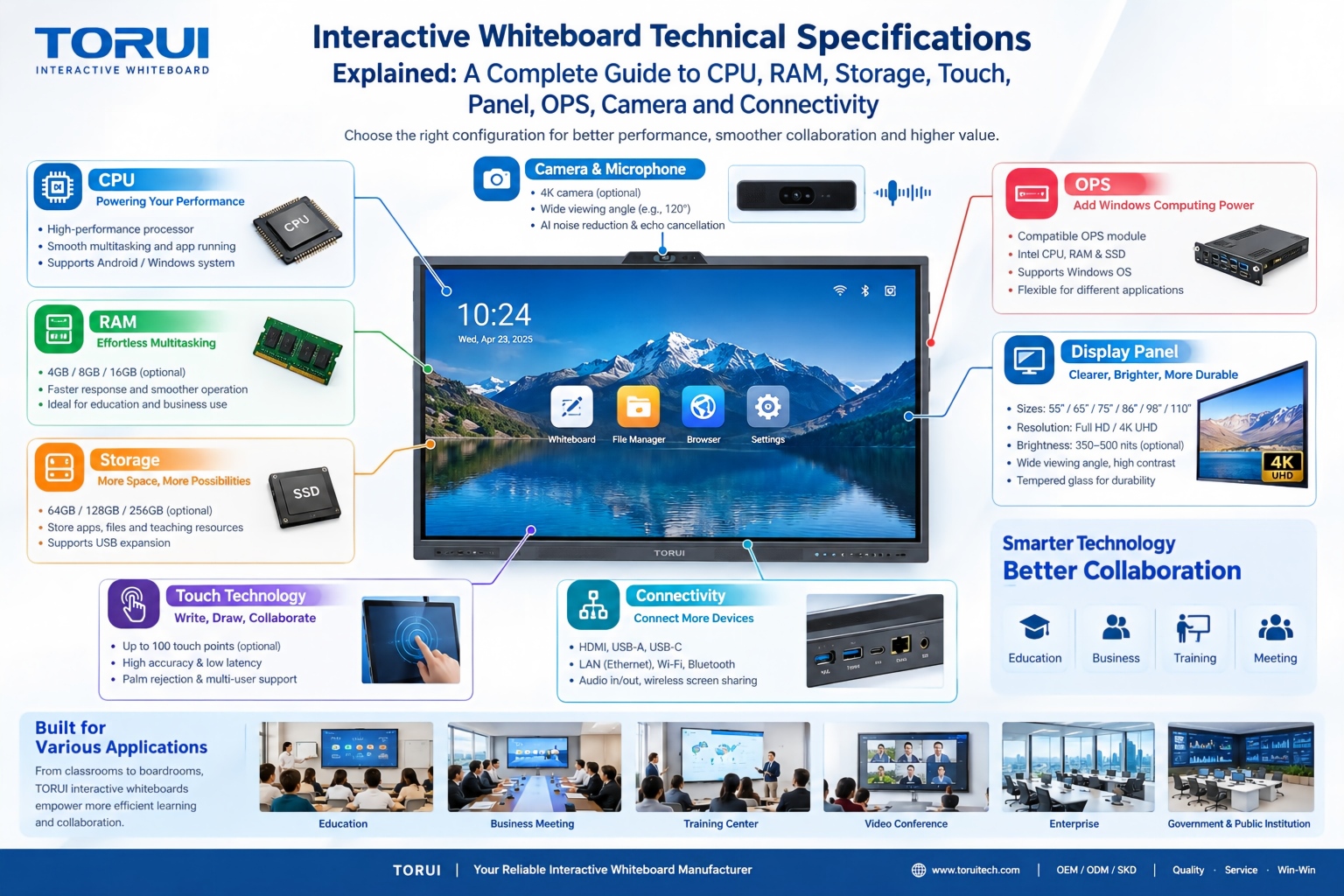
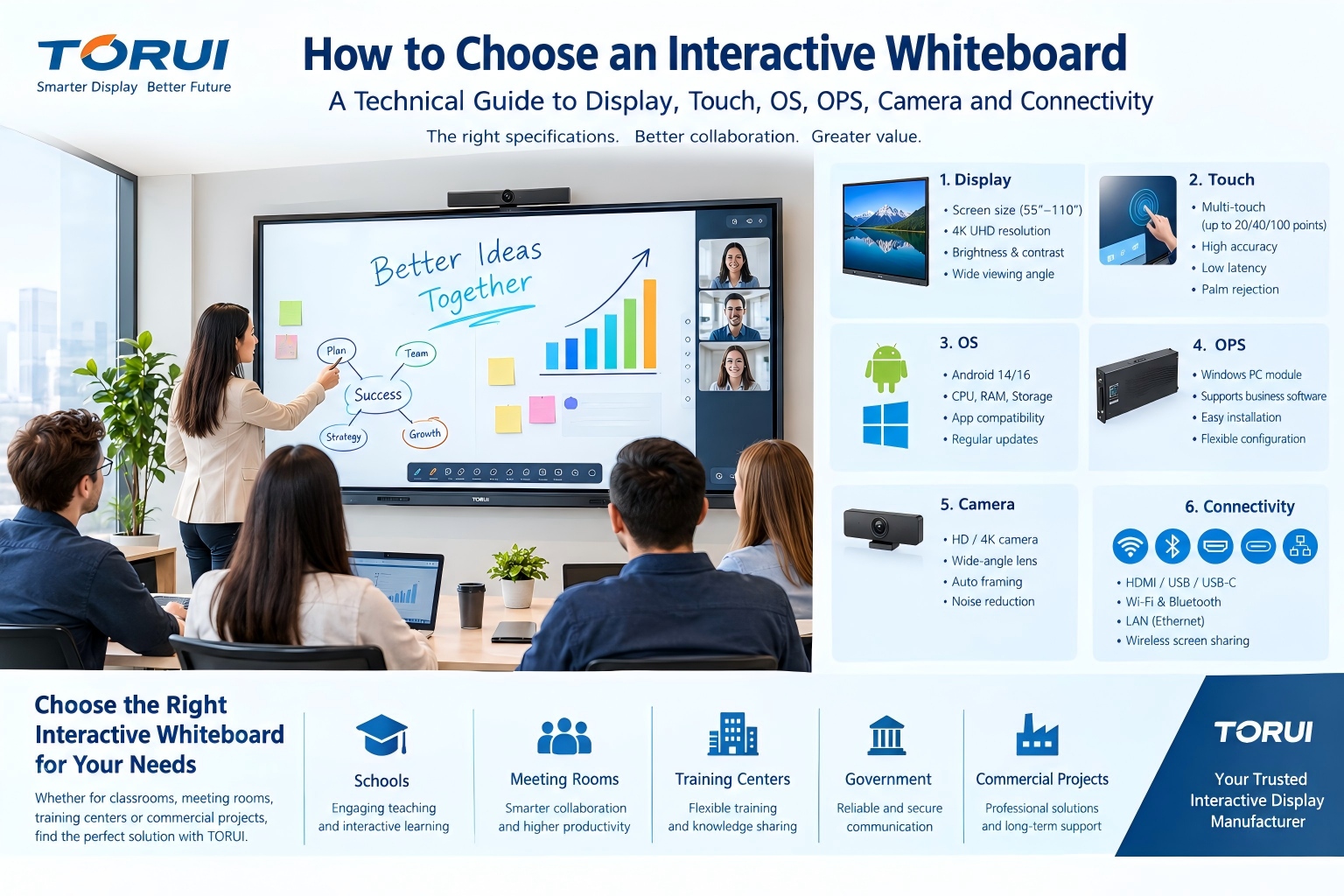
Screen Size (65"–98") based on classroom size.
-
Resolution (4K UHD is ideal for clarity).
-
Touch Technology (Infrared or Capacitive for accuracy).
-
Operating System (Android + Windows dual system preferred).
-
Warranty and Support from a trusted manufacturer.
6. Conclusion
A smart board for classroom is no longer a luxury—it’s a necessity in modern education. It transforms traditional teaching into an interactive, multimedia-rich experience that improves engagement and learning outcomes. Schools adopting this technology empower both teachers and students to collaborate, explore, and innovate in a more connected educational environment.
TORUI Interactive Whiteboard Specification Analysis
How to Import Interactive Whiteboards from China: A Complete Guide
Related Article