
Smart Classroom Solution: Transforming Education Through Interactive Technology
author: toruitech
2025-10-06
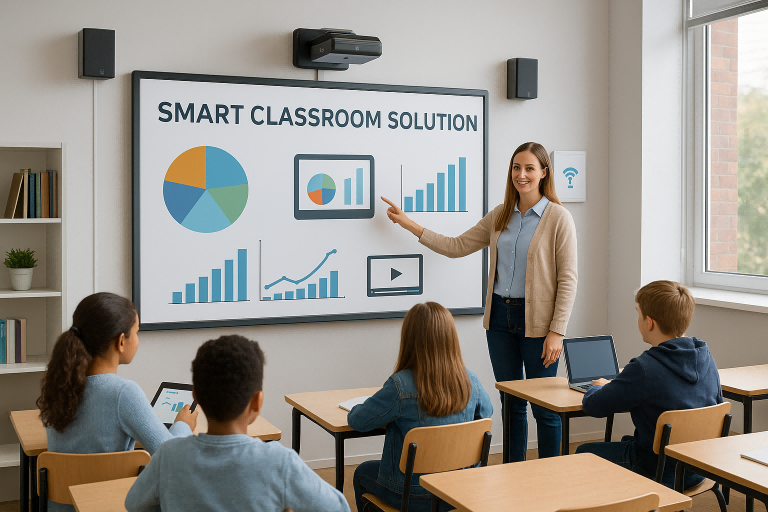
A smart classroom solution is an advanced educational setup that integrates digital technologies such as interactive whiteboards, projectors, touch displays, wireless sharing systems, and AI-based teaching software to create a more engaging, efficient, and data-driven learning environment. Unlike traditional classrooms that rely heavily on chalkboards and printed materials, smart classrooms enhance interactivity and collaboration between teachers and students.
The core components of a smart classroom typically include interactive whiteboards or smart panels, wireless connectivity, cloud-based content management, and audio-visual systems. Teachers can present multimedia lessons, annotate directly on the board, record sessions, and share resources instantly with students. Meanwhile, students can interact through tablets or laptops, answer quizzes in real time, and access digital notes anytime—making learning both flexible and personalized.
One of the key benefits of a smart classroom solution is improved engagement and retention. Visual and interactive elements help students understand complex topics more easily, while gamified learning encourages participation. Moreover, cloud-based systems allow educators to track progress, identify learning gaps, and provide targeted support. In addition, the integration of AI and IoT technologies can automate attendance, manage classroom lighting, and analyze performance data for better decision-making.
From an institutional perspective, smart classroom solutions support remote and hybrid learning, ensuring continuity even when students are not physically present. They also promote sustainability by reducing paper usage and optimizing energy efficiency.
For schools, universities, and training centers aiming to modernize their teaching methods, implementing a smart classroom solution represents a long-term investment in educational quality. Leading manufacturers now offer customizable systems tailored to different scales—from small classrooms to entire campuses—ensuring smooth integration with existing infrastructure.
In summary, a smart classroom solution is the foundation of future-ready education, enabling digital transformation, fostering student engagement, and empowering teachers with innovative tools to enhance learning outcomes.
Meeting Room Solution: Enhancing Collaboration and Efficiency in Modern Workspaces
The Future of Smart Education Technology
Related Article

Choosing the right interactive whiteboard size is an important decision for distributors, wholesalers, and education technology suppliers. The 65-inch, 75-inch, and 86-inch interactive whiteboards are popular options for classrooms, meeting rooms, training centers, and commercial projects.
65 vs 75 vs 86-Inch Interactive Whiteboard: Which Model Should Distributors Choose?

Choosing the right interactive whiteboard manufacturer in China is an important decision for distributors, wholesalers, education technology suppliers, and system integrators. The right manufacturing partner can help businesses improve product quality, maintain competitive pricing, customize products for local markets, and build a sustainable distribution business.
Who Are the Best Interactive Whiteboard Manufacturers in China for B2B Distributors and Wholesalers?
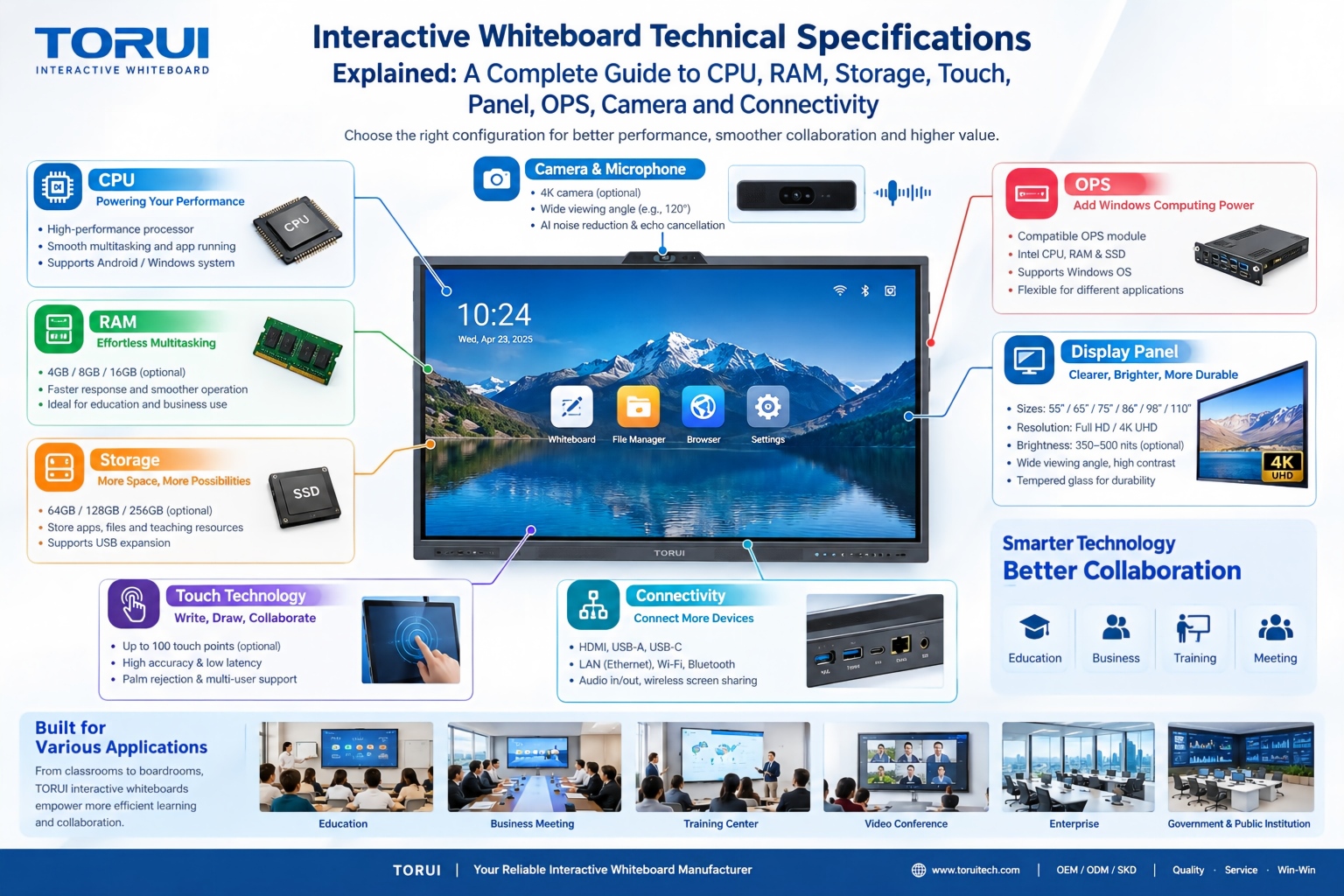
Choosing an interactive whiteboard involves more than comparing screen sizes and prices. For schools, businesses, distributors, wholesalers, and system integrators, understanding the technical specifications is essential to selecting a reliable product that meets different application requirements.
Interactive Whiteboard Technical Specifications Explained: A Complete Guide to CPU, RAM, Storage, Touch, Panel, OPS, Camera and Connectivity
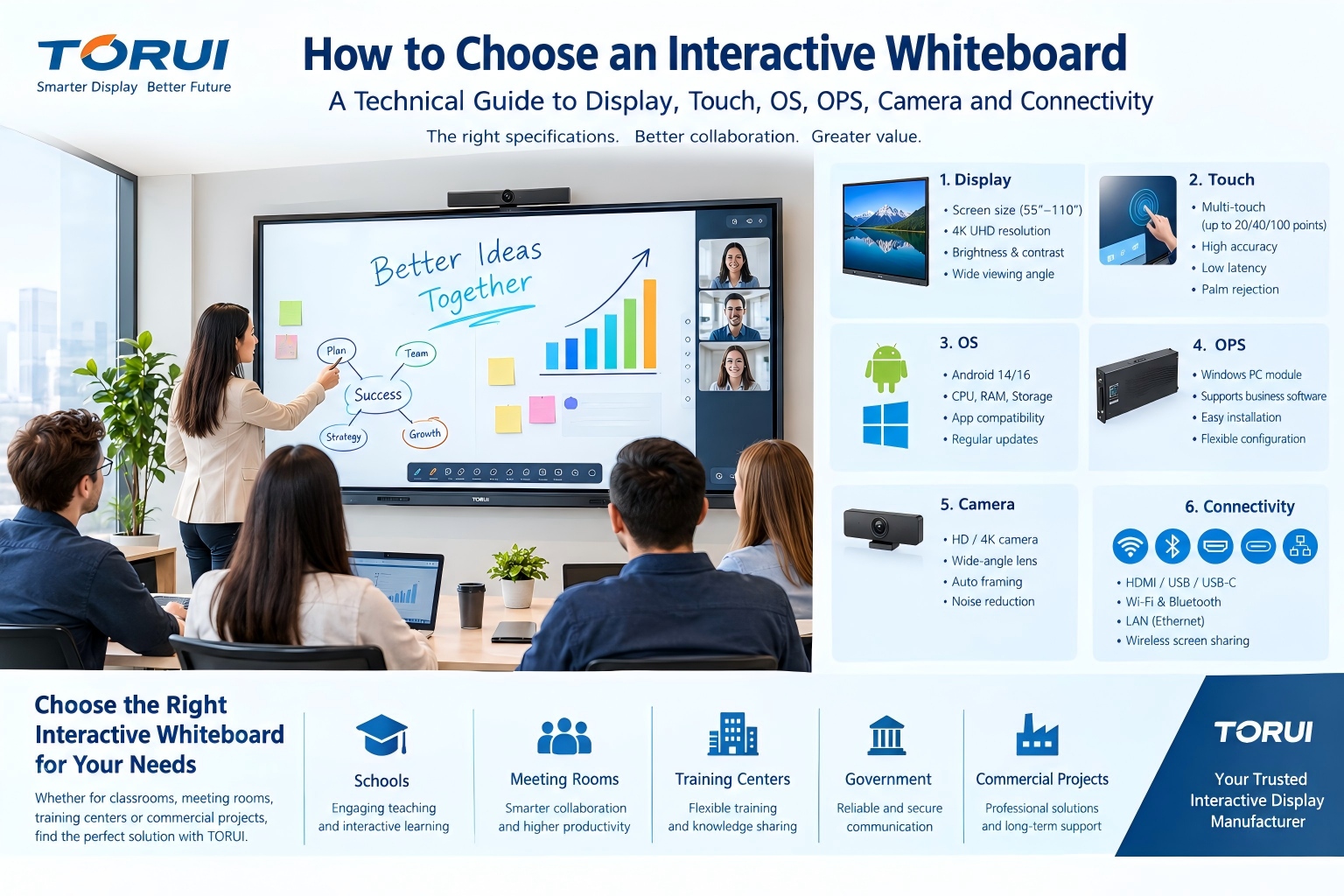
Choosing an interactive whiteboard for a school, meeting room, training center, government organization or commercial project requires more than comparing screen size and price. The most important specifications include display resolution, brightness, touch technology, operating system, processor, memory, storage, OPS compatibility, camera and microphone performance, connectivity, durability and after-sales support.
How to Choose an Interactive Whiteboard: A Technical Guide to Display, Touch, OS, OPS, Camera and Connectivity