Smart Interactive Whiteboard: A Complete B2B Buying Guide for 2026
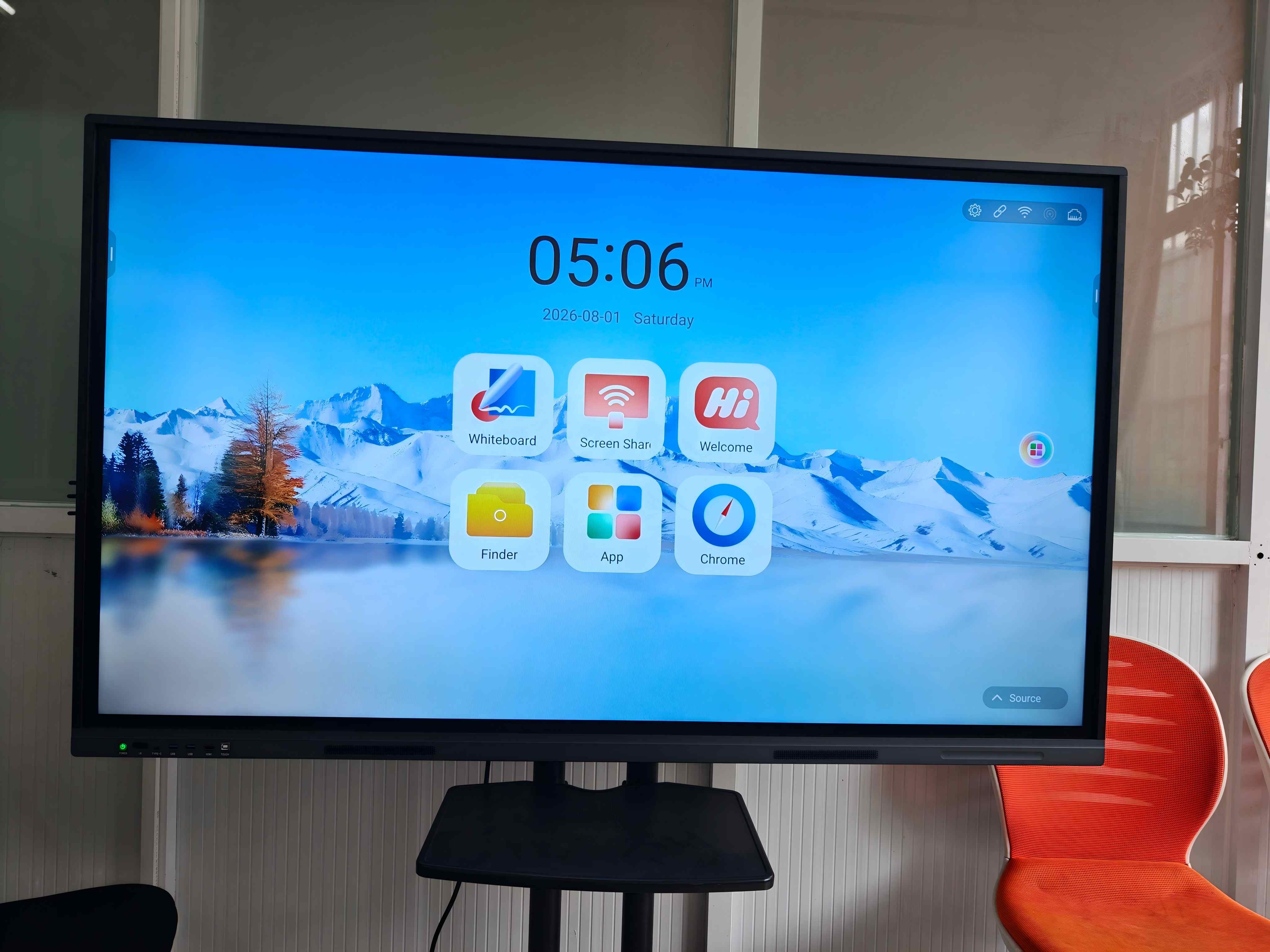
A smart interactive whiteboard is becoming an essential digital collaboration tool for modern classrooms, training centers, meeting rooms, government institutions, and corporate offices. Combining a large touchscreen, high-resolution display, intelligent software, wireless connectivity, and interactive functions, it can replace several traditional devices with one integrated solution.
For B2B buyers, however, choosing an interactive whiteboard is not simply about finding the lowest price. The right purchasing decision should consider performance, reliability, compatibility, certification, supplier capability, total cost of ownership, and after-sales service.
What Is a Smart Interactive Whiteboard?
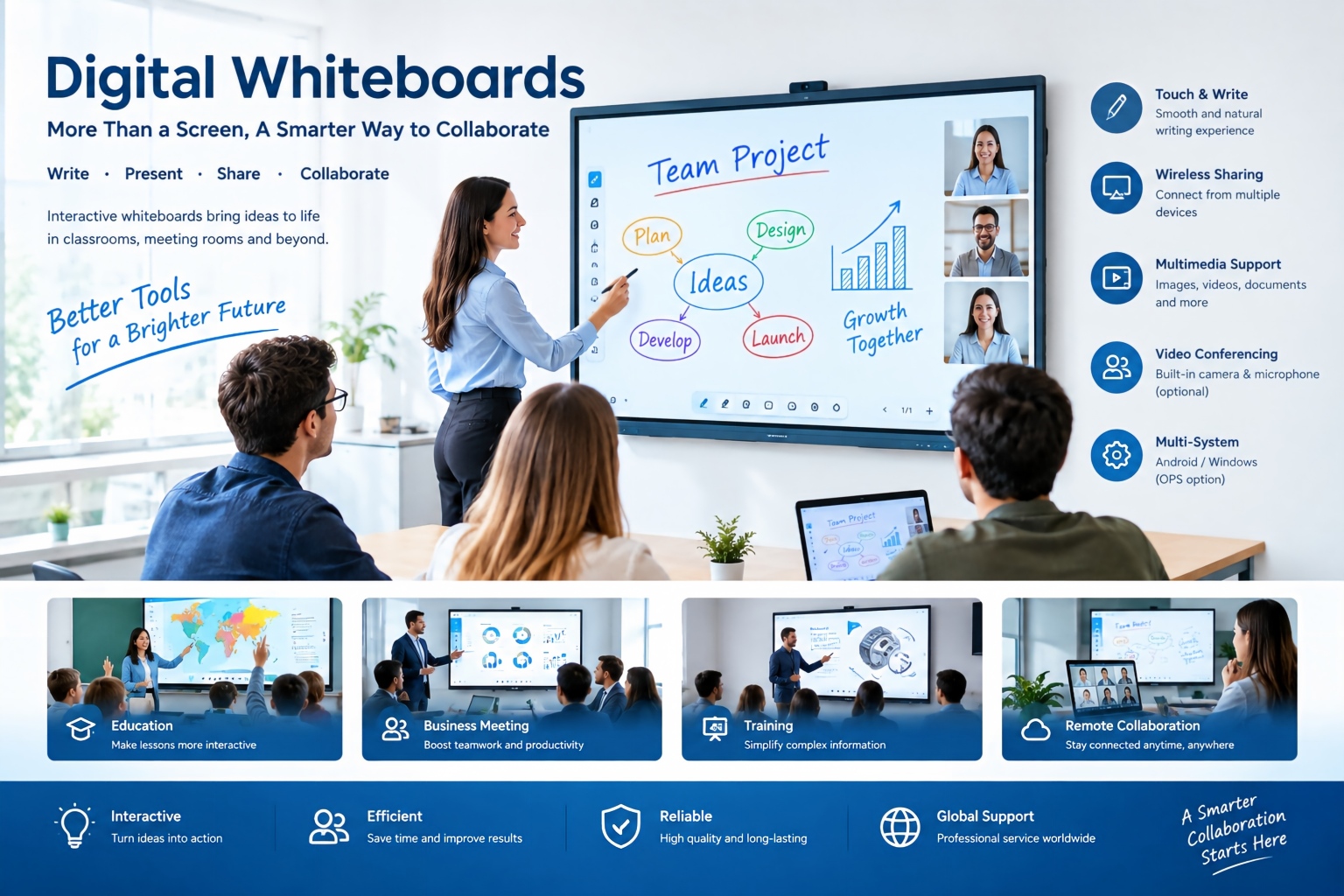
A smart interactive whiteboard, often called an interactive flat panel display (IFPD), enables users to write, annotate, present, share screens, play multimedia content, and collaborate directly on the display. Compared with traditional projectors and conventional whiteboards, modern interactive displays provide better visibility, easier operation, and more flexible digital collaboration.
For education, interactive whiteboards can support digital teaching, annotation, multimedia lessons, and remote learning. For businesses, they can improve presentations, video conferences, brainstorming, and team collaboration.
What Should B2B Buyers Consider?
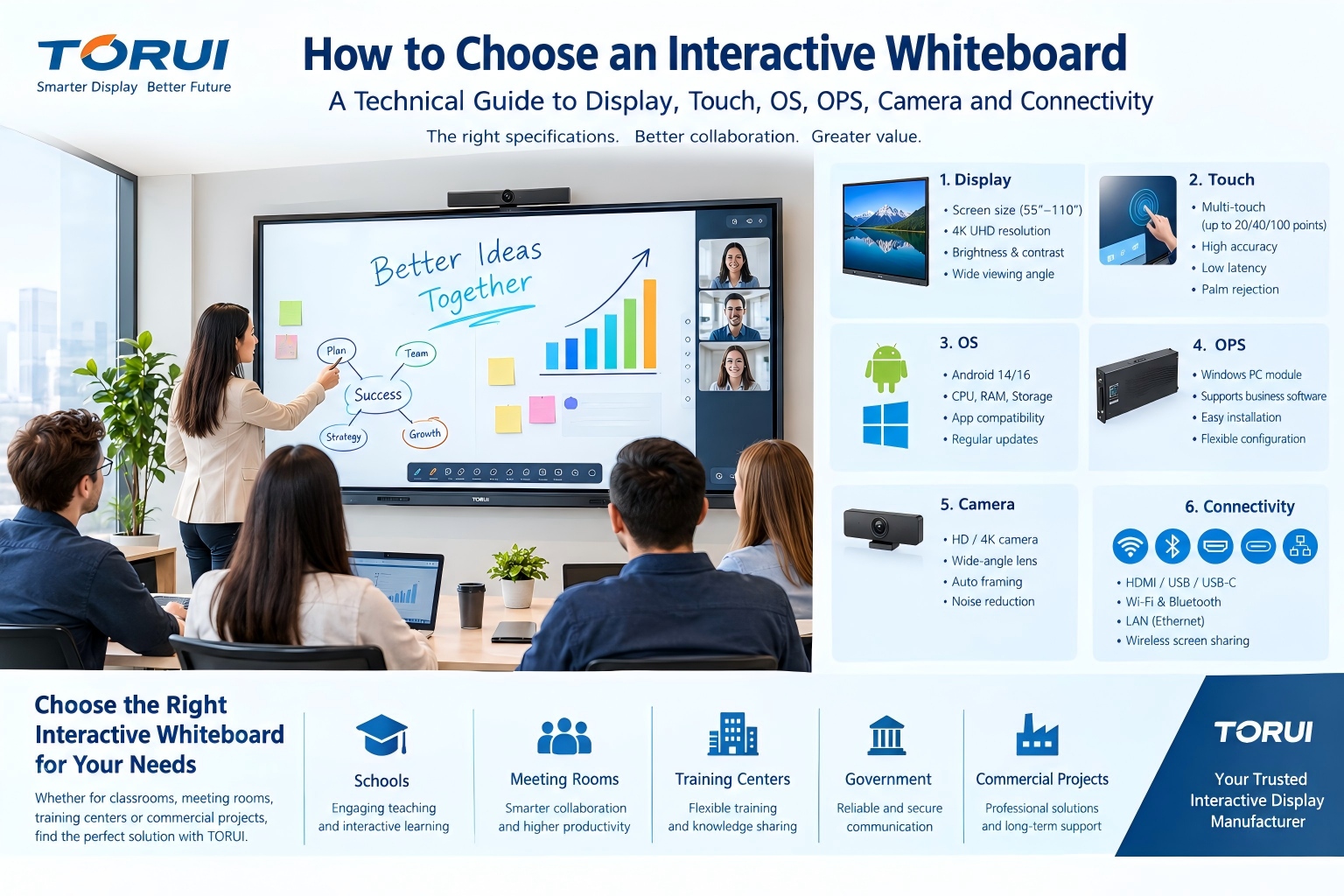
1. Screen Size and Display Quality
Popular sizes include 55, 65, 75, 86, 98, and 110 inches. The appropriate size depends on room dimensions and viewing distance. For most classrooms and meeting rooms, 75 or 86 inches offers a practical balance between visibility and cost. Large 98-inch and 110-inch displays are more suitable for large conference rooms, training centers, and lecture halls.
4K resolution is generally recommended for professional applications because it provides clearer text, charts, images, and video content.
2. Touch Technology
Touch performance directly affects the user experience. Buyers should evaluate touch accuracy, writing smoothness, response speed, palm rejection, and multi-touch capability. High-touch-point configurations can be particularly valuable for collaborative teaching and group presentations.
3. Hardware and Software
A reliable interactive whiteboard should have sufficient processing performance, memory, storage, Wi-Fi, Bluetooth, and connectivity ports. Buyers should also verify operating-system compatibility and whether the product supports Windows, Android, OPS computers, screen mirroring, and commonly used collaboration applications.
4. Quality, Certification, and Reliability
For international B2B procurement, product compliance is critical. Depending on the destination market, buyers may need certifications such as CE, FCC, RoHS, ISO-related quality documentation, or other local compliance requirements.
A professional supplier should also provide aging tests, quality-control procedures, warranty terms, spare-parts support, and technical assistance.
5. Supplier and Factory Capability
The manufacturer behind the product can significantly affect long-term purchasing success. Distributors and system integrators should evaluate production capacity, OEM/ODM capability, customization options, quality control, delivery reliability, packaging, export experience, and after-sales support.
Before placing a large order, requesting a sample and conducting a complete technical and quality evaluation is highly recommended.
Why Choose TORUI Technology?
For B2B buyers looking for a reliable smart interactive whiteboard manufacturer in China, TORUI Technology provides an integrated manufacturing and supply solution for education and business applications.
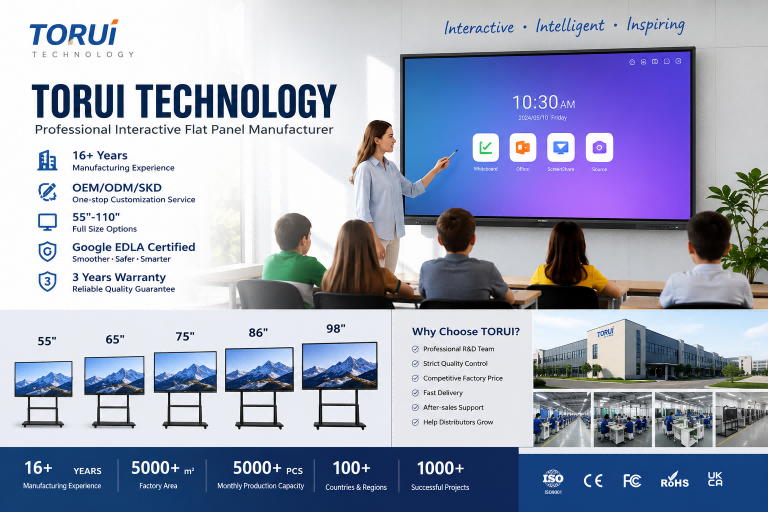
TORUI has 16 years of interactive display manufacturing experience and supports multiple screen sizes, including 55, 65, 75, 86, 98, and 110 inches. The company provides OEM, ODM, and SKD services, helping distributors, wholesalers, and system integrators develop products for different markets.
TORUI also focuses on production quality, factory testing, certification support, customized solutions, and international B2B service. With a factory production capacity of 5,000+ units per month, TORUI can support both standard orders and larger-scale procurement requirements.
For buyers comparing interactive whiteboard suppliers, the key is to evaluate not only specifications and price, but also manufacturing capability, product consistency, customization, compliance, delivery reliability, and long-term support. A comprehensive evaluation can help reduce procurement risks and build a stronger, more sustainable B2B partnership.
Who Are the Best Interactive Whiteboard Manufacturers in China?
Who Are the Best Interactive Whiteboard Manufacturers in China? A Complete Guide for Global B2B Buyers
Related Article