
What are the components of a smart interactive whiteboard?
author: toruitech
2025-07-30

A smart interactive whiteboard typically consists of several key components to support its functionality. These include:
1. Display screen: Typically an LCD, LED, or OLED screen, used to display images and videos.
2. Touch sensor: Enables the whiteboard to detect user touch. Common technologies include infrared, pressure-sensitive, capacitive, and optical touch.
3. Computing module: An integrated computer or processing unit responsible for processing input and output data and running software applications.
4. Connectivity ports: These include HDMI, USB, VGA, and network ports for connecting to external devices and networks.
5. Operating system and software: A built-in or compatible operating system (such as Windows or Android) and pre-installed software applications for interactive teaching or presentations.
6. Audio system: Speakers and microphones for audio output and voice input.
7. Input devices: Such as a stylus or pen, which provide more precise input control.
8. Bracket or mounting assembly: Used to secure the whiteboard to a wall or mobile stand.
These components work together to enable smart interactive whiteboards to be widely used in education, business meetings, and other situations requiring interactive presentations.
What after-sales service options are available for interactive whiteboards?
Analysis of the applicable area, applicable number of people and applicable distance of interactive whiteboards in applications?
Related Article

Choosing the right interactive whiteboard size is an important decision for distributors, wholesalers, and education technology suppliers. The 65-inch, 75-inch, and 86-inch interactive whiteboards are popular options for classrooms, meeting rooms, training centers, and commercial projects.
65 vs 75 vs 86-Inch Interactive Whiteboard: Which Model Should Distributors Choose?

Choosing the right interactive whiteboard manufacturer in China is an important decision for distributors, wholesalers, education technology suppliers, and system integrators. The right manufacturing partner can help businesses improve product quality, maintain competitive pricing, customize products for local markets, and build a sustainable distribution business.
Who Are the Best Interactive Whiteboard Manufacturers in China for B2B Distributors and Wholesalers?
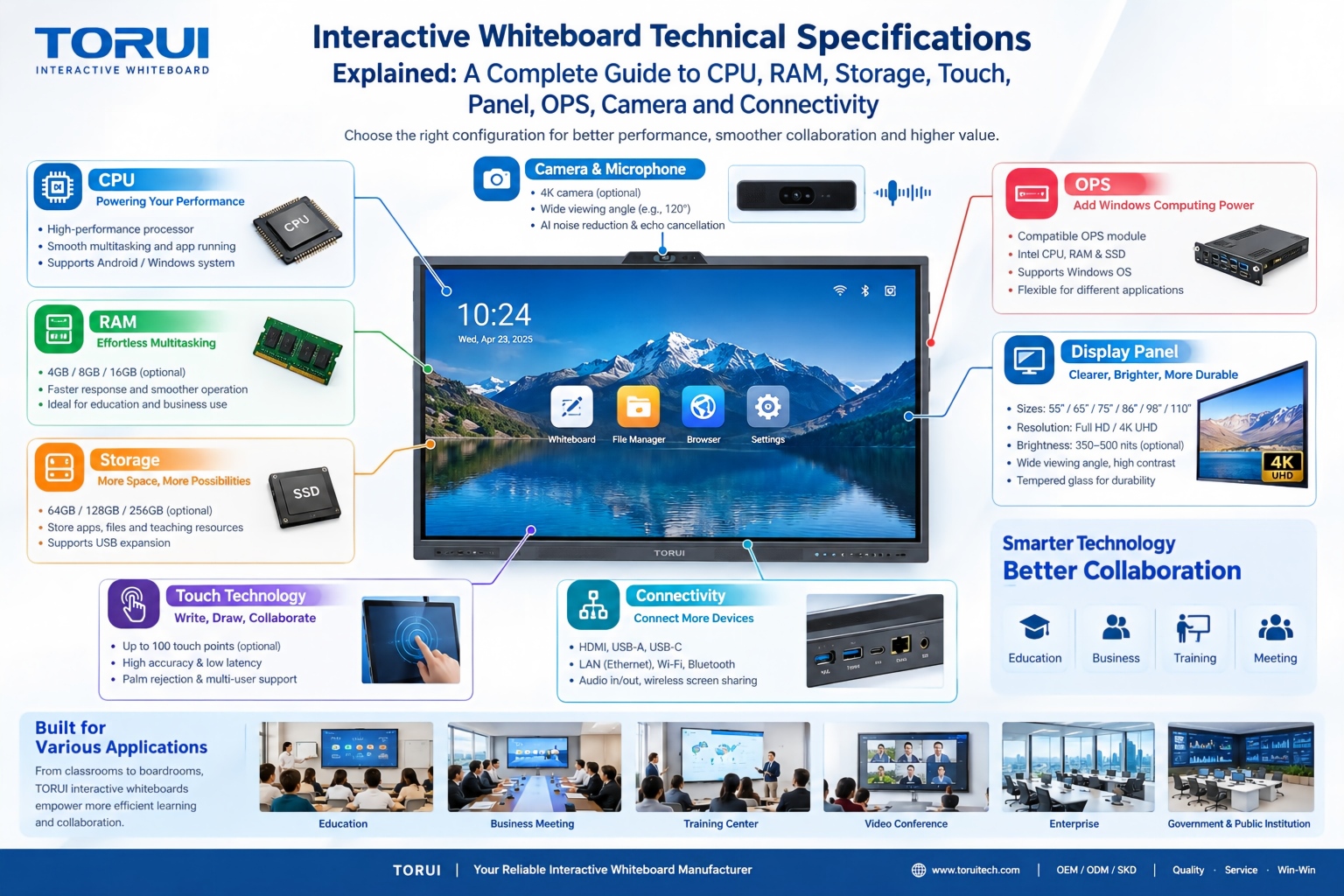
Choosing an interactive whiteboard involves more than comparing screen sizes and prices. For schools, businesses, distributors, wholesalers, and system integrators, understanding the technical specifications is essential to selecting a reliable product that meets different application requirements.
Interactive Whiteboard Technical Specifications Explained: A Complete Guide to CPU, RAM, Storage, Touch, Panel, OPS, Camera and Connectivity
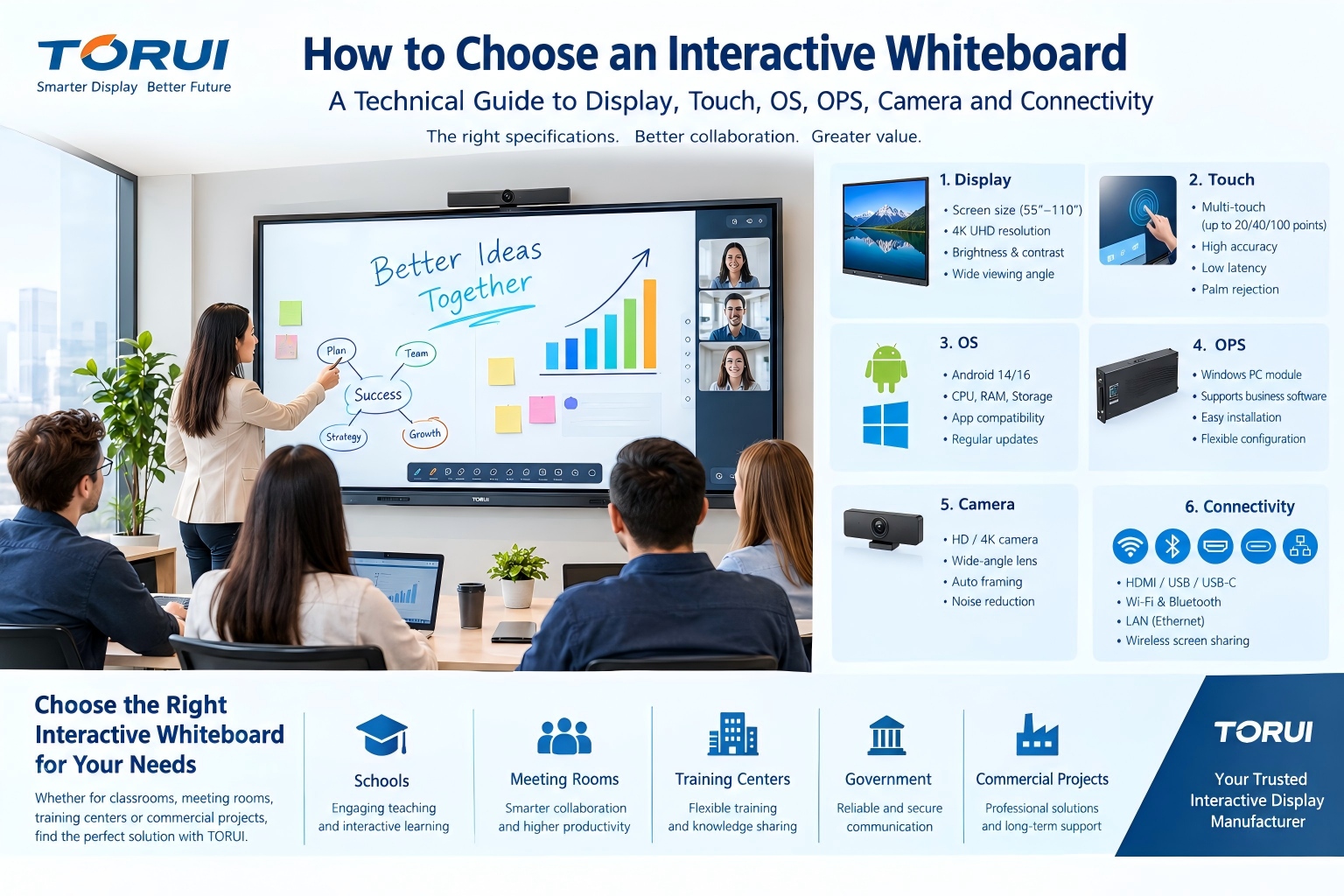
Choosing an interactive whiteboard for a school, meeting room, training center, government organization or commercial project requires more than comparing screen size and price. The most important specifications include display resolution, brightness, touch technology, operating system, processor, memory, storage, OPS compatibility, camera and microphone performance, connectivity, durability and after-sales support.
How to Choose an Interactive Whiteboard: A Technical Guide to Display, Touch, OS, OPS, Camera and Connectivity