
Smart Whiteboard Cost: Influencing Factors and Investment Value Analysis
author: toruitech
2025-08-08
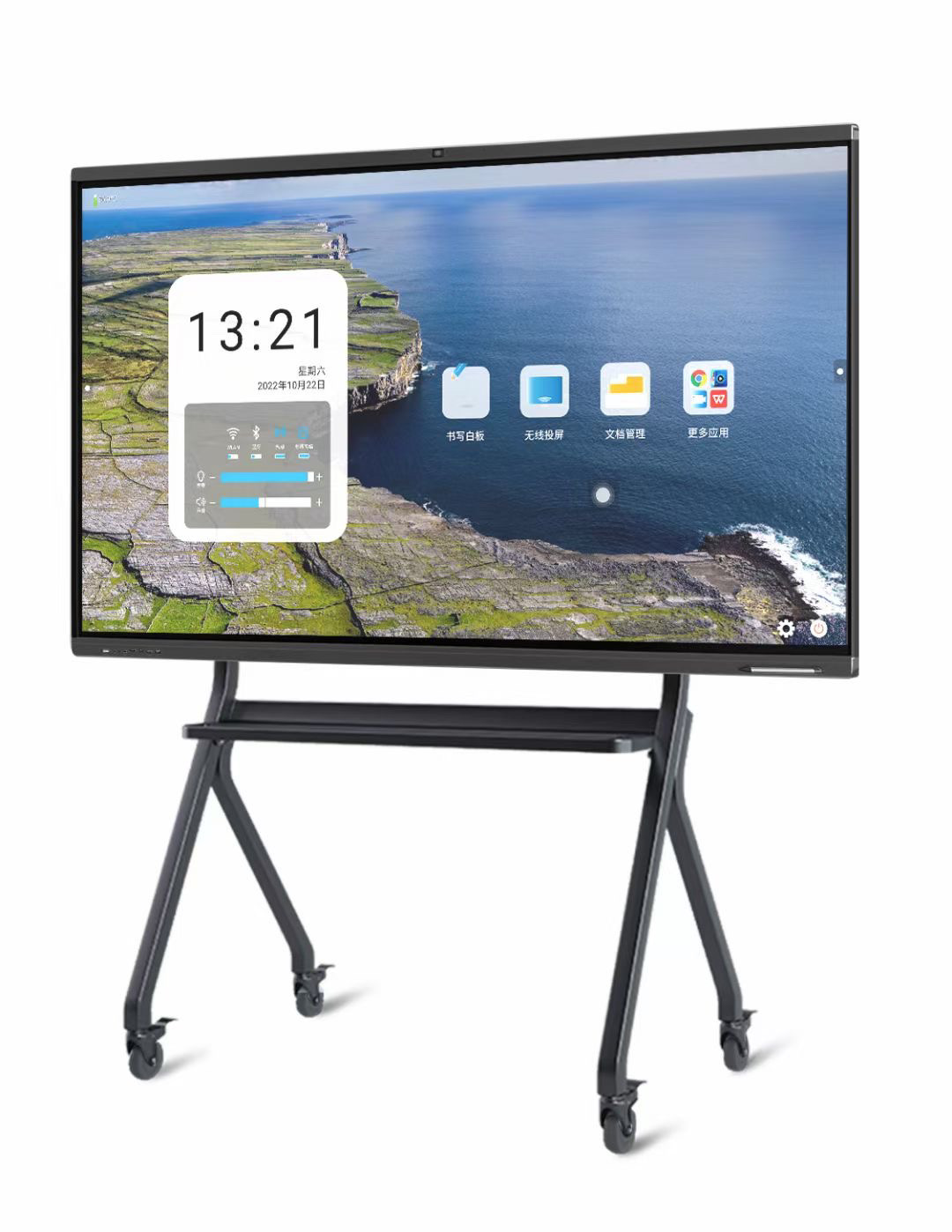
With the continuous advancement of educational informatization and smart office work, smart whiteboards (intelligent interactive whiteboards) are becoming increasingly popular in schools, businesses, and various training institutions. Cost is a top concern for many purchasing managers and decision-makers when purchasing smart whiteboards. This article focuses on the topic of "smart whiteboard cost," comprehensively analyzing the key factors influencing smart whiteboard costs and exploring their investment value.
I. Main Components of Smart Whiteboard Cost
Hardware Cost
The hardware components of a smart whiteboard primarily include the display, touch module, main control board, housing, and power supply. The display, as a core component, utilizes various touch technologies, including infrared, nanometer, optical, and capacitive, with significant cost variations. Common sizes include 55 inches, 65 inches, 75 inches, and 86 inches, with larger sizes increasing the price. High-end products also feature 4K ultra-high-definition displays and blue light protection technologies, which increase overall hardware costs. Software and System Costs
Smart whiteboards typically come with a dedicated operating system and interactive teaching/office software, including features such as whiteboard writing, annotation, multimedia playback, and remote collaboration. Some brands also offer value-added services such as cloud storage, intelligent recognition, and AI-powered grading. Genuine software licensing and subsequent upgrades and maintenance are also factored into the total cost.
Accessories and Installation Costs
In addition to the main unit, accessories such as a wall mount, mobile stand, stylus, camera, and speakers are also required. Professional installation services (such as wall reinforcement, cabling, and commissioning) are also significant expenses, especially when deploying multiple units in a centralized location.
Transportation and After-Sales Service Costs
Large-sized smart whiteboards can be expensive to ship, and cross-provincial and international shipping also require insurance and tax considerations. High-quality brands offer after-sales services such as on-site repairs, remote technical support, and regular maintenance, which are also reflected in the cost.
II. Key Factors Affecting Smart Whiteboard Costs
Brand and Technology
Internationally renowned brands such as SMART, Promethean, BenQ, and Samsung offer high-quality products and comprehensive service offerings, and are generally priced higher than domestic brands. Products with advanced touch technology and high-end hardware configurations will also have higher prices.
Purchasing Quantity and Channels
Bulk purchases offer greater discounts, and working directly with the manufacturer or authorized distributor offers even more competitive pricing. Purchasing through e-commerce platforms or distribution channels may offer promotions and rebates.
Customization and Functional Requirements
Some customers customize the system interface, functional modules, or design based on their specific needs, which increases R&D and production costs. The richer the functionality and the higher the level of integration, the higher the price.
Region and Market Environment
The market environment, tariff policies, and logistics conditions of different countries and regions will affect the final selling price of smart whiteboards. For example, in the European and American markets, prices are generally higher than in the Asian market due to higher labor and service costs.
III. Mainstream Market Price Range
According to public industry data, the average price per unit of mainstream smart whiteboards in 2024 will be as follows:
55-inch: RMB 5,000-10,000 (approximately US$700-1,400)
65-inch: RMB 8,000-15,000 (approximately US$1,100-2,100)
75-inch: RMB 12,000-20,000 (approximately US$1,700-2,800)
86-inch and above: RMB 18,000-35,000 (approximately US$2,500-5,000)
High-end customized products or smart whiteboards with special features (such as facial recognition and AI interaction) may cost more.
IV. Value Analysis of Smart Whiteboard Investments
Although smart whiteboards require a significant initial investment, the value they bring far exceeds that of traditional blackboards or standard projectors. It enhances the interactivity and efficiency of teaching and meetings, saves significant amounts of paper and manpower, supports remote collaboration and resource sharing, and provides a solid foundation for digital transformation. In the long term, a smart whiteboard typically has a lifespan of 5-8 years, and the actual annual and monthly costs are relatively low, making it a worthwhile investment.
Conclusion
The cost of a smart whiteboard is comprised of hardware, software, accessories, installation, and service, and is influenced by multiple factors, including brand, technology, procurement method, and market environment. When purchasing, consider product performance, service guarantees, and long-term value based on actual needs and budget, and choose the most cost-effective solution.
Digital Blackboards: A New Force for Educational Transformation
Interactive Whiteboard Quality Control and Production Process
Related Article

Choosing the right interactive whiteboard size is an important decision for distributors, wholesalers, and education technology suppliers. The 65-inch, 75-inch, and 86-inch interactive whiteboards are popular options for classrooms, meeting rooms, training centers, and commercial projects.
65 vs 75 vs 86-Inch Interactive Whiteboard: Which Model Should Distributors Choose?

Choosing the right interactive whiteboard manufacturer in China is an important decision for distributors, wholesalers, education technology suppliers, and system integrators. The right manufacturing partner can help businesses improve product quality, maintain competitive pricing, customize products for local markets, and build a sustainable distribution business.
Who Are the Best Interactive Whiteboard Manufacturers in China for B2B Distributors and Wholesalers?
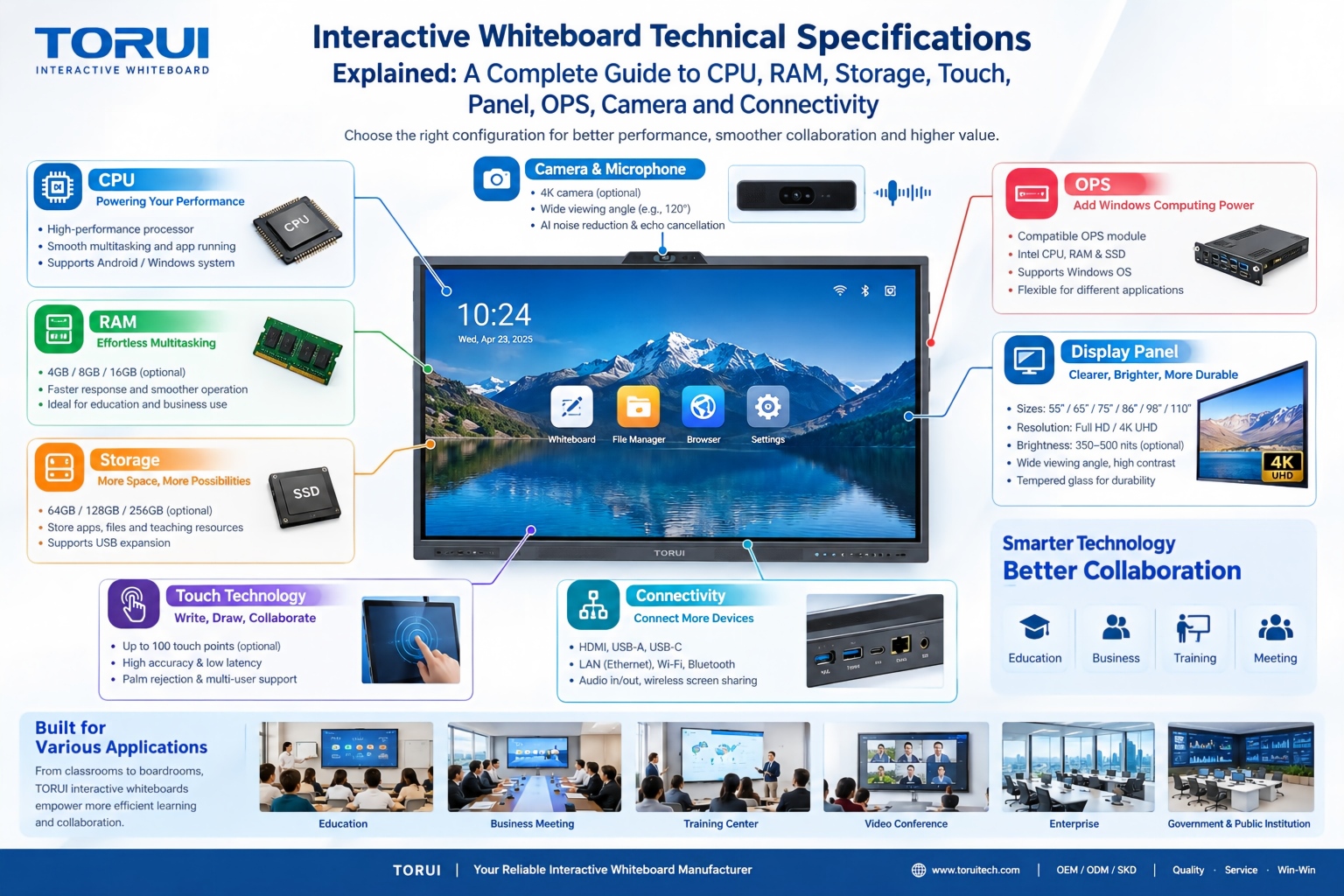
Choosing an interactive whiteboard involves more than comparing screen sizes and prices. For schools, businesses, distributors, wholesalers, and system integrators, understanding the technical specifications is essential to selecting a reliable product that meets different application requirements.
Interactive Whiteboard Technical Specifications Explained: A Complete Guide to CPU, RAM, Storage, Touch, Panel, OPS, Camera and Connectivity
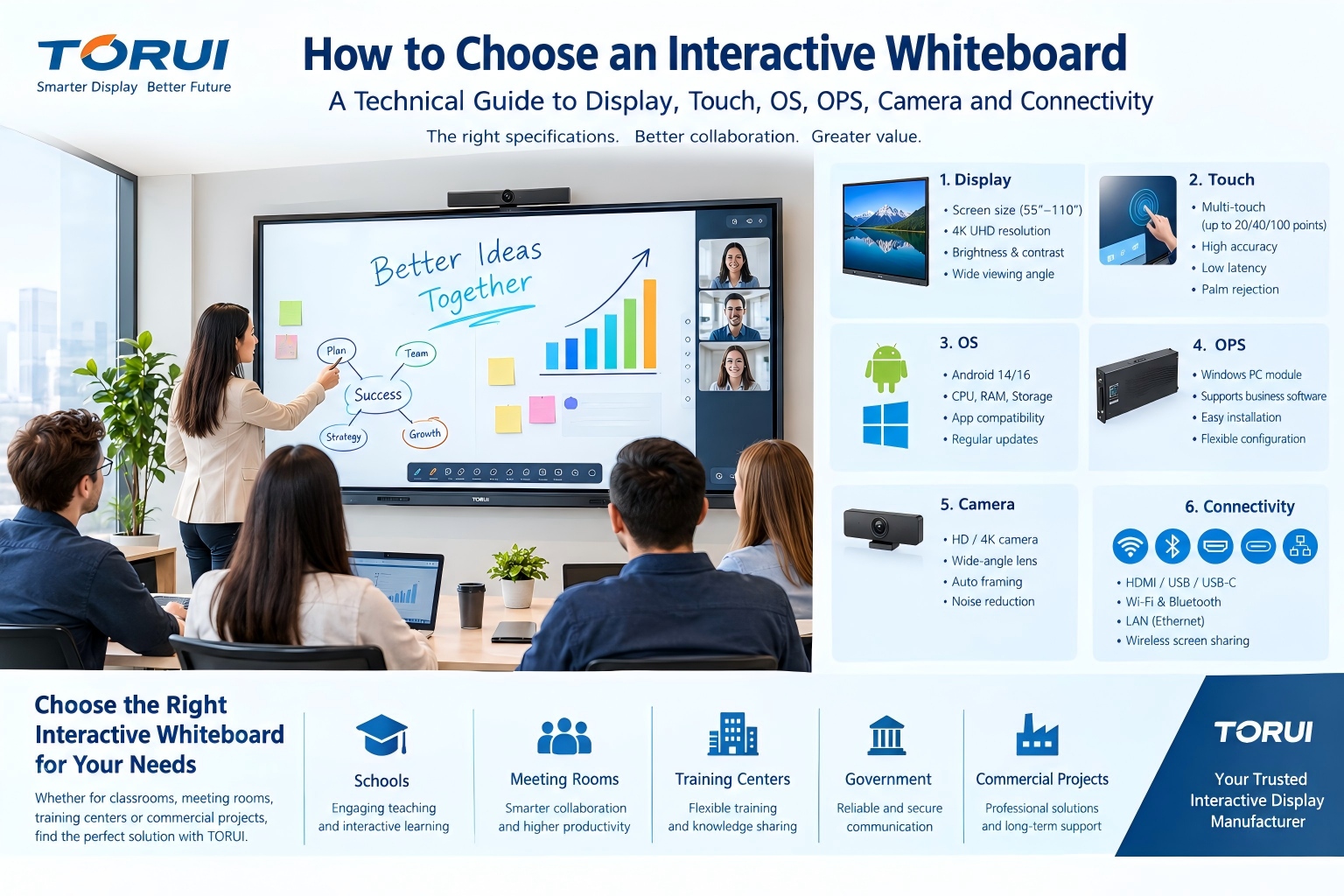
Choosing an interactive whiteboard for a school, meeting room, training center, government organization or commercial project requires more than comparing screen size and price. The most important specifications include display resolution, brightness, touch technology, operating system, processor, memory, storage, OPS compatibility, camera and microphone performance, connectivity, durability and after-sales support.
How to Choose an Interactive Whiteboard: A Technical Guide to Display, Touch, OS, OPS, Camera and Connectivity