
Smartboards for Classrooms: Enhancing Interactive Learning in the Digital Age
author: toruitech
2025-10-11

Smartboards, also known as interactive whiteboards, have become an essential tool in modern classrooms. They combine the functionality of a traditional whiteboard with the capabilities of a computer, allowing teachers and students to engage in interactive, multimedia-rich lessons. As education continues to shift toward digital learning environments, smartboards are transforming how teachers present information and how students participate in the learning process.
One of the key advantages of using smartboards in classrooms is interactivity. Unlike traditional whiteboards, smartboards allow users to touch the screen to write, draw, or move digital objects. Teachers can display videos, images, or PowerPoint presentations and annotate them directly on the screen. This hands-on interaction keeps students engaged, especially in subjects such as science, math, and geography where visual demonstration enhances understanding.
Another major benefit is collaboration. Many smartboards support multi-touch functionality, allowing several students to work together on the screen at once. This encourages teamwork, communication, and active learning — essential skills for 21st-century education. When integrated with educational software or cloud-based platforms, students can share answers, brainstorm ideas, and participate in group activities in real time, even in hybrid or remote learning settings.
Accessibility and inclusivity are also improved with smartboards. Teachers can adjust text size, display multimedia resources, or use built-in accessibility features to support students with different learning needs. Moreover, lessons can be saved, recorded, or shared, allowing absent students to catch up easily or teachers to reuse lesson materials efficiently.
From a practical perspective, smartboards simplify classroom management. With built-in internet access and compatibility with various devices — laptops, tablets, and smartphones — teachers can quickly access online resources, display assignments, and integrate interactive quizzes or polls. This reduces preparation time and enhances teaching flexibility.
When choosing a smartboard for classroom use, several factors should be considered. Screen size should match the classroom’s dimensions to ensure visibility for all students. Touch sensitivity and response speed are important for smooth interactivity. Connectivity options such as HDMI, USB-C, and wireless casting improve versatility. In addition, schools should evaluate software compatibility — choosing a system that integrates well with educational tools like Google Classroom, Microsoft Teams, or Zoom.
In conclusion, smartboards are revolutionizing classroom teaching by fostering interactive, engaging, and inclusive learning experiences. They bridge the gap between traditional teaching and modern technology, making lessons more dynamic and effective. For schools aiming to improve student engagement and learning outcomes, investing in smartboards is a forward-thinking choice that aligns with the future of digital education.
Smart Board — Transforming Modern Learning and Collaboration
How to Choose the Right Interactive Whiteboard for Your School
Related Article

Choosing the right interactive whiteboard size is an important decision for distributors, wholesalers, and education technology suppliers. The 65-inch, 75-inch, and 86-inch interactive whiteboards are popular options for classrooms, meeting rooms, training centers, and commercial projects.
65 vs 75 vs 86-Inch Interactive Whiteboard: Which Model Should Distributors Choose?

Choosing the right interactive whiteboard manufacturer in China is an important decision for distributors, wholesalers, education technology suppliers, and system integrators. The right manufacturing partner can help businesses improve product quality, maintain competitive pricing, customize products for local markets, and build a sustainable distribution business.
Who Are the Best Interactive Whiteboard Manufacturers in China for B2B Distributors and Wholesalers?
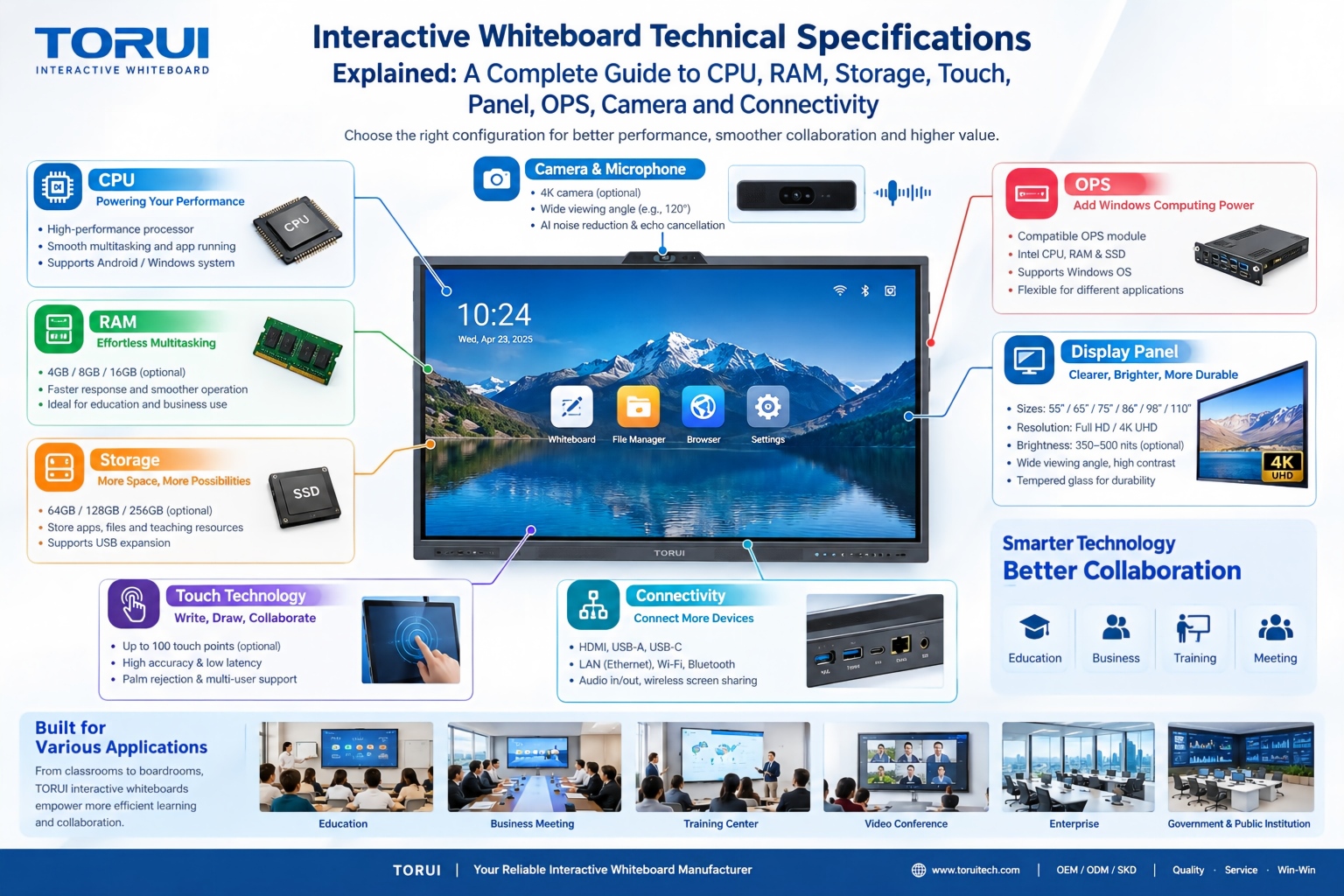
Choosing an interactive whiteboard involves more than comparing screen sizes and prices. For schools, businesses, distributors, wholesalers, and system integrators, understanding the technical specifications is essential to selecting a reliable product that meets different application requirements.
Interactive Whiteboard Technical Specifications Explained: A Complete Guide to CPU, RAM, Storage, Touch, Panel, OPS, Camera and Connectivity
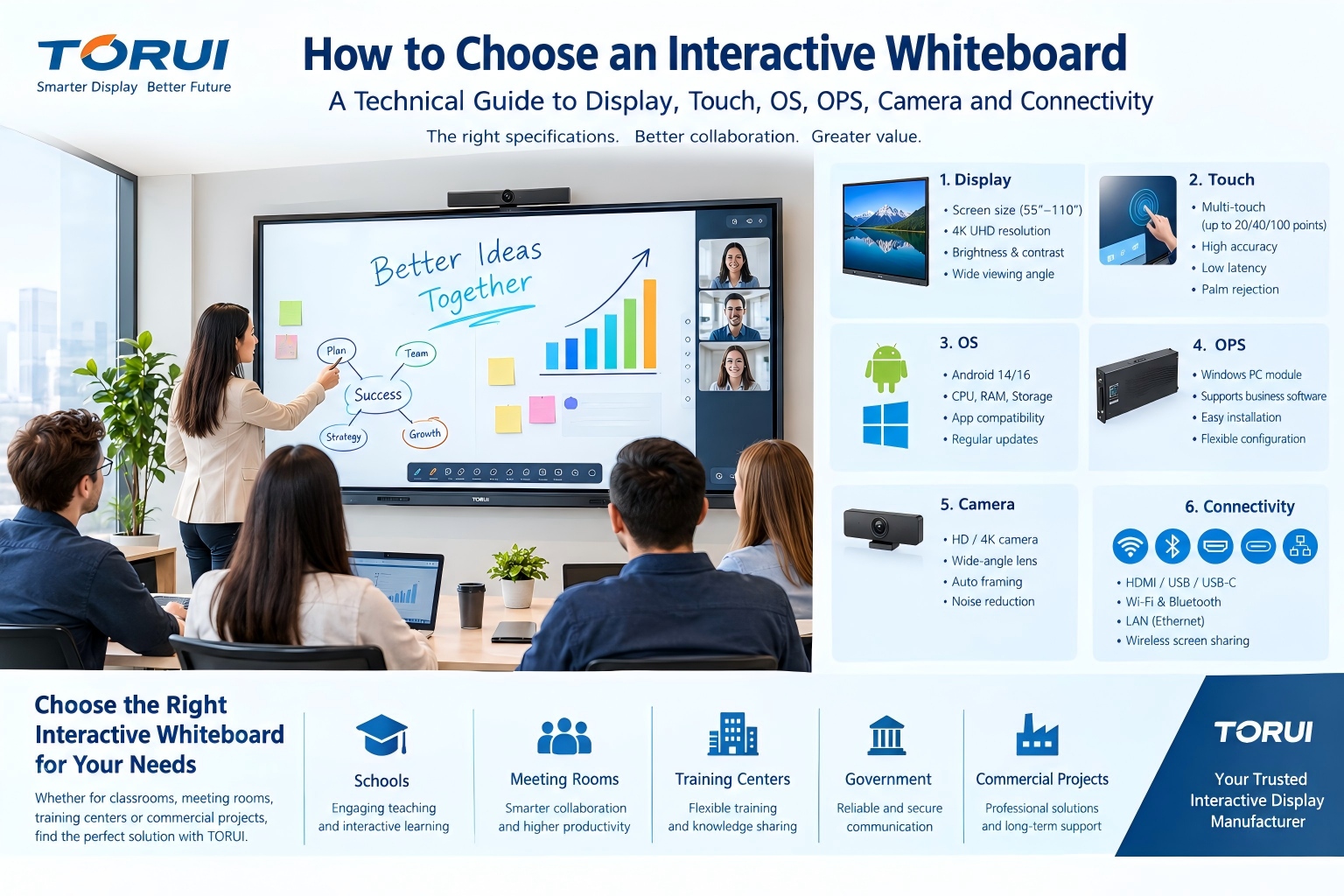
Choosing an interactive whiteboard for a school, meeting room, training center, government organization or commercial project requires more than comparing screen size and price. The most important specifications include display resolution, brightness, touch technology, operating system, processor, memory, storage, OPS compatibility, camera and microphone performance, connectivity, durability and after-sales support.
How to Choose an Interactive Whiteboard: A Technical Guide to Display, Touch, OS, OPS, Camera and Connectivity