
Specific Applications of Interactive Whiteboards in Mathematics Teaching
author: toruitech
2025-09-04
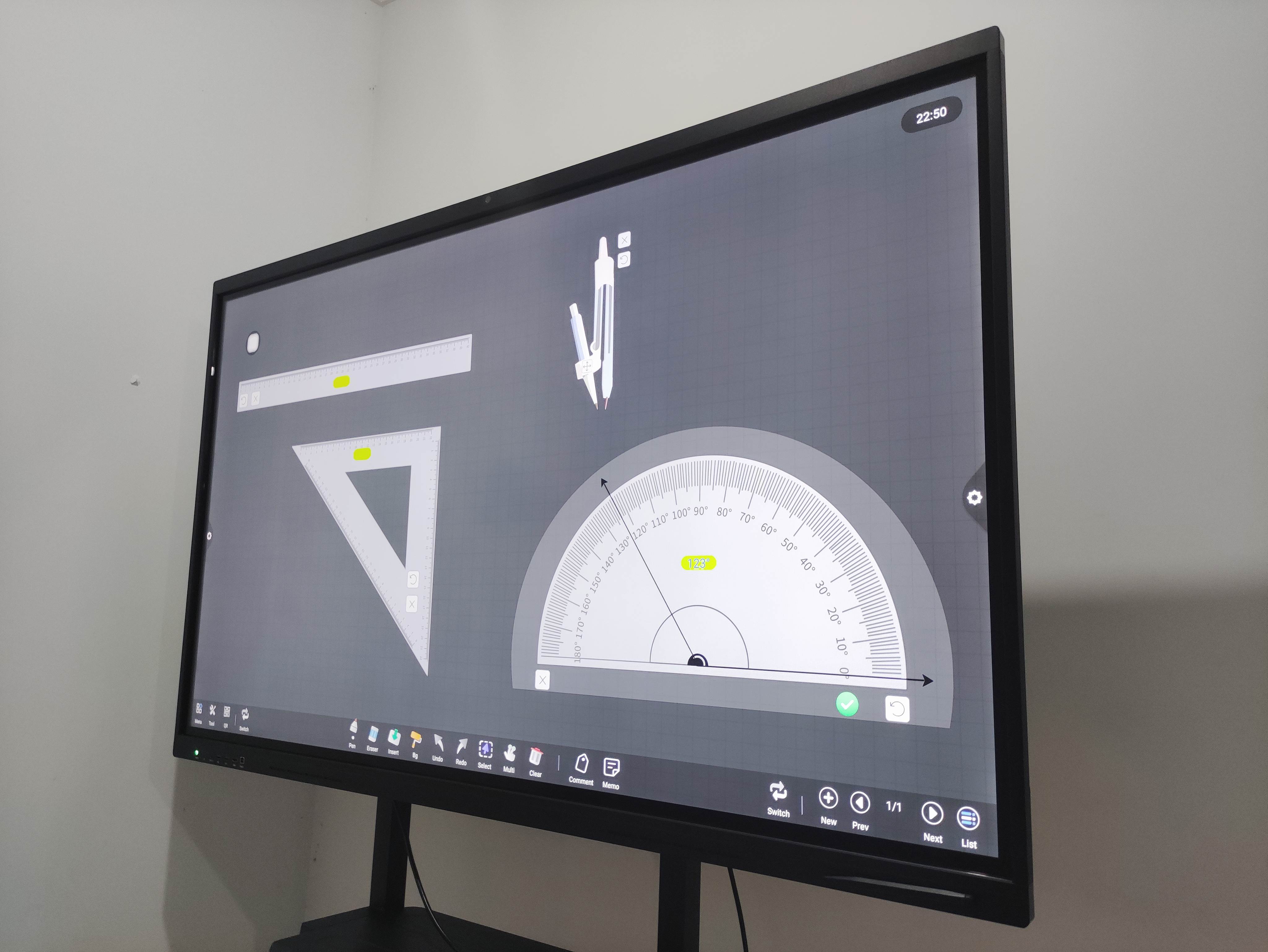
With the continuous development of information technology, modern education is undergoing profound changes. As an emerging teaching tool, interactive whiteboards, with their powerful interactivity, intuitiveness, and multimedia integration capabilities, are gradually becoming a vital aid in mathematics classrooms. They not only enrich teaching methods but also greatly enhance teaching efficiency and student learning interest. This article will explore the specific applications of interactive whiteboards in mathematics teaching from the perspectives of their advantages, specific application scenarios, and teaching effectiveness.
I. Advantages of Interactive Whiteboards
Mathematics is known for its abstractness and logical rigor. Traditional blackboards and chalk have certain limitations in conveying knowledge. Interactive whiteboards overcome these limitations. First, they enable dynamic presentations combining text, images, and audio and video, making mathematical knowledge more vivid and engaging. For example, dynamic demonstrations of geometric figures and real-time transformations of function graphs can be intuitively presented on the whiteboard, helping students understand abstract concepts. Second, interactive whiteboards support a variety of operation methods, such as touch, gestures, and electronic pen writing, greatly enhancing teacher-student interaction and stimulating student participation in class. In addition, whiteboards can connect to the internet, providing convenient access to a vast array of teaching resources and enriching classroom content.
II. Analysis of Specific Application Scenarios
Concept Explanation and Visual Presentation
In mathematics instruction, many concepts, such as geometry and functions, are relatively abstract. Interactive whiteboards can help students develop concrete understanding through intuitive multimedia resources such as images, animations, and videos. For example, when explaining the concept of a circle, teachers can first display images of various physical circles, then use the whiteboard to draw a circle, demonstrating elements such as the radius, diameter, and center. Students can even use dragging and zooming functions to see how the circle changes, significantly deepening their understanding.
Dynamic Demonstration and Experimental Manipulation
Mathematical concepts such as geometric transformations and function changes are difficult to present dynamically in traditional teaching. Interactive whiteboards can demonstrate processes such as rotation, translation, and scaling of figures in real time. For example, when explaining the angle bisectors of a triangle, teachers can have students use a mouse or finger to drag the triangle's vertices to observe how the angle bisectors always intersect at a point. This dynamic presentation is more persuasive and inspiring than static blackboard instruction. Classroom Interaction and Instant Feedback
Interactive whiteboards provide ample space for interaction between teachers and students. Teachers can design interactive exercises and have students write their solutions, draw diagrams, and even work in groups for math competitions. Students' work is recorded and displayed in real time, allowing teachers to identify and correct errors promptly, fostering deeper student engagement. For example, when solving math word problems, students can demonstrate their steps on the whiteboard, while the teacher and classmates discuss the problem together, improving collaboration and communication skills.
Resource Integration and Post-Class Review
Interactive whiteboards support courseware saving and playback, allowing teachers to save classroom content and student work records for post-class review. The whiteboards can also connect to the internet, providing timely access to the latest math problem banks, animated demonstrations, and other resources, broadening students' knowledge base. Furthermore, teachers can deliver personalized review materials based on students' learning progress, ensuring personalized instruction.
III. Teaching Effectiveness and Development Prospects
Extensive experience demonstrates that the use of interactive whiteboards has significantly improved the efficiency and quality of math classes. Students gain a deeper understanding of abstract knowledge, their interest and initiative in learning are significantly enhanced, and the classroom atmosphere is more lively. Teachers can also organize teaching content more efficiently and optimize the teaching process. According to relevant literature (such as Taodou.com and Originality Documents), interactive whiteboards' dynamic demonstrations, interactive operations, and resource integration capabilities have greatly promoted student thinking development and ability cultivation.
With the accelerated progress of educational informatization, interactive whiteboards will continue to integrate more intelligent technologies, such as artificial intelligence and cloud computing, bringing more innovative possibilities to mathematics teaching. In the future, interactive whiteboards are expected to become a key infrastructure for smart classrooms, helping teachers and students grow together.
Conclusion
As a significant achievement of modern educational technology, interactive whiteboards are playing an irreplaceable role in mathematics teaching. They not only make abstract mathematical knowledge vivid and easy to understand, but also inspire students' enthusiasm for learning and proactive exploration. We believe that with the continuous advancement of technology, interactive whiteboards will demonstrate greater value in mathematics teaching and promote the continuous innovation and development of educational models.
How Much Is a Smart Board Interactive Whiteboard?
What Are Interactive Displays?
Related Article

Choosing the right interactive whiteboard size is an important decision for distributors, wholesalers, and education technology suppliers. The 65-inch, 75-inch, and 86-inch interactive whiteboards are popular options for classrooms, meeting rooms, training centers, and commercial projects.
65 vs 75 vs 86-Inch Interactive Whiteboard: Which Model Should Distributors Choose?

Choosing the right interactive whiteboard manufacturer in China is an important decision for distributors, wholesalers, education technology suppliers, and system integrators. The right manufacturing partner can help businesses improve product quality, maintain competitive pricing, customize products for local markets, and build a sustainable distribution business.
Who Are the Best Interactive Whiteboard Manufacturers in China for B2B Distributors and Wholesalers?
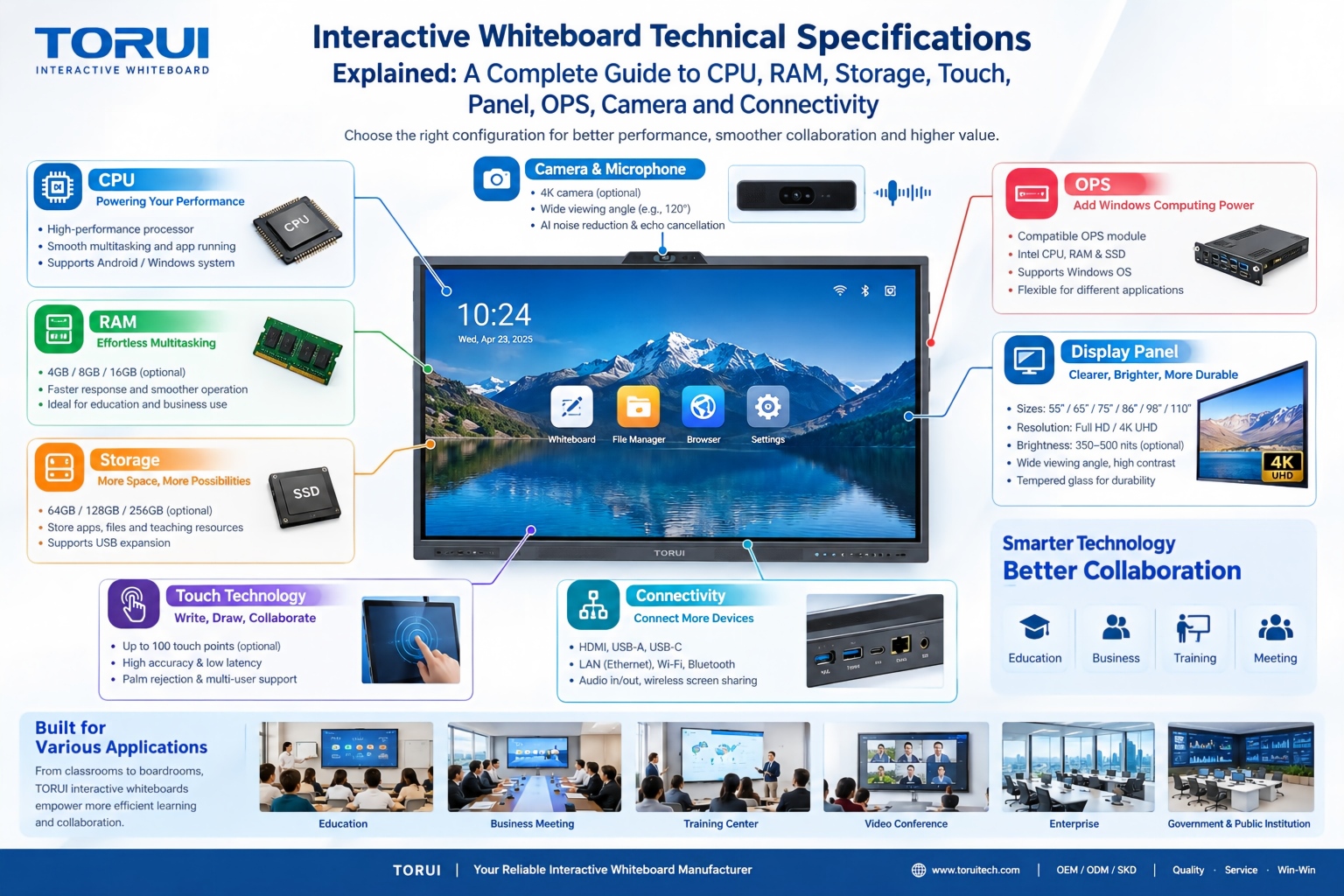
Choosing an interactive whiteboard involves more than comparing screen sizes and prices. For schools, businesses, distributors, wholesalers, and system integrators, understanding the technical specifications is essential to selecting a reliable product that meets different application requirements.
Interactive Whiteboard Technical Specifications Explained: A Complete Guide to CPU, RAM, Storage, Touch, Panel, OPS, Camera and Connectivity
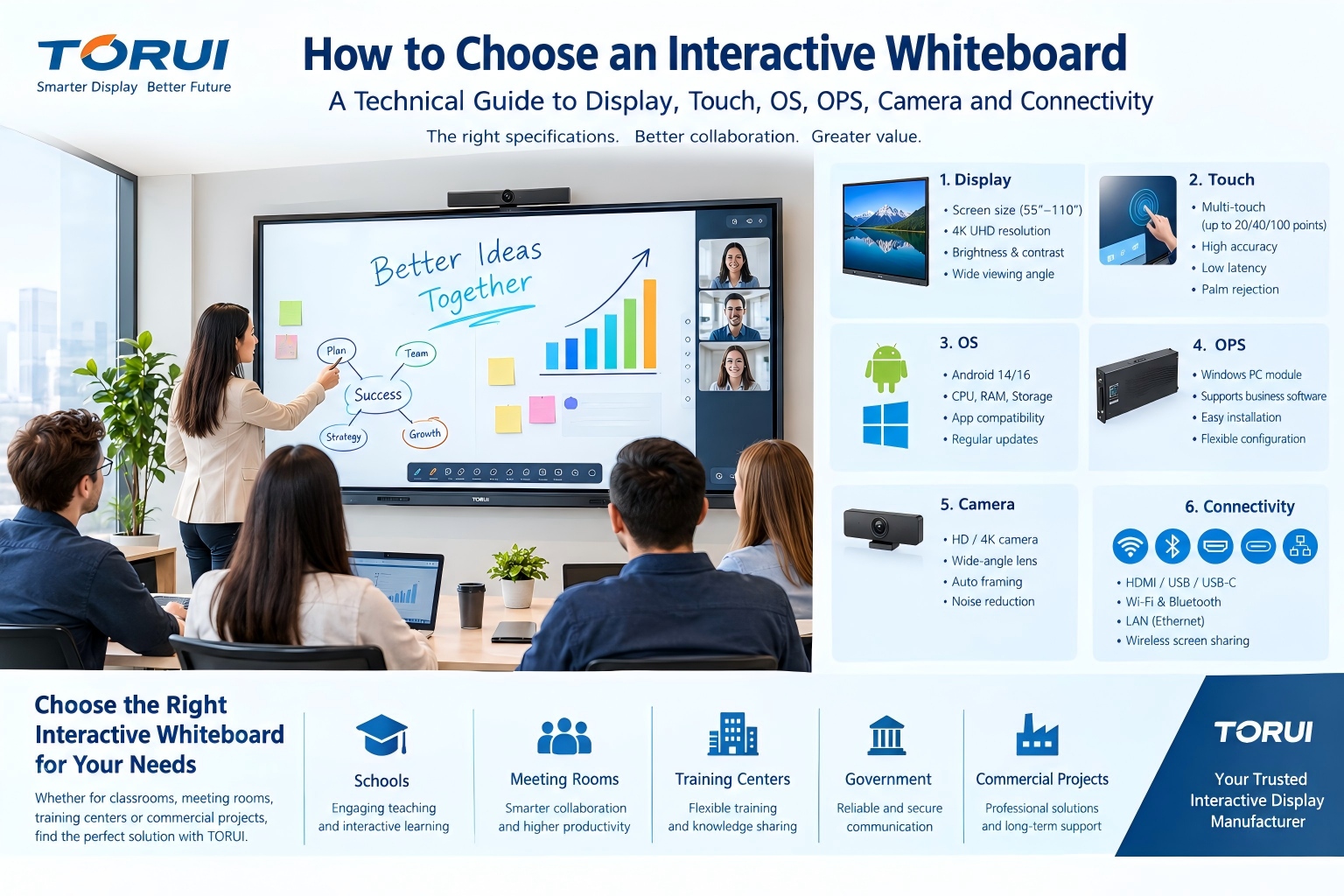
Choosing an interactive whiteboard for a school, meeting room, training center, government organization or commercial project requires more than comparing screen size and price. The most important specifications include display resolution, brightness, touch technology, operating system, processor, memory, storage, OPS compatibility, camera and microphone performance, connectivity, durability and after-sales support.
How to Choose an Interactive Whiteboard: A Technical Guide to Display, Touch, OS, OPS, Camera and Connectivity