
The Future of Smart Education Technology
author: toruitech
2025-10-05
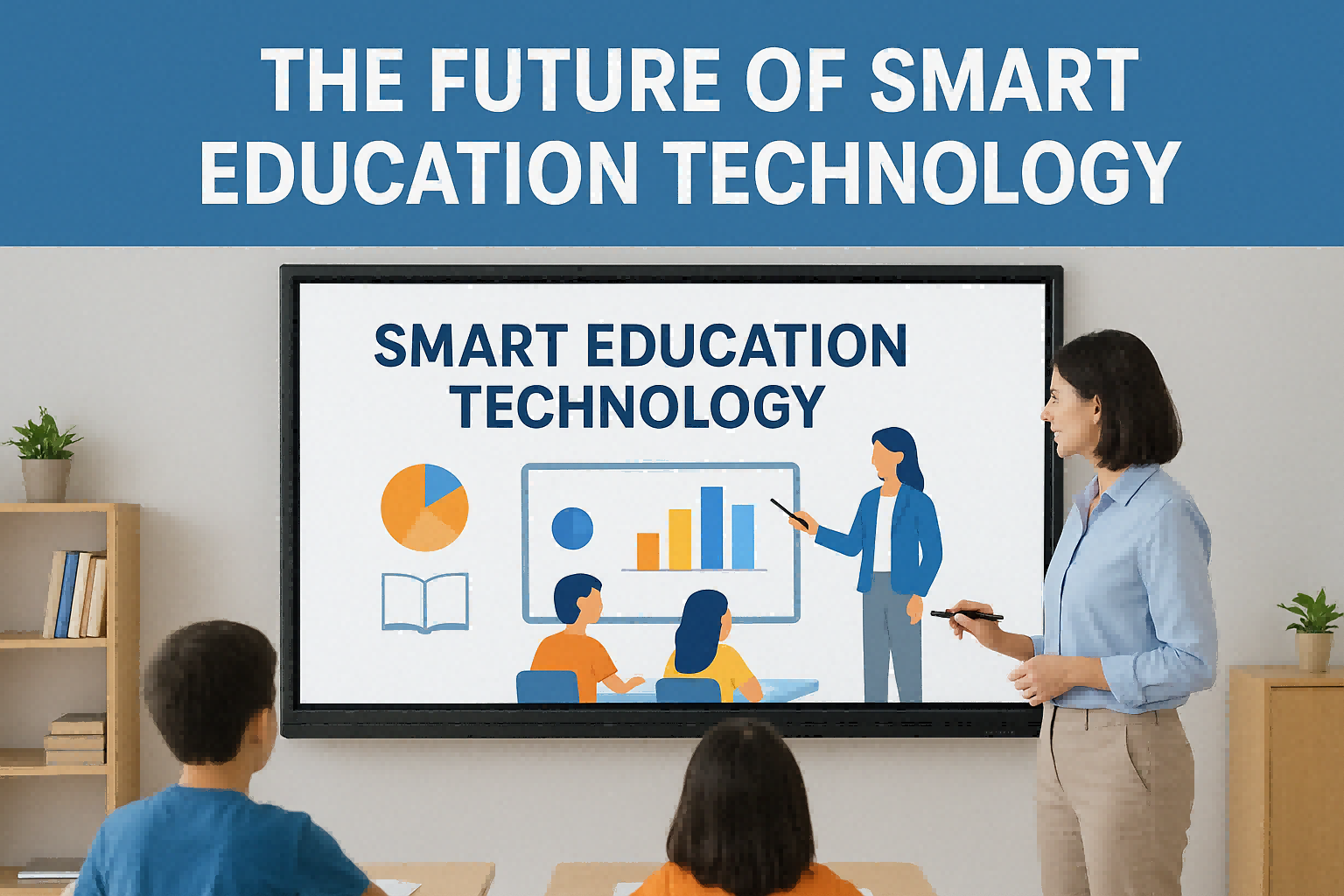
The future of education is being reshaped by digital innovation. As schools and institutions embrace smart technologies, learning is becoming more engaging, efficient, and personalized. Smart education is not only about using new tools—it’s about building connected ecosystems that empower both teachers and students.
1. The Rise of Interactive Whiteboards
Interactive whiteboards are at the heart of the modern classroom revolution. These digital displays combine touch, multimedia, and online connectivity, allowing teachers to present lessons dynamically and students to interact directly.
Educators can annotate, share content in real time, and foster greater classroom participation—making learning more collaborative and fun.
2. Artificial Intelligence and Personalized Learning
AI is revolutionizing education by delivering adaptive learning experiences. Smart software can track student performance, identify weaknesses, and suggest personalized study paths.
Teachers can rely on AI-driven analytics to understand each learner’s needs, automate grading, and focus on creativity and mentorship.
3. Cloud-Based and Hybrid Classrooms
Cloud technology enables seamless collaboration between in-person and remote learners. Hybrid classrooms equipped with cameras, microphones, and interactive panels allow lessons to be accessible from anywhere.
This flexibility ensures students continue learning effectively—whether in school or at home.
4. Immersive Technologies: AR and VR in Education
Augmented Reality (AR) and Virtual Reality (VR) are redefining how complex subjects are taught. Students can explore virtual museums, conduct 3D science experiments, or visit historical sites without leaving the classroom.
These immersive tools make education more engaging, interactive, and memorable.
5. The Road Ahead: Inclusive and Connected Learning
The next generation of smart education technology will focus on interoperability—connecting devices, platforms, and data seamlessly. It will also prioritize accessibility, ensuring every student benefits regardless of region or ability.
Manufacturers like TORUI Interactive Whiteboard are developing scalable, user-friendly solutions that bring intelligent learning to classrooms worldwide.
Conclusion
Smart education technology represents the future of global learning. Through innovations such as interactive displays, AI analytics, and cloud-based systems, schools can create smarter, more engaging environments that prepare students for success in the digital era.
Smart Classroom Solution: Transforming Education Through Interactive Technology
TORUI Interactive Whiteboard: 15 Years of Manufacturing Excellence
Related Article

Choosing the right interactive whiteboard size is an important decision for distributors, wholesalers, and education technology suppliers. The 65-inch, 75-inch, and 86-inch interactive whiteboards are popular options for classrooms, meeting rooms, training centers, and commercial projects.
65 vs 75 vs 86-Inch Interactive Whiteboard: Which Model Should Distributors Choose?

Choosing the right interactive whiteboard manufacturer in China is an important decision for distributors, wholesalers, education technology suppliers, and system integrators. The right manufacturing partner can help businesses improve product quality, maintain competitive pricing, customize products for local markets, and build a sustainable distribution business.
Who Are the Best Interactive Whiteboard Manufacturers in China for B2B Distributors and Wholesalers?
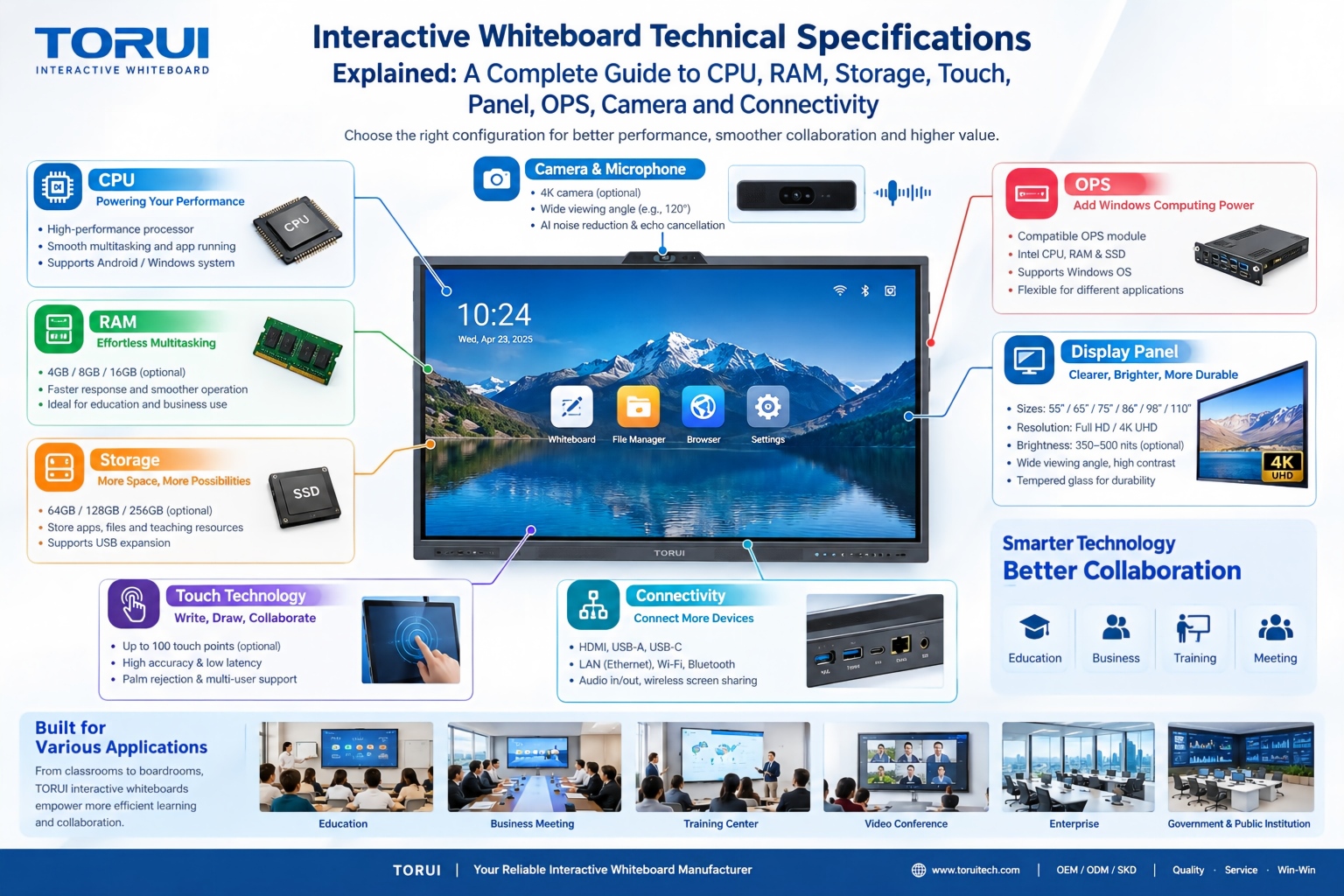
Choosing an interactive whiteboard involves more than comparing screen sizes and prices. For schools, businesses, distributors, wholesalers, and system integrators, understanding the technical specifications is essential to selecting a reliable product that meets different application requirements.
Interactive Whiteboard Technical Specifications Explained: A Complete Guide to CPU, RAM, Storage, Touch, Panel, OPS, Camera and Connectivity
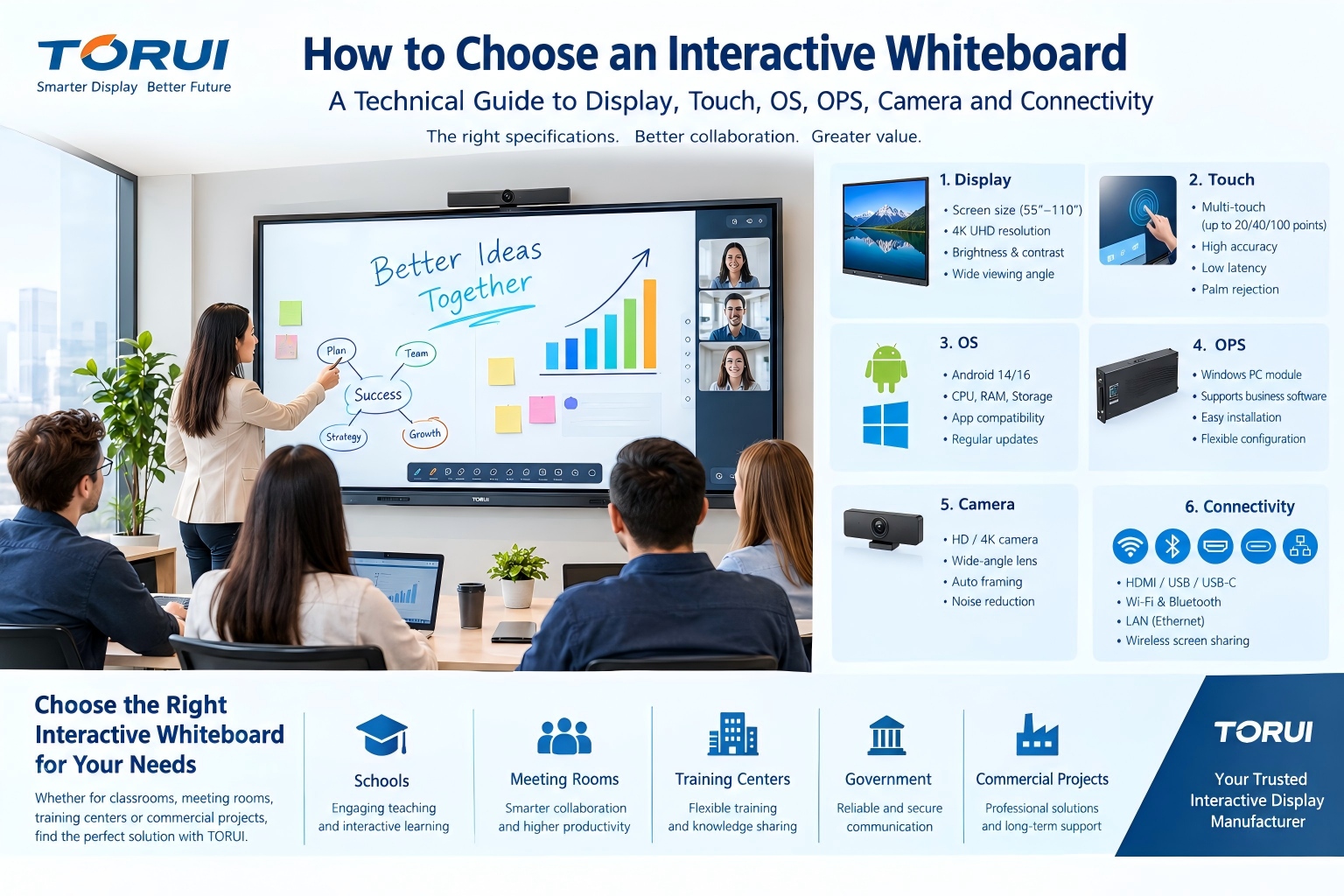
Choosing an interactive whiteboard for a school, meeting room, training center, government organization or commercial project requires more than comparing screen size and price. The most important specifications include display resolution, brightness, touch technology, operating system, processor, memory, storage, OPS compatibility, camera and microphone performance, connectivity, durability and after-sales support.
How to Choose an Interactive Whiteboard: A Technical Guide to Display, Touch, OS, OPS, Camera and Connectivity