The Production Process of Interactive Whiteboards: A Complete Guide for Buyers
Interactive whiteboards have become essential tools in modern education and business environments. Understanding the production process of interactive whiteboards not only helps buyers make informed decisions but also ensures product quality, durability, and long-term performance.
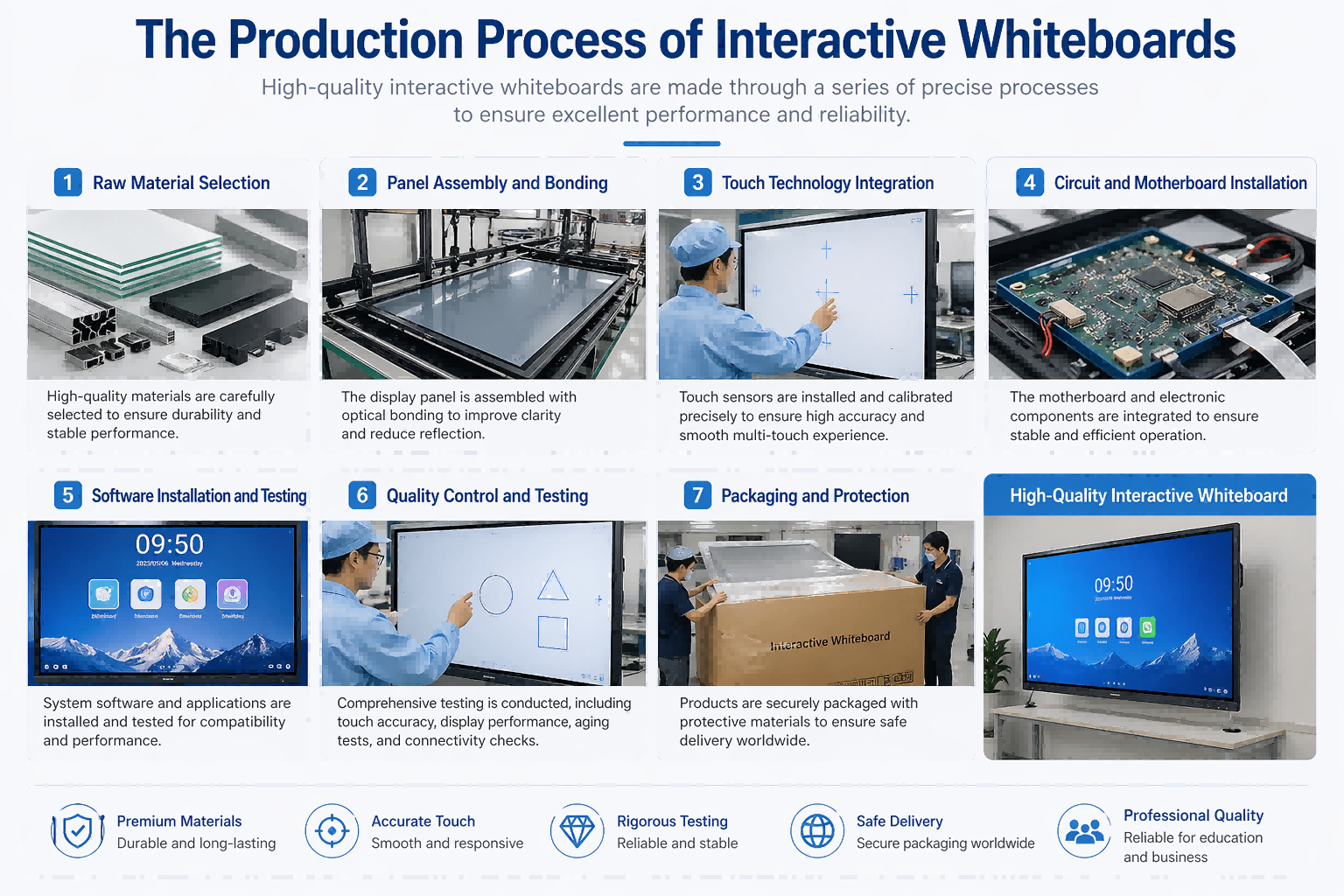
1. Raw Material Selection
The production begins with the careful selection of high-quality raw materials. Key components include tempered glass, LCD or LED display panels, aluminum alloy frames, and sensitive touch sensors. Premium materials ensure better durability, clearer visuals, and enhanced touch accuracy, which are critical for professional use.
2. Panel Assembly and Bonding
At this stage, the display panel is assembled with layers such as the backlight unit, liquid crystal module, and protective glass. Advanced optical bonding technology is often used to reduce air gaps between layers, improving image clarity and reducing reflection. This step directly affects display performance and viewing experience.
3. Touch Technology Integration
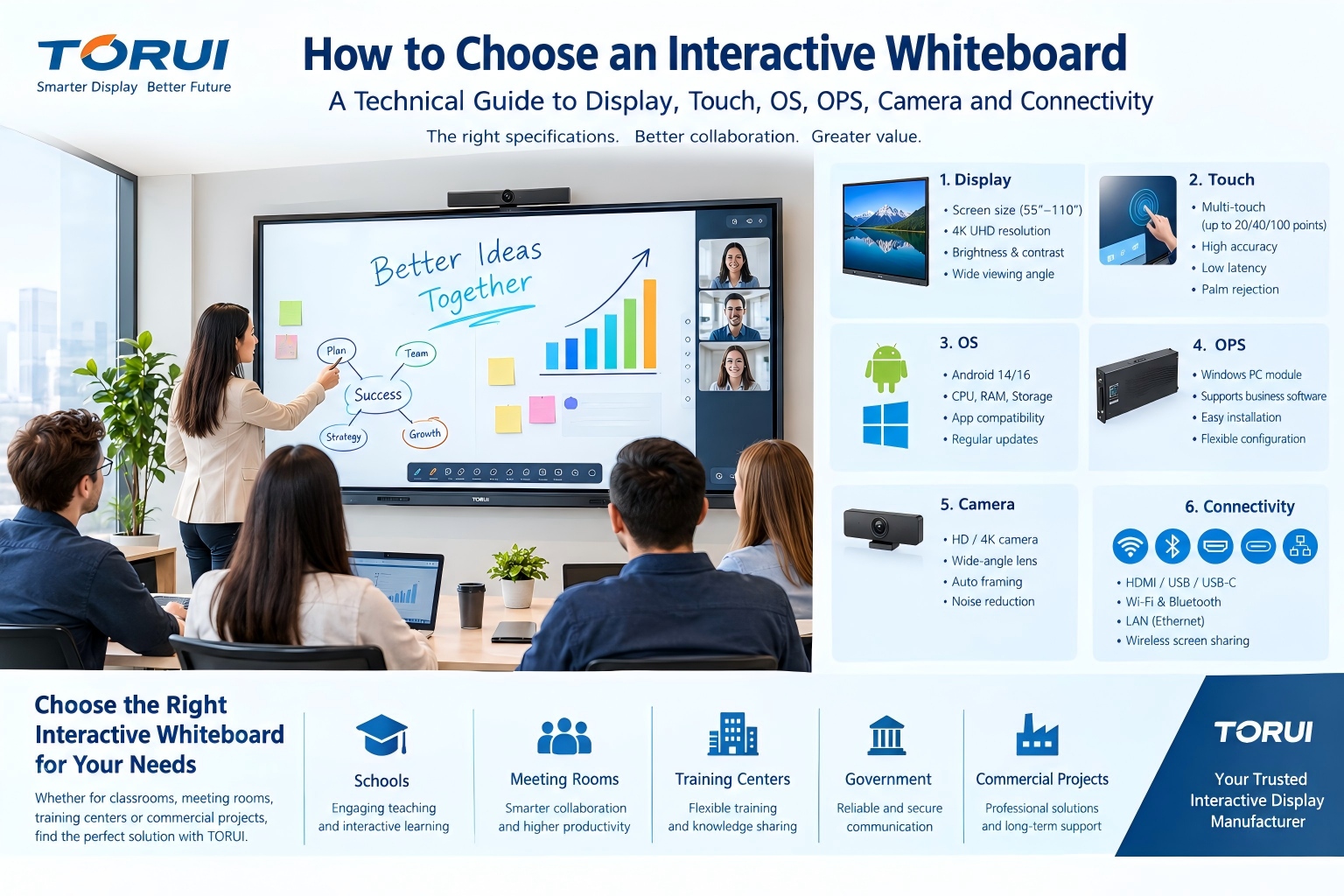
Interactive whiteboards rely on technologies such as infrared (IR), capacitive touch, or electromagnetic systems. During production, touch sensors are precisely installed and calibrated to ensure accurate multi-touch response. High-end models support 40-point or even 100-point touch, enabling smooth collaboration.
4. Circuit and Motherboard Installation
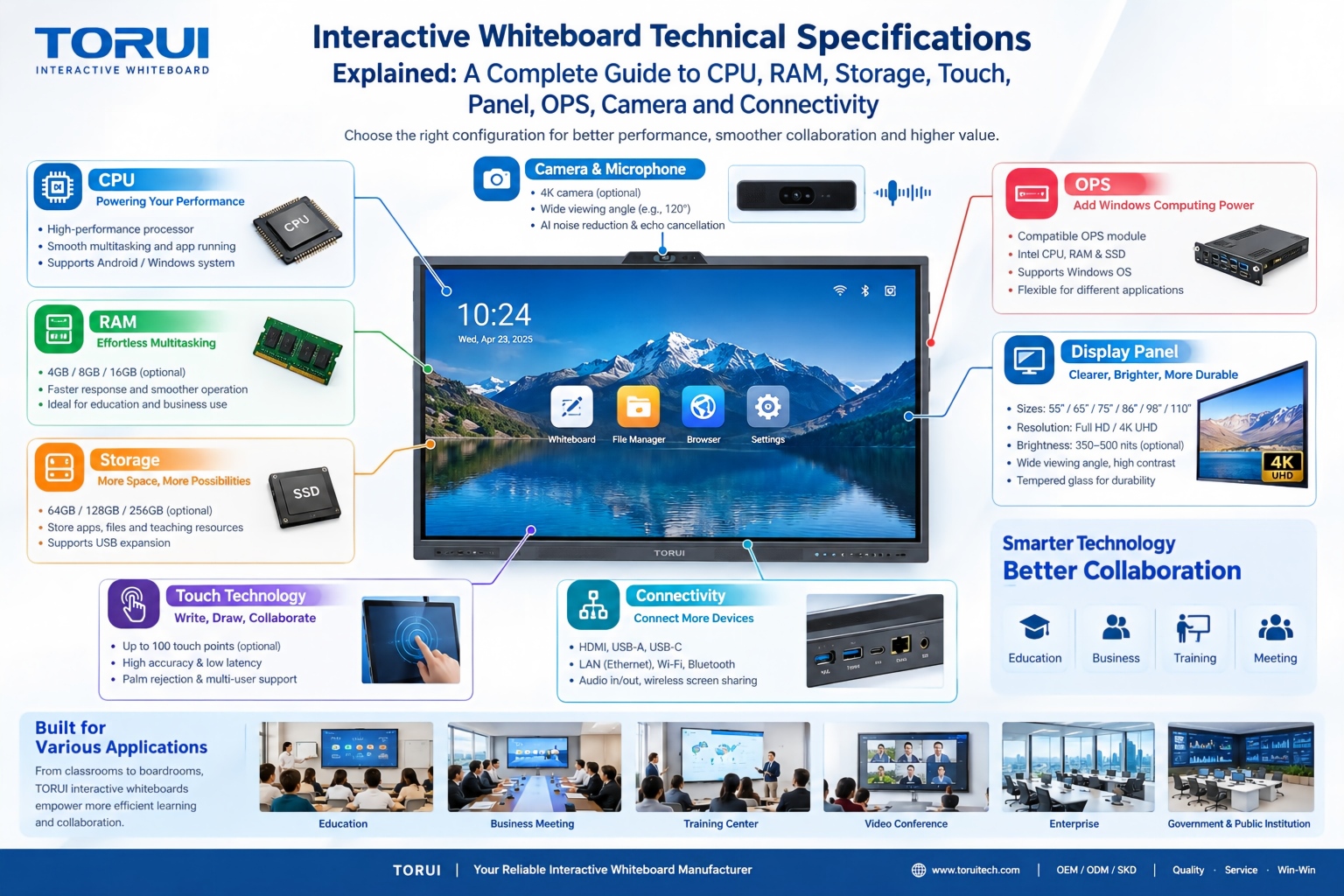
The internal hardware, including the motherboard, CPU, memory, and connectivity modules, is integrated into the unit. Some interactive whiteboards support OPS (Open Pluggable Specification) modules, allowing users to upgrade computing performance easily. Stable hardware ensures fast processing and seamless operation.
5. Software Installation and Testing
After hardware assembly, the system software is installed. This may include Android OS, Windows compatibility, or dual-system configurations. Pre-installed applications such as whiteboarding tools, screen sharing software, and conferencing platforms enhance usability.
6. Quality Control and Testing
Strict quality control is a crucial part of the production process. Each unit undergoes multiple tests, including:
- Touch accuracy and responsiveness testing
- Display performance and color calibration
- Aging tests for long-term reliability
- Connectivity and compatibility checks
These tests ensure that the product meets international standards and performs consistently in real-world environments.
7. Packaging and Logistics
Finally, the finished products are securely packaged using shockproof materials to prevent damage during transportation. Professional manufacturers also conduct drop and vibration tests to simulate international shipping conditions, ensuring safe delivery to global markets.
Why the Production Process Matters
A well-structured manufacturing process reflects a brand’s technical capability and commitment to quality. Buyers should prioritize suppliers with advanced production lines, strict quality control systems, and proven OEM/ODM experience.
Conclusion
The production of interactive whiteboards is a complex and highly technical process involving precision engineering, advanced materials, and rigorous testing. By understanding how these devices are made, buyers can better evaluate product quality and choose reliable solutions that deliver long-term value for education and business applications.
Interactive Whiteboard Multilingual Features: Empowering Global Communication and Collaboration
Interactive Whiteboard in Meetings: Transforming Collaboration and Decision-Making
Related Article