
Top Features to Consider When Choosing an Interactive Whiteboard
author: toruitech
2025-11-06
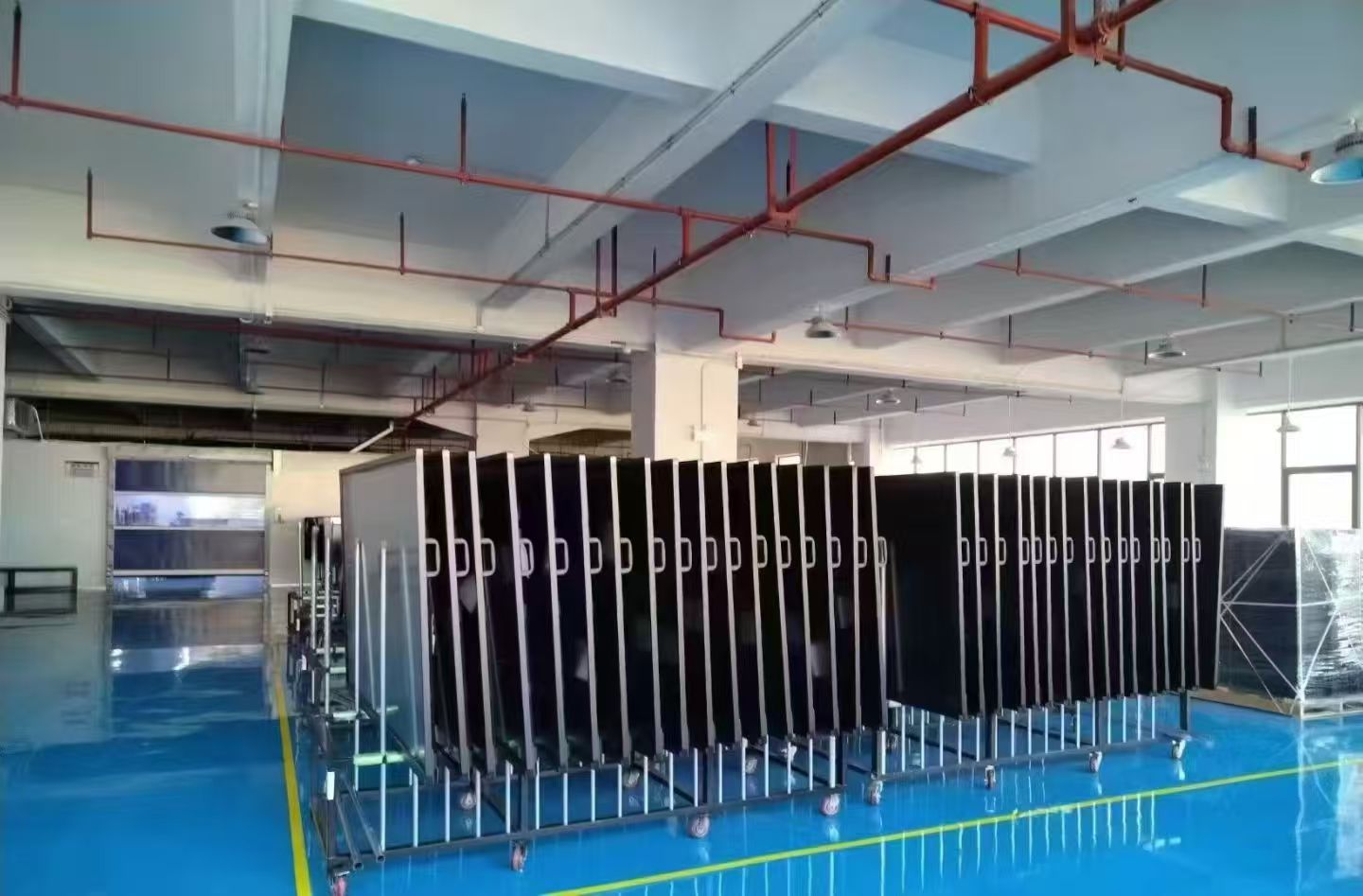
In the age of digital transformation, interactive whiteboards (IWBs) have become essential tools for education, business, and training environments. When selecting the right IWB, it’s crucial to understand the key features that will influence its performance, longevity, and value for your specific needs. This article discusses the top features to consider when choosing an interactive whiteboard.
1. Touch Sensitivity and Multi-Touch Support
The touch sensitivity of an interactive whiteboard is one of the most important features to consider. High-quality touch screens respond accurately to even the slightest touch, enabling smoother interaction. Multi-touch capability allows multiple users to engage simultaneously, which is ideal for collaborative learning or group meetings. Look for whiteboards with responsive touch systems, including support for at least 20-point multi-touch, to ensure versatility in classroom or office settings.
2. Screen Resolution and Display Quality
The screen resolution of an IWB impacts the clarity of content, including text, images, and videos. A higher resolution, such as 4K or Full HD (1920x1080), provides clear, sharp images that are easy to read from any angle in a room. For presentations, teaching, or meetings, a good display ensures all participants can clearly see the content from a distance. If you plan to use multimedia content regularly, investing in a high-resolution IWB will enhance the overall experience.
3. Screen Size
The size of the interactive whiteboard plays a significant role in its effectiveness. It’s essential to choose a screen size that suits the space and audience size. A larger board, such as 75 inches or above, is ideal for classrooms or large meeting rooms, while smaller sizes like 55 or 65 inches work better in smaller environments. Consider the room size and number of participants to determine the best size for optimal engagement and visibility.
4. Software Compatibility and Features
Interactive whiteboards are designed to work with specific software that enhances their functionality. Look for models that are compatible with a wide range of applications, such as digital pens, collaborative tools, and educational programs. Some boards come with pre-installed software that allows users to annotate, draw, or manipulate content directly on the screen. When choosing an IWB, ensure that the software options match your specific needs, whether for teaching, brainstorming, or data presentation.
5. Connectivity and Integration
IWBs should integrate seamlessly with other devices and systems in your environment. The ability to connect to laptops, smartphones, or tablets is essential for modern, collaborative settings. Popular connectivity options include HDMI, USB, wireless (Wi-Fi, Bluetooth), and even cloud-based integration for easy sharing of files and media. If your organization uses specific tools, such as Google Classroom, Microsoft Teams, or Zoom, ensure that the whiteboard is compatible with these platforms to streamline operations.
6. Durability and Build Quality
Interactive whiteboards are a significant investment, so ensuring they are durable and built to last is essential. Consider factors like scratch-resistant surfaces, anti-glare coatings, and the board's ability to withstand heavy usage, especially in educational environments. Additionally, check the warranty and support services offered by the manufacturer to ensure that repairs and maintenance can be done quickly in case of malfunctions.
7. Ease of Use and User Interface
An intuitive user interface is vital for efficient interaction with the IWB. The best boards are designed with user-friendly menus, easy-to-navigate touch controls, and minimal setup requirements. Whether for teachers, students, or corporate users, the IWB should not require extensive training to operate. Features like one-touch access to frequently used functions, quick setup, and ease of calibration improve user experience.
8. Interactive Features and Customization
Some interactive whiteboards come with advanced features like gesture recognition, voice control, and the ability to create custom tools or settings. These interactive capabilities can enhance the engagement of users, making them more active participants in presentations or lessons. The ability to customize functions, create shortcuts, or save preferences for repeated use can save time and improve productivity.
9. Support for Digital Pens and Writing Tools
While many IWBs support finger touch, those designed to work with stylus pens provide a more precise writing experience. Digital pens allow users to draw, annotate, and highlight content with fine control, offering a more natural writing or drawing experience. When choosing a board, check for the sensitivity and accuracy of the pen, as well as its ease of use.
10. Cost and Total Ownership
Finally, the cost of the IWB should align with your budget and offer long-term value. Consider the upfront cost, but also factor in maintenance, software licensing fees, and additional accessories, such as stands, mounts, or protective screens. Ensure that the IWB you select offers enough features and durability to justify the investment over time, especially if it will be used extensively.
Conclusion
Choosing the right interactive whiteboard requires careful consideration of various factors, from touch sensitivity and screen quality to software compatibility and durability. By understanding the key features that will make a significant impact on your user experience, you can select an IWB that meets your needs and enhances your classroom, business, or training environment. Ultimately, the right IWB can transform collaboration, boost engagement, and drive productivity in both educational and professional settings.
TORUI Interactive Whiteboard – Smart Collaboration for Education and Business
Why Schools Are Switching to Interactive Whiteboards in 2025
Related Article

Choosing the right interactive whiteboard size is an important decision for distributors, wholesalers, and education technology suppliers. The 65-inch, 75-inch, and 86-inch interactive whiteboards are popular options for classrooms, meeting rooms, training centers, and commercial projects.
65 vs 75 vs 86-Inch Interactive Whiteboard: Which Model Should Distributors Choose?

Choosing the right interactive whiteboard manufacturer in China is an important decision for distributors, wholesalers, education technology suppliers, and system integrators. The right manufacturing partner can help businesses improve product quality, maintain competitive pricing, customize products for local markets, and build a sustainable distribution business.
Who Are the Best Interactive Whiteboard Manufacturers in China for B2B Distributors and Wholesalers?
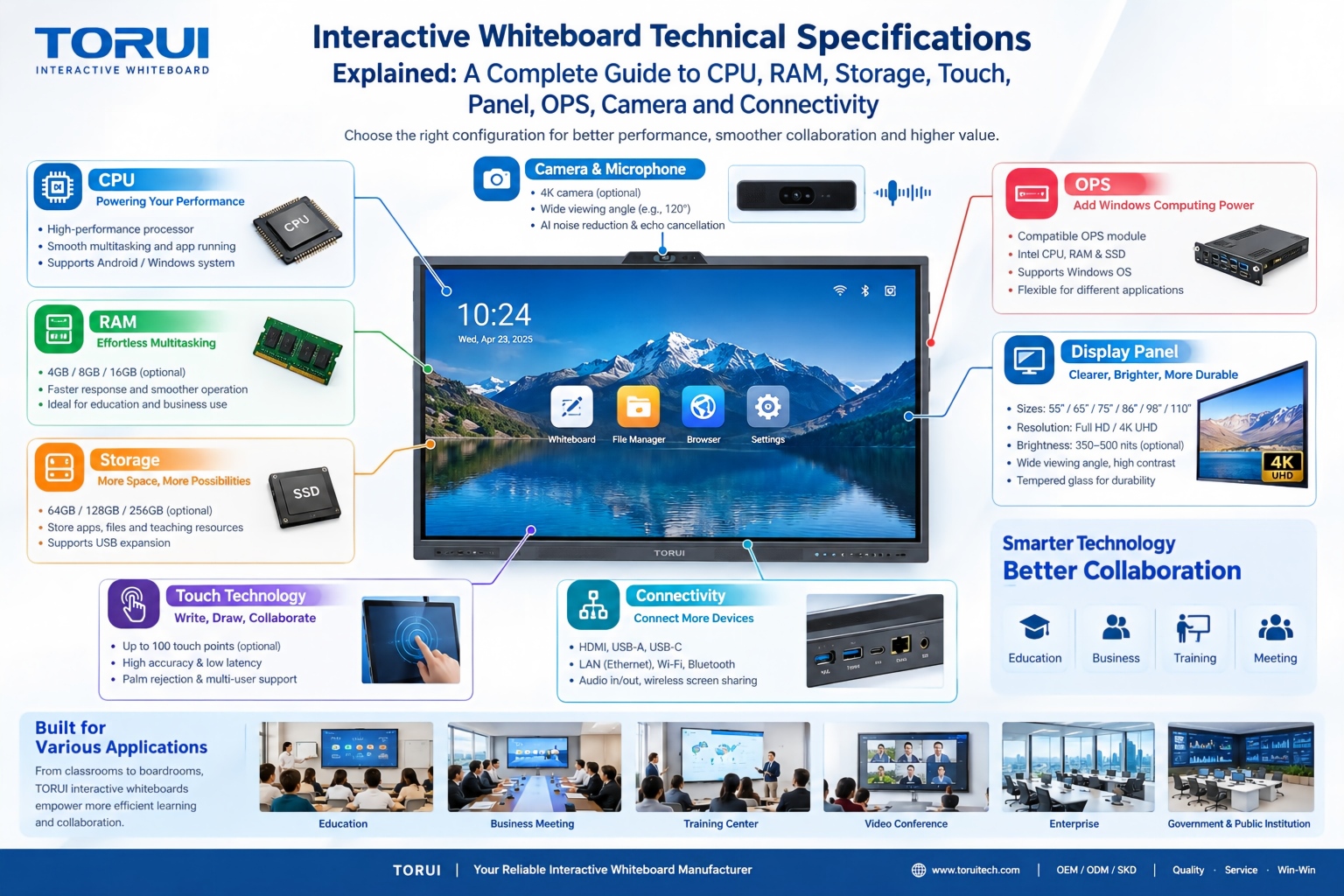
Choosing an interactive whiteboard involves more than comparing screen sizes and prices. For schools, businesses, distributors, wholesalers, and system integrators, understanding the technical specifications is essential to selecting a reliable product that meets different application requirements.
Interactive Whiteboard Technical Specifications Explained: A Complete Guide to CPU, RAM, Storage, Touch, Panel, OPS, Camera and Connectivity
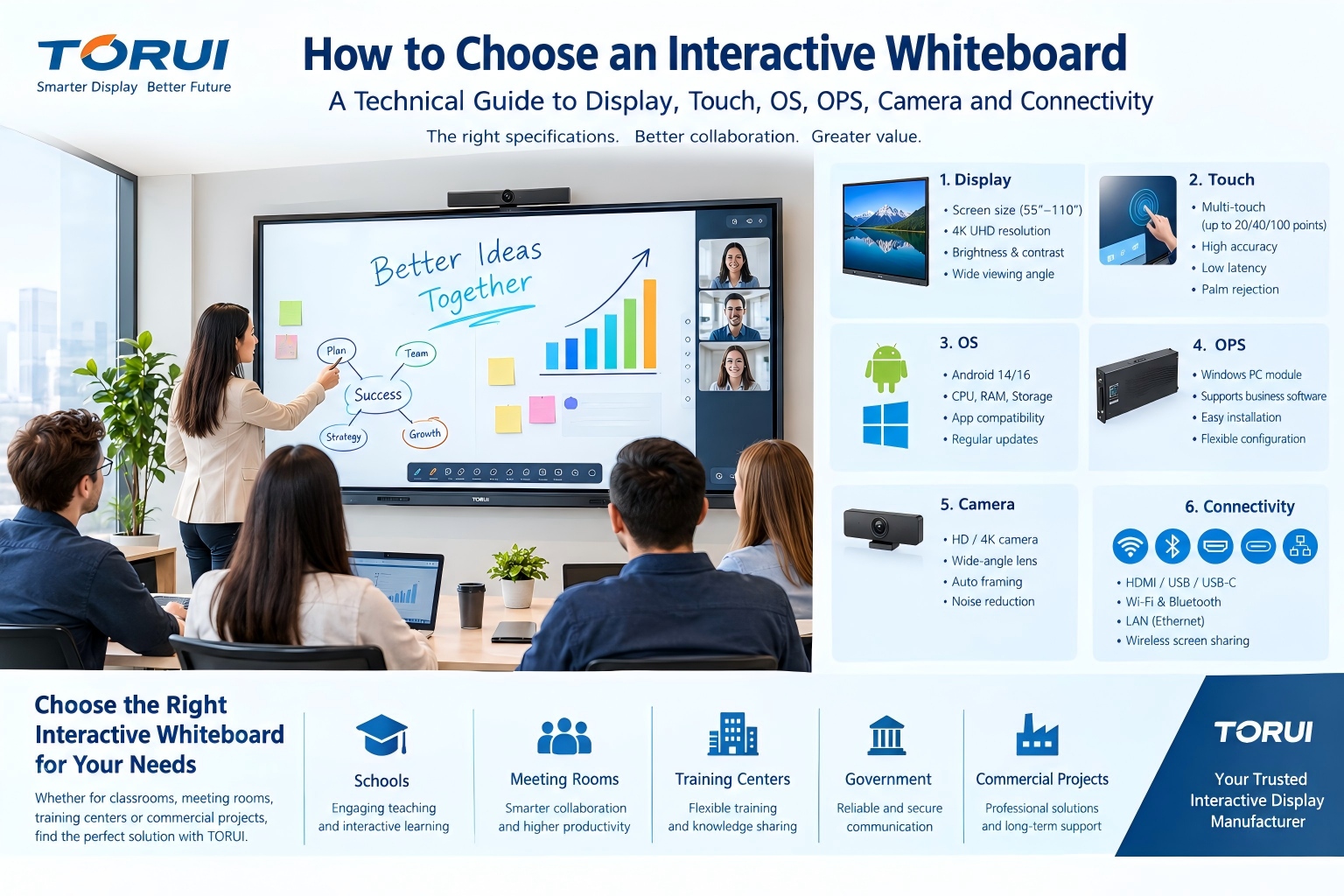
Choosing an interactive whiteboard for a school, meeting room, training center, government organization or commercial project requires more than comparing screen size and price. The most important specifications include display resolution, brightness, touch technology, operating system, processor, memory, storage, OPS compatibility, camera and microphone performance, connectivity, durability and after-sales support.
How to Choose an Interactive Whiteboard: A Technical Guide to Display, Touch, OS, OPS, Camera and Connectivity