
Why Schools Are Switching to Interactive Whiteboards in 2025
author: toruitech
2025-11-05

In 2025, schools around the world are rapidly upgrading their classrooms with interactive whiteboards. The move reflects a broader shift toward digital learning, where interactive technology supports engagement, collaboration, and efficiency. As education continues to evolve beyond traditional blackboards and projectors, interactive whiteboards have become an essential part of the modern classroom.
1. Growing Demand for Digital Learning
The COVID-19 pandemic accelerated digital transformation in education, and the effects are lasting. Schools now aim to combine face-to-face teaching with online resources, creating hybrid and interactive learning environments. Interactive whiteboards make this possible by allowing teachers to share multimedia content, display live annotations, and connect with remote students in real time.
In 2025, many governments and institutions are investing in smart classroom programs, recognizing the role of interactive technology in improving learning outcomes. This policy support further drives schools to adopt advanced teaching tools like interactive whiteboards.
2. Improving Student Engagement
One of the most powerful advantages of interactive whiteboards is their ability to keep students actively engaged. Traditional teaching often limits student participation, but interactive displays encourage students to come forward, write, draw, and collaborate directly on the screen.
With multi-touch functionality, multiple students can work together on the same board. Teachers can also integrate videos, games, and quizzes to make lessons more dynamic and memorable. This level of interactivity turns passive listening into active learning, which helps improve attention and understanding.
3. Enhancing Teaching Efficiency
Interactive whiteboards simplify lesson delivery and classroom management. Teachers can access digital teaching materials, cloud storage, and online platforms such as Google Classroom or Microsoft Teams directly from the board.
This eliminates the need for multiple devices like projectors and laptops. Teachers can switch between presentations, whiteboard writing, and multimedia content seamlessly—saving time and creating a smoother learning flow.
Moreover, the ability to record lessons and share them later supports self-paced learning, allowing students to review difficult topics anytime.
4. Supporting Collaborative Learning
Modern education emphasizes teamwork and problem-solving skills. Interactive whiteboards promote collaboration by allowing students to brainstorm ideas, solve problems together, and present group projects interactively.
In 2025, many boards include wireless screen mirroring and multi-device connections, enabling students to display their work directly from their tablets or laptops. This collaborative setup mirrors the digital workspaces students will encounter in future careers.
5. Long-Term Cost and Sustainability Benefits
While interactive whiteboards require initial investment, they offer long-term savings compared to traditional teaching tools. There’s no need for markers, chalk, or separate projectors, and digital content reduces paper waste.
With durable screens and regular software updates, schools enjoy a low-maintenance, eco-friendly solution that supports sustainable education goals.
Conclusion
The shift toward interactive whiteboards in 2025 is more than a technology trend—it’s a transformation in how schools teach and students learn. By making lessons more engaging, efficient, and collaborative, interactive whiteboards help schools deliver a richer and more effective learning experience.
As education continues to evolve, schools that embrace interactive technology today will be best prepared for the digital classrooms of tomorrow.
Top Features to Consider When Choosing an Interactive Whiteboard
The Role of Interactive Whiteboards in Smart Meeting Rooms
Related Article

Choosing the right interactive whiteboard size is an important decision for distributors, wholesalers, and education technology suppliers. The 65-inch, 75-inch, and 86-inch interactive whiteboards are popular options for classrooms, meeting rooms, training centers, and commercial projects.
65 vs 75 vs 86-Inch Interactive Whiteboard: Which Model Should Distributors Choose?

Choosing the right interactive whiteboard manufacturer in China is an important decision for distributors, wholesalers, education technology suppliers, and system integrators. The right manufacturing partner can help businesses improve product quality, maintain competitive pricing, customize products for local markets, and build a sustainable distribution business.
Who Are the Best Interactive Whiteboard Manufacturers in China for B2B Distributors and Wholesalers?
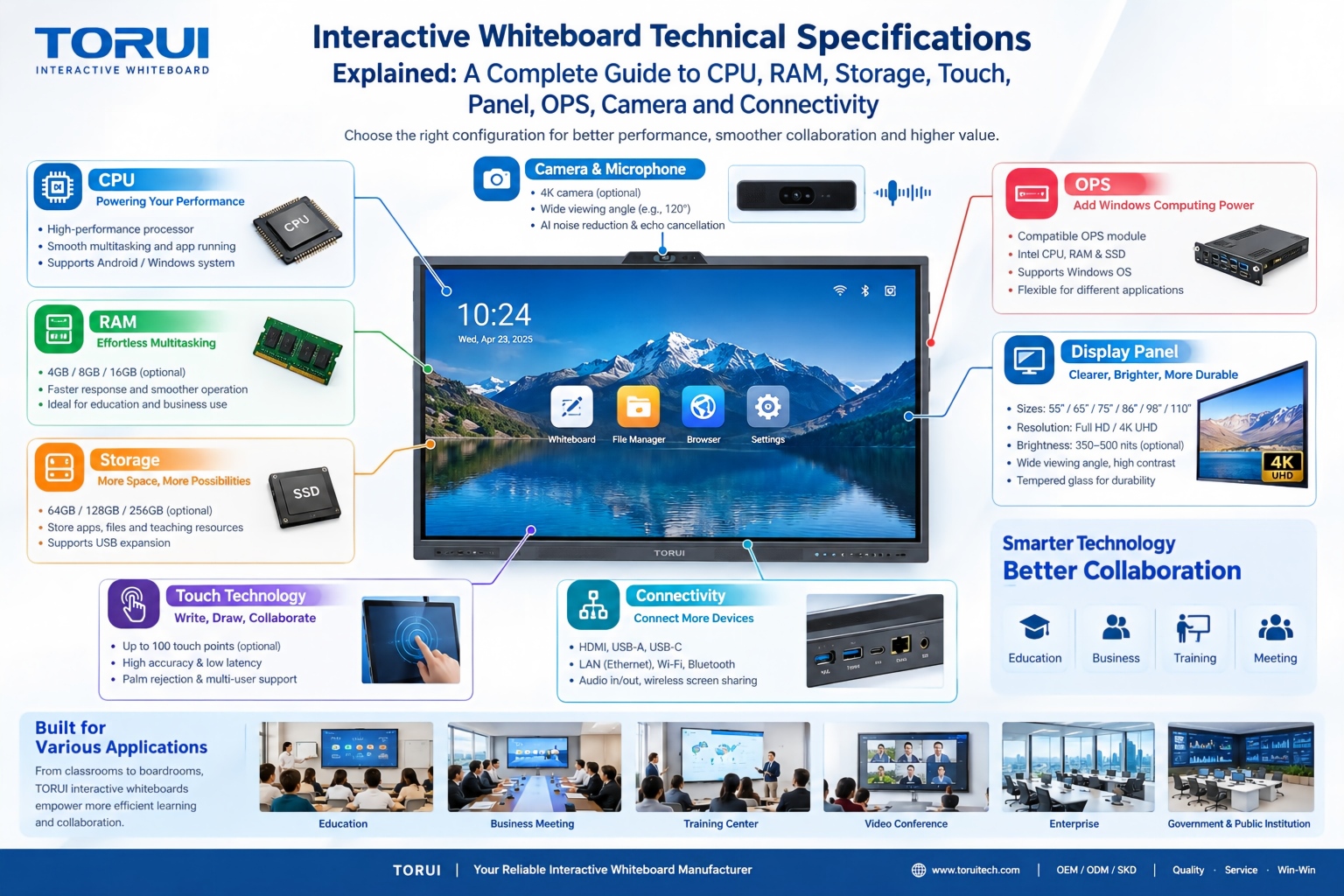
Choosing an interactive whiteboard involves more than comparing screen sizes and prices. For schools, businesses, distributors, wholesalers, and system integrators, understanding the technical specifications is essential to selecting a reliable product that meets different application requirements.
Interactive Whiteboard Technical Specifications Explained: A Complete Guide to CPU, RAM, Storage, Touch, Panel, OPS, Camera and Connectivity
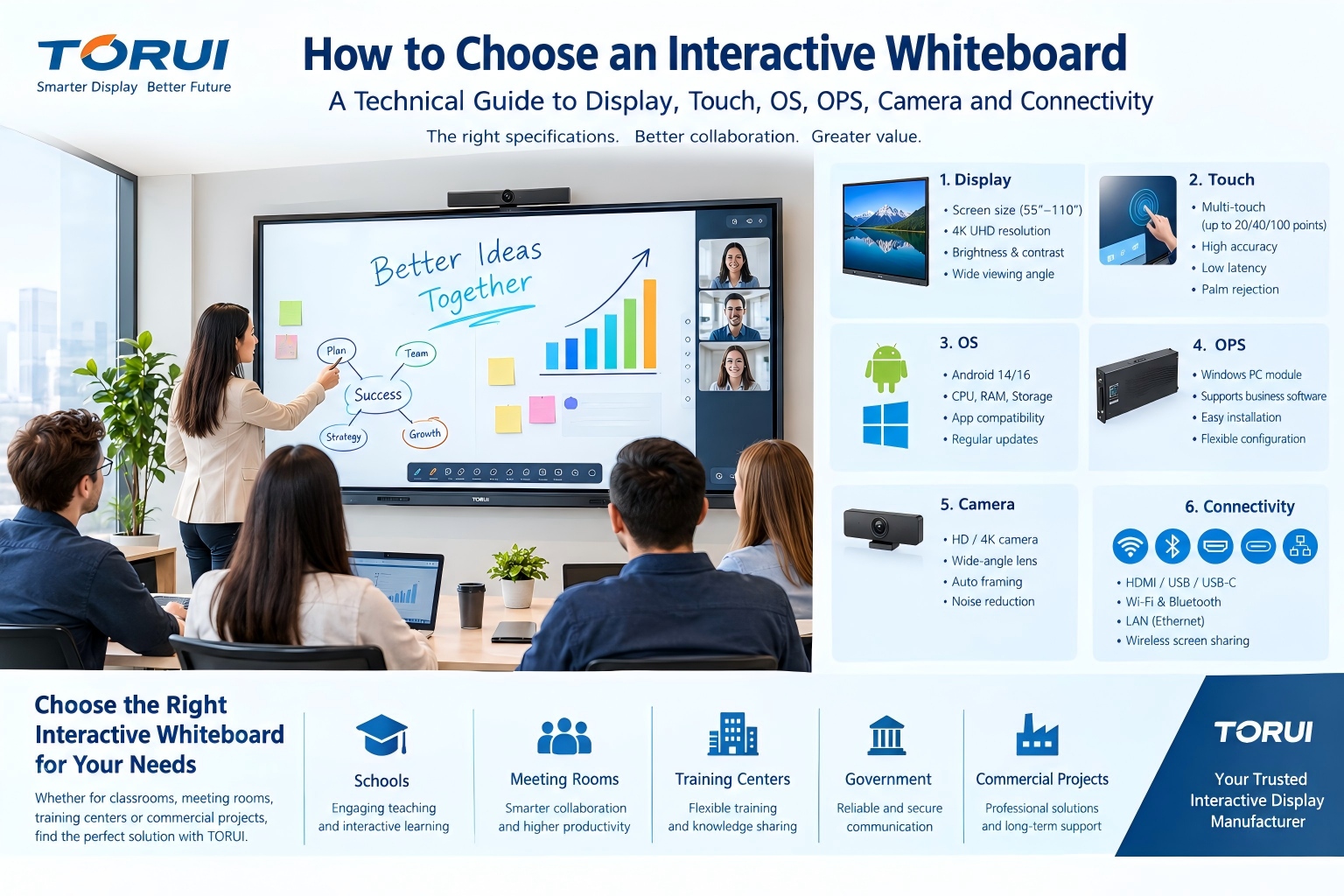
Choosing an interactive whiteboard for a school, meeting room, training center, government organization or commercial project requires more than comparing screen size and price. The most important specifications include display resolution, brightness, touch technology, operating system, processor, memory, storage, OPS compatibility, camera and microphone performance, connectivity, durability and after-sales support.
How to Choose an Interactive Whiteboard: A Technical Guide to Display, Touch, OS, OPS, Camera and Connectivity