
The Writing Speed of Interactive Whiteboards: A Comprehensive Guide
author: toruitech
2025-11-25

Interactive whiteboards (IWBs) have become a crucial tool in modern classrooms and workplaces. They offer a wide array of functions beyond simple writing, such as interactive learning, presentations, and collaboration. However, one of the most fundamental features that users often prioritize is the writing speed of the board. This is a key aspect of usability, as a slow writing experience can disrupt the flow of teaching or meetings. In this article, we will explore the writing speed of interactive whiteboards, the factors that influence it, and how manufacturers are addressing these challenges.
Understanding Writing Speed on Interactive Whiteboards
Writing speed on an interactive whiteboard refers to how quickly the board can register and display a user's input as they write or draw on the surface. This includes the response time from the moment the pen or finger touches the screen to the instant the stroke is visible. The writing experience is considered smooth when the time delay between input and visual output is minimal. A delay of even a fraction of a second can negatively impact the fluidity of writing, especially during dynamic lessons or fast-paced meetings.
Factors Affecting Writing Speed
Several factors can influence the writing speed of an interactive whiteboard:
-
Technology Used
The core technology behind an interactive whiteboard plays a significant role in determining its writing speed. Most modern IWBs use either capacitive touch technology or electromagnetic resonance (EMR). Capacitive touchscreens, which are often used in consumer devices like smartphones, tend to offer faster response times. EMR technology, which is more common in traditional interactive whiteboards, can also provide excellent precision but may have slightly higher latency in some cases. The sophistication of the touch technology, including how many touchpoints the board can register at once, directly impacts the speed of writing. -
Processor and Hardware
The processor and internal hardware of the IWB system also affect its writing speed. High-quality processors and efficient hardware ensure that the board can handle multiple inputs simultaneously, providing a smoother, faster writing experience. Whiteboards with lower-end processors may struggle with multiple simultaneous touches, leading to slower writing speeds. -
Software Optimization
Software that drives the whiteboard is another crucial factor. Well-optimized software minimizes lag and ensures that handwriting or drawings are immediately reflected on the screen. Poorly optimized software or outdated firmware can lead to delayed responses, causing frustration during real-time writing or annotation. -
Display Technology
The type of display panel used on the interactive whiteboard is also an important consideration. LED, OLED, and other display technologies can impact both the clarity and speed of the visuals on the board. A high refresh rate display, for example, ensures that the writing appears fluid and instantaneous. Low refresh rate displays can introduce a noticeable lag between writing and visual feedback, negatively impacting the user experience. -
Surface Quality and Calibration
The sensitivity and calibration of the board's surface are equally important. A well-calibrated surface ensures that strokes are registered accurately and immediately, contributing to the overall speed. In contrast, miscalibrated or dirty surfaces can slow down the board's responsiveness, leading to writing delays or inaccuracies.
How Manufacturers Are Addressing Writing Speed Challenges
To provide a superior user experience, manufacturers of interactive whiteboards are constantly innovating to enhance writing speed. Leading brands use advanced technologies such as high-speed processors, optimized touch sensitivity, and low-latency response mechanisms. Additionally, the development of advanced display panels with high refresh rates has become a standard feature in newer IWB models, helping to minimize lag.
Moreover, manufacturers are integrating AI and machine learning algorithms into the software that powers these whiteboards. These algorithms help predict and optimize input responses, ensuring that writing on the board remains as responsive and smooth as possible. Some systems even incorporate predictive handwriting technology, which adjusts the display speed based on the user's writing style and speed, creating a more fluid experience.
Writing Speed in Practice
In practical terms, the writing speed on most modern interactive whiteboards is nearly instantaneous, with a lag time of only a few milliseconds. However, this can vary depending on the factors discussed above.
For teachers and presenters, fast writing speed can enhance the learning or meeting experience by enabling real-time annotations without interruption. In environments that require rapid idea generation or sketching, such as brainstorming sessions or design meetings, a responsive interactive whiteboard is essential for maintaining the flow of thought.
Conclusion
The writing speed of interactive whiteboards is an important consideration for anyone looking to use these devices in an educational or professional setting. Advances in technology, from touch sensitivity to processor capabilities and software optimization, have resulted in significant improvements in writing speed. While most modern interactive whiteboards provide near-instantaneous feedback, it is important to consider the specific features that contribute to writing speed, such as the underlying technology, processor, software, and display panel. By understanding these factors, users can select the right interactive whiteboard to meet their needs and ensure a smooth, efficient writing experience.
Introduction to Interactive Whiteboard Annotation Features
TORUI Delivers High-Quality Products and Outstanding Service for Global Customers
Related Article
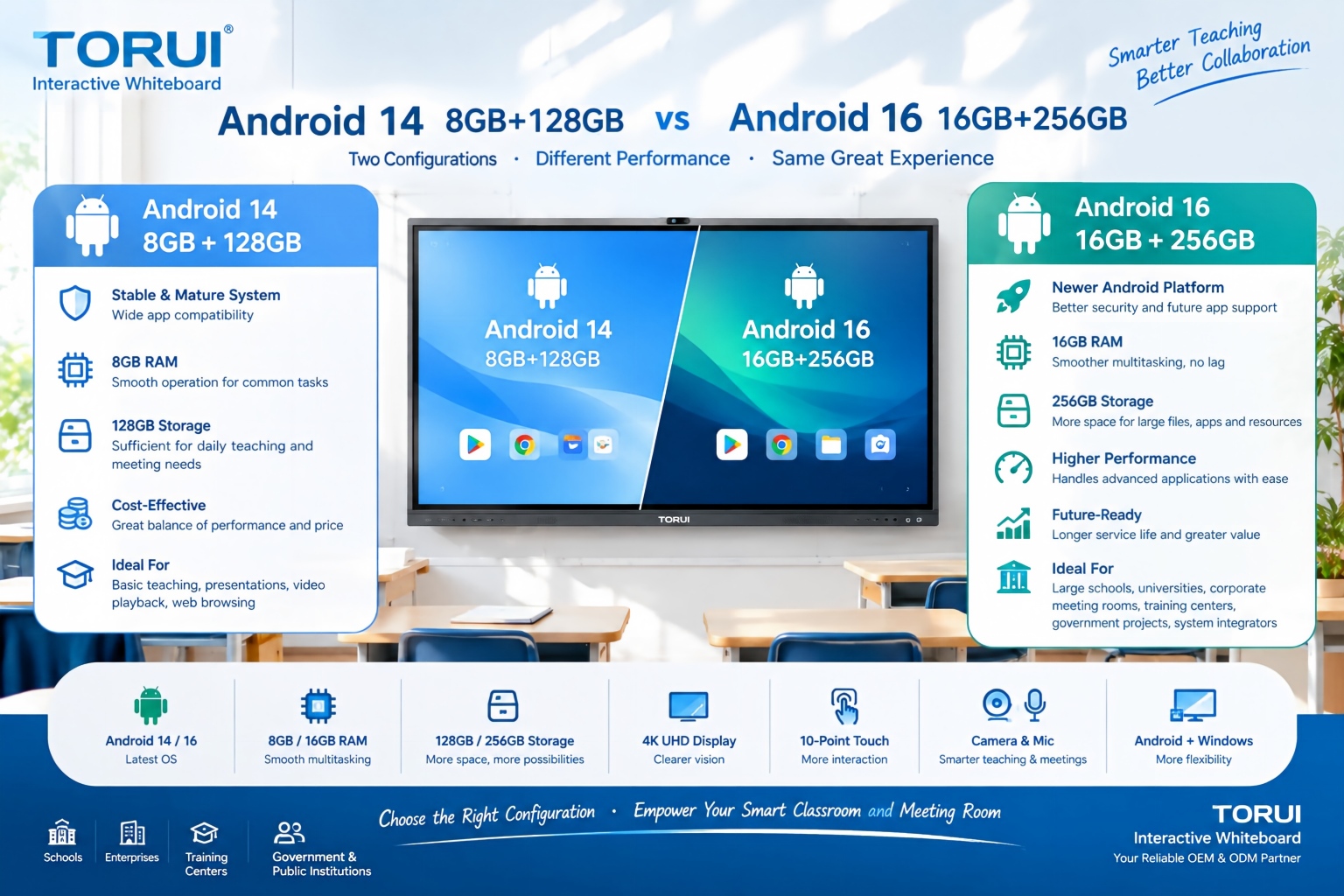
When choosing an interactive whiteboard for a school, training center, meeting room, or commercial project, the Android version and hardware configuration can significantly affect user experience. Two common configurations are Android 14 with 8GB RAM and 128GB storage and Android 16 with 16GB RAM and 256GB storage.
Android 14 8GB+128GB vs Android 16 16GB+256GB: Which Interactive Whiteboard Is Better?

Buying an interactive whiteboard is not simply about choosing the right screen size, resolution, or operating system. For B2B buyers, distributors, system integrators, schools, and corporate procurement teams, quality control is one of the most important factors affecting long-term reliability, user experience, warranty costs, and customer satisfaction.
Interactive Whiteboard Quality Control: What Should Buyers Check?
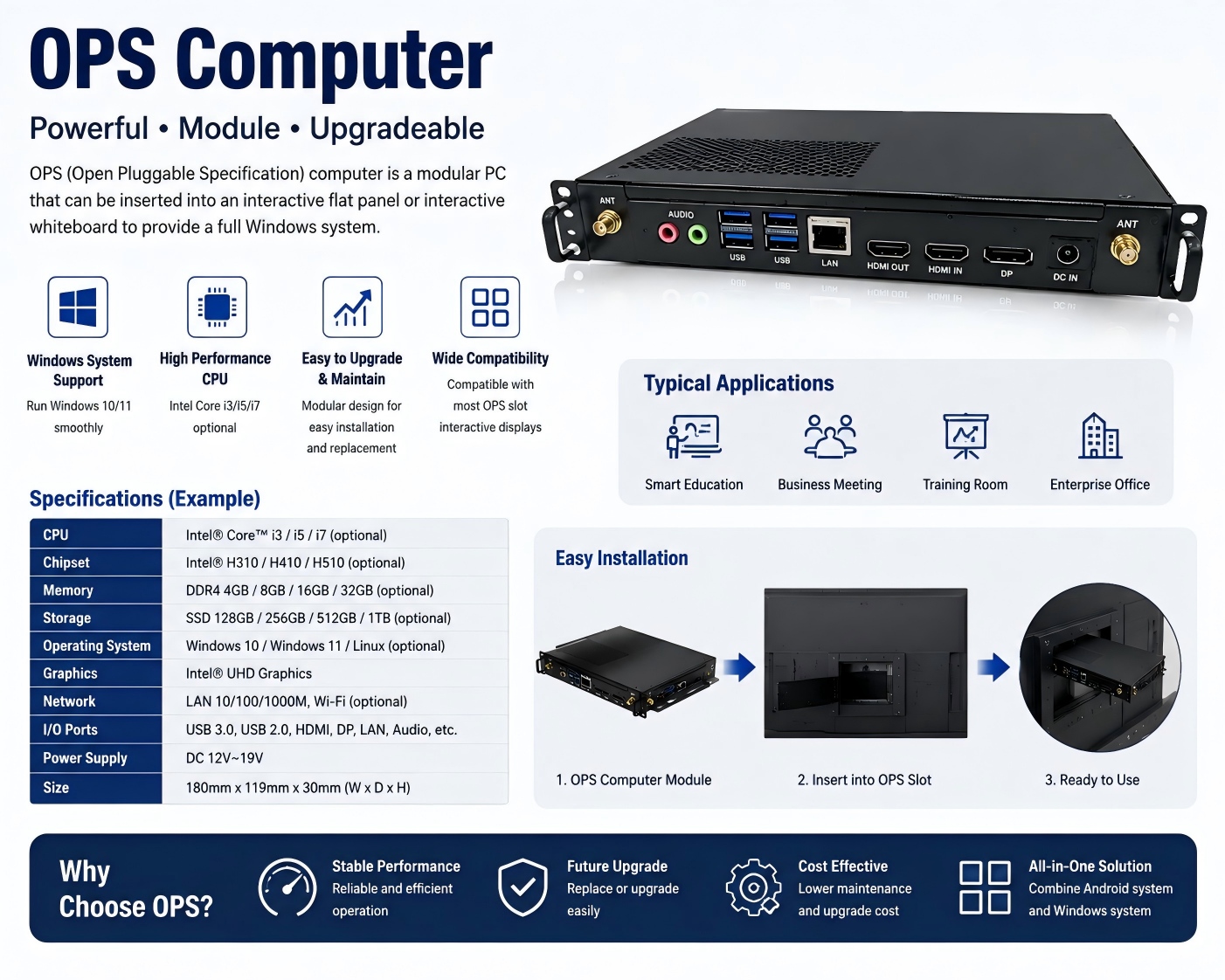
An OPS computer for an interactive whiteboard is a modular plug-in PC designed to add Windows-based computing power to an interactive display. OPS stands for Open Pluggable Specification, a standardized form factor originally developed for commercial interactive displays.
What Is an OPS Computer for Interactive Whiteboards?

Choosing the right chipset is an important decision when sourcing an interactive whiteboard for schools, conference rooms, training centers, government projects, or commercial applications. Among Rockchip platforms, RK3588 and RK3576 are two powerful options for modern Android interactive displays.
RK3588 vs RK3576: Which Chip Is Better for Interactive Whiteboards?